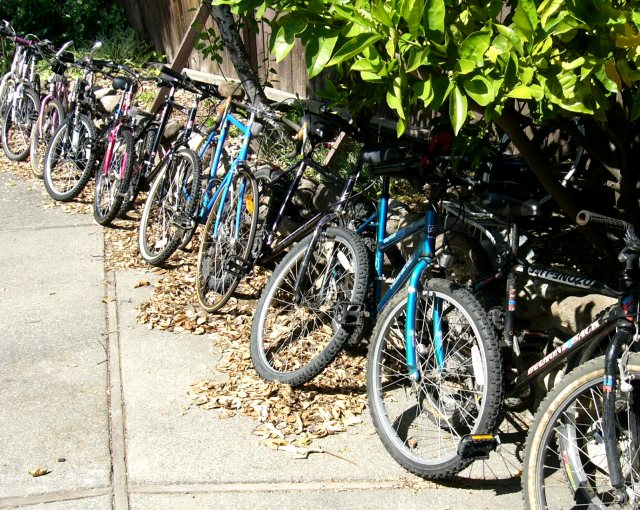
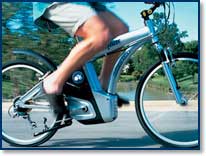
Secondhand bicycles offer a unique buying and selling opportunity because they are plentiful, easy to sell, and the perceived values can vary considerably. Computers become out-of-date too quickly. Clothing generally has less value, requires sizing, and much of it is stained or torn. Furniture can be bulky. But with bicycles there’s money to be had!
Bikes at garage sales can be incredibly inexpensive. The people may be moving next week, and haven’t been able to sell their bikes for a reasonable price. The owner of the bike may be at college and the parents want to sell it to help pay for textbooks. A bike may be broken and quite undervalued by the owner. It is very common to pay $25 for a typical mountain bike, one that sold for $300 when it was new. You can put $20 worth of parts in it, perhaps $50 for labor if you don’t do it yourself, and then sell it for $150. For a few months, in a somewhat offbeat scheme to support some relatives, I did this with twenty bikes per week out of my one-car garage. I just went to as many garage sales as I could hit on Friday, Saturday and Sunday, rounding up the bikes with my pickup truck. If I didn’t have a pickup truck, I could have rented a U-Haul for $40 or so on Sunday evening, and gather up all the bikes I had purchased over the weekend.
It is great if you can display your bikes locked up outdoors, with prominent price signs where many people drive by, but most people don’t have a place to do this. You might consider a consignment arrangement with someone who does. You can place classified ads in the newspaper, and although expensive, this generally works well. In most communities, the best bet is Craigslist. You can place ads for as many bikes as you want, along with pictures, and it is all free. Here’s more about Craigslist.
When I was doing this out of a home, I mostly dealt in medium-quality mountain bikes, a few road bikes, and one or two children’s bikes. In general, children’s and low-end adult bikes don’t sell for a sufficient profit to be worth your while. A twenty-year-old mountain bike that you price at $150 or $200 is the easiest thing to sell. I also had some relatively high-end bikes when I could find good enough deals. Typically, I’d pay $100 or $150 for a high-end bike at a garage sale, and sell it for $600.
As you develop your selling business, you’ll discover that you no longer need to get all your bikes at garage sales. People will start calling to find out whether you’ll buy their old bikes. You can enhance that by telling everyone you see that you’re always willing to buy broken or inexpensive adult bikes. (Remember, there just isn’t much money in low-end and children’s bikes.)
You’ll want to be careful about stolen bicycles. They don’t generally show up at garage sales because thieves don’t operate that way. They wouldn’t want the exposure. Still, you’ll want to be careful about anything in too good a condition at too good a price being sold by people between 12 and 25 years old unless their families are at the sale with them.
This is a showcase site for Jeff Napier of US-Web-Design. Surprisingly low-cost solutions for all your website and marketing needs. More...
If you have doubts about the history of a bike, you can ask the seller for a receipt. Often they’ll have legitimate excuses – such as they didn’t save the receipt. But if they can produce a receipt, you’ll know for sure that the bike has not been stolen. Sometimes, you can ask whether anyone has taken a picture that includes the bike. If they show you an old picture on their smartphone, it’s a pretty good bet that the bike has a good history.
In many communities, the police have worked out some sort of system to register used bikes. If you start dealing with used bikes regularly, they’ll want you to let them know about bikes you purchase. This probably isn’t as important as when you get an actual store, but you’ll want to participate if you can to protect the community at large from bike theft. The police won’t charge you any money, but they’ll want you to provide the serial number, description and source of every bike you handle. They usually ask you to hold every bike for 72 hours so they can have a chance to follow up if something turns out to be stolen. The downside is that if a bike is stolen, you’ll have to give it up, and won’t be reimbursed for what you paid. The upside is that the owner from which it was stolen gets it back.
Imagine a twelve-year-old boy who saved all summer to buy his BMX bike, has it for two weeks, leaves it unlocked in a friend’s yard, as twelve-year-olds will do, and discovers it has been stolen. The poor thing will cry his eyes out. If you can help prevent that sort of scenario, you can be proud to do so. Wouldn’t it be a great gesture to clean and tune a bike that’s going to be reunited with it’s owner? I never got the chance. I registered hundreds of bikes with my local authorities, and no bike was ever reported as stolen. Part of the reason is that the majority of bikes I purchased were broken, not shiny, valuable bikes. I think another reason is that most homeowners fail to record the serial numbers of their bikes, laptop computers, cameras and such gear.
If the police recover bikes that have been stolen, but don’t have a serial number or some way to positively identify the bike and reunite it with its owner. they hold it a while, then sell it at a ‘police auction.’ You can sometimes buy some remarkably good bikes for very little money at these auctions. You’re bidding against the general public, most of whom are looking for bikes for themselves, and know very little about how valuable certain models are. Others will see a bent wheel, or a missing cable, and just assume the bike is beyond their ability to repair for a reasonable cost.
That’s not always the case. Sometimes, the police auctions are way too popular, and you’d be wasting your time to try to buy bikes there. For instance, at some auctions, you need to pay as soon as you win each bike, so you miss the opportunity to bid on the next several bikes that go across the block while you’re waiting in line at the cashier. Of course, in that case, bringing a friend to help is a good idea. Some of the best auctions happen in inclement weather. In late fall, the police will have their last auction of the year. These will be many good bikes that accumulated during the end of the summer. There’s less interest as soon as the weather cools, and if it rains, or snows, there won’t be many bidders. You win. Mostly. But there is an unexpected catch.
When you buy a bike at a police auction, guess what? It may still be a stolen bike! Normally, this means nothing, and having gone through the process, and paid money, it is morally and nominally yours. But if the original owner discovers you have his bike, you are obligated to give it back.
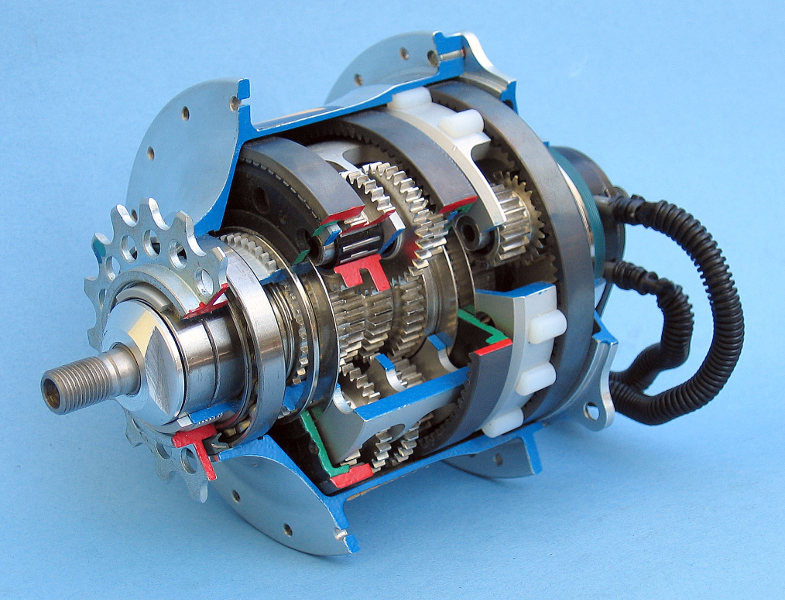
Buying and selling can also be about parts and accessories. I believe a person could watch eBay like a hawk, and pick up things like Campagnolo components, and bullet headlights from bikes from the 1950s. You could turn right around and sell them for more on eBay. There is 14-speed internally geared hub made by a company called Rholoff that sells for $1000.
If you could pick a used one up on eBay for $300, you could sell it for $600 – $700 easily. Interestingly, even a common three-speed hub sells regularly on eBay for $40. You might also mix and match with your local market, using Craigslist and garage sales. I think another good eBay business could be had by buying the lowest of the low bikes locally – you know, the department store $100 mountain bikes, disassembling them, and selling the pieces on eBay. Better yet, if you can score the older bikes, maybe something like a Peugeot PX-10 from 1970, you can disassemble them, and sell the parts for a rather remarkable sum.
Low-end larger bike parts such as frames, forks and complete wheels are hard to sell profitably due to the shipping cost. Hubs, shifters, derailleurs, handlebar stems and saddles sell surprisingly well.
Driving for Lyft, DoorDash or Uber is a great way to make a little bit of money. Getting started is fairly easy. The problem is your income will be limited because the companies take most of the money, leaving you something close to minimum wage. It may be even less than minimum wage.
Here’s how to defeat that: Give every passenger a business card, and let them know that you offer elite car service. They can call you for their regular business, such as weekly medical or business appointments, airport runs and so on. There are at least five reasons they may want to contact you directly rather than just using their Uber app:
1. You can be there right on time. For instance, if they need a ride at 10:15am, they don’t have to log into Uber and hope someone will come along in a reasonable amount of time.
2. You might offer to charge a little less, but you’ll still make more than if you took the ride as a company driver.
3. You can give higher-quality service, for instance offering a coffee and snacks to your passengers.
4. If you have a winning personality, which often means just asking questions that your passengers will be delighted to answer, then of course they’d want to ride with you.
This is a showcase site for Jeff Napier of US-Web-Design. Surprisingly low-cost solutions for all your website and marketing needs. More...
5. If you feel like a safe driver, they will trust you more than whatever random driver the company provides.
You can look at the General Business Action Pack to discover other ways to promote your independent driving business.
If you live in an urban community, or even a small town, to become a bicycle messenger is as easy as falling off a log. All you need is a bike and a cell phone. You can make up some business cards and flyers. Your first task as a messenger is to deliver the flyers to bulletin boards all over town, and to deliver the cards into the hands of as many people as you can. Don’t forget about Craigslist – a great cost-free way to advertise a service in most towns. If you live in a large city, there may already be messenger services. But there’s always room for more. Especially if you do something unique. For instance, you might deliver meals between 9pm and midnight. Or you might specialize in transporting medical records – whatever you find a need for in your city. If you’re in a small town, even as small as 5,000 residents, you can set up a general messenger service and prosper nicely.
Although messengers who use cars can deliver more quickly and can carry larger packages, many people just love the idea of the small ecological footprint of utilizing bicycles to deliver their messages, lunches and small packages.
Meanwhile, you get exercise while at work, and are likely to live a longer, happier, healthier life than one who spends their time at a desk.
Do be careful about breathing air pollution and stay aware of traffic. Statistically, you’re better off health-wise riding your bike than sitting around doing nothing. This is not a job for someone who doesn’t get enough sleep, is unaware, drinks too much, or takes unnecessary risks.
If an organized bicycle messenger service exists in your area, you might start by working for them, so you can learn intricacies of the business. Later, when you set out as an independent, you’ll make money on your own.
For general information about how to start and promote a bicycle messenger service, you might find this page helpful: General Business Action Pack.
This is a showcase site for Jeff Napier of US-Web-Design. Surprisingly low-cost solutions for all your website and marketing needs. More...
If you want to work as a welder in a shipyard, on a construction site, or in high tech, you’ll need to be certified. However, there’s a wide field for non-certified welders.
One variation is mobile welding. You can set up a truck with an electric and gas welding system, hand and power tools, and do housecalls for all sorts of welding jobs, from fence and gate repair and construction, to minor automotive fabrication as well as commercial applications.
You’ll find that since so few people are equipped or trained in welding, and even fewer who want to be mobile, there’s a large, hungry clientele.
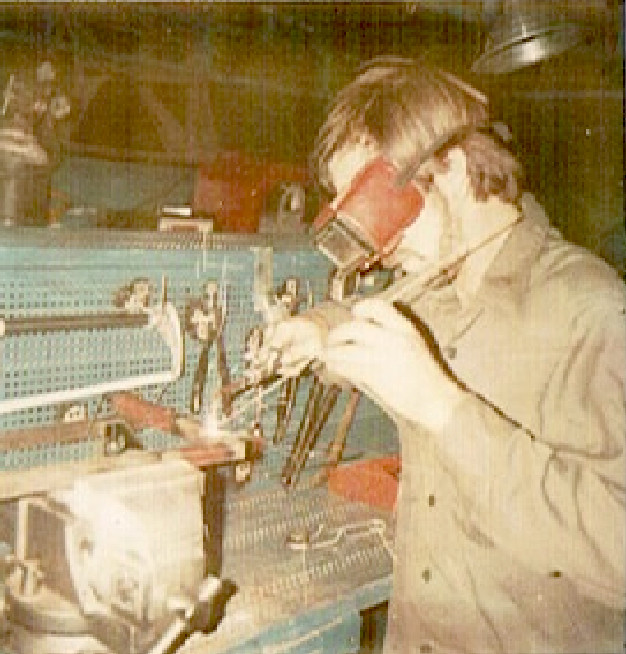
Your author set up a small welding truck with a Hobart electric stick welder and oxy-acetylene set. My little Toyota truck carried a ladder, and a couple hundred pounds of tools such as an angle grinder, a large assortment of Vice-grip clamps, squares and measuring devices, drills and so on.
My specialties developed by themselves. My very first project was to build some engine mounts for a custom promotional vehicle, the Smile Shuttle as shown in the article.
An early project was to repair a stainless steel sink in a restaurant that had developed a leaky seam. I found that welding thin-gauge stainless steel is not easy, it’s something that can be learned. That wasn’t the hard part. I either hand to drag my 50-foot welding cables into the restaurant, generally through a kitchen window, or disconnect the sink, drag it into the parking lot, weld it, then drag it back and and hook it up.
This is a showcase site for Jeff Napier of US-Web-Design. Surprisingly low-cost solutions for all your website and marketing needs. More...
Another of my early jobs was to construct a custom ladder rack for a pickup truck.
Within a year, I had as many custom truck racks and restaurant sinks as I could handle. The construction workers and restaurateurs all contacted each other when they needed my services.
I really liked the custom racks, because each tradesman had specific requirements, such as hooks for cables or hoses, holders for special equipment and so.
Yup, that’s me, many years ago!
Of course, you can set up a similar business. Something I didn’t do, but you should, is really work to protect your health. Do not breathe dangerous or heavy metal fumes! I was pretty good about it, and my health is still fine, since I went on to another business after a couple of years, but you really should wear a high quality breathing mask and carry a strong fan or work in ventilated areas.
One thing I did do was to really focus on fire safety. It would be way to easy to do a little job in which a spark from your work starts a grass fire, sawdust fire, sets rags on fire and so on. The fire may be small and unnoticeable for a while, until it isn’t!
So, I always carried literally a few various fire extinguishers. I always checked my environment before I started working. I asked for volunteers to watch the area for smoke or fire, and whenever I felt it was necessary, I either stayed around for a half-hour or more when a job was finished, or made sure someone else kept an eye on things.
Even still, I set my pants on fire one time. Literally! I was fixing some broken cross-members in a ramp truck, one that hauls cars up a ramp with a winch to carry them. There was a lot of grease on the structure under the ramp. Basically, I had no business welding in that rig in the first place. After an hour, having brushed up against the various framework, my pants became coated in grease. At one point, I felt a sort of sweaty warmness along my left thigh. I lifted up my hood to discover flames coming off my pants that I quickly padded out with my gloved left hand. I wasn’t hurt in the slightest, but things could have been worse!
On another occasion, I had hired a helper, something I had done many times. This helper was new, so one of the things I showed him is how welders get into the habit of never just picking something up. I always quickly touch a thing to make sure it is not hot, then I pick it up.
Not 15 minutes later, right in front of the kid, I absent-mindedly picked up a one-by-one inch bit of square tubing I had just welded, leaving some impressive blisters on the palm of my hand.
I also avoided any projects that would cause any worry. I would not repair a broken car frame member. I would not work on safety-critical components. I would not work on structures that carried a lot of weight. I would not work in flammable environments.
General welding is a lot of fun because every job is different.
Another version that costs somewhat more to set up is in-shop welding. You can start your own welding and fabrication shop. You can also start as a mobile welder, then as your income grows, transition into having your own shop.
Personally, I loved the art of gas welding, and did as much of that as I could. Some of the jobs were really fun. For instance, I was once asked to replace the broken off fin at the bottom of an outboard boat motor. The two-inch aluminum fin was entirely missing. Using hollow-core aluminum gas welding rod, I rebuilt the fin, bead by bead, ground it into shape and smooth with a 4-inch angle grinder, charged the guy a couple hundred dollars, and was on the road to the next job.
If you’d like to set up as a mobile welder, make sure you have a lot of practice and are very safety-conscious.
You’ll probably want a website to promote your business and then maybe some digital marketing. If you don’t want to build your own website or do your own marketing, make sure to find someone who has a good reputation. Unfortunately, many in the website business are less than ideal. You may find this article useful in finding a true professional: People Being Cheated in Website Development, SEO and Promotion.
In addition to the usual ways to build business, you may find that you work from time to time along side carpenters, plumbers and others who need welding services. For instance, a plumber who installed rooftop solar water heating systems called me one day to fabricate mounts for his solar panels. The next thing I knew, I was getting calls all the time to do the same thing for him, and also his buddies in similar businesses. Let them know you’re available, and you may quickly get as much work as you can handle.
Is it just me, or does the noise from lawn care equipment seem really bothersome to you also? Many people are bothered by loud lawnmowers, leaf blowers, mulchers and other equipment. Yet they feel the noise is inevitable. It is not!
The latest battery-powered electric lawnmowers can be much quieter. I’m sure one who looks around or is willing to do some of their own mechanical work can come up with much quieter lawn care equipment. Then it is a simple matter to advertise that you’re doing quiet lawn care. You should have a full clientele in no time!
Perhaps your quiet lawn business can grow to the point where you have 800 employees throughout the country or maybe even throughout the world.
You might enjoy this bit of background information: One of my first businesses was quiet lawn care. When I was fourteen years old, my neighbor across the street had a go-kart. I, being a typical kid of the era was green with envy. I wanted some sort of engine-powered ride also. But even then, I though of the go-kart as silly entertainment. I wanted a machine that could do something. So, I asked my father to lend me the money for a riding mower.
He bought me a Toro 500 lawn tractor. I immediately went around the neighborhood and set up weekly lawn care jobs. I was able to pay my dad back half-way through the first summer.
Now, my neighbor’s go-kart was much faster than my Toro, which went 5.4 miles per hour (8.6 kph) in high gear and that bothered me. Plus, it took ages to drive to lawns a few blocks away. I learned that I could replace the pulleys between the engine and the transmission, and managed to make that Toro go 25 mph (40 kph) in high gear, while low gear was still slow enough to properly mow lawns. It was a terribly dangerous thing to do, but I survived.
This is a showcase site for Jeff Napier of US-Web-Design. Surprisingly low-cost solutions for all your website and marketing needs. More...
I found that in my community, whereas no 14-year-old boy could legally drive o go-kart, there was a brilliant legal exception: Farm equipment was legal on the streets without any sort of license or age restriction. So, my little Toro mower was technically a farm tractor as far as I was concerned. I don’t know whether a policeman would have bought that argument, but I was never stopped.
If you’re astute, you’ve already picked up on the part of this story that doesn’t yet fit. You see, my Toro was terribly loud, like all lawn care equipment of the era.
One day, while mowing a lawn, a neighbor beckoned me over. I rode my mower over to her, and shut off the engine so I could hear what she was saying. She complained that my little tractor was way too loud. I had to agree. It was so loud it was even bothering me. Leaving her in high gear with the engine near idle speed to be as quiet as I could, I went home and stuffed the muffler with coarse steel wool. Suddenly the little tractor made 1/10 the amount of noise. I was so pleased!
One problem remained: Every now and then, the steel wool would catch fire, blowing a remarkable shower of sparks out the exhaust pipe. I learned to carry spare steel wool and re-stuff the muffler from time to time.
After two summers, winter came, and I bought a snow plow attachment for the little tractor. I figured I could continue to make money by clearing driveways. However, the tractor was too light-duty to do the job. That’s when I gave up lawn care and moved into another business, photography, which I have described elsewhere.
So, that’s my story, and I’m sticking with it.
For the general business information about how to start and build a quiet lawn-care business, see General Business Action Pack.
This title is kind of fun. Of course lawns are green. There are a million people already in the lawn care business, so why is this article here on the website?
I’m using the term ‘green’ in a different sense. I’m not talking about the color. This use of green means ‘organic’ or ‘earth-friendly.’
It turns out that a lot of people care about green services these days. So your new business is super-simple.
Promote yourself as a lawn-care specialist who uses only green, safe, organic products. If you don’t have a good idea already, you can learn on YouTube and elsewhere how to substitute chemical fertilizers, pesticides, dyes and other chemicals for all-natural products.
People will care. They are more likely to hire you rather than any regular lawn-care professional and may pay more as well. You see, they worry about their kids playing on chemical-coated lawns. They worry not only about what their dogs and cats might track in, but also what can happen to their pets with chemical exposure.
So, by doing this business, everyone, even the dogs and cats, win.
This is a showcase site for Jeff Napier of US-Web-Design. Surprisingly low-cost solutions for all your website and marketing needs. More...
It’s not unfathomable to think that whereas you start out as a single person, in time your green lawn business can grow to the point where you have 800 employees throughout the country or maybe even throughout the world.
For the general business information about how to start and build a green lawn-care business, see General Business Action Pack.
Early in his career, Travis Barker decided he wanted to be a drummer so badly that he was willing ta take a huge risk. He wanted to make sure he was unemployable so he couldn’t escape from his dream by taking an ordinary job. So, he got some tattoos on his face. Any prospective employer would look at him and say, “No way.”
Now, Travis had to be a drummer. He had quite purposely eliminated all other choices. For Travis it worked to such a degree that he is world-famous, and has branched out into multi-million dollar merchandising.
I’m not sure I recommend something so drastic for you. On the other hand, many people have fallen short of the life they really wanted because they took the easy way out.
You can make real money with your guitar, even if you aren’t a great musician.
1. Teach beginners to play. Most lessons are given to beginners. Few students are intermediate or advanced players. As long as you know the fundamentals and are one step ahead of your students, you can teach. This is especially true if you have an empathetic personality. Any teacher can make $60/hour or more. Typically lessons are 1/2-hour for $30. You can make even more by teaching multiple students concurrently, even online through Zoom lessons.
2. Street performing can be surprisingly lucrative. It is important to find a location where street performing is legal and appreciated. It also has to be quiet enough that people can hear you. This can pay in excess of $40/hour. One of the coolest things about street performing is that you get to practice or work out new material while you’re getting paid. The next time you see an experienced street performer, hang around for a while, and watch how much money is going in their hat or tip jar.
When you first start street performing, you’ll make mistakes. You may even find the whole thing embarrassing, but in time, you’ll be like a rock star to the people who stop and listen.
You get to set your own hours, play the music you like, and do everything your way. What could be better?
You might want to perform on an acoustic guitar. This is fine if the environment is quiet enough. More commonly, performers will use a little battery-powered amp.
This is a showcase site for Jeff Napier of US-Web-Design. Surprisingly low-cost solutions for all your website and marketing needs. More...
3. If you’re a typical musician, you appreciate good instruments. Leverage your knowledge of guitars by buying one which you know is a particularly good deal. Sell it at a profit through local networking, Craigslist, or Ebay. Take the profit and buy two more guitars. Sell those, and so on, until you’ve built up a profitable guitar sales business. In order to success, make sure there is a good markup on each purchase. You don’t want to spend $100 on an average guitar and sell it for $125. Instead, you might prefer to buy an especially nice guitar for $150, and sell it for $600.
4. Run a music camp. This can be as basic as having paying musicians come to your living room on a regular basis to a full-on camp where you rent live-in facilities and provide all sorts of activities for a week or two. Camps don’t have to be just for children. Many adults would love mixing with other adults in a music camp.
There’s money in specialization. If you’re a flamenco player, love finger picking, are remarkable with slap guitar, have a knack for composing, or can do anything most other guitarists can’t, you win!
The main rule in business that overrides all others, no matter what business you’re in, is that you have to take in more money than you spend.
It’s just that simple.
“You have to take in more money than you spend.”
Consider this rule in all your decisions, and you are much more likely to do well.
That’s the magic right there: Remember to take this into account when you’re thinking about anything that could cost money.
There are exceptions to the rule, but they should all be temporary. For instance, you may need to break the rule for a while to replace your broken-down delivery van. Or, you can add high turnover products to your inventory. Or, a relative needs dentistry.
This is a showcase site for Jeff Napier of US-Web-Design. Surprisingly low-cost solutions for all your website and marketing needs. More...
Getting back to the rule: On average, you need to take in more than you spend. Factor that into everything and you’ll have a good life!
Most businesses that failed were owned by people who have repeatedly disregarded this rule.
You probably know that you can post on Facebook to promote your business. Creating free posts, known as ‘organic posting’ can be effective, but is usually not enough to make you wealthy. However, Facebook offers an option called ‘boosting’ posts. This starts with an organic post. You pay Facebook a few dollars and they will expose it to more people. The number of additional people can be remarkable. For instance, you may make a post that is seen by 25 people. If you boost the same post, it might be seen by 400 people.
You can experiment with boosting without spending a fortune. Boosts can be as little as a few dollars per day. The minimum boost is $1 per day for seven days.
You can run experiments over and over again, until you find one that starts to work. That post, you can boost further. Once you know it works you can spend $1,000 per day. Of course you’ll be happy to do so if your profit exceeds $1,000 per day.
You probably figured this out already: Don’t pay more than just a few dollars per post until you find one that works.
On the other hand, don’t be discouraged if your boosted posts don’t work at first. The cost is so low that you can just keep changing things, trying new posts, until you discover what works.
Pinterest, LinkedIn, Twitter and other social venues have similar paid posting programs. I like to recommend sticking with Facebook at the beginning because it’s easy, is seen by potentially billions of people, and has a low cost of entry.
This is a showcase site for Jeff Napier of US-Web-Design. Surprisingly low-cost solutions for all your website and marketing needs. More...
In this article we’ll talk about organic posting. Organic posting is about publishing free posts in social media such as Facebook, Twitter, LinkedIn and Pinterest. You can also pay for advertising in social media. A common technique is called ‘boosting,’ which is covered here: Carefully Boosting Facebook Posts.
When you’re starting a new business, or trying to build up an existing business, there is no need to spend a fortune on advertising. In fact, that’s not even a good idea, since most advertising fails to make even enough money to pay for the advertising.
You can actually build your business with organic posting. It will help if you incorporate these techniques:
1. Every post should contain a description with a link to your website.
2. If you can make videos, then you can post on YouTube, Vimeo and WhatsApp. Videos can be very effective. However, they are time-consuming to develop.
This is a showcase site for Jeff Napier of US-Web-Design. Surprisingly low-cost solutions for all your website and marketing needs. More...
3. Memes are nearly as effective as videos. The term ‘meme’ can have various meanings, but is generally understood as a picture with embedded text. You may need to do some learning to create your own memes with something like Photoshop, Windows Paint, or Gimp. Or, you can use one of the several online meme generators. They are easy to use, but most require that you sign in, and buy a small membership for typically $4/month.
4. Target your audience. It doesn’t generally hurt to attract people who will not buy your product or service, unless you swamp your website’s server or invite lots of phone calls that would waste your time. By targeting your audience, you’ll attract the kind of people who are most likely to buy your product or service. Targeting can be done by using the words they are most likely to use when they are looking for what you offer.
5. Put keywords in your post descriptions. ‘Keywords’ can be words or phrases. For instance, if you are offering piano lessons in Marin County, your keywords might be ‘piano lessons’, ‘piano lessons San Rafael,’ ‘piano lessons Novato’, ‘piano teacher’ and so on.
6. Leverage hashtags. You may have seen posts with hashtags in front of keywords, such as #Novato or #SanRafael. Hashtags cannot have spaces or punctuation. Typically, to make multiple-word hashtags more human-readable, the first letter of each word is capitalized,
Most people don’t quite understand how hashtags work.
Let’s say you’re in the reptile business. In your posts, you hashtag #reptile. Other people posting will hashtag reptile also. Imagine a visitor comes to someone else’s post about reptiles and that other poster also hashtagged reptile. The visitor who is particularly interested in reptiles may click the hashtag in the other person’s post, and will be shown a list of other recent posts that have used the same hashtag. That’s where you win. Your targeted visitor is shown your post even if they otherwise would hever have found you.
7. Be more specific in your keywords and hashtags. You could hashtag #SanDiego. The problem is that hundreds of others, maybe thousands of posters have also tagged #SanDiego. However, if you hashtag some of the surrounding communities, such as #LaJolla, #Encinitas or #ChulaVista, you’re very likely to capture everyone interested from those communities.
8. Make your posts interesting, cute, or positively eccentric. By ‘positively eccentric’ I mean something catchy and unusual, maybe even crazy, but not so nutty that it would hurt your brand.
If your posts excite people they’ll click their ‘Like’ buttons, email their friends and so on. If you get it right, your post could go viral overnight. Of course the likelihood on any one post going viral is small, but if you make enough positively eccentric posts, something is likely to work quite well.
9. There is generally no limit on posting. Two former presidents of the United States used to tweet (create posts on Twitter) up to twenty times per day. If you make a few posts, don’t expect much business, but if over the course of a few weeks you publish a hundred posts, some of the are likely to work well.
Below are some posts I’ve created for past clients.
What does a toaster oven have in common with a pond fountain? Absolutely nothing! You can’t even buy a toaster oven at discount-pumps.biz. But you can get floating pond fountains, waterfall pumps, pondDye, and all sorts of other things to enhance your acreage on a pond or lake. (#pump, #fountain, #pondFountain)
At the House of Bread in Anchorage, Alaska, they baked a 100-pound cinnamon roll. You can have fun like that in your own franchise #bakery. Find out all about it at HouseOfBreadFranchise.com (#businessOpportunity, #franchise, #franchiseOpportunity, #baking, #bread, #bakery)
Docking your sailboat, fishing boat, speed boat or any kind of recreational boat is fine until the day another boat comes too close or bad weather sets in. It’s easy to fix with a mooring whip. Get your mooring whip and other marine supplies at DockingProducts.com. (#marine, #mooring, #mooringWhip, #boat, #boating, #sailboat, #speedboat, #fishingBoat)
Can’t talk to your family and friends? We understand you. Welcome to the safe, friendly, and informative community of lightworkers helping each other to get through the spiritual awakening process at HigherSelfPortal.com. (#spiritual, #spiritualAwakening, #family, #friends, #relationships)
She doesn’t know what’s expected of her. Can she bark or not? How does she walk with a leash? Who’s in charge? Dogs need to know this stuff. Obedience Training is the answer, but dog training is expensive, right? Not if you do it yourself. Check out the puppy training videos at trainingforpuppy.com (#dogTraining, #dog, #puppy, #puppyTraining, #obedienceTraining)
As shown here, four ounces of organic, biodegradable pond dye starts a wonderful transition in your lake or pond. It’s completely non-toxic and It’s much more than just a pretty color. Find out what it does at discount-pumps.biz/pond-dye.php – where you can also get floating pond fountains, waterfall pumps and more. (#pondDye, #pond, #lake, #fountain, #floatingFountain, #pondFountain)
When it comes to painting your house, you probably don’t want this guy to do it. It’s better to hire a professional painting contractor. If you’re lucky enough to live around San Jose, Campbell, Almeden or Saratoga, California, you can contact MikeLundPainting.com at (408) 514-5415 (#paintingContractor, #paintingYourHouse, #SanJose, #Campbell, #Almeden, #Saratoga, #California)
I’m about to tell you how to make money by giving things away!
Perhaps your church or group has sponsored an occasional clothing exchange. I’m not talking about a rummage sale where you donate your unwanted clothes and they sell them to support the organization. I’m talking about an event where everyone brings their unwanted clothes, perhaps on a Saturday morning, and everyone can carry away other members’ unwanted clothes. So, you can get rid of that funky sweater someone ‘gifted’ you with and pick up a great pair of pants, or whatever.
What if this happened on a grander scale and was about whatever you’re interested in, not necessarily clothing? Imagine a regular location where this free exchange went on every weekend, or even every day?
Do you see where the profit is in this? Since you could be the one who organizes and maintains it, it is only fair that you get first pick on everything that comes in. If you let everyone know right up front that that’s exactly what you’re doing, they’ll all be OK with it. I can assure you of that, because I set up a business that grew nearly overnight into a large, ongoing free general exchange in Marin County, California, and that’s what actually happened.
More specifically, I rented a 2,500 square-foot store, primed it with stuff I bought for next to nothing at garage sales, and opened to the public. In my exchange, I allowed exchange of anything of reasonable size (no refridgerators or mattresses, please!) There were many books, garden tools, car parts, sports equipment, you name it. But I could have specialized in appliances, bicycles or car parts and accessories, clothing, computer gear, or pretty much any type of thing. A couple of years later, I set up a quite successful specialty exchange, dealing just with books, CDs and DVDs.
Never once did anyone complain that I had first pick. Quite the contrary, I received complements all day long for the nature of the business.
This is a showcase site for Jeff Napier of US-Web-Design. Surprisingly low-cost solutions for all your website and marketing needs. More...
Another thing that might surprise you is that I received much more stuff than I gave away. There was so much stuff coming into my exchanges, that much had to be discarded.
When people decide to clean out the attic, basement or garage, they tend to bring multiple boxes full of stuff. There were hundreds of wealthy people who brought things to the exchange just so other less wealthy people could get them. All these donors knew full-well that I was supporting the business by picking the cream off the top.
I’m sure you can imagine what I did with the one percent or so that I picked. Right, I sold them on Amazon and eBay.
I only ran my exchanges as experiments for four months each.
During my first four months, in the general exchange, a volunteer ran some math and worked out that I gave away $44,000 per month worth of stuff. This was just wonderful for all the people who came from the poorer areas east of Marin and were able to get good things for their children and themselves. Even though the store was in a rather fancy suburban neighborhood, and many of the ‘shoppers’ came in junky cars and looked kind of scary to the locals, I was often told how much it was a great community service by the well-off locals.
I have been more of an experimenter than a do-the-same-profitable-thing-year-after-year person – probably to my detriment, but my exchanges could have been huge successes. Instead of moving on to the next experiment, I suppose they could have branched out, and I’d be very successful in the exchange business. But, being an experimenter and a writer, I’ll leave starting the next exchange up to you.
Imagine the potential. If you specialize in musical instruments, you’ll get instruments into the hands of children and adults who couldn’t otherwise afford them. If someone has had their instrument stolen or broken, you can provide them with another. You can provide sheet music. It wouldn’t be surprising if your free sheet music collection could become larger than what any store in town carries. You could have walls filled with free CDs. Interestingly, your place can become a destination for musicians. Many will volunteer to help your efforts. Everyone will just love hanging out, offering advice, repairing instruments, talking shop, jamming – well, you get the idea. What a place it can become!
If you specialize in clothing, you’d be offering a great service indeed, as people who can barely afford to clothe themselves and their children will get what they need. Their hard-earned money will go to better quality food, paying back bills, and so on instead of clothing, and they can dress proudly, not shabbily.
Of course much of the stuff that comes in will be in sad shape. You’ll get brass instruments that are quite dented. You’ll get torn clothing. You’ll get books that are 30 years old. You’ll get unidentifiable car parts. You’ll get wobbly furniture. But not all of it will be junk!
When it’s free, you’d be surprised how delighted someone can be with “70’s Pop Tunes.” When it’s free, people will figure out a way to fix that chair with the missing leg, or the vase with the crack in the side. Or if they can’t fix it, they’ll have fun trying. You may not be too happy about selling the good things that come in, even though that could be quite profitable. But if a stamp album comes in that you can sell on eBay for $4,000, that money will go along way to support the exchange, wouldn’t it? That way, you can get a lot more servicable goods into a lot more hands.
Perhaps the bulk of the money will be from selling pieces of broken things. As far as I went with pieces is that I experimented with two student-model flutes. I took them apart and listed the pieces on eBay. They each brought just over $100, after all expenses, selling most of the bits and pieces for $10 each. I once took in a guitar that was cracked on all sides, and missing a couple of tuners. It was not a production model. It appeared handmade, having no brand name and no model, but it had excellent inlay around the sound hole. I put it as-is on eBay, expecting maybe I’d get lucky, with a winning bid of around $20. It sold for $203.
The reason I created two exchanges was that I wasn’t quite happy with the first one.
My first version started out quite large, and I had a rag-tag assortment of about 20 volunteers. Not being a great manager, I quickly lost a degree of control over these people. Some came in drunk, some complained about everything in sight, some treated the clientele crudely. So, if you’re going to do this, you’ll either want quality employees rather than volunteers, or you’ll want to screen your volunteers better, or you’ll want to have a more alpha personality. Or, perhaps the best solution, is keep it small and manageable, perhaps in a 700 – 1,000 square foot space in a smaller community, or hidden away in a neighborhood.
That’s what I did with my second exchange. I wanted something smaller and more manageable. It was 1,000 square feet, about a third the size of a typical 7-11 store, in a town of just under 20,000 residents. Initially I did everything myself, no volunteers. I decided to specialize in books, CDs and DVD movies, because I figured I’d have a quieter, more focused clientele. I was exactly right. The second exchange was just as profitable, yet much less hectic, and therefore more fun for me.
Speaking of profit, I spent about $10,000 setting up the second exchange. I could have done it with less, but in my case, I didn’t need to. By the end of the second month, I was making $5,000 per month profit. At the end of the four-month experiment, I sold it quickly for $32,000. (If I had wanted to, I could have held on for a year, and sold it for much more!)
A bit of a problem with the first, general exchange was waste. Since I was taking everything, not just books and disks, I had to rent larger and larger dumpsters to accommodate the things that weren’t worth even giving away. At the end of the fourth month, I was paying $250 per month for dumpster rental.
To avoid discouraging people from bringing things, I decided never to decline any reasonable donations. I stand by this, and believe it’s better to spend a bit on garbage pickup than losing donations from people who start to figure you may not accept what they bring. Interestingly, things they assume you don’t want may be wonderful donations. I received a sousaphone that’s bell was crushed all out of shape. It was awful in appearance, but still played, so I gave it away.
If an item needs repair, you may be surprised how many volunteers are available to fix it. They may prefer to fix it in the exchange – if you have the space for a repair area. This is so they can become part of the social scene. Or, they may want to take things home to repair them. But what if the volunteers are unreliable? What if someone brings a sweater home to reknit a blown seam, and never brings it back? If you were going to give it away anyway, no loss!
In the case of an item beyond repair, you can sell what parts are good. There’s good money in a sousaphone mouthpiece or valve if someone needs that exact part on eBay. I have studied the bicycle parts sections of eBay from time to time, and am amazed how many ordinary everyday parts are being sold there. I once took apart a Roomba vacuum cleaner, and sold all the parts for well over $100.
I had a sign on the front window of my general exchange that told people not to leave donations after hours. But they did. Most mornings I’d find a enough bags of worn-out clothing, broken lawnmowers, sofas without cushions, and so on to fill a pick-up truck. These were the things that people just wanted to dispose of, didn’t want to pay landfill fees, and would be too embarrassed to try donating to the store during the day. Of course this wouldn’t be so much of a problem with a specialized exchange. In fact, the nighttime donations might surprise you. Someone once left two banker’s boxes full of old records. I called my friend Ken, who paid $100 per box for the collection. He took about six albums per box, and donated the rest back to the exchange.
In my media exchange, I learned to solicit nighttime donations. I had a drop box with a slot outside. Hundreds of books per months came in through that slot. I used a slot rather than an open container, because I didn’t want other people coming by and rummaging through the books before I had a chance to pick through them. I also put a free shelf outside, so visitors could get books, and occasionally music CDs, any time of the day or night.
Taking the concept one step further, you might be able to design an exchange that doesn’t need your presence at all. One way is to staff it with volunteers. Another is to have drop boxes around town, much like some clothing companies do, in which you ask people to drop of things they’re not using. On the drop boxes, you’d have signs indicating what you’re doing – donating most of the stuff to children overseas – or locally, for that matter.
I believe you should also state that you’re making a profit in the process. If you’re up front, not only will no one complain, but many will just love what you’re doing. If you try to hide it, people will undoubtedly get the wrong idea. Unfortunately, some of those companies that put out clothing donation boxes a few years ago developed a bad reputation for not actually fulfilling the promise of making good use of the donated clothing.
A little aside here: As I understand it, a fellow in Boston advertised on Craigslist that he would pick up unwanted books. He didn’t mention what he was going to do with them. He didn’t promise anything. Yet, many people gave him thousands of books, which he sold on Amazon.com.
Taking it even a step further, I can imagine that you might have a charitable arm. But that’s up to you. It is quite possible that a year or two after you start an exchange it becomes so profitable that you would have money left over with which to do good work.
To round out the picture, it would also be possible to have specialty exchanges that are simply shelves in public locations. The idea is people can drop off CDs, DVDs, books, toys, or whatever they don’t care about any more, and pick up ones they like – all for free, of course. Your job, besides keeping the shelves organized and clean, is to go through the stuff that comes in, gleaning what will sell online. Quick oil change places, laundromats, and restaurants would all love to have such a shelf.
You can tighten up the efficiency of free exchange shelves a bit by having a box with a slot on the shelves. Signs tell people to drop donated music into the slot, and take whatever they want. The point is you don’t want people carrying away the obscure and possibly valuable items. You want to be able to sort everything that has been donated before it gets away.
Don’t forget to have contact info so if someone has boxes and boxes of stuff, they know how to contact you for a free pickup.
If have not tried this exact business model myself. I did, however, put book shelves in eight laundromats. These weren’t exchanges. I purchased the books by the boxful at garage sales, paying on average five or ten cents per book. I then put them in the laundromats with signs saying, “Put $3 in the slot per book.” I split the money 50/50 with the laundromat owners or managers. Sure, some books were stolen from my shelves, but I never noticed, and it didn’t significantly impact the bottom line. These shelves were quite profitable for the small amount of time involved.
Music CDs ought to work especially well. Millions of people are looking for music they haven’t heard to put on their iPods or smartphones, and then discarding the CDs once they’ve finished uploading. It’s recycling at its best, isn’t it?
Getting back to the idea of a full-size exchange, when you pick a location, it is important to have good parking. This can be even more important than for an ordinary retail store, because many people are going to be bringing large loads of stuff. If they have to carry it a hundred yards (100 meters), they’ll be less inclined to bring stuff next time. Fortunately, the parking was very close to my first exchange. Even still, I provided hand carts for people to get things from their cars into the exchange. You don’t want anything to come between people and their desire to bring things to your exchange.
And yet, parking was a problem. My store became rather popular within a very short time. (Advertising and publicity is absolutely not necessary in a business that exists to give things away.) The problem was the parking lot became congested. And that, ultimately, was the downfall of my experiment. When traffic started clogging the little strip mall I was occupying, the neighboring businesses started to complain. The property manager suggested I leave. Oh, I could have worked things out, but since I was ready to move on, I just pulled the plug.
So, you can learn from my experiments. One thing I’d recommend if you want to start your own exchange is to start very, very small. You don’t need to rent a store. Depending on where and how you live, you might want to start it out of your garage. Or you can rent a space in a flea market. Or set up something cooperatively with someone who has commercial space available. For instance, you might find a quick-change oil change place who would gladly donate some lobby space in trade for hundreds more people getting their oil changed there.
I’m not the first one who set up a store to give things away. The precedent was set in 1968 at the Digger Store in the Haight-Ashbury neighborhood of San Francisco. The Diggers were a loosely assembled group of entertainers (one of whom was Peter Coyote) who started making free soup, beans, and bread for the hippies that came to the Haight during the Summer of Love. In time, they rented a storefront where they accepted donations of clothing and general merchandise, and gave everything away. I did a bit of research and never found out how they paid the rent. My guess is that they came up with the first month’s rent, then just coasted until they were evicted. That store, too was a short-lived experiment. Digger Archives
In my youth, my dad gave me a catalog from a supplier of scientific equipment. It used to be called Ward’s Natural Science Establishment. Their website is Wardsci.com. He let me buy things from the catalog from time to time. I started with some things like flasks and microscope slides. I was rapidly turning into a happy science nerd.
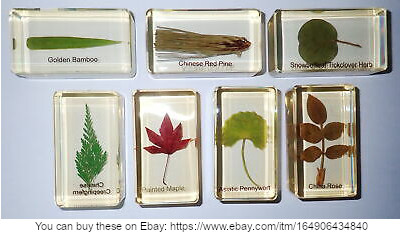
I noticed they had a little kit to make something called “Bio-Plastic Mounts.” With that little kit, I could take specimens such as bugs, coins, or postage stamps and embed them in clear plastic blocks. I fooled around with it for a while, then moved on to other pursuits.
What I’m thinking now is that embedding things in clear plastic could be a great business for someone. So far as I know, it’s not being offered anywhere.
Imagine, a client could send you an important keepsake, maybe a four-leaf clover, or a snapshot, or a scientific specimen, or a special coin. You embed it in plastic, and charge a lot of money!
Now there will be some difficulties to overcome. First, so far as I can tell, Ward’s no longer sells the kit. All they have is the bio-plastic material, a two-part liquid that hardens. The kit contained a mold, some of the liquid plastic, and mold release compound, plus some miscellaneous brushes and such, as I recall.
The procedure was to prepare the specimen. It had to be dry. I found out early on that any liquid would leak out and contaminate the mount. Then, I’d coat the mold with release compound, mix up some of the plastic liquid, and fill the mold about a third of the way. Shining an incandescent lightbulb on the mold, I let the plastic layer harden overnight. Then I’d set the specimen on that layer of hardened plastic, and fill the remaining two thirds of the mold with plastic. Once the plastic was hardened, I’d snap it out of the mold.
This is a showcase site for Jeff Napier of US-Web-Design. Surprisingly low-cost solutions for all your website and marketing needs. More...
You’d think that would be it, but no, the work was just beginning. The surfaces of the mount were rough and not entirely transparent. Each surface had to be sanded until there were no bumps or depressions, then sanded and polished with ever finer grits until it became fully transparent. I did it by hand, and by the time I was done, the edges were often rounded. If I had a belt sander, my mounts would have been finished much faster, and come out much better.
No doubt you could improve on the process. There may be molds that you can acquire or make that leave a smooth enough finish that sanding and polishing is not required. There may be another, better source of plastic. I remember how stinky the stuff was. Perhaps Ward’s discontinued it because it was toxic.
If you can work out a nice process, you’d have a very nice home business on your hands! You could make mounts of things like four-leaf clovers (that you can buy on Ebay) and sell them locally such as at flea markets, or online through Ebay, Etsy or Amazon. You could let people know they can send their keepsakes or specimens to you for embedding. You would have to be practiced and careful, because you don’t want to wreck things that could be very important to your clients. But, you could charge a heck of a lot of money for a mount, right?
Taking the concept a step further, one could make coffee tables and other large things with embedded specimens in plastic.
Let’s say you’re particularly interested in vacuum cleaners. If you can photograph all sorts of unusual vacuums, then you can create a virtual museum. You might or might not like to write up extensive descriptions, add videos, sound bites, a blog, discussion area, and so on. You could have a membership area, where those who pay a small monthly fee get to see otherwise hidden pages. Some membership sites are free. Instead of charging money, you give a membership to anyone who is willing to give you their email address. Then, perhaps monthly, you can send them an e-letter with advertising for collectible vacuum cleaners or whatever. If there are serious vacuum collectors, you could buy and sell vacuums on your site, or link to your eBay listings. You could even charge money for people to post classified ads on your site.
Is there a way to go beyond a virtual museum? You bet! How about a ‘real’ museum? Perhaps your interest is railroads. You’ve traveled over the country taking pictures of steam engines, rail lines, signal trees, water towers, stations, engine repair shops, and so on. All you need is a small storefront. There, you build stand-alone ‘walls’ to display all your photos. No doubt you’ve collected some hardware, some of which may be antique. Perhaps some spikes, a coupling, a bell or sand dome, maybe even an entire small switch engine. You could build a replica station or engine shop. The interesting thing about many such small museums, is that they are mostly photographs. You do not need an extensive collection of tangibles to make it appealing. In your little storefront, you charge a per-head admission. You get to talk ‘railroad’ all day long with other interested parties. Ideally, it brings a sufficient income so that you can travel around the world taking more railroad photos.
For most privately owned museums to succeed, it is very helpful to be in just the right retail environment. Areas crowded with tourists are best. If you are in the right location, most of your business will be walk-in traffic. If not, you’ll need to provide brochures to the Chamber of Commerce, all the hotels, restaurants and other venues that attract tourists in your area.
I remember a motorcycle museum on the Oregon coast between towns. It had a large inviting parking lot, with signs that could be easily seen from Highway 101. That highway hosts two million cars a year. I doubt the museum had to do any advertising or publicity. Just being there was sufficient.
The prestige and freedom that comes from having your own retail store can put a long-lasting smile on your face. It’s your place, so you can have wonderful conversations with your customers. You can decide to host jams, groups, or parties after hours. The local celebrities may drop in from time to time. You’ll probably eventually end up making more than any hourly wage, and you can hand the whole works over to your children forty years later.
Being primarily a writer, I lost interest in the stores I started, so I did what you can do with your stores too – if you are impatient as I am: You can build your store up, then sell the business for what will seem like a remarkable amount of money. The longer you keep your store, the more it is worth. The downside is that you’ll be making so much after a few years, you may not want to sell it.
I have found that the idea of starting a store from scratch scares many people. That’s why so many will pay so much for an established store. However, as one who has done it several times, I can tell you starting a store from scratch is really quite easy.
It is also easy to lose money, so I’ll offer a few pointers in this chapter to help you start successfully and stay successful.
Consider this, the first rule of business: You’ve got to make more than you spend.
A good second rule might be: Don’t invest more than you can afford to lose.
This is a showcase site for Jeff Napier of US-Web-Design. Surprisingly low-cost solutions for all your website and marketing needs. More...
Given those two rules, you may have to start something on a shoestring, and let it pay for its own growth. That’s very possible, and what this chapter is about.
But you may not yet have even a shoestring. If you don’t yet have the money for a retail store, you can put this book away and give up. Wait a minute! Of course, I don’t recommend that. There is another way.
you might like to start small – very small. You can usually find a way to start with a very few of whatever you’d like to sell, or something similar, put them in the trunk of your car, sell them to friends and aquaintences, list them on Craigslist if it serves your area, and possibly sell at flea markets or in consignment stores. As your mini-business grows, and as you are gaining experience with your product line, you can start building a pile of inventory and a pile of money, until you have enough to easily and safely start a retail store. I know a fellow who did it with camping gear. He started with second-hand things he bought at flea markets and garage sales. It’s been several years since he started. He now owns two full-fledged and full-service retail camping goods stores. His stores don’t compete with K-Mart. He mostly sells high-end used and new camping gear to expert hikers, climbers, hunters and others. It turns out there are plenty of those expert enthusiasts to keep his two stores plenty busy.
The biggest expense for most people starting a retail business is space. A typical store is around 1,000 square feet. Rent in a ‘good’ neighborhood is $1 to $2 per square foot (10 – 15 Euros per square meter), or more. So, right away, you’re looking at $12,000 to $24,000 per year.
Then you might want to consider heat or air conditioning, electrical usage for lighting and so on, liability insurance, telephone, credit card processing, and city or county licensing. All these typically add up to another $10,000 per year.
Then there’s advertising costs. And there could be the rather huge expense of employees.
These are the expenses for someone starting a typical retail store.
If you want to start a business in the usual way, you must be able to afford to lose a lot of money, at least until your business is up and running. And many businesses take from two to five years to become profitable.
Worse, many, make that ‘most,’ businesses never do become profitable. The statistics are staggering, and interesting. Did you know that one out of every four women fail in business? Ah, but what about the men? How well do they do? Four out of every five men fail in business!
Of course there are stories of people who failed two or even three times before becoming successful. Can you afford that? Would you want to go through that kind of stress?
But there is the other way – starting small – in which you can avoid most all the stress, most of the expense, and the risk of failure. Starting small has been covered in other chapters.
You can shortcut this process. You can do it your way. But I don’t recommend it. What I’m going to tell you is a rather safe and sure way to get into the retail business once you have some experience and money built up. Starting from absolute scratch has as much chance of growing into something big, maybe even huge, as those who start with $500,000 cash.
You want to choose a business that will work in our modern world. Urban blight, WalMart, a troubled economy, and inexpensive machine-made products are part of our world these days.
So, let’s rule out some things: If you have a hand-made product that’s the same as, or no better than what anyone con buy in a variety store such as K-Mart, then you probably aren’t going to be able to sell it. If it costs you $10 to make each of your ‘things,’ then the big companies can have the same ‘thing’ made in an Asian factory for perhaps $2.
If you want something that can be purchased wholesale, and you can buy them in lots of 100, you’ll pay more per item, and more for shipping, than the big chain store companies who can buy in lots of 100,000. They make all sorts of back-room deals with the manufacturers with which you can’t compete. UnlessÖ (more about that in a minute.)
You’ll find service is easier to sell. Yes, the big chain stores offer computer repair, eyeglasses, they have a big photography department, some offer tayloring, you can have window screens replaced, paint mixed, keys made. However, everyone knows this is boiler-plate service. The service is generally done by minimum-wage employees with relatively little training.
If you offer service by an expert, in a field that needs quality attention, you’ve got something you can sell. Then, if you can offer that, you can pump up your sales with hard goods – the very things I said you can’t buy at competitive prices. As you’re writing up service tickets, you can suggest this replacement part or that accessory. The customers who come into your store start to become familiar with what’s on your shelves, and will start coming for the specialty items they can’t find at the department stores. And, even though you have to pay more for items purchased from wholesalers in lots of one or a dozen (instead of 100,000), you’ll be able to sell them for more.
A small bicycle shop fits the mom-and-pop retail paradigm nicely. Wal-Mart does not offer high-end bicycles. They do not have special cycloscross tires, or Zefal pumps or Kool-Stop brake pads. They do not have employees that know how to custom fit your bike to you, or even sell you the right size. They do not offer any after-sale service other than a complete refund. They don’t know how to get you the same model, but in lime green. What else? They don’t know about accessorizing the bike: fenders, lock, lighting, luggage and so on. They cannot tell you from their own experience how it is to bicycle tour in Bulgaria, how to train for a double-century, how to strategize a BMX race, or maybe even how to fix a flat tire.
The same is true for a fabric store, a pet shop, or a musical instrument store. The department store employee doesn’t quite know what pinking shears are used for, why someone might like 12-inch hacksaw blades instead of 10-inch, or what a red-eared slider eats.
I think you’re beginning to see why a specialty shop would be successful, even with a huge chain store right next door. Maybe even more so, since all the chain-store buyers will see your sign and drop into your shop when they want something that the chain store can’t offer.
What other kind of store might work? Musical instruments. Tool supply. Certain kinds of appliances, many kinds of specialty sports or hobbies, as long as there are enough participants in the sport or hobby in your community. Ethnic foods. Organic natural foods are particularly good if your community is one that is aware of good eating, and doesn’t already have too many such stores. Automotive accessories. Antiques. Used merchandise can be a great choice, especially second-hand clothing and furniture.
Do you see the common factor in these? They offer products that can’t be found in the department stores, or something that requires more knowledge or service than those stores can offer.
It is probably important to pick something that you know quite a bit about. Whereas a person can just decide to start a guitar store without even knowing how to play music, it is harder that way. On the other hand, the owner will probably enjoy learning to play guitar, how to determine the value of guitars, and so on – but it can be an expensive process as mistakes are made, and customers are left without the advice they need.
So what do you know and enjoy? Second-hand building materials? Home crafts? Spanish cuisine? Sound systems? Digital photography? Soccer? Laptop computers? Organic gardening? You don’t have to start out as the world’s leading authority in your field. But it helps to know enough to advise your customers properly, and know what kind of inventory they will want to buy. And if you’ve been through this process and that, you’ve read the books, you know you’d want to buy certain brands and models, then you have the knowledge you’ll need.
What people notice first about a piano store is the pianos. A successful piano store doesn’t sell the kind of keyboards you find in the department stores. They start at mid-level, and go up in price from there. That’s because they can’t compete with low-end keyboards. You can purchase an entry-level Yamaha keyboard from a typical wholesaler for $119. You can buy the same thing at Radio Shack for $79. But when it comes to keyboards for $400 and up, with a USB port and weighted keys, they simply aren’t available at Radio Shack. On the other hand, customers shopping in that price range are rather specific about what they want. So, you need to carry a variety, be well tuned into what people want, or expect sales of new keyboards few and far between. Then, assuming there are other high-end music stores in your area, you’ll have to keep your prices competitive, making only a rather small mark up.
So, eventually, you’ll want to carry new keyboards and pianos because they bring customers in who buy sheet music, amplifiers, microphones, and all that. They come to look at your keyboards, as if it were a museum, but they don’t leave without buying a patch cord, a speaker cabinet, a sheet music book, or some other accessory.
However, if you were to start your music store with new keyboards and pianos, you’d be in debt on your first day – or maybe you would have blown your inheritance foolishly.
So now let’s talk about this shoestring concept. That’s how I started. I took it to the extreme, by necessity. You see, I was 16 years old at the time, with just about no money at all – maybe $10. So doing what a 16-year-old sometimes would do: I started fixing bikes for kids in the neighborhood, trading used bike parts, and just having a good time puttering around. Every now and then, I’d make $20 or $30 on a repair or a trade. Then people started paying more regularly for repairs. The trading inventory became so attractive that people bought my second-hand things more and more often. It wasn’t long before I outgrew my one-car garage, and my parents’ patience. But by then I had a couple of thousand dollars. That’s when I made the leap to a retail store. I found a place of about 700 square feet for rent in the ‘bad’ part of town. It was a place I could afford. And I moved my eight used bikes, handful of used parts and tools into the store. I painted my own sign and kept the heat very low all winter. I was willing to do whatever it took. I remember one time regluing a bunch of wooden dining room furniture because I had a customer who was willing to pay for that. But I also taught some bicycle repair courses in the shop. By spring, I had made it through the winter without going in debt. In fact, I had more than when I started. Actually, it was right before Christmas that I was able to make my first-ever wholesale purchase. I bought $200 worth of lights, pants guards, reflectors, patch kits, tires, seats, and things I thought might sell as Christmas gifts, or be good general inventory. I had found a wholesaler who was willing to sell in quantities of one or two, not dozens of anything. Some of the stuff sold, and I bought more. By Spring, I was able to place my first order for honest-to-goodness NEW bikes. It was only 6 bikes, but oh, I was so proud!
Let’s fast forward four and a half years. My shop had turned into a ‘pro’ shop. In a city of 400,000 people there were 10 other bike shops. Too many, really. But I did well anyway, because I treated each and every customer as if they were important – because they were. I studied, practiced, and listened, and became a bike expert. I was able to offer advice. I’d steer someone away from a certain brand of patch kit because I knew the glue would always dry up after the first use. People like this kind of personalized service, and went out of their way to buy things at my shop. They told me all the time that they drove past this bike shop or that, to come to mine. I taught more bike repair lessons. I learned how to build custom frames, and taught frame-building lessons. I hired people to help. At the peak of the summer season, I had eight employees and had expanded into other units in the building. I was then operating out of a couple thousand square feet. To fill the extra space, I went crazy and bought 125 new bikes in one batch and sold them all within a month.
Actually, new bikes wasn’t the focus. The part of the profit pie that came from new bikes was actually rather small. The piece that came from the accessory sales, repairs and customizations those new bikes brought was larger.
The two biggest parts of the pie were the general repair trade and used bikes. It turns out that all my customers told their friends and family that my shop was good, honest, fast, and all the other right things when it comes to repair. So during the summer, I had enough work to keep four mechanics going full time.
Used bikes turned out to be much more profitable than I had figured. They were more profitable than new bikes. You see, I learned early on to ask anyone who was considering buying a new or used bike whether they’d like to trade anything in. I could buy bikes all the time for $25, put perhaps $25 worth of labor and parts in, and sell them for $125.
And that’s my advice for someone who wants to start on a shoestring. You may not have to start as small as I did, or maybe that’s just right. Can you work out of your back yard? Your basement? A tiny rented space? I have seen bike shops set up in 10 x 20 foot flea market stalls. What about partnership? If you don’t have everything you need, perhaps you can find a partner who has the missing knowledge, money, time, space, whatever you lack. Check out the Partnerships chapter.
As your business slowly outgrows your space, you’re gaining experience in your product line, and in dealing with your customers. By the time you have the money to move into a bigger space, you also have the expertise to make sure your profit is more than enough to pay for it.
What happened after 4-1/2 years? I sold the business for quite a bit of money. I bought a motorhome and traveled around the USA for several years on the profit. In retrospect, that may have been foolish, but I was still young. If I had kept the shop, it would probably have been a chain of bicycle shops by now. I may have had my own manufacturing plant. On the other hand, by traveling, I gained more and varied experience, and at any time I could have started another bike shop. In fact I did, twice. And I created some other businesses. Then I sold them. I can always start another. But of course today, I’m having too much fun writing about businesses.
Here is some more detailed advice:
1. Remember the first rule? Don’t spend more than you take in. If you take that quite literally in your first months, you’ll stay safe. Furthermore, you’ll learn all sorts of shoestring tricks, ideas and work-arounds that will serve you well, even once you’re making millions of dollars. Then, you can have your managers show your employees some of the same things you once did to save money, so each of your employees is also profitable to you.
2. And the second rule? Don’t invest more than you can afford to lose. Once business is gaining momentum, you may be tempted to speed things along a bit by investing too much, too soon. I remember a camera store that had one Hasselblad, a very expensive camera. After a while, it sold. So, they bought five more. It took years to sell all five, and in the meantime, those five high-end cameras tied up a lot of inventory money that could have been used for everyday things that sell more quickly.
When you first start, it is completely acceptable to focus mostly on service, if your product line has a profitable service component. If you can fix the things you deal with, you have an immediate income in the repair business, without having to put much, or any money into inventory. As your repair business grows, you’ll know which parts and accessories to stock that will sell frequently.
It was quite common in past decades to find many stores in a town that were really almost entirely repair shops. You’d walk in, and see almost no retail displays. It felt like walking into a, well, repair shop. Right up to the front door was equipment in all stages of repair, tools everywhere, the ‘salesman’ who probably owned the place greeted you in dirty overalls. You may still see this from time to time. Shoe repair stores come to mind. TV repair stores often were like that. TV repair, however, has gone bye-bye, since solid-state electronics are more reliable and the cost of new TVs is so low in comparison to repair costs. But for many businesses, starting out as a ‘repair shop’ can be just as successful today as it was back then.
If your product doesn’t really have a service aspect, look into what else you can do. Can you teach in the back room? I know a health suppliment store that teaches classes on many aspects of nutrition and healthy living in their back room. They make more money out of the back room than the front room, with all its cans and bottles. Can you buy, sell, consign or broker used items? Can you set up profitable local events of some sort based around your product line?
Listen to your customers. Talk to everyone. Find out what they want, and do your best to provide it.
Be on the look-out for pride. What if I told the dining room furniture person, “No, this is a bicycle shop, I refuse to stoop so low as to fix your chairs!” Well, I’d have to borrow money for groceries that week! Plus, it turns out, the furniture guy bought bikes for both of his teenage sons that spring, and another bike when one was stolen, and spent perhaps $400 that year in parts and service.
Finding the right retail building can make a world of difference. If you can find a location where many people drive by, and where it is easy to park, you’ll be much more successful. Even better, if you can rent a spot in a mall, tourist location, or where there are plenty of people walking by, people who are there to shop, you may never need to do any advertising or publicity at all. Just put up your sign, and you’re in business! Really check out your location before signing a lease. If it is in the ‘bad’ part of town, there may be people who are afraid to come to your store. You may also have to deal with shoplifting. On the other hand, depending on your product line, you may find many grateful people in the ‘bad’ part of town who no longer have to commute a long distance to get what they want.
Parking meters are the death of a retail business. Many customers would rather drive across town to their competitor than be worried about whether 25 cents was enough the whole time they are shopping in your store.
Exposure is the thing. I’m sure you’ve heard the expression, “Location. Location. Location.” Getting the wrong place can ruin a business before it gets started. Getting the right place, even if it is small, or the cost per square foot is high, can mean that you start making money from your very first month.
Most small retail businesses start with rented stores. Unless you are prepared for an entirely different kind of investment, commercial real estate, you’ll be better off renting. Commercial leases are pretty much like residential leases. They are usually one-year or five-years in length.
In upscale settings, there is something called “Triple Net” abbreviated as NNN. This is a monthly fee added to the rent for maintenance, such as mowing the lawn, cleaning of the common areas, and upkeep of parking lot. The ‘triple’ in triple-net means nothing. The amount is anything the landlord decides. Typical triple-net for a 1,000 square-foot (100 square-meter) retail store is from $35 to $100 per month.
once you’ve found the right place, you may want to have the one thing that’s missing from most leases written in: An escape clause. What if a dry cleaner next door fills the neighborhood with perchlorethylene fumes? What if a family situation requires you to move to Philadelphia? What if the dog next door just won’t quit barking? You laugh, but these things really happen. What if your business grew faster than you thought, and you need to expand into a larger building? You don’t want to be stuck with a one-year or five-year lease. So, the escape clause is something that both you and the owner of the building can live with. For instance, you might suggest that if you want to move before the end of the lease, you’ll pay three months rent up front.
Finally, before you sign that lease, you need to work out a business plan. Oh, I don’t mean a fancy plan to show a banker for a loan. I do not advocate starting with a loan. If you don’t yet have enough money saved up, and the ability to risk that money, there’s no hurry. You can just keep selling your stuff on craigslist, out of the trunk of your car, the flea market, or whatever, until you do have enough money. This is a better plan, because you’ll be proving to yourself that your business is profitable, while you learn the ropes.
A business plan just for yourself can be as simple as scratching some numbers on the side of a grocery bag. What you want to see is whether you’re biting off more than you can chew. Figure that you’ll need to pay first and last rent, then pay the rent for a few months until your business is running and established. You’ll need to cover the electric bill and other overheads. If you’re smart, you won’t figure in employees. They come later, after you’ve become successful. This is a business that you’ll run entirely by yourself at first. Finally, you need a starting inventory. Ideally, you already have plenty of items. If you don’t, go ahead and step back for a year or so, continuing to do your business out of the flea market or whatever, until inventory surrounds you. Until it fills your garage, living room, bathroom, and takes up all the space under the kitchen table.
Moving forward, let’s say you have figured out the finances, and rented a store. Now what? There’s just a little bit of paperwork, and it is easier than you thought.
Through your chamber of commerce, find your local business license office. There, you can get a DBA – Doing Business under Assumed name, also known as a business license. This costs a little bit. Typically from $20 to $200 per year, depending on your community. You fill out a one- or two-page form with the usual stuff – name, address, phone number, and they give you the license. No one is refused. Furthermore, you don’t have to know anything about it. The people in these offices know that you are not an expert in what they do. The typical person coming in wants to start a car repair shop or a beauty parlor, and knows all about car repair or cosmetology, but nothing about business. So, they are there to help you. They want you to succeed, so you can keep paying your annual license fee to the community.
You’ll probably want a business checking account, and in some cases, the local government wants to see your business checking account number before they’ll grant the DBA. No problem, any normal bank can do this for you in twenty minutes. Most banks offer business checking accounts for free.
Customers coming to retail stores often expect to pay with credit cards. In the past, this was somewhat expensive and difficult to set up. Now, you can go to PayPal.com, and get set up to take credit cards easily. In one of my stores, I was unable to take credit cards for the first couple of weeks after opening. I told people up front – so as to not suprise them once they approached the sales counter, and let them know there was an ATM a block away. So far as I can tell, I did not lose a single sale during that time.
Finally, you need to get set up to collect sales tax or VAT in most countries unless you are in a place without sales tax such as Alaska, Delaware, Montana, New Hampshire, or Oregon. This costs nothing, and also requires filling out a simple one- or two-page application. The certificate, often called a resale certificate or tax number is usually given to you right away. They also hand you a pamphlet explaining how sales tax works in your area. You’ll learn what percentage to charge, and which items and people are tax-exempt. For instance, in New York State, American Indians do not have to pay sales tax if they present the retailer with an exemption form. In some states, labor is taxable, and in some, it is not. To find the tax office in your community, simply ask at the business license office. They already know that’s where you’re going next, and will certainly have the address. Now-a-days, you can often set up your sales tax account entirely online or by mail.
Collecting sales tax can be thought of as a right, responsibility, or privilege. I won’t get into the philosophy here. The usual arrangement is that you set aside the tax money you collect, fill out a one-page form, and mail a check to your tax office every three months.
Once you’re in business, you do need to keep track of income and expenses. You’d want to do this anyway, so you can understand how things are going, and what to adjust from time to time to make sure you’re making a good profit.
The old-fashioned way still works: You can buy an ordinary ledger book, and enter your expenses and income by hand. Domes Monthly is a ledger you can buy in any stationery store in the USA. There are no doubt equivalents in every country. Keeping track isn’t rocket science, although it may seem so at first. The only thing you need to do is list everything you spend money on and enter the amount of money you take in every day. You can optionally break out the income into categories such as “new,” “used,” and “service.” You’ll want to break out the expenses into categories such as “inventory,” “rent,” and “utilities.” You may want to additionally list all legitimate business expenses such as “automotive,” and “advertising.”
It is much easier to use automated software. For under $100, you can buy any of a variety of business bookkeeping packages, such as Quicken. This software tells you what to do at every step. The people who make the software know that you’re a musician, beautician, or bike mechanic, not an accountant, so you’re not expected to know what to do. The software has a lot of built-in help.
If that still seems intimidating, you can hire a bookkeeper for a single session to set up your system, and tell you what to do. Only after your business becomes successful, unless you are already wealthy, do you want to hire a bookkeeper on a regular basis. Some bookkeepers are better at teaching than others. If your first bookkeeper is not good at explaining things, try another.
At the end of the year, you need to figure out your income tax. This too, is easier than it might seem. In the US, the basic addition to your taxes for business is a Schedule C. It is a single two-sided page. The categories are obvious. But it is easier to get the automated software that does it for you. At the HR Block website, you can do the whole thing on line, and then just pay $30 to $80 to file your taxes. With a business, it takes about twenty minutes longer than someone who is only filing an ordinary 1040.
What if you make a mistake? All the government officials are on your side. Really! They’d rather have you succeed, than harrass you. They know you’re not an MBA or accountant. They want you to succeed, so you can go on paying taxes year after year. If you make a mistake, they tell you what to do different. They may issue a reasonable fine – just part of the cost of doing business, and you get to move on. No one goes to jail. Well, OK, I knew one fellow who did. He was a professional ice skater who paid no income tax at all. Still, he wouldn’t have spent six months in jail if he didn’t stand up to the judge and the whole court and make a big presentation about why he shouldn’t pay income tax. Only rebels go to jail. In fact, even with all the small mistakes all of us make, almost no one gets audited. I’ve received perhaps five letters from the IRS and sales tax agencies in all my 35 years in 18 various businesses. In each of the three cases where I actually did something wrong, I had to pay a small fine. My fines ranged from $20 to $150. I knew one fellow who didn’t report his income tax at all for several years. This one was a professional juggler. He was probably making around $150,000 per year. He didn’t even keep any records, so no one, even he, knew how much he made. The IRS stated that he owed them approximately $20,000 in back taxes, which he gladly paid. Of course from that time on, he did have to keep records and pay the appropriate taxes. I know a lot of business people and these two are the worst case scenarios.
Something like a signage violation is so minor that some business people play with them. For instance, in a little store that had a maximum 3 x 2 foot (1 meter x 66 cm) sign requirement, I made a much larger sandwich sign and put it out on the sidewalk every day from the first day I opened. I knew this was in violation, and I knew someone would notice it. They did, after two months. The zoning office did not issue a fine. They only issued a ‘cease’ letter, telling me I had 30 days to comply with the law. So I kept my sign out for another month, then I threw it away. It had done its job. I’m not recommending that you play with your government regulations, unless you know what you are doing is morally correct and the repercussions are safe.
Once you are in business, you can get wholesale catalogs and the wholesalers’ secret price lists. In order to qualify for a wholesale account, all you normally need is to fax or mail a copy of your resale certificate or DBA. Some wholesalers do require a photograph of the front of your store. Some have protected dealerships. This means that if someone else is selling their brand within a certain distance, perhaps 5 miles (3km), you can’t also sell the same brand. That’s fine, find other brands that aren’t protected or aren’t yet represented in your neighborhood. You can find the wholesalers online. Often, they find you, sending representatives to your store, to let you know about their wares.
Whereas you might start your store with only second-hand or collectible items, you now have the opportunity to sell new merchandise. The biggest advantage is that you can buy multiples of things that sell well. I have always imagined how nifty it would be to have a store that sells nothing but 25-pound (10kg) bags of dog food. Only one brand, only one type. I’d sell them over and over, the same to everyone who comes in. This is of course an oversimplified dream, but you can imagine that in a typical store it would simplify things if you could sell 100 copies of the same thing.
You’ll find the markup is remarkable in the lower-priced items, if you’re not familiar with retail. Things over $100, in most specialty businesses are marked up 50 percent. So if you pay $100, you sell it for $150. If you can ‘turn’ your inventory six times a year, meaning sell six of those $150 items in a year, your profit will be $300, on what amounts to $100 invested. A 200 percent annual return on investment (ROI). Compare that to a money market account! But wait, it gets better. the mark up on things in the $5 range is 100 percent. So things that you sell for $10, you paid $5 for. And under $2? It can run as high as 800 percent. If your business sells a lot of left-hand-threaded ‘thingamajigs’ for $2 each, you may find that you can buy them for 25 cents each. But you do have to sell a lot of left-hand-threaded thingamajigs to make any real money.
Insurance presents an interesting quandary. You want to be covered for liability, especially if you’re selling anything like ladders, saws, bikes or automotive accessories. But at first, you may not be able to afford $500/year for general liability insurance. On the other hand, if you can’t afford that. then you have no money, and no lawyer will take the case against you, because there’s no money to be had. So, you can buy insurance when you can afford to. By then, you may have assets to protect.
The one hole in the theory is that you might want to help people who have somehow have had a loss due to something you may have done. Its like driving a car. You want insurance in case you bump into someone. You want them to have their fender fixed without paying for it out of their own pocket, or your pocket.
So, my advice regarding insurance is to keep it high on the priority list, and get it as soon as you can after you’ve decided you’re going to grow a business.
Most local insurance agents are a bit unfamiliar with general liability insurance for businesses, but they can talk to their parent companies or refer you to agents who know how to help. Shop around, because you’ll find the costs vary considerably.
Most general liability insurance comes packaged with some other things that you might enjoy having, such as loss of contents. If your building is flooded, and if you have the right insurance, you can be covered for your lost inventory, equipment, and even loss of income while you were repairing the damages.
Then there’s advertising. The huge mistake most new retailers make is to buy too much of the wrong kind of advertising.
Especially when you are starting out, try to do as much as you can with free publicity. If you’re offering something new or different, or even if only something about what you’re offering is new and different, the newspapers (press releases, editorials), TV and radio stations will want to tell the public about it. After a while, when your initial publicity wears off, maybe you can invent something else that’s new and different about your business, and get another round of publicity. See the Publicity chapter for some crazy ideas.
In absolutely every case I can think of, placing display ads in your main newspaper, your local ‘throw-away’ newspapers, merchant maps, or anything else like that, works remarkably poorly. In this country, literally billions of dollars have been spent on advertising that brings absolutely no new business.
The advertising salespeople always have the same story when your advertising doesn’t work: “You didn’t buy enough yet.” Don’t fall for that!
Coupons work better, but don’t pay very much for any sort of coupon ad campaign. In fact, I’d suggest staying away from that altogether, unless you can make the coupons yourself and place them with restauranteurs, on bulletin boards, and so on. The nice thing about coupons is that you have a way to gauge the effectiveness of your advertising.
A reasonably small yellow pages ad, in the main phone company phone book (not any sort of third-party phone book) can be useful. But today’s customer mostly looks online, trying to find your phone number on your website.
So, of course you’ll want to build a website. Even if it’s just a home-made blog with a couple of pictures of you at work, your storefront if you have one, etc. All you need to do is display your phone number, hours, directions and a description of your products or services. In most cases, the website won’t initiate new customers. They need to have heard of you elsewhere, then they’ll use the website to see if you carry X-brand, or if you’re open on Sundays. So, don’t spend any significant money on a website.
In some cases however, SEO – Search Engine Optimization can work wonders. The basic idea is that you put product or service and the name of your community in the right places on your website, and the search engines such as Google, will display your website high on the page of search results if others in the same product line, in the same community haven’t already optimized their pages in the same way. You can read much more about website and business in the Website chapter.
Craigslist can be useful if it serves your area, and it is free! See the Craigslist chapter for techniques for maximizing Craigslist.
Once your business grows, you’ll want employees. There are four ways to handle this:
1. Only when your business is very small, you can pay a part-time person in cash to help you out. This is truly illegal but seldom enforced. So, you’ll want to seriously consider the following alternatives:
2. Contract worker: This is not an employee at all, but a person who technically has their own business and is designated to provide a specific service. This may be delivery, repair, cleaning, or commission sales. It is important to understand the distinction between a contract worker and an employee. Generally, the contract worker sets his or her own hours, often works off-premises, has his or her own tools, and does a specific task. If you can tell this worker to clean the bathroom, then this person is not a contract worker, but an employee. You can pay this person like any supplier – just pay cash or write a check weekly, monthly, whenever, in trade for an invoice. Contract workers are entirely legal – assuming they’re not illegal aliens or anything else that violates other labor laws. Be careful about having contract workers rolling around in vehicles. You’ll want to make sure you have the right insurance coverage if anything happens.
3. Temporary: You can contact a temporary agency (or “head hunters”) to get workers. This involves almost no paperwork on your part. All you do is pay the temp agency every month. They take care of all the employee insurance, the taxes, everything. But they also charge you 30 to 40 percent more than the employee would cost you directly. ‘Temporary’ is just a term. If you and your ‘temp’ like the arrangement, it can last as long as you both wish.
4. Employee(s): To do this legally, you need to provide workers’ compensation insurance and collect and submit payroll taxes. New software packages make this easy, but it gets even eaiser when you use an agency that exists for the sole purpose of helping you with employee paperwork. ADP is an example. You tell them the name, social security number and amount of pay for any new employee. At the end of every pay period (week, or two weeks), you tell them how many hours the employee worked. They do all the magic, filing federal forms, state forms, collecting from you any taxes that are required, sending those taxes to the government, and provide you with whatever accounting you may want. Occasionally they forward a form to be signed. For all this service, they charge around $50 per payroll period per employee. Another version is a bookkeeper who comes to your place every week for an hour or two, files all all your paperwork, pays your bills, fills out any tax or official forms, has you sign a document or two, offers suggestions to organize your business better, and then comes back next week. This is great, and relatively low cost, so you can focus on what you do best, and don’t have to learn anything. Bookkeepers are not licensed or tracked in most communities, so be sure you get a good one – one who knows what he or she is doing. When shopping for a bookkeeper, ask about training and experience, and check references. With a bookkeeper, probably more than any other worker, you really want to check references. In addition to possible embezzlement, you could get into trouble with the government, or lose money, if your bookkeeper is confused or uninformed. With a great bookkeeper, you’ll learn about and implement utility discounts, better credit terms with suppliers, and other tricks that might more than conpensate for the bookkeeper’s cost.
When hiring a worker, make sure not to discriminate. You can read more about this, but basically, be fair. Hire people based on their skills (including being able to co-exist with others in your business), and on their references, not based on skin color, sex, religion, etc.
So you see, it’s all easy. Especially if you think about the process only one step at a time.
And, it’s reasonably safe and likely to succeed if you remember the two rules:
1. Don’t spend more than you take in.
2. Don’t invest money you can’t afford to lose.
You may be amazed at how much a small store can grow, and how it can grow from almost nothing. Especially if you let it be a natural process. Imagine that you happen to like Lowrey organs.
Now, that may or may not be your favorite contraption, but they are expensive. So, if you happened to like them, you might eventually get yourself a used one on eBay. Perhaps it’s an old one and costs you only $1,000. You play it, enjoy it, and in time get a newer but still used one for $4,000. You sell the first one on Craigslist, and to your surprise, it brings $1,800. So, you put your $4,000 organ up for sale at $6,500, just in case someone would actually pay that much. And sure enough, after a bit of wheeling and dealing, you agree to sell it for $6,000. But now, you have no organ! So you quickly order another on eBay. Two in fact. And you end up selling them. Fast forward a year, and you have four Lowreys in your garage, and two in your living room, and you’re selling one every week or two. At some point, you realize you’re making $30,000 per year with your organs, and so you quit your job, devoting your full time to it. Now, you’re making $50,000 per year, and have $20,000 in a savings account. So, you rent a store, put the six Lowreys you currently have in the store, order four more, and things just keep growing.
As the years pass, you almost don’t notice the growth of your business, because you’re having such a good time. You spend your days playing your various organs, demonstrating them to customers, or just noodling around for your own amusement. You get to talk shop with lots of other people who love organs, including your sales people. Eventually you get a Lowrey dealership, and we won’t even talk about your income ten years later, because, well, wealthy people don’t talk about their money!
If you know quite a bit about cats you could be a cat whisperer. No license and no certification is necessary in most communities. It helps to understand their mentality, the reasoning behind the things they do, and the ways they are likely to react to various situations. Perhaps just as important, if you know something about people, and especially how they interact with their pets, you’ll have a big advantage.
Hang out your shingle, and you can do housecalls, helping people with their cats.
Your technique doesn’t much matter. You might offer the cat treats, you might talk to the kitty, you might wave a wand. Hopefully, your technique will correct cats’ behavior, or the cats’ owners’ behavior in a majority of the cases, but even if it doesn’t, and you certainly don’t want to guarantee it, you can charge your clients a surprising amount of money.
I’d launch a business like this on Craigslist, or any community website that serves your area. Have a nice personality. Tell all your clients how much you appreciate them talking you up to their friends and relatives. You’ll be amazed that even when the kitty’s behavior doesn’t change, they’ll still recommend you. Crazy, but true. However, I recommend being 100% legitimate. You really do want to do your best to help these kittycats, and their people.
By the way, it will probably more often be the people’s behavior that you’ll want to change, not the cats.
Tips and Tricks
Here are a couple of tricks you may find useful:
This is a showcase site for Jeff Napier of US-Web-Design. Surprisingly low-cost solutions for all your website and marketing needs. More...
If two cats don’t get along, put a drop of perfume on their backs. The cats will smell just like each other, and they’ll think of each other as family. This can have an immediate effect.
If you’re trying to slow a busy cat, lift up slightly on the scruff of the neck. This lifting mimics what the mother cat does to carry kittens, and it sets off a reflex that causes the cat to immediately stop wiggling or resisting. You don’t need to lift the cat entirely off its feet. In fact lifting an adult cat in the air by the scruff might hurt the kitty.
An older male cat that starts urinating in bad places is probably suffering from urinary tract problems. I don’t know if it’s too late to help, but I highly recommend changing the diet right away if the cat has been eating solid cereal-like food all it’s life. Cats are meat-eaters, with a short intestine appropriate for a carnivorous diet. Giving them the wrong kind of food, even if the companies that make it insist it’s alright, can result in urinary problems, and probably other medical issues as well.
A cat that doesn’t want to be picked up is probably suffering from early memories of being held captive. Have the owner pick up the cat a few times a day, but set the cat back down right away, or as soon as the cat starts wiggling. In time, the cat will realize that it’s not being held captive, and may learn to love the warm attention.
A cat that scratches furniture will stop immediately if the furniture is covered in aluminum foil. They also won’t walk on aluminum foil, so that’s a good way to protect things like half-done picture puzzles.
Is a cat too playful with it’s claws? Are the owners getting scratched? Whenever the owners can, as they play with their kitties, have them gently press the kitty’s claws back into a retracted position, and hold them that way for several seconds. It may take a while, but eventually the cat will play better. Under no circumstances should a cat be declawed. It makes them miserable for weeks afterward, and leaves them unprotected if they have to deal with predators outside the home.
Avoid any sounds that sound like hissing. This upsets cats. They may not show it, but even mild hissing noises can set them off into bad behavior.
What do you do with a cat that stays under the furniture and hisses at anyone who comes by? First, put the cat’s food and toilet where it can be reached without undue exposure. Cat’s in fear worry about attacks from overhead, like big birds coming out of the sky. So they like to stay under things. People can, and should be in the same room with the cat. Let the cat get used to people all around. Don’t try to make friends with the cat. Don’t stare at the cat, and try to make the kitty come out and be your friend. Same with some dogs and cats. As long as the other animals in the room don’t attack or tease the cat, the kitty will slowly get used to the environment, and venture out from under cover a little more each day.
How to give medicine to a cat: If it’s liquid, put it on the kitty’s back. The cat will lick it off. If the cat needs pills, one of the best techniques is used by veterinarians: They quickly wrap the cat in a towel, so the cat cannot scratch, and cannot wiggle away. That seems terrible, but it’s less traumatic than a long battle. Another thing about the towel that’s interesting: Many animals, and sometimes people too, like being gently squeezed in a restricted space. It calms them. In cattle ranching, they have a thing called a “squeeze frame,” in which a cow is placed. It keeps the cow calm while medical procedures are administered.
If you have woodworking skills, you’re all set to start a business. All you need is an idea for something you can make quickly that the public would like to buy.
Unique clothing buttons, desk toys, children’s toys, high-end ballpoint pens, and similar small objects come to mind.
Using rare and beautiful woods is a big plus.
Ordinary plywood can be made into interesting objects. For instance, I once cut a 42-inch disk from a piece of thick plywood. With a router, I carved a chess set into the middle by cutting alternate squares down through the top layer. The squares underneath were darker. I then covered the whole thing in a thick layer of clear resin. The thick resin-coated concept is a very 1970s art style, but it could make a great comeback.
I’m sure smaller objects could be carved from plywood, showcasing it’s unique laminated look as well.
Selling your objects can be done in all the usual ways. Find ones right here in the General Business Action Pack such as selling on Ebay, Etsy, Craigslist, yard sales, and consignment.
This is a showcase site for Jeff Napier of US-Web-Design. Surprisingly low-cost solutions for all your website and marketing needs. More...
Electric bicycles are so popular now that I believe you could source them on Amazon or Ebay and resell them locally. You could use Craigslist to sell your bikes, or just ride them around and talk with people.
This would be an easy experiment to run because you can start with a single electric bike and see what happens.
It is important not to go with low-end junk electric bikes that have short battery lifespans, or frequent mechanical failures, since you don’t want to be responsible for them.
In fact, it is a good idea to make it very clear that you don’t guarantee your bikes – unless you’re willing to take that on.
You could also resell used e-bikes, but be very careful that the batteries aren’t worn out. Batteries are very expensive and can be hard to get.
As your business grows, you could buy bikes from wholesalers or manufacturers, move into a glass-front retail store and hire a sales and repair staff.
This is a showcase site for Jeff Napier of US-Web-Design. Surprisingly low-cost solutions for all your website and marketing needs. More...
Please feel free to use up to 600 words in your own reports, stories, websites and research. Citing or linking to 500Ways.com is not required but greatly appreciated.
what will kill your website is lousy hosting. If your existing website is slow, or quits working periodically, it’s costing you a lot! I wrote about that here so you can know the truth.
How accurate, relevant and well-written is this website? If you find any inaccuracies, typos, or have suggestions, I'd really appreciate hearing about it. Please drop me an email: jeff@500ways.com