Posted on — Leave a comment

Worst Sibling Rivalry

One species of shark is so competitive that the babies fight each other within their mother, until only one is left to be born.

Sharks almost never get cancer. Scientists are studying them to find out why, and whether their protection is adaptable to humans.

Sharks are older than trees.

Sharks have been around for roughly 450 million years, while the first trees appeared about 385 million years ago. Sharks were already swimming in ancient oceans before forests existed.
Some sharks glow in the dark.

Several deep-sea species are bioluminescent or biofluorescent, producing or manipulating light. The cookiecutter shark, for example, has a glowing underside that may help disguise its silhouette from predators below.

Sharks can replace their teeth constantly.

Learning a language such as French, German, Spanish or Korean is easy and fun with Rocket Languages. 30-day free trial, no credit card required!

A shark may lose thousands of teeth during its lifetime. New teeth continually move forward from rows behind the functional teeth, creating what amounts to a conveyor belt of dental replacements.

The Greenland shark may live for centuries.

Greenland sharks are among the longest-lived vertebrates known. Scientists have estimated that some can live several hundred years, with one famous estimate suggesting an age of around 400 years.

Sharks can detect electricity.

Special organs called ampullae of Lorenzini allow sharks to detect tiny electrical fields produced by living animals. This can help them locate prey even when it is hidden beneath sand.

A shark’s skin feels like sandpaper.

Shark skin is covered with tiny tooth-like structures called dermal denticles. They make the skin rough and also help reduce drag as the shark moves through water.

Some sharks can walk.

Several species of epaulette shark can use their fins to “walk” across the seafloor and even across shallow exposed areas. They can tolerate remarkably low-oxygen conditions too.

Not all sharks need to keep swimming.

The popular idea that every shark must swim constantly to avoid suffocating is false. Some sharks, such as nurse sharks, can actively pump water over their gills while resting on the seafloor.

The whale shark is a shark, not a whale.

The whale shark is the world’s largest fish and can exceed 40 feet (12 meters). Despite its enormous size, it is a filter feeder that eats plankton and tiny organisms.

Some sharks eat plants.

The bonnethead shark, a small hammerhead relative, has been found to digest and obtain nutrients from seagrass. This makes it one of the few sharks known to have a significant omnivorous diet.

See also World’s Worst Webpage.
Posted on — 1 Comment

People Being Cheated in Website Development, SEO and Promotion

I’ve had so many clients tell me about being absolutely cheated with website development, SEO or marketing that I thought I ought to let you know some of the things to watch out for. Some of these are rather amusing except for the thousands of people who have had to deal with the consequences.

disappointed after website designer took deposit and would not return phone calls or emails

Skip this pitch, show me how people are being cheated
I’m retiring from the business, so I’m no longer available, but I’ll be glad to put you in touch with good people. These people fit all the requirements below and are somewhat vetted. They have passed the tests I could manage to give them, and so far, no one has complained about their services. I actually threw two people out of the group when clients got back to me with complaints. These website developers and marketers give me a commission which I appreciate, so there is no cost to you for contacting me. Plus, I think you’ll enjoy my friendly conversational style.

Contact Jeff Napier for website development, SEO or marketing

Jeff Napier

Learning a language such as French, German, Spanish or Korean is easy and fun with Rocket Languages. 30-day free trial, no credit card required!

(805) 843-5353 (voice or text)
jeff@jeffnapier.com

10 Ways People Are Being Cheated

1. Don’t pay someone a big deposit up front. I can’t tell you how many times these developers or marketers would start a little bit of work, then disappear, never again answering their email or phones. My clients lost every cent.

Clients lost big money on website development and marketing

2. Avoid long-term contracts and keep an eye on results. I had a client who told me she had been paying $2,000 per month for over two years for ‘SEO maintenance.’ I asked her how well that was working. She said that as far as she knew, not a single client had come from that.

3. Make sure you have all your usernames and passwords. I’ve had a few clients who ended up with websites full of typographical errors, incorrect images, and downright misinformation. They didn’t have their own passwords, so they couldn’t even take down these embarrassing websites representing their professional identities.

Embarrassed because website developer screwed up live website and won't give password

4. You’ll want to work with someone who speaks good English, preferably someone in the USA. Otherwise, you’ll spend a lot of time and perhaps money in editing all the bad grammar and misunderstandings.

5. You want a friendly open-minded developer. It’s really hard to work with someone who is so crazy or intimidating that you can’t communicate what you want. After all, you don’t want what the developer wants to create. You want what you want!

6. Ideally, your web developer should have artistic talent. You want a good-looking website.

You want a website developer with artistic talent

7. Your developer should also have technical expertise. For instance, there’s not much worse than a website that doesn’t work right, or doesn’t look good on mobile phones. Thirty-two percent of web browsing is done on phones these days. I’ve had more than one client who ended up with an incomplete website because the developer literally didn’t know how to get everything working right.

8. The developer should also be a good marketer, or have good marketers on their team. Once your website is done, you don’t want it to just sit there. You want targeted visitors, people who want what you’re offering, and lots of them.

9. Consider all marketing ‘research and development.’ It is unrealistic to believe you could pay a marketer a few hundred dollars and suddenly you become wealthy. Whereas that could happen, it is rare. Marketing is not cheap and doesn’t work for everyone every time. You will have to spend some money. Your marketer should start with small experiments with good analytics. Once something starts to work, then you will become wealthy!

10. Communicate as much as you can with your website developer or marketer. You know your product or service better than anyone. Without clear communication, you’ll end up with something that’s off-target or misrepresented.

So, avoid these mistakes, and you should end up happy! I can help you find the right person. My service is free. You’ll enjoy my friendly style.

– Cheers! – Jeff Napier
(805) 843-5353 (voice or text)
jeff@jeffnapier.com

Contact Jeff Napier for website development, SEO or marketing

Posted on — 2 Comments

Worst Singing


Kathy and Janet’s application for the 2008 Arctic Winter Games.

Some people may consider this Inuit throat singing the world’s worst singing, but to others, it’s beautiful.

Interesting Facts About the Inuit People

They Have Over 50 Words for Snow and Ice

The Inuit languages (such as Inuktitut) have an extraordinary vocabulary for frozen water. Rather than having dozens of completely unrelated root words, their polysynthetic language structure allows them to create precise descriptive terms for specific conditions—such as qaniit (falling snow), aput (snow on the ground), pukak (crystallized snow that looks like sugar), and siqulloq (crusted snow).

They Used Armor Made from Walrus Ivory

Long before European contact, Inuit warriors crafted protective plate armor called qatigait. Made from overlapping plates of walrus ivory or bone bound together with raw leather thongs, this lightweight armor was designed to deflect arrows, spears, and harpoons during conflicts.

Learning a language such as French, German, Spanish or Korean is easy and fun with Rocket Languages. 30-day free trial, no credit card required!

They Invented “Polaroid” Sunglasses Thousands of Years Ago

To combat intense snow blindness caused by sunlight reflecting off snow and ice, the Inuit engineered traditional snow goggles (iggaak). Carved from driftwood, bone, or walrus ivory, these goggles featured narrow horizontal slits that drastically reduced incoming glare while sharpening visual focus.

Their Traditional Diet is Almost Entirely Meat, Yet They Avoid Scurvy

Living in the Arctic tundra where plants are scarce for most of the year, the traditional Inuit diet consisted almost entirely of meat and fish—including seal, whale, caribou, and arctic char. Despite the lack of citrus fruits or fresh produce, they historically avoided scurvy by eating raw, nutrient-rich foods like muktuk (whale skin and blubber), organ meats, and seal liver, which are naturally high in Vitamin C.

Igloos Are Far Warmer Inside Than You Think

While an igloo is built purely out of hard-packed snow blocks, snow functions as a remarkable natural insulator due to trapped air pockets. Body heat alone can raise the internal temperature of a well-built igloo to 40°F to 60°F (4°C to 16°C) even when the outside temperature plummets to -40°F (-40°C). Adding a small seal-oil lamp (qulliq) can bring the interior up to near-room temperature.

The Term “Eskimo” is Considered Derogatory

The term “Eskimo” was historically used by non-Indigenous people to describe Arctic populations, but it is now widely recognized as culturally insensitive or offensive, particularly in Canada and Greenland. The term is believed to derive from an Algonquin word meaning “eaters of raw meat.” The people self-identify as Inuit, which simply means “the people” in Inuktitut (with Inuk being the singular noun).

More About Throat Singing

Inuit throat singing (Katajjaq) is a unique form of vocal performance traditionally practiced by two women standing face-to-face. Rather than a formal concert, it began as a friendly competition or game to entertain children while men were away hunting. The performers rhythmically inhale and exhale to imitate natural sounds (like wind, birds, or river water), attempting to outlast each other until one bursts into laughter.

Inuit Mythology Features a Terrifying Child-Stealing Monster

Inuit oral tradition includes rich folklore to teach children survival lessons. One famous figure is the Qalupalik, a human-like sea monster with green skin, long fingernails, and a low hum. According to legend, the Qalupalik wears an amauti (a traditional child-carrying parka) to snatch children who wander too close to the ice edge without adult supervision.

They Have Genetic Adaptations to Extreme Cold and High-Fat Diets

Studies show that Inuit populations possess unique genetic adaptations honed over thousands of years. Research highlights mutations in the CPT1A and FADS genes, which allow their bodies to process high levels of omega-3 fatty acids without experiencing high rates of cardiovascular disease, while also helping their bodies produce heat from fat reserves more efficiently.

They Developed Parkas, Kayaks, and Anoraks

Many modern winter items trace their origins directly to Inuit ingenuity. The word kayak comes from the Inuktitut word qajaq (a seal-skin covered hunting boat designed to be watertight). Similarly, parka and anorak originate from Arctic Indigenous languages, referring to hooded, animal-pelt garments tailored with natural oils to resist sub-zero temperatures and sea spray.

Posted on — Leave a comment

Worst Flower

The world’s largest flower is also one of the worst smelling flowers. Rafflesia Arnoldii is often over 3 feet (1 meter) wide and its petals are almost an inch (2.54 cm) thick. You wouldn’t want it in your garden, however, because it smells like a rotting animal. The flower is attempting to attract flies for pollination.

See the worst of everything: The Worst

Posted on — Leave a comment

Starfish Table Manners

Starfish have a gross and unusual manner of eating. They eat by regurgitating their stomachs outside of their bodies. To consume prey like clams or mussels, a starfish pries open the shell slightly, ejects its lower stomach out through its mouth, and digests the prey’s tissue right inside the victim’s shell before pulling its stomach back in.

Starfish aren’t actually fish. They are echinoderms, closely related to sea urchins and sand dollars. Because they lack gills, scales, and backbones, scientists and marine biologists prefer to call them “sea stars.”

They can regenerate entire lost arms. If a predator bites off a sea star’s arm, the animal can grow a brand-new one. In some species, a single severed arm can even regenerate an entire new body if a central part of the core remains attached.

They pump seawater through their bodies instead of blood. Sea stars do not have blood or a central heart. Instead, they use a vascular system that pumps filtered seawater through their bodies to deliver nutrients and operate their feet.

They have eyes on the ends of their arms. At the tip of each arm sits a small micro-eye spot that detects light and dark. While they cannot see detailed images, these eyes help them navigate toward light sources and avoid shadow-heavy predators.

They move using thousands of tiny tube feet. On the underside of their arms are hundreds of tube feet operated by hydraulic pressure. These feet allow them to walk smoothly across the ocean floor, adhere tightly to steep rocks, and open tough mollusk shells.

Learning a language such as French, German, Spanish or Korean is easy and fun with Rocket Languages. 30-day free trial, no credit card required!

Not all sea stars have five arms. While the classic sea star shape features five arms, some species have far more. The sun star can have up to 40 arms, while the crown-of-thorns starfish typically has between 13 and 21.

They can change their sex. Certain species of sea stars are born male and transition into females later in life as they mature. Others can reproduce both sexually by releasing gametes into the water and asexually through body division.

Their skin is covered in tiny protective pincers. Called pedicellariae, these tiny claw-like structures sit on the surface of the sea star’s skin to prevent algae, parasites, and debris from settling on them and blocking their breathing gills.

They have no centralized brain. Sea stars manage complex movements and hunting behaviors entirely through a decentralized nervous system. A nerve ring around the mouth connects to radial nerves running down each arm, allowing the limbs to act independently yet cooperatively.

See the worst of everything: World’s Worst Website

.

Posted on — Leave a comment

The Way Spiders Eat

Spiders inject their victims with a chemical that dissolves them. Then the spiders drink their lunch with their mouths which are soda straw-like. A tarantula can totally liquefy a mouse.

More Unexpected Information About Spiders

Some Spiders Cartwheel Away from Danger

The golden wheel spider (Carparachne aureoflava) of the Namib Desert escapes predatory pompilid wasps by flipping on its side, curling its legs, and cartwheel-rolling down sand dunes at speeds of up to 44 turns per second.

They Eat Their Own Webs to Recycle Silk

Spider silk is made of complex protein chains that require significant energy to produce. To conserve resources, many orb-weaver spiders tear down their webs every night and eat the silk, digesting the amino acids to spin brand-new webs the next day.

Vegetarian Spiders Actually Exist

Out of over 50,000 known spider species, Bagheera kiplingi—a species of jumping spider found in Central America—is almost entirely vegetarian. Up to 90% of its diet consists of specialized nutrient-rich buds (Beltian bodies) harvested from acacia trees.

They Hydraulic-Pump Their Legs Instead of Using Muscles

Spiders don’t use opposing muscle pairs to extend their legs like mammals do. Instead, they rely on a hydraulic system, pumping hemolymph (blood) into their limbs to force them outward. When a spider dies, its hydraulic system loses pressure, causing its legs to curl inward.

Sub-Aquatic Spiders Live Underwater in Air Bubbles

The diving bell spider (Argyroneta aquatica) spends almost its entire life under freshwater lakes and ponds. It spins a bell-shaped silk web underwater and traps air bubbles from the surface, creating an aquatic “diving bell” that functions like an artificial gill to absorb oxygen from the surrounding water.

Learning a language such as French, German, Spanish or Korean is easy and fun with Rocket Languages. 30-day free trial, no credit card required!

Some Spiders Mimic Ants to Avoid Being Eaten

Myrmecarachne jumping spiders use myrmecomorphy (ant mimicry) to deter predators like birds and wasps, which usually avoid aggressive, bad-tasting ants. These spiders hold their front two legs in the air to resemble ant antennae and walk in frantic, ant-like zig-zags.

The Huntsman Spider Can Creep Through Cardboard-Thin Gaps

Despite having a leg span reaching up to 12 inches (30 cm), giant huntsman spiders have uniquely flattened bodies and specialized hip joints. This allows their legs to extend sideways rather than vertically, enabling them to squeeze into crevices no thicker than a coin.

Their Blood is Blue

Unlike human blood, which uses iron-based hemoglobin to transport oxygen and turns red, spider blood uses a copper-based protein called hemocyanin. When exposed to oxygen, spider blood turns a pale translucent blue.

Peacock Spiders Perform Elaborate Dance Routines

Male peacock spiders (Maratus) engage in intricate courtship displays that rival tropical birds. They raise their iridescent, colorful abdominal flaps, wave their legs in complex patterns, and vibrate their bodies in rhythmic beats to court females—who will promptly eat them if the dance isn’t impressive enough.

Spider Silk Is Stronger Than Steel and Tougher Than Kevlar

Weight for weight, dragline spider silk is roughly five times stronger than high-grade steel and significantly tougher than Kevlar. It can stretch to over 30% of its length without snapping, allowing it to absorb high-impact energy without breaking.

See the worst of everything: World’s Worst Webpage

.

Posted on — 1 Comment

Acute Nasopharyngitis

Have you ever had the disease, acute nasopharyngitis? That is the common cold. It may be less serious than many other diseases, but it certainly makes the most people temporarily miserable.

It Isn’t Just One Virus—It’s Over 200

The “common cold” isn’t a single illness; it is an umbrella term for infections caused by more than 200 different viruses. Rhinoviruses are responsible for about 30% to 50% of cases, but coronaviruses, adenoviruses, and enteroviruses can all produce identical symptoms.

Your Own Immune System Causes the Symptoms, Not the Virus

The runny nose, sore throat, and sneezing aren’t direct damage caused by the virus itself. They are the result of your immune system releasing inflammatory chemicals (like histamines and cytokines) to fight off the invader.

Being Cold Doesn’t Directly Give You a Cold

Mom was slightly off: going outside with wet hair or without a jacket won’t magically spawn a virus. However, cold, dry air does weaken the immune defenses inside your nasal passages and allows cold viruses to replicate more efficiently in chilled nasal tissues.

You Can Spread It Before You Even Feel Sick

You can shed the virus and infect others roughly 24 hours before your first symptom appears. You remain contagious for up to a week, usually peaking during the first 2–3 days of feeling sick.

Cold Viruses Can Survive for Hours on Surfaces

Rhinoviruses can live on hard surfaces like door handles, light switches, and phone screens for up to 24 hours. If you touch a contaminated surface and then touch your eyes, nose, or mouth, you can contract the virus without anyone coughing directly on you.

Learning a language such as French, German, Spanish or Korean is easy and fun with Rocket Languages. 30-day free trial, no credit card required!

You spent Years of Your Life Sick

The average adult catches 2 to 3 colds per year, while children can catch 6 to 8. Given that an average cold lasts about 7 to 10 days, the average human spends between 1 and 2 full years of their life dealing with cold symptoms.

Chicken Soup Actually Has Scientific Backing

It’s not just comfort food: laboratory studies show that chicken soup acts as a mild anti-inflammatory by inhibiting the movement of neutrophils (white blood cells that trigger inflammation). The warm vapor also speeds up mucus clearance in the nasal passages.

A Single Sneeze Can Travel 100 MPH

A forceful sneeze can propel up to 40,000 microscopic fluid droplets into the air at speeds up to 100 miles per hour, spreading viral particles across a distance of over 20 feet.

Space Travel Suppresses Cold Viruses… Until You Return

Astronauts rarely get colds while aboard the International Space Station because the environment is isolated from outside germs. However, the stress of re-entry and spaceflight can temporarily suppress the immune system, leaving astronauts particularly susceptible to colds upon landing back on Earth.

Echinacea and Vitamin C Won’t Stop a Cold in Its Tracks

Despite being multi-million-dollar industry staples, extensive scientific reviews show that taking Vitamin C or Echinacea after symptoms start does not significantly shorten or cure a cold. Regular Vitamin C intake before getting sick only slightly reduces symptom duration in high-stress athletes.

See the worst of everything: World’s Worst Webpage

.

Posted on — Leave a comment

Chocolate’s Hidden Truth

Thinking you ought to eat less chocolate? Knowing this might help: The US FDA (Food and Drug Administration) considers chocolate acceptable for public consumption as long as there are less than 60 microscopic insect fragments per 100 grams (four ounces, or approximately one candy bar).

Chocolate was once used as currency. The ancient Mayans and Aztecs valued cacao beans so highly that they used them as money to trade for food, clothes, and tools.

White chocolate isn’t technically chocolate. Because it contains no cocoa solids or chocolate liquor—only cocoa butter, sugar, milk solids, and lecithin—it fails the strict legal definition of chocolate in many countries.

It melts right at human body temperature. Cocoa butter has a unique melting point between 86°F and 90°F (30°C to 32°C), which is just below normal body temperature (98.6°F). This is why chocolate yields that distinct “melt-in-your-mouth” sensation.

It takes around 400 cacao beans to make one pound of chocolate. A single cacao tree produces about 20 to 30 pods per year, meaning one tree yields enough beans to make only a few bars of chocolate.

Chocolate was originally consumed as a bitter, spicy drink. For nearly 90% of its history, cacao was brewed as a liquid, often mixed with chili peppers, water, and cornmeal. Solid eating chocolate wasn’t mass-produced until the mid-19th century.

Learning a language such as French, German, Spanish or Korean is easy and fun with Rocket Languages. 30-day free trial, no credit card required!

The world’s largest chocolate bar weighed over 12,000 pounds. Crafted in the UK in 2011, the bar set a Guinness World Record at 12,770 lbs (5,792 kg) and measured over 13 feet long.

The smell of chocolate increases theta brain waves. Smelling chocolate triggers relaxation by stimulating theta waves in the brain, which are associated with a calm, meditative state.

Rats are as vulnerable to chocolate toxicity as dogs. Theobromine, the bitter alkaloid found in cacao, is toxic to many animals because their metabolisms process it much slower than humans do. Dark chocolate contains the highest concentrations.

The word “chocolate” comes from Classical Nahuatl. It derives from the Aztec word chocolātl, which in turn gave rise to the Spanish word chocolate before spreading globally.

Ruth Wakefield sold the chocolate chip cookie recipe for $1. The creator of the Toll House Cookie gave her recipe to Nestlé in 1939 in exchange for a lifetime supply of chocolate and a dollar (which she reportedly never collected).

See the worst of everything: World’s Worst Webpage.

Posted on — Leave a comment

Giving Medicine to a Cat

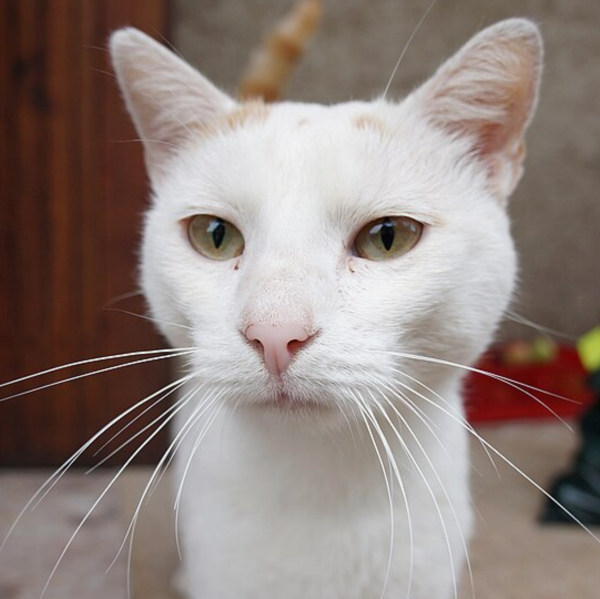
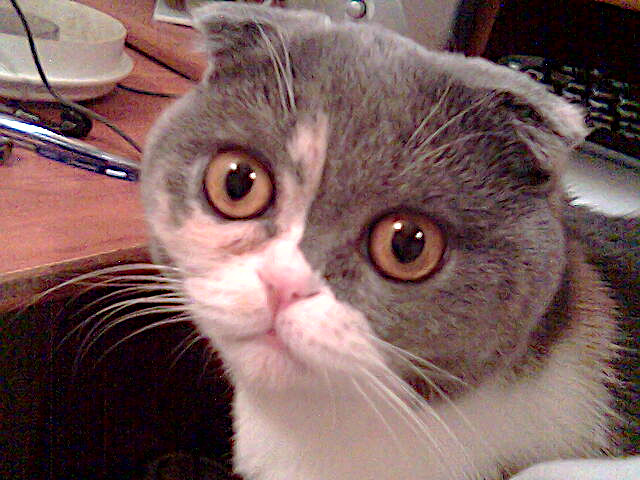
If you need to give liquid medicine to a cat, don’t try to feed it to the cat. This would only result in a battle. Instead, spill the medicine on the kitty’s fur. The cat will lick it off in the process of cleaning.

Some Facts About Cats

Cats can make over 100 different sounds. While dogs only produce around 10 distinct vocalizations, cats use a vast repertoire of meows, purrs, chirps, trills, hisses, and snarls. Intriguingly, adult cats rarely meow at other cats—they developed the meow primarily as a custom frequency to communicate with humans.

They have a extra scent organ on the roof of their mouth. Known as the vomeronasal or Jacobson’s organ, this system allows cats to “taste” scents in the air. When a cat curls its lip and sneers after smelling something strong (a reaction called the Flehmen response), it is routing molecules to this organ for deeper analysis.

Cats cannot taste sweetness. Due to a genetic mutation that occurred early in the evolution of the feline family, cats lack the functional taste receptor proteins required to detect sweet flavors. As obligate carnivores, their palates are strictly wired for amino acids and fats.

Their purr frequency may promote bone and tissue healing. Domestic cats purr at a frequency between 20 Hz and 150 Hz. In human medicine, sound frequencies within this exact range are known to improve bone density, repair tendons, and ease muscle strain, suggesting a purr might double as an internal self-repair mechanism.

Cats spend nearly 70% of their lives sleeping. An average domestic cat sleeps between 12 and 16 hours a day, and older cats can sleep up to 20 hours. This trait is inherited from their wild ancestors, who needed to conserve energy for explosive bursts of high-speed hunting.

Learning a language such as French, German, Spanish or Korean is easy and fun with Rocket Languages. 30-day free trial, no credit card required!

A cat’s nose print is as unique as a human fingerprint. The pattern of ridges, bumps, and slits on a cat’s nose pad is entirely unique to that individual. No two cats share the exact same nose print design.

They walk like camels and giraffes. Cats are “direct register” walkers and share a rare gait pattern known as pacing with camels and giraffes. They move both right legs forward together, followed by both left legs. When stepping forward, a cat’s hind paws land almost perfectly in the exact footprint left by its front paws, minimizing noise and visible tracks.

Cats do not have collarbones. Unlike humans, a cat’s clavicle is not anchored to other bones; it is suspended in muscle. This floating collarbone allows their shoulders to collapse inward, enabling them to squeeze through any opening that is wide enough to fit their head.

They have an extra eyelid. Cats possess a translucent “third eyelid” called a nictitating membrane, located in the inner corner of each eye. This thin layer sweeps across the eye to protect it from debris and keep it moist without requiring the cat to fully close its eyes.

A group of cats is called a “clowder.” While a group of kittens born together is a litter, a gathering of adult cats is known as a clowder (or alternatively, a glaring or a pounce).

See the worst of everything: World’s Worst Webpage

Posted on — Leave a comment

Worst Breathing

See the worst of everything: World’s Worst Webpage

Puppies have lungs. Goldfish have gills. Many species of shrimp breathe with their legs. Snapping turtles have two ways of getting their oxygen. They have lungs and they can absorb oxygen from water with their rectums.

Here are 10 weird facts about snapping turtles:

They Can Lure Fish Using a Built-in “Worm”

Alligator snapping turtles have a tiny, pink, worm-like appendage on the tip of their tongue. They sit motionlessly on the bottom of a river with their mouths wide open, wriggling their tongue to mimic a worm. When an unsuspecting fish swims in to grab a meal, the turtle snaps its jaws shut in milliseconds.

They Are Too Big for Their Own Shells

Unlike most turtles that can pull their heads, legs, and tails completely inside their shells for protection, snapping turtles have a much smaller underside shell (plastron). Because they can’t hide in their shell, evolution made them aggressive and defensive on land instead.

Their Shells Are Living Ecosystems

Because snapping turtles spend so much time sitting still in muddy, dark water, algae easily grows on their backs. In older alligator snapping turtles, their shells can become mini-ecosystems covered in algae, moss, small invertebrates, and leech colonies, providing built-in camouflage that makes them look like submerged logs.

More About Breathing Through Their Rear Ends

When lakes freeze over in winter, snapping turtles hibernate under the ice in muddy riverbeds. Since they can’t surface to breathe air, they survive using a process called extrapulmonary respiration—specifically, absorbing oxygen from the water through vascularized tissue in their cloaca (their rear opening).

Learning a language such as French, German, Spanish or Korean is easy and fun with Rocket Languages. 30-day free trial, no credit card required!

They Can Survive for Months Without Oxygen

During winter brumation (reptile hibernation) under ice-covered water, common snapping turtles can go up to 100 days without taking a single breath of air or consuming oxygen, relying on specialized metabolic adaptations to survive extreme cold and oxygen deprivation.

Their Bite Strength is Often Overrated, But Still Dangerous

Despite urban legends claiming snapping turtles can easily sever human broomsticks or legs, a common snapping turtle’s jaw force is around 200–600 Newtons—similar to a human’s strong bite. However, an alligator snapping turtle can exceed 1,000 Newtons of force, which is easily powerful enough to break bones or sever fingers.

Nest Temperature Decides the Babies’ Sex

Like many reptiles, snapping turtles exhibit Temperature-Dependent Sex Determination (TSD). If the eggs in the nest are incubated at lower or higher extreme temperatures, they develop into females. Intermediate temperatures around 20°C to 26°C (68°F–79°F) produce predominantly males.

They Are Gentle Giants in Water, But Terrors on Land

Snapping turtles are notorious for being aggressive, but this behavior only happens on land where they feel exposed and vulnerable. When submerged in water, snapping turtles are surprisingly shy and docile, usually choosing to swim away or hide in the mud rather than attack humans.

They Are Prehistoric “Living Fossils”

Ancestors of modern snapping turtles have been around for over 90 million years, meaning they roamed the earth alongside T. rex and Triceratops. Their physical design has remained largely unchanged for tens of millions of years because it is so effective.

They Can Live for Over a Century

Snapping turtles are extremely long-lived. While their average lifespan in the wild is around 30 to 50 years, alligator snapping turtles can live well over 100 years, with some unverified estimates suggesting they can reach up to 150 years of age.

Posted on — Leave a comment

Getting Her Licence

A woman in England had to take her driving test 41 times before she was awarded a license to drive. It sounds to me like the only time she got to practice was when she was taking her test. That’s one way to get driving lessons without paying for them. I’d say the examiner got taken for a ride.

See the worst of everything: The Worst

Posted on — Leave a comment

Ben Franklin’s Failed Architecture

When plans were required for a new house of government, Ben Franklin was given a crack at the architect’s job, but his design was rejected. It was just too offbeat. He had planned to hook all the seats in the meeting room to the fireplace chimney. The bottoms of the seats would have many small holes. The draft from the chimney would create a slight suction at these holes in the seats, carrying away what he called “personal odors.”

But, one has to try things, right? Look how well his other ideas worked out!

Lightning Rod
Designed in the 1750s after his famous kite experiment, this pointed iron rod attached to the tops of buildings grounded electrical charges from storm clouds, preventing disastrous structure fires.

Franklin Stove
Invented in 1741, this metal-lined fireplace featured a hollow baffle and a rear flue system designed to radiate more heat into the room while using significantly less wood than traditional open fireplaces.

Bifocal Eyeglasses
Tired of constantly swapping between distance and reading glasses, Franklin cut lenses from both types of preview spectacles in half and combined them into a single frame in 1784.

Flexible Urinary Catheter
In 1752, Franklin created a modified, flexible catheter made of hinged segments of silver tubing to help ease the medical discomfort experienced by his brother John, who suffered from kidney stones.

Learning a language such as French, German, Spanish or Korean is easy and fun with Rocket Languages. 30-day free trial, no credit card required!

Glass Armonica
Inspired by wine glass music, Franklin invented a mechanical instrument in 1761 consisting of nested, color-coded glass bowls mounted on a rotating spindle operated by a foot pedal.

Odometer
While serving as Postmaster General, Franklin built a hub-attached gear mechanism for carriage wheels in the 1760s to accurately measure distances along postal routes and calculate efficient delivery rates.

Long Arm (Reach Extender)
To reach books on high shelves without a ladder, Franklin created a wood pole with two wooden fingers at the end operated by a cord, serving as an early mechanical grabber.

Three-Wheel Clock
Designed in 1757, this simplified mechanical clock used only three gears and two hands to keep accurate time, making it far cheaper and easier to manufacture than standard timepieces of the era.

Swim Fins
As an avid young swimmer in Boston around 1717, an 11-year-old Franklin crafted hand-held wooden fins shaped like painter’s palettes to increase propulsion in the water.

The Library Chair and Stepstool-Ladder
A master of practical furniture design, Franklin created a conversion library chair whose seat flipped over to turn into a short ladder, as well as a rocking chair fitted with a foot-powered fan to keep insects away.

See the worst of everything: World’s Worst Webpage

.