Posted on Leave a comment

10 Ways to Trick Yourself into Starting Tough Projects

Starting a difficult project is often less like “motivating yourself” and more like smuggling your brain past its own security guards. 🧠🚧
Here are 10 surprisingly effective ways to outwit procrastination and get moving.

  1. Lower the starting line until it becomes ridiculous
    Don’t “write the article.” Open the document.
    Don’t “clean the garage.” Move one box.
    Your brain fears marathons but tolerates tiny absurd errands. Momentum is a sneaky little bicycle with no brakes.
  2. Tell yourself you’re allowed to quit after 10 minutes
    Most resistance is about starting, not continuing. Once engaged, the brain often stops acting like a raccoon trapped in a trash can and settles into the task.
  3. Create a “project runway” the night before
    Leave the tools open and ready:

    • document already loaded
    • paintbrushes out
    • workout clothes visible
    • code editor open

    Reduce friction until beginning feels almost accidental.

  4. Use the “bad first draft” strategy
    Intentionally aim to do it badly at first.
    Terrible beginnings are vastly underrated. Many excellent projects begin as steaming compost piles of confusion.
  5. Make the project socially real
    Mention it to someone. Post a deadline. Schedule a meeting around it. Humans are bizarrely willing to suffer to avoid looking flaky.
  6. Pair the task with a pleasurable ritual
    Special tea. Candle. Soundtrack. Fancy pen. Café visit.
    You’re basically training your nervous system like a tiny emotional otter: project time = pleasant atmosphere.
  7. Focus on curiosity instead of completion
    Instead of “I must finish this,” try:

    • “What happens if I try?”
    • “What would version 1 look like?”
    • “Can I discover one interesting thing?”

    Curiosity slips past fear more easily than ambition.

  8. Use productive procrastination
    If the main project feels impossible, do a related mini-task:

    • organize notes
    • sketch ideas
    • rename files
    • research one detail

    You’re still circling the airport instead of never leaving the house.

  9. Change locations dramatically
    Different environment, different mental state.
    Libraries, cafés, porches, parks, empty conference rooms, hotel lobbies. Sometimes the brain simply needs new wallpaper to stop replaying old avoidance patterns.
  10. Pretend you’re helping someone else
    People often show more compassion and discipline toward imaginary others than toward themselves. Ask:
  • “If a friend needed this done, how would I help?”
  • “What advice would I give another person?”

Suddenly the impossible task becomes… oddly manageable.

Bonus truth nugget:
Many tough projects do not begin with confidence. They begin with shuffling. Half-energy. Mutters. A vague sense of administrative doom. Great novels, businesses, inventions, and life changes have often started with someone reluctantly opening a laptop while eating crackers.

Posted on Leave a comment

10 Ways To Make a Website Irresistible (Like This One)

Here are 10 powerful ways to make a website so irresistible that visitors forget they have a life outside it:

1. Instant Visual Wow Factor

Hit them with a hero section so gorgeous they’ll think they accidentally clicked on a luxury resort website. Use a jaw-dropping image or video with a headline like “Stop scrolling. Your new obsession starts here.” If it doesn’t make them whisper “whoa,” redo it.

2. Lightning-Fast Loading Speed

Make your site load faster than your ex can text “u up?” Compress those images, cut the unnecessary scripts, and aim for under 2 seconds. Nobody has time for a loading wheel spinning like it’s doing laundry.

3. Dead-Simple Navigation

Design your menu so clear that even your grandma (or your confused uncle) could find what they need without rage-quitting. If visitors need a treasure map to find the “Contact” page, you’ve already lost.

4. Emotional, Benefit-Driven Copy

Write like a charming, slightly chaotic friend instead of a corporate robot. Say “Finally sleep like a well-rested cat” instead of “Our mattresses have 47 memory foam layers.” People buy feelings, not features.

5. Micro-Interactions & Delight

Add tiny animations that make people smile: buttons that do a happy little bounce, confetti when they sign up, or a cursor that turns into a taco on hover. These are the digital equivalent of giving your website a personality.

This is a showcase site for Jeff Napier of US-Web-Design. Surprisingly low-cost solutions for all your website and marketing needs. More...

6. Social Proof That Actually Works

Real testimonials with faces, not “John D. – satisfied customer.” Bonus points if someone says “This changed my life” and you can prove it. Nothing says “trust me” like strangers raving about you online.

7. Mobile-First & Beautiful on Every Device

Make sure it looks perfect on phones, because 90% of your visitors are probably sitting on the toilet right now. If it breaks on mobile, congratulations — you just built a desktop-only museum piece.

8. Clear, Irresistible Calls-to-Action

Ditch boring “Submit” buttons. Use “Yes, Give Me the Good Stuff” or “Take My Money.” Make them big, colorful, and impossible to ignore — like that one friend who keeps texting you about their MLM.

9. Personalization & Smart Recommendations

Greet returning visitors or show them stuff they’ll actually like. It’s like Netflix saying “We know you watched 47 true crime docs… here’s more.” People love feeling understood (and slightly spied on in a cute way).

10. Scarcity, Urgency & Exclusivity (used ethically)

“Only 7 spots left this month” or “Price goes up in 48 hours.” Just don’t be that guy who’s been having a “flash sale” for three years straight. People can smell desperation from across the internet.

Bonus Tips for Maximum Irresistibility:

Use generous white space — clutter is the visual equivalent of someone talking with food in their mouth.

Inject personality and humor. Let your brand be weird. Normal is forgettable.

Remember: Your website should feel less like a brochure and more like a really good first date.

Posted on Leave a comment

10 Ways to Feel Wealthy Without Being Wealthy

True wealth is often less about the number in a bank account and more about a state of mind, autonomy, and the quality of your daily experiences. You can engineer the sensation of living a highly luxurious life by shifting how you interact with your time, your environment, and other people.

Here are 10 ways to cultivate a rich life without needing a fortune:

1. Curate a “Boutique” Daily Experience

Treat your personal space and daily routines like a high-end brand. Instead of accumulating cheap clutter, focus on a few well-placed, well-cared-for items. Keeping your physical environment deliberate and uncluttered immediately mimics the luxurious, intentional feel of boutique spaces.

2. Practice “Social Wealth” Through Generous Praise

A mindset of scarcity looks for flaws; a mindset of abundance looks for the good. You can feel instantly emotionally wealthy by having enough goodwill to give away. Try cultivating an overwhelmingly positive praise-to-criticism ratio in your daily interactions. Lavishing genuine, specific compliments on the people around you costs nothing but makes you feel immensely valuable and connected.

3. Design a Sleek Digital Environment

Since we spend so much of our lives looking at screens, your digital space should feel luxurious, too. Clear your desktop of clutter, organize your files meticulously, and choose high-resolution, visually striking wallpapers—whether you prefer a sleek, glossy, minimalist aesthetic or the intricate, brassy details of a steampunk laboratory. A beautiful workspace elevates your mood every time you log on.

4. The Luxury of Polished Communication

There is an undeniable elegance in well-crafted words. Take the time to intentionally refine, proofread, and meticulously edit your texts, letters, and emails. Making an idea perfectly concise and delivering a beautifully written message feels distinctly high-class and commands immediate respect from the recipient.

This is a showcase site for Jeff Napier of US-Web-Design. Surprisingly low-cost solutions for all your website and marketing needs. More...

5. Reclaim “Time Affluence”

The ultimate luxury of the ultra-rich is having control over their own schedules. You can simulate this by aggressively protecting small pockets of your day. Block out a specific hour on your calendar where you are entirely unavailable to the world. Having time that belongs strictly to you is the definition of affluence.

6. Elevate the Everyday Mundane

Wealth is often found in the details. Upgrade your smallest daily rituals. Drink your morning coffee out of a heavy, beautiful ceramic mug instead of a paper cup. Put your hand soap in a nice glass dispenser. Light a high-quality candle while you do the dishes. Adding a touch of elegance to basic chores changes how you experience your day.

7. Consume High-Quality Information

Swap mindless doomscrolling for deep-dive learning. Reading a masterfully written book, studying the psychology of human interaction, or watching an expertly produced documentary gives you direct access to the world’s greatest minds and ideas. Intellectual wealth is entirely free at your local library.

8. Curate Your Sensory Inputs

High-end environments are rarely loud, chaotic, or harsh. Pay attention to the sensory details of your home. Dim the harsh overhead lights in favor of warm lamps. Play soft, ambient background music, such as lo-fi beats or classical piano. A calm sensory environment signals to your nervous system that you are safe and comfortable.

9. Appreciate Without Acquiring

You can enjoy beautiful things without carrying the burden of owning them. Visit local art galleries, walk through high-end hotel lobbies, or admire the architecture in a beautiful neighborhood. Train yourself to appreciate the world as if it is a giant museum curated specifically for your enjoyment, rather than a store where you must buy things.

10. Embrace the Power of “No”

People with a wealth mindset protect their energy fiercely. Start politely declining invitations, favors, or obligations that drain you. The autonomy to choose exactly what you do with your Saturday afternoon is one of the richest feelings in the world.

Posted on Leave a comment

10 Ways to Make Ordinary Conversations Unexpectedly Memorable

A surprising, specific compliment — Not “Nice shirt,” but “That color makes you look like you’re about to win an award.” Specificity sticks.

A tiny, vivid story — Drop in a 10‑second anecdote. People remember stories far more than facts.

A curious, sideways question — Instead of “How’s work,” try “What’s something you learned recently that surprised you?” It jolts the brain awake.

A playful observation — Light humor about the moment you’re both in (“This line is moving like it’s being paid by the hour”) creates instant connection.

A micro‑confession — Something harmless but real: “I always forget people’s names the second they tell me.” Vulnerability invites warmth.

A thoughtful callback — Refer to something they said earlier. It shows you were actually listening, which is rarer than it should be.

This is a showcase site for Jeff Napier of US-Web-Design. Surprisingly low-cost solutions for all your website and marketing needs. More...

A well‑placed metaphor — “That meeting felt like trying to herd caffeinated squirrels.” People remember images.

A moment of genuine enthusiasm — When you light up about something, even briefly, it gives the conversation a spark.

A question about their inner world — “What’s something you wish people asked you about more often?” It’s intimate without being intrusive.

A graceful, intentional ending — Most people end conversations awkwardly. Ending with warmth (“This was fun — you made my day a little brighter”) makes the whole exchange stand out.

Posted on Leave a comment

10 Ways to Disappear for an Hour Without Leaving Home

The Door-Closed Rebrand

Pick a room, close the door, and declare it “administrative closure for atmospheric maintenance.” Even if it’s just you and a laundry basket.

Headphones as a Force Field

Put on immersive music or an audiobook and treat it like a privacy bubble. To the outside world: you’ve been airlifted to elsewhere.

Bath or Shower Exile

Long shower, bath, or even just “standing under water thinking about absolutely nothing in particular.” Time dissolves politely here.

The Reading Sinkhole

A physical book or long article that quietly eats the hour while you think you’re just “starting a chapter.”

Micro Nap with Diplomatic Intent

Set a timer and lie down “for a moment of restoration.” You may return as a slightly upgraded version of yourself.

Deep Clean Black Hole

Choose one tiny task (a drawer, a shelf). It will expand like a universe and consume the hour without asking permission.

This is a showcase site for Jeff Napier of US-Web-Design. Surprisingly low-cost solutions for all your website and marketing needs. More...

Screen Tunnel Mode

One show episode, one YouTube rabbit hole, one game level. The trick is not starting three portals at once unless you want temporal distortion.

Kitchen Experimentation Lab

Make something unnecessarily specific: tea at exactly the right temperature, a snack plate arranged like modern art, or a “taste test study.”

Journaling / Brain Dump Portal

Write everything in your head onto paper or a doc. It feels like emptying a noisy attic into silence.

The Stare-Into-Nothing Protocol

Sit somewhere comfortable and do absolutely nothing structured. No productivity, no input. Just let your thoughts wander off like they missed their train.

Posted on Leave a comment

10 of the Dalai Lama’s Most Remarkable Quotes

Happiness is not something ready made. It comes from your own actions.”

“Be kind whenever possible. It is always possible.”

“Remember that sometimes not getting what you want is a wonderful stroke of luck.”

“My religion is very simple. My religion is kindness.”

“Love and compassion are necessities, not luxuries. Without them, humanity cannot survive.”

“If you think you are too small to make a difference, try sleeping with a mosquito.”

This is a showcase site for Jeff Napier of US-Web-Design. Surprisingly low-cost solutions for all your website and marketing needs. More...

“Our prime purpose in this life is to help others. And if you can’t help them, at least don’t hurt them.”

“The purpose of our lives is to be happy.”

“Do not let the behavior of others destroy your inner peace.”

“Choose to be optimistic, it feels better.”

Posted on Leave a comment

10 Ways to Spot a Narcissist

See Also: 10 Tips for Getting Along with Narcissists

Here are 10 tips for recognizing narcissistic traits, particularly in how they navigate social and professional settings:

Watch the Praise-to-Criticism Dynamic: In healthy interpersonal communication, people can usually handle a reasonable balance of positive feedback and constructive critique. A narcissist, however, demands a drastically skewed ratio—expecting constant, excessive admiration while being completely intolerant of even the mildest perceived criticism.

Observe Their Reaction to Feedback: When faced with constructive criticism, they rarely respond with self-reflection. Instead, they often react with intense anger, defensiveness, or by shifting the blame entirely onto the person offering the feedback.

Notice the Conversation Flow: Pay attention to who dominates the dialogue. They frequently monopolize conversations, steering the topic back to their own achievements, experiences, or problems, while showing little genuine interest in what others have to say.

Assess Their Empathy Levels: A hallmark trait is a profound lack of empathy. They often struggle to recognize, understand, or validate the feelings and needs of others, viewing situations primarily through how they are personally affected.

Look for a Grandiose Sense of Self-Importance: They often exaggerate their achievements and talents, expecting to be recognized as superior even without commensurate accomplishments.

This is a showcase site for Jeff Napier of US-Web-Design. Surprisingly low-cost solutions for all your website and marketing needs. More...

Identify a Sense of Entitlement: They frequently possess unreasonable expectations of especially favorable treatment or automatic compliance with their demands, believing standard rules simply don’t apply to them.

Spot Interpersonal Exploitation: In both personal and professional environments, they may take advantage of others to achieve their own ends, often without guilt or remorse.

Watch for Envy: They are frequently envious of others’ success, possessions, or relationships, or they may possess a deep-seated belief that others are highly envious of them.

Note Arrogant or Haughty Behaviors: Their attitude and body language often project superiority, condescension, or disdain for people they perceive as “lesser” than themselves.

Check for Boundary Violations: They routinely ignore personal boundaries—whether emotional, physical, or professional—feeling justified in intruding on others’ space or time to meet their own needs.

Posted on Leave a comment

10 Tips For Getting Along with Narcissists

See Also: 10 Ways to Spot a Narcissist

1. Set firm boundaries
Be clear about what behavior you will and won’t tolerate.

2. Don’t expect deep empathy or accountability
Lowering unrealistic expectations prevents constant disappointment.

3. Stay calm and emotionally neutral
Big emotional reactions often intensify conflict.

4. Pick your battles carefully
Not every argument is worth entering. Save energy for important issues.

5. Avoid overexplaining yourself
Short, direct communication usually works better than long defenses.

6. Don’t rely on them for validation
Build your self-worth independently instead of chasing approval.

This is a showcase site for Jeff Napier of US-Web-Design. Surprisingly low-cost solutions for all your website and marketing needs. More...

7. Watch patterns instead of promises
Consistent behavior tells you more than dramatic words.

8. Keep a strong outside support system
Friends, family, therapists, or trusted coworkers help keep perspective.

9. Use emotional distance when necessary
Techniques like the “gray rock” method can reduce drama and manipulation.

10. Know when to step back or leave
Sometimes the healthiest strategy is reduced contact, strict limits, or ending the relationship altogether.

A useful distinction:

Some narcissistic people are mostly exhausting.
Some are emotionally abusive.
Some can improve with insight and therapy.
Some never meaningfully change.

Knowing which category you’re dealing with can save years of confusion.

Posted on Leave a comment

Phonetic Criticism to Praise

Family criticism

To spell phonetically means to write words as they sound. Phonetic spelling has many advantages.

  • Anyone who understands the basic of English can do it. One doesn’t have to spend years learning the ‘correct’ spellings of thousands of words.
  • Anyone can read it, no matter how complex the words.
  • There is latitude for both the reader and writer. For instance one person may use ‘o’ in a word, while another might use ‘u.’ Both will be easily read and understood.
  • Phonetic spelling can also give a sense of the way the speaker sounds. For instance, I’m inclined to write ‘yor’ to mean ‘your’ (or ‘you’re’) while you might write ‘yur.’ That’s because I tend to emphasize the ‘o’ in your more than most people.

There are some downsides to phonetic spelling.

  • Until you get used to it, you’ll find reading is slower. You are used to immediately understanding whole words as they have always been written, while phonetically, you need to sound them out until you get used to phonetic spelling. For instance, you know ‘bicycle’ immediately, but you might stumble over ‘biisikl’ until you get used to it.
  • You’ll find many people are stuck in their ways and just don’t want be forced to learn something new.

There are many versions of phonetic spelling, Dictionary phonetics might look like this: ‘DICT-shun-arey.’ Ben Franklin famously proposed another version in which some letters were dropped but several new letters were added. This is not practical for modern use because the new letters are not readily available on most computers and mobile devices.

The version I like, as shown in the example below, uses doubled vowels to represent the long vowel sounds, such as eezee – meaning ‘easy.’

If you’d rather read the text below in its original form, here you go: The Criticizm To Praise Ratio.

It haz ben studeed and dokumented that we heer thirtee-tu itmz ov kritisism foor each itm ov praise! It starts wen wee r babeez, ”Ooooh, yor diiperz stink!” or ”Kan’t u keep out ov trubl for evn wun minit?” Shur, wee maa not hav noown wut thu wordz ment, but evn az babeez, wee felt thu eemoshunz beehiind thooz wurdz. Wee gru up with much moor negatie input than positiv. It is noo surpriiz that wee du thu saam thing tu our frendz, asoosiatz, and children.

This is a showcase site for Jeff Napier of US-Web-Design. Surprisingly low-cost solutions for all your website and marketing needs. More...

Wut if it wer reversd? Wut if u started ofering jenuiin praz to aneewun and evreewun, evree tiim u see sumthing praazworthee?

At first, peepl wud probablee think u flipd. But that wud alsoo enjoee thu kompliments. Eventuulee, thaa maa katch on, or maabee thaa’d just start foloowing yor egzampl, beekas peepl du tend tu emulaat wut surooundz them.

Thu big pictuur reezults r obvius. Eventulee wee’d hav a wurld in which evreewun heerz how wel thaa du thingz, how niis thaa luk, how thaar prezens iz so enjoeeabl, and soo on. And, theez peepl wud hav moor konfidens in themselvz.

Wud thaa? Ov koors. If frum a yung aag, uu wer told that u r gud, and that u kan akomplish wut u liik, u’d maak the efort. U’d noo that u kan maak a diferens, that u kan hav wut u want, that u deeserv a gud lif, that it iz worth yoor tiim tu praktis yoor skilz. In such a world, if it eksistd, u’d haav a much moor suksesful and hapier liif. So woud evreewun, and at noo kost, othr than thu energee to oopn yor mouth and saa kiind things tu evrywun, and hold yor tung wen whut u hav to saa iz not soo pozitiv.

Such iz not thu wurld wee liv in now. But u kan chaanj it yoorself. Not al bii yoorself, but u kan start it in yor spheer ov influens, and peepl wil katch on. U kan influens yor frendz, yor familee. Thaa wil influens thaar frendz and asosiatz. Perhapz suner than u think, evereewun wil start duing it. Wee see it hapen with slang. Remember when “baad” ment baad? That tranzishun hapend faarlee kwiklee. And soo kaan this, becuz this, to, iz simplee a mater ov spokn wordz.

U maa gaan from this sunr than u’d think. Beefoor thu hool wurld changz tu this nu thirtee-tu-tu-wun praaz tu kritisism racheeoo, it wil help u in yor liif. Az an eksampl, if u start praazing yoor maat much moor than u skoold, wut wil hapn? Wil yor maat bekum laks? Perhaps dinr wil bee laat, thu libraree buks wil bee oovrdu, thu kitee pan woon’t get changd wen it shud? Maaybee, a littl bit, at first. Kaan u stand it? Moor impoortant, kaan u keep kwiiet, and let it hapn, wiil u go on praktising yor 32-to-1 gaam?

I think soo, espesalee wen u noo that sun yor maat wil start kopeeing u, konshuuslee or not. Then, u’l start feeling gud, wen yor lovd wun telz u that yor haar luks niis, or that u r such a graat kuk, rathr than teling u that thu lawn needz moowing reely bad. Imajin a peesful hoom liif, waar u no yor maat liikz th waa u luk, thu waa u kuk, waar u feel no preshr tu moo thu lawn riit noow. Wii, u’d probablee want tu moow that lawn, just beecaz u’ll get praaz for it.

Let’s luk at thu bigr pictur. It iz a smalr world than u think. Within sevn levlz of akuaantans, almost evreewun noz evreewun els. This meenz that u maa hav a frend, whu haz a frend, whu haz a frend, and soo oon, whu nooz Dolee Parton, Arnold Schwarzenegr, Justin Beebr, Miiley Syrus, Oopra Winfree, and soo oon. Soo, you kan influens thees peepl, and al peepl. Praktis 32-to-1, and suun yor frendz wil bee doing it, and thar frendz wil bee doing it, and eeventulee politishanz wil bee doing it, and wee’ll hav noo moor warz.

For best resultz, maak shur yor praaz iz alwaas sinseer. Kontriivd iz embaarasing for givr and reseevr.

Sum peepl hav a hard tiim reseeving komplimentz, after al tha don’t get them veree often. Tharfor, at first, keep yor komplimentz smal and simpl, using oonly a few kaarfulee choozn wordz.

Peepl r moor komfortabl with komplimentz about things thaa r not noon for. Thu profeshonal muuzisan wud rathr heer that u reespect her pooliticl veewz, than that shee plaaz her instrument wel.

Anuthr waa tu komfortablee praaz peepl iz tu ofr komplimentz which tha doon’t hav tu wurk tu aknoowlej. If u praaz sumwun noeesilee in a gruup ov peepl, thu reesipeeent then feelz hee haz tu ofr sum sort of thanks, or deenii it, ekwalee looudlee. On thu othr hand, if u slip praaz intu the midl ov a paragraf, then thu recipeeent kan hav thu kompliment without obligashun. Heer’z an eksampl:

“Jon, Salee’s a graat kuk, luk wut shee did with this pootaatoo salad! Salee, iz thaar anee moor in thu kitchen?”

Reelaaed praaz i thu best ov al, worth ten tiimz az much az direct praaz. For instans, if u root a song that I liikd, but Fred toold u that he enjooeed it wen I plaad it for him, u’d bee moor pleezd than if I simplee told u I liikd thu song, riit?

Reelaad praaz kan bee amplifiid evn furthr, if it koms from sumwun notd in thu feeld. If I shoowd yur song to a faamus songriitr, who then told u it wus reelee ekselent, that wud bee eevn betr than if plaan old Fred sed soo.

Asking sumewun for thaar opinion or ekspeereencz iz alwaayz a graat waa to let them noo u reespect thar thouts. And agen, if dun in thu prezens of othrz, thu eefekt iz magnifiid.

Bee on thu lukout for bakhanded kompliments. Thaar iz a strong temptashun to saa sumthing liik, ”I reelee admiir yur intelijens. That’s wii it surpriizes me that u hav so litl undrstanding ov our budjet.” This iz not a kompliment. Wee noo that but wee r soo uusd tu korekting, ofring kriteek, that if wee don’t paa atenshunn, thees things slip out.

A gud test iz tu see if u plan tu gaan aneething wen u praaz sumwun. If u deesiid that u hav nothing tu gaan, u arn’t triiing tu get sumwun tu fiks yur flat tiir, tu chaanj intu a betr luking outfit or tu cleon up thaar room, then yur kompliment iz probablee a gud wun.

Gosip kurentlee followz thu saam thirtee-tu-tu-wun raasheeoo. Gosip hurts thu peepl whu du it, almost moor than thu peepl about whom thaa tak. Thu reezun iz that sumwun whoo gosips kan’t bee trustd. Thaarfor, az thaar repuutaashunn bildz, thaa r trustd with les and les infoormaashun. Reelee seveer gosips hav feew kwalitee frendz, beecuz tha hav a hard tiim fiinding peepl desperat enuf tu risk spending tiim with them.

My rekomendaashun with gosip, then, iz tu reevers its raasheeoo also. Thirtee-tu tiimz moor ofn than u negativlee gosip, luk for gud thingz u kan tel otherz about yor frendz, familee and asosiats.

“I wil speek il ov no man, and speek al thu gud I noo ov evreebudee.” – Benjamin Franklin. If it wurkd for him, it oot tu wurk for us.

“I hav eeet tu fiind thu man, howevr eksalted his stashun, whoo did not du betr wurk and put forth thu greatr efoort undr a spirit on aprovl than undr a spirit ov kritisism.” – Charls Schwab, whu wus paia a mileeon dolars per yeer for his manajment skils.


Posted on Leave a comment

Chuck’s Spending Habits

At the age of 23, Chuck took a job with a big appliance company. He drove a van all over town and fixed dishwashers and washing machines. It paid just a bit more than minimum wage.

At first, like almost everyone at that age, he spent every penny. Then something convinced him to start saving money. Perhaps it was a story like this: The Ten Percent Rule.

It was not easy. His rent, car payments, food and utilities used up almost everything. But not quite. He reduced how many times he bought take-out food. When he dated, he did not spend lavishly to impress the ladies. He switched from a private club to the free public pickleball courts. He dropped his Netflix membership. Life wasn’t horrible even though his TV was old and only 21 inches. He could manage to put 10% of his paychecks in the bank.

It took quite a long time, but in the end it didn’t seem that long at all when he had $10,000 in a savings account. It seemed like a real victory.

Now came the difficult part. He had to teach himself something about investments. He hated it. It was so boring – at first. Then, something started to click and he found reading up on financial matters with a degree of excitement. He realized that continuing to keep the money in a savings account was stupid.

Real estate was out of his league. He didn’t trust the stock market. He found municipal bonds – perhaps not the best choice for everyone, especially in this day and age, but he started with that. In time he added a retirement fund offered by his company, and a couple of small wildcard investments, just in case they might pay off big-time.

This is a showcase site for Jeff Napier of US-Web-Design. Surprisingly low-cost solutions for all your website and marketing needs. More...

He kept driving around and fixing things. He kept investing 10% of his paychecks. He continued to live in his 500-square-foot studio apartment, and did not replace his 21-inch TV. He didn’t buy a new car until it was easy to pay cash.

Twenty years later, at the age of 43, he retired as a multi-millionaire. Some of his habits remain to this day. He takes a kind of pleasure in remaining frugal, even though he has no need. He buys a new Jaguar every 10 years. Of course he pays cash. He has a manager take care of his seven rental properties. His wife and children enjoy their swimming pool, private pickleball court and the many acres surrounding their home.

Starting from the age of eight, he has been teaching his children about saving 10% of their incomes. They get $10 allowances every week, of which they voluntarily put $1 into investments. His teenage daughter Judy has already already turned her $1/week savings into over $1,500. She has written to Bill Gates, Elon Musk, Steven Bartlett, Warren Buffet, Barack Obama and Oprah Winfrey among others for financial advice. Some of them have written back.

You might also enjoy The Ten Percent Rule

And What the Ski Mechanic Did Wrong

Posted on Leave a comment

The 10 Percent Rule

When Thomas Calder turned twenty-three, his net worth was a chipped coffee mug, two shirts, one of which had a permanent salad oil stain, and a checking account that trembled whenever he logged in. He did not call it “financial hardship” then. He called it “normal.”

He lived in a narrow apartment above a dry cleaner that steamed all night like an exhausted dragon. The windows rattled when trucks passed. The carpet had the texture of a public apology. Every month, he played a small private game called Which Bill Can Wait? Utilities usually won. The credit card never did.

Thomas worked at a printing warehouse, feeding reams of paper into machines that roared like offended animals. The work was honest, repetitive, and paid just enough to keep him balanced on the edge of falling. His paycheck arrived biweekly and vanished weekly. He told himself he would get ahead “once things settled down,” though nothing ever did.

One evening, after a long shift that smelled of ink and overheated metal, Thomas stopped at the corner store and counted coins for ramen. The cashier, a woman with silver hair and an expression that suggested she had seen every version of human panic, waited patiently. When he finally slid the coins across the counter, they made a sound like surrender.

She smiled, not unkindly.
“You ever save money?” she asked.

The question landed oddly. Not judgmental. Curious.

This is a showcase site for Jeff Napier of US-Web-Design. Surprisingly low-cost solutions for all your website and marketing needs. More...

Thomas laughed. “I don’t make enough to save.”

She nodded as if she’d heard that sentence in many dialects. “Neither did I. I saved anyway.”

He took his ramen and left, but the question followed him upstairs. That night, lying on his thin mattress while the dry cleaner hissed below, he stared at the ceiling and did math he usually avoided. What if he saved something? Not a lot. Just a slice. A small, survivable slice.

Ten percent sounded terrifying and arbitrary. But also… clean. Mathematical. Like a rule you could follow even when life made no sense.

The next morning, Thomas opened a separate savings account. No fancy apps. No motivational quotes. Just a plain account with a balance of zero and a rule written on a sticky note above his desk:

Save 10%. First. No exceptions.

The first paycheck hurt.

Saving that money felt like voluntarily stepping into cold water. His checking account looked offended. He said no to things he was used to saying yes to. He walked instead of taking the bus. He learned which groceries filled the stomach without emptying the wallet. He discovered that boredom often disguised itself as hunger.

But something unexpected happened.

The money he saved did not vanish like the rest. It stayed. It accumulated. Slowly. Quietly. It gave him a strange new feeling, like a second spine forming.

After six months, his savings equaled one paycheck. After a year, two. When his car battery died unexpectedly, he did not panic. He sighed, paid for it, and went to work the next day. The relief was disproportionate to the amount. It was not about the money. It was about the absence of fear.

At the warehouse, Thomas began noticing things he had previously ignored. Which machines jammed most often. Which clients were always late. Which coworkers complained and which ones asked questions. He realized that attention itself was a kind of currency.

During lunch breaks, instead of scrolling his phone, he read. Not about “getting rich,” but about how money actually behaved. Compound interest. Index funds. Debt. Risk. He learned that money liked patience more than brilliance. That boring strategies often won.

Two years passed. His savings reached five figures. Not impressive by magazine standards, but to Thomas it felt unreal, like discovering a hidden room in his own apartment.

He asked his supervisor for extra responsibility. Not more hours, but different ones. Inventory tracking. Process improvements. The supervisor shrugged and said sure. Thomas learned spreadsheets. He found inefficiencies. He suggested changes. Some worked. Some didn’t. The warehouse noticed.

When a junior management role opened, Thomas applied. He wore his only blazer, which had survived several interviews like a veteran of small wars. He got the job. The raise was modest, but the shift was profound. He was no longer paid only for his hands, but for his thinking.

The 10% rule remained unchanged.

As his income grew, his lifestyle did not sprint to keep up. He upgraded selectively. A better mattress. Healthier food. Occasional dinners out that felt intentional instead of compensatory. The rest went quietly into savings and then, eventually, into investments.

The market dipped. Then rose. Then dipped again. Thomas did not flinch. He had learned that volatility was not a verdict, just weather.

There were setbacks. A relationship ended, taking half his furniture and some of his optimism with it. A promising side project failed. A year went by where progress felt invisible. Through it all, the habit held.

Save 10%. First.

At thirty-five, Thomas owned a small home with a leaky faucet and a backyard that grew weeds more enthusiastically than vegetables. He fixed the faucet himself. He paid extra on the mortgage. He slept better.

At forty, his investments began doing something subtle but astonishing. They earned more in a year than he had once earned in several. The numbers felt fake, like Monopoly money, until he realized they kept appearing even when he did nothing.

He was not flashy. No sports cars. No dramatic announcements. But he noticed freedom creeping into his life. He could take time off without dread. He could say no to work that felt wrong. He could help his sister through a rough patch without resentment.

Wealth, he discovered, was not a pile. It was leverage over time.

At forty-eight, Thomas left the warehouse industry entirely. He consulted now, advising small operations on efficiency and cost control. He worked fewer hours for more money, a sentence he once would have dismissed as fantasy. The 10% rule had evolved. He now saved far more, but the principle was unchanged: live on less than you make, consistently, patiently.

One afternoon, he found himself in a corner store, waiting while a young man counted coins for instant noodles. The scene felt oddly familiar, like a message looping back through time.

The young man muttered an apology.

Thomas smiled. “No rush.”

As the cashier rang him up, the young man shook his head. “I’ll start saving when I make more,” he said, half to himself.

Thomas hesitated. Advice can be a blunt instrument. But some truths are sturdy.

“Start now,” he said gently. “Even a little.”

The young man looked skeptical, but not dismissive. Just tired.

Thomas left the store with groceries he didn’t need to count coins for. The sky was doing that late-afternoon thing where everything looks briefly meaningful. He walked home slowly.

He thought about how none of this had happened quickly. There was no breakthrough moment, no dramatic windfall. Just a decision repeated so often it became identity.

He had not escaped hardship by outrunning it. He had outlasted it.

Ten percent at a time.

And if someone were to ask him how he became wealthy, Thomas would struggle to give a satisfying answer. There was no secret. No trick. Just patience, humility, and the willingness to live slightly below his means while the future quietly caught up.

Wealth, he knew now, does not announce itself.

It accumulates.

You Might Also Enjoy Chuck’s Spending Habits

Posted on Leave a comment

25 Things Everyone In Business Should Know

Most businesses, whether they sell jet engines or artisanal socks, run on a handful of quiet truths. Miss them and the wheels squeak. Know them and things tend to hum along. Here are some fundamentals that apply almost everywhere.

Customers are not buying what you sell. They are buying how it makes their life easier, safer, cooler, faster, or less annoying.

Cash flow matters more than profit. You can be “profitable” on paper and still run out of oxygen in real life.

Clear communication beats clever communication. Confusion is expensive. Clarity pays rent.

People don’t quit companies. They quit managers, expectations, and daily dread.

Systems outperform heroes. A repeatable process beats one brilliant person having a great day.

This is a showcase site for Jeff Napier of US-Web-Design. Surprisingly low-cost solutions for all your website and marketing needs. More...

What gets measured gets managed, but what gets obsessed over gets distorted.

Speed is a feature. Most customers prefer “good and now” over “perfect and eventually.”

Small problems ignored turn into large, dramatic, and very expensive problems.

Culture exists whether you design it or not. If you don’t shape it, it will shape you.

Most competitive advantages expire. What worked last year is already aging like unrefrigerated milk.

Marketing is not lying louder. It’s explaining value more clearly than the next person.

Sales is not persuasion. It’s diagnosis followed by alignment.

Your best ideas often come from the front lines, not the boardroom.

Consistency builds trust faster than intensity.

Training is not a cost. It’s how you avoid paying for the same mistakes forever.

Customers notice friction you’ve learned to ignore.

Simplicity scales. Complexity multiplies meetings.

The cheapest way to grow is to keep the customers you already have.

Feedback is a gift that sometimes arrives wrapped in sandpaper.

If everything is urgent, nothing is important.

Reputation travels faster than advertising and sticks longer.

Delegation is not abdication. It’s clarity with backup.

Decisions made with incomplete information are still better than decisions endlessly postponed.

The numbers are telling a story. If you don’t read it, they will eventually shout.

Ethics is not a side policy. It’s the long-term strategy wearing sensible shoes.

Posted on Leave a comment

Some Tricks to Improve Employee Relations

Dale Carnegie was an author of communication techniques dating back to the 1930s, and still applicable today. His ideas are less a rulebook and more a climate system. When you apply them with employees, you are adjusting the emotional weather so people want to work, not just comply. Here’s how to translate what he discussed into daily, practical behavior at work.

1. Start with genuine appreciation, not applause confetti.

Carnegie insisted on sincerity. With employees, this means noticing specific actions and naming them.
Not “Good job.”
But “You handled that client call calmly and kept the relationship intact. That mattered.”
Specific praise sticks. Vague praise evaporates.

Practice: Keep a short weekly note of what each person did well so appreciation doesn’t rely on memory roulette.

2. Criticism becomes curiosity.

Carnegie warned against direct criticism because it bruises identity. In practice, replace criticism with inquiry.
Instead of “Why did you do this wrong?”
Try “Help me understand what led to this choice.”
Now you are diagnosing a system, not indicting a person 🔍.

This is a showcase site for Jeff Napier of US-Web-Design. Surprisingly low-cost solutions for all your website and marketing needs. More...

Practice: Ask at least one clarifying question before offering any correction.

3. Let people save face, even when fixing mistakes.

Correction works best when dignity survives the process.
Address issues privately. Acknowledge constraints. Separate the mistake from the person.
“This missed the deadline” lands better than “You missed the deadline.”

Practice: When correcting, include one sentence that affirms competence or intent.

4. Talk in terms of their interests, not just company goals.

Carnegie emphasized speaking to what people care about. Employees care about growth, security, pride, and time.
When rolling out changes, connect the dots.
“This will reduce rework and give you more uninterrupted focus time.”

Practice: Before meetings, ask yourself: “Why should they care?”

5. Make employees feel important, and mean it.

Importance comes from being heard, not from flattery.
Ask for input. Use it visibly. Credit it publicly.
Nothing drains morale faster than being asked for opinions that vanish into a managerial black hole.

Practice: When you adopt someone’s idea, explicitly say whose idea it was.

6. Lead with empathy during conflict.

Carnegie taught seeing things from the other person’s point of view.
In employee conflicts, reflect emotions before solving problems.
“I can see why that felt frustrating.”
This sentence is not surrender. It’s lubrication for cooperation.

Practice: Mirror their concern in your own words before proposing solutions.

7. Inspire instead of command.

Carnegie believed people prefer to do things when they feel ownership.
Instead of orders, frame requests as invitations to contribute.
“How would you approach improving this process?”
Now you’ve turned compliance into creativity ✨.

Practice: Replace one directive per day with a question that invites ownership.

8. Be the example you want copied.

Carnegie quietly assumed leaders set the emotional tone.
If you admit mistakes, employees feel safer doing the same.
If you listen patiently, patience spreads.
Behavior cascades faster than memos.

Practice: Publicly model the behavior you want reinforced.

The core Carnegie test.

Before speaking to an employee, ask:

Does this preserve dignity?

Does this encourage cooperation?

Does this make them feel valued?

If yes, you are practicing Dale Carnegie, even if his name never comes up. And when done well, the workplace starts to feel less like a factory of tasks and more like a workshop of humans.

Posted on Leave a comment

30 Tips for Selling

Sell curiosity before selling product. People buy after they feel understood.

Listen like you are being graded on silence.

Mirror values, not personalities. Authenticity beats imitation every time.

Assume the prospect is smart and busy. Respect earns attention.

Ask questions that make them pause, not just nod.

Conversation Craft

Talk in outcomes, not features. Nobody buys a drill, they buy holes.

This is a showcase site for Jeff Napier of US-Web-Design. Surprisingly low-cost solutions for all your website and marketing needs. More...

Use stories as Trojan horses for facts.

Name the problem better than the customer can. Trust appears instantly.

Slow down right before the price. Calm suggests confidence.

Avoid jargon unless the customer uses it first.

Momentum and Process

Follow up like a professional, not a mosquito.

Take notes as if Future You is forgetful. Future You is.

Shorten the time between steps. Deals decay in dead air.

Always agree on next actions. Hope is not a strategy.

Protect your pipeline from fantasy deals.

Psychology and Mindset

Detach your ego from the outcome. Desperation has a smell.

Rejection is data, not a verdict.

Confidence comes from preparation, not volume.

Treat objections as requests for clarity.

Remember that “not now” is not “never”.

Long-Game Advantages

Underpromise slightly, overdeliver consistently.

Become a resource even when you are not selling.

Keep learning your customer’s world. Industries evolve, scripts expire.

Ask for referrals when value is fresh.

Build trust like compound interest.

Practical Edge

Know your numbers cold. Guessing kills leverage.

Practice your opening line out loud. Your brain lies about readiness.

Have one killer case study memorized.

Protect your energy. Burnout makes people sloppy.

Leave every interaction better than you found it.

Posted on Leave a comment

30 Unusual Business Aphorisms

See Also: 30 Business Maxims (Chart)

Here are 30 interesting or unusual general business aphorisms, a box of strange but useful tools you did not know you owned.

Sell the result, then the mechanism. People buy outcomes and justify them with features later.

Charge for clarity, not just labor. People pay more for decisions they do not have to agonize over.

The fastest way to look professional is to reply faster than expected. Speed signals competence before quality ever gets evaluated.

If a customer asks for a discount, ask for a concession. Price is a lever, not a surrender flag.

Make one thing slightly annoying to copy. Friction is an underrated moat.

This is a showcase site for Jeff Napier of US-Web-Design. Surprisingly low-cost solutions for all your website and marketing needs. More...

Your worst customer is often your most educational one. They are an unpaid consultant with terrible bedside manners.

If your value proposition needs a paragraph, it needs surgery. Good offers or elevator speeches fit on a napkin.

Meetings expand to consume the courage of the room. Shorter meetings create braver decisions.

The person who controls the calendar quietly controls the business. Time is governance disguised as logistics.

Raise prices before you feel ready. Readiness is usually just fear wearing a sensible hat.

If you are “too busy,” you are probably underpricing or overcustomizing. Chaos loves bespoke work.

Document processes while you are annoyed by them. Irritation is a powerful instructional designer.

Most “strategy problems” are actually energy problems. Fix sleep, food, and focus before the spreadsheet.

Your first hire should buy you time, not make you money. Leverage beats revenue in the early chapters.

If something feels political inside your company, it is under-defined. Vagueness breeds power games.

Referrals increase when you ask when not if. Assumptive phrasing unlocks generosity.

A boring business with clear demand beats a clever one with applause. Applause does not pay invoices.

Your best marketing often looks like teaching. Authority sneaks in wearing a cardigan.

Write customer emails as if they might be forwarded. Because they will be.

The cost of saying yes is invisible until you try to say no later. Practice refusal while it is still cheap.

If everyone agrees too quickly, someone is not thinking. Silence is not consensus.

Constraints are design partners, not enemies. Limits force decisions instead of fantasies.

Track the questions customers ask before buying. Those questions are your sales copy in disguise.

You do not need more ideas. You need fewer options. Progress hates buffets.

Most businesses fail from mild neglect, not dramatic mistakes. Starvation is quieter than explosion.

If a competitor copies you, you just validated your direction for free. Say thank you privately.

Your inbox is a to-do list written by other people. Choose which authors you publish.

Policies are promises you make to your worst day. Write them when things are calm.

The longer something has worked, the more dangerous it is to assume it always will. Success fossilizes quickly.

Build a business you would still tolerate on a bad Tuesday. Great visions collapse under mundane misery.

Posted on Leave a comment

Pickleball: You Don’t Have To Be A Great Player To Become A Coach

I discovered a system that is without a doubt the fastest way for people to improve their games. I call it “Socratic Pickleball,” or “Socratic Analytical Pickleball.”

For Socratic coaching, you don’t have to be a great player. All you need is be good enough to spot some of the things people aren’t doing properly. You can greatly increase that ability by watching some YouTube videos. Focus on instructional videos as well as high-level competitions.

Socratic works like this: Four players of approximately equal skill level, or three players and you as the coach, play games that are ordinary doubles pickleball. However, you stop between many of the rallies to discuss strategies.

I believe this would work well for two singles players, or a singles player and a coach as well, but so far I have only worked with doubles pickleball.

The players are encouraged to interact. It doesn’t always have to be advice handed down from on high from the coach. As rallies are discussed, many interesting notions come up, many of which are presented in ways that are more memorable than just watching videos, or having the coach say ‘do this,’ or ‘do that.’ So, you can be more of a facilitator than instructor.

The player who is reluctant to come to the kitchen quickly learns to do so. The player who has never tried a long shot with forehand topspin learns how it’s done. The player who has gone into a serving slump (‘the yips’) learns ways to quickly overcome the problem. The experienced player who is trying to answer many deep shots with backspin learns why that may not be a good idea, players learn the difference between a defensive lob and an offensive lob, and much more!

This is a showcase site for Jeff Napier of US-Web-Design. Surprisingly low-cost solutions for all your website and marketing needs. More...

In fact, this can be done without a coach. (Of course that’s not what this post is about. This is about making money as a pickleball coach.) Any four players can get together and critique at the end of rallies. Even without the coach, a lot of improvement will come to these players.

Did I say critique? It is important not to load up anyone with too much advice, especially negative advice. It is a rare human who could handle someone telling them “For the thousandth time, I’m telling you you’ve got to come to the kitchen!” without feeling resentful. In ideal Socratic pickleball, it is better to say something like, “Your backcourt play is so good, maybe you should see what you can do when you come more quickly to the kitchen,” or “I find I can cut off more angles at the kitchen.”

The Socratic method is attributed to the philosopher Socrates, who it is said would often ask questions, then allow his students to debate the relevant issues.

The version I was initially teaching was four weeks of one-hour sessions. Each player paid $285, so I was making $285 per hour. Now, I do live in Marin County, California where money flows more freely, but I think in most communities a price close to that is possible.

More recently, I’ve been coaching for free and just asking my participants to support their local food banks.

Did I mention you don’t have to be a highly skilled player? I have done some Socratic coaching and at my height, I was rated at only 4.5, and that’s when ratings were more liberal than they are today.

There are other professional coaching variations you might also consider. Some things that come to mind are:

1. Group sessions. You can teach the very basics of pickleball to beginners. If you have the skill, you can hold workshops on speed at the kitchen, topspins and backspins, or third-shot drops.

2. You can organize pickleball festivals for which you could charge admission. This would take some organizing. You could have a day of festivities that include demonstrations by invited guests, fun and games that involve pickleball skills, food vendors, a raffle, and maybe even an evening dance.

3. I believe there are millions of pickleball players who would like to focus on drilling. Your job would be mostly to spend a half-hour or an hour with your students working on one skill at a time, such as diagonal dinking, passing shots, defensive lobs, split stepping, and so on.

4. For around $1,000 you can buy a ball machine. The most popular one is called Lobster. Add in $200 worth of balls, and you can provide great skill-building fun for your students.

You don’t have to do this alone! Call or text me at (805) 843-5353. I can be your business coach to start or expand your pickleball coaching business!

Here’s what a few people have said:

Thanks Jeff. I loved joining the group! Thank you for sharing your time and amazing pickle skills with all of us. I have learned a lot from you. – C.M.

Thank you for another wonderful lesson, Maestro! – K.E.

This has all been really fun and helpful. – Jeff

Thank you SOOOO much for your wisdom, cheer, and teaching skill. – K.E.

The Socratic pickleball sessions were extremely helpful! I not only learned but got to practice some new techniques. Jeff made it fun as well as informative. I am hoping to be able to do more Socratic sessions! – Nancy Boughey

Had a great time at Socratic Pickleball! Was so helpful to stop mid-game and think about what just happened. Jeff, our Socrates, was always encouraging us to push our skills to try new approaches, all while having a fun time. And you’ll love “The Yawn” 🥱.

– Ray Michaelsen

Thank you so much, Jeff. You’re a great teacher and getting corrections while the game is in play has been invaluable.

– Lou Gurman

Thank you for all that you have taught me. Very grateful. – Laura

Jeff’s generous Socratic pickleball coaching was a bright spot in a dark season. In just four weeks, I’ve improved more than with any teacher so far, and it was always a delight to hear his wry and gentle wisdom. Now if I could only remember to bend my knees…
Katherine Ellison

Jeff’s enthusiasm for pickleball is infectious! He always has a smile on his face and a positive outlook on how to improve your game. He was extremely helpful with instruction and tips on how to play with all types of players… great experience.
DS

Jeff’s Socratic clinics are helpful, effective, and fun! He covers all aspects of play, from simple physical technique to strategy and also emphasizing the importance of a positive mental outlook. Stopping play to analyze shot sequences really helps to understand how points are won and lost. His approach is a good blend of taking the game seriously without being too serious about it!
Thank you so much Jeff!
Jeff Bayles

Jeff made the concepts so approachable, now I know I can improve everyday, and most of all have fun. It’s the little tweaks that make the difference over time and Jeff has a special way of sharing that. I hear his voice, “where’s your partner?”, “are your knees bent?’!! Thanks, Jeff!!!

You might enjoy another of my websites: OddPickleball.com.

Posted on Leave a comment

Open a Stuck Jar Lid

The reason most jar lids stick is that the contents are vacuum-sealed. The vacuum is pulling down on the lid. Releasing the vacuum with the tiniest of a leak will generally render the lid easy to remove.

To quickly open most jars without any equipment, gently tap the rim of the lid at a 45-degree angle against a countertop, cutting board or surface that can’t be damaged. Don’t tap so hard that you’d risk breaking the jar.

If vacuum is not the issue, the most common reason is some of the content of the jar has dried, gluing the lid in place. Tapping will often break the bond.

Many wide-mouth food jars can be easily opened by first hitting the lid with the palm of your hand to break the seal.

Other techniques:

Run the lid under hot (not boiling) tap water for 30–60 seconds. The heat expands the metal lid slightly, loosening the seal. Dry the lid, then twist counterclockwise. This works best for metal lids on glass jars.

This is a showcase site for Jeff Napier of US-Web-Design. Surprisingly low-cost solutions for all your website and marketing needs. More...

Rubber Grip: Wrap a wide rubber band around the lid’s edge for extra traction, or wear a rubber dishwashing glove (or even a clean sock). Grip firmly and turn. The friction helps overcome slippery surfaces.

Tap the Edge: Place the jar upside down on a sturdy towel. Gently tap the lid’s rim with a wooden spoon or the back of a knife in short, firm strikes around the circumference.

Dish Towel Leverage: Drape a dry dish towel over the lid, grip it tightly, and twist. The cloth provides grip and protects your hand from slips. For more leverage, hold the jar at a 45-degree angle against your body.

Butter Knife Pry: Insert the tip of a butter knife or bottle opener between the lid and jar edge, then gently pry upward while turning the jar. Use caution to avoid scratching the glass. Work slowly around the lid. Sometimes you can hear a slight hiss as air replaces the vacuum.

Dishwasher Hack: If time isn’t an issue, place the jar (lid on) in a dishwasher on a hot cycle. The steam and heat will often pop the lid loose upon removal. Not ideal for perishable contents.

If you ever have trouble understanding which way to turn the lid, think of it as a clock running backward.

Here is a humorous video that demonstrates some of these hacks:


Posted on Leave a comment

Mobile Bike Repair Business

If you know a lot about fixing bicycles, a great opportunity awaits.

If you know only how to fix flat tires and handle small repairs, you still have an opportunity. For any thing beyond your capabilities, you can offer to transport stranded riders and their bikes to their homes or to a better-equipped bike shop.

Starting a mobile bike repair business is easier than starting a full retail bike shop. On the other hand, a mobile bike repair business can be a profitable stepping stone to an eventual bike shop.

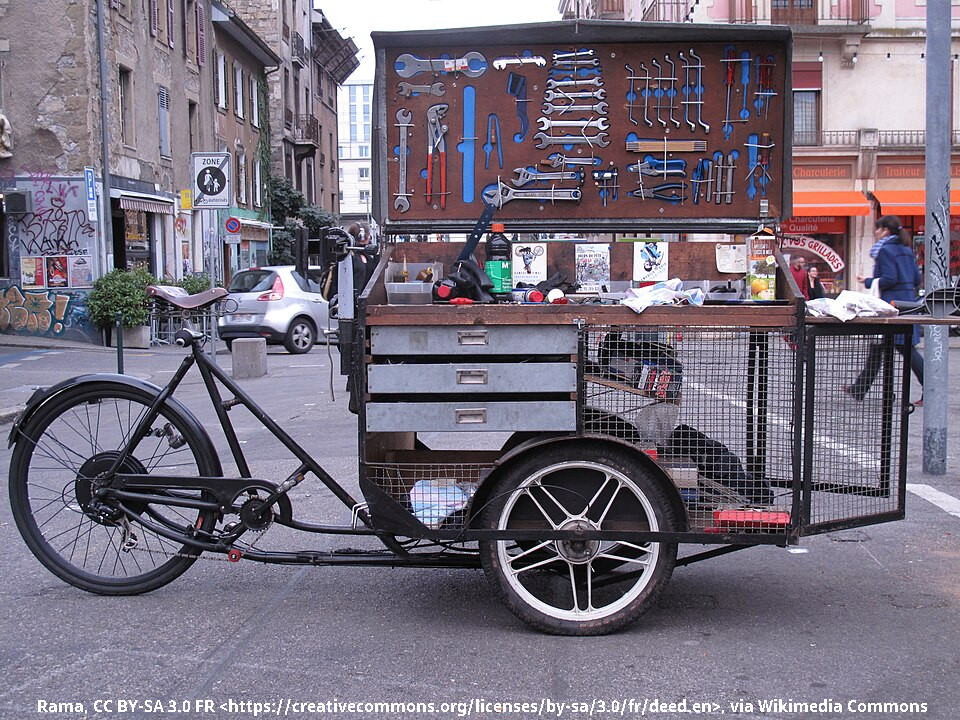
You could start as simply as loading some tools, a few spare parts and a good tire pump onto your bike shop, and meet stranded bicyclists on the road.


mobile bike repair trike

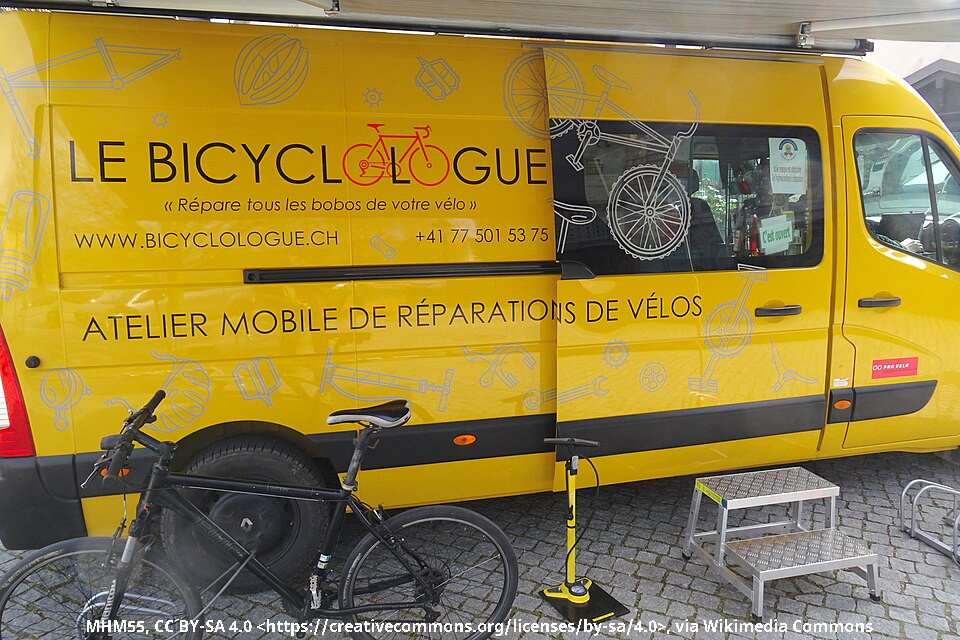
On the other end of the spectrum, you could equip a tall van with everything from a workstand to a vise, power source, and welding equipment. You can also carry 90% of the parts bicyclists need, and even a few accessories.

This is a showcase site for Jeff Napier of US-Web-Design. Surprisingly low-cost solutions for all your website and marketing needs. More...

Mobile bike repair can be done in one or all of three general ways:

1. You help stranded bicyclists. They call, you roll. It’s your choice whether you’d want to keep office hours, or be on-call 24 hours a day. Keep in mind that most recreational bicycle riding is done during the daytime, but on weekends.

2. People make an appointment for you to go to their homes to fix up the families’ bicycles. This often includes full tune-ups, and could potentially include major overhauls and repairs. This can be especially lucrative because you may have four or more repairs at a single location. You might even encourage them to make a ‘neighborhood bicycle repair fair,’ inviting all their friends and neighbors.

3. You travel to a public location such as a flea market, doing repair work for people who stumble upon you, or those who know you’re going to be there. Unless you do something to publicize your presence for the first time at a place such as a flea market, your first week is likely to be really slow. However, once people catch on to you being there week after week, you can expect a lot of business.

Initially, you can lay in a stock of common replacement parts by simply buying them at a local bike shop. If you tell them your plans, they may give you a small discount, typically 10%, hoping you’ll become a steady, high-volume customer.

You may find better deals on the most common parts such as inner tubes and saddles at discount stores.

In time, you can become established with bicycle wholesalers, giving you a better markup on parts. If your only income was from repair labor, that could be good enough, but augmenting it with parts sales is icing on the cake.

Then, if you want your cake and eat it too, you can lay in a stock of attractive accessories. You might realize quite a profit by selling jerseys, locks, helmets, and maybe even carry a complete bike or two in your van.

For more about the bicycle business in general, see How To Start A Bike Shop.

For more general business information to help you start this business, see General Business Action Pack.