Posted on

Betty Dodson’s Kindness

Betty Dodson’s life and work can indeed be seen as profound acts of kindness—especially in how she empowered countless women with self-respect, autonomy, and pleasure. While her contributions weren’t framed as charitable “acts” in the traditional sense, they were transformative gifts to individuals and the broader feminist community. Here are a few standout examples:

Beginning in the 1970s, Betty Dodson created and led Bodysex workshops—safe, educational group sessions that encouraged women to explore their own bodies, orgasm, and self-pleasure without shame. She provided attendees with vibrators (specifically the Hitachi Magic Wand) to aid their learning. These workshops weren’t merely instructional—they promoted self-love, healing, and liberation from societal stigma. The results were substantial: in one 2007 study of 500 women experiencing anorgasmia, an impressive 93% achieved orgasm during therapy using her method.

Despite her fame, Dodson lived modestly in a rent-stabilized Manhattan apartment, intentionally choosing a frugal life so that she could direct her resources toward supporting workshops for low-income women. She also split her earnings evenly with collaborators, subverting capitalist norms and ensuring sustainable—and equitable—education.

Dodson co-founded the Betty A. Dodson Foundation (a 501(c)(3) nonprofit) to broaden access to comprehensive, inclusive sex education. The foundation develops and disseminates educational materials rooted in her methodology, trains educators, and supports curriculum innovation globally.

Beginning in 1999, Dodson embraced internet platforms to expand her teaching reach. She provided downloadable guides and engaged online communities, well before many educators recognized the internet’s potential for democratizing information. In 2006, together with Carlin Ross, she began certifying women to lead Bodysex workshops in multiple states and countries.

Dodson’s role extended beyond teaching. She was a mentor and “sexual mother” to many in the feminist and sex-education community. One educator wrote of a 25-year friendship where Dodson always called her “kid” and consistently offered support and wisdom, even attending her book release party while unwell just because it mattered. Dodson’s personal generosity and mentorship leave an indelible mark.

This is a showcase site for Jeff Napier of US-Web-Design. Surprisingly low-cost solutions for all your website and marketing needs. More...

Through her workshops, writings, and public persona, Dodson gave women permission to own their pleasure and bodies without shame. As one tribute put it: “She not only inspired thousands of women to connect to their bodies through self-pleasure … Her mantra, ‘better orgasms, better world,’” underscores how her educational kindness created ripple effects across generations.

While Betty Dodson might not be remembered for a single headline-grabbing charitable gesture, her lifelong advocacy—often deeply personal and quietly revolutionary—was a consistent act of kindness. She empowered women globally, dismantled stigma with laughter and candor, and offered mentorship that changed lives.

See also Betty Dodson, Interesting Facts.

Posted on

Michelle Obama’s Acts of Kindness

Michelle Obama continues to demonstrate kindness in ways both intimate and transformative—whether by lifting spirits through surprise visits, supporting youth, or launching initiatives that improve lives at scale.

While playing tennis at a club in Martha’s Vineyard, Michelle Obama sprang into action when a nearby player tore his hamstring. She immediately signaled her Secret Service team to provide first aid—ice packs, an ambulance call, and assistance. Michelle personally checked on him, introduced herself, and even posed for a photo, offering friendly advice on stretching as people age. Observers described her as “friendly, cool, and helpful,” and noted the moment “saved the day.”

Michelle dropped in unexpectedly on teenage girls at the Lower East Side Girls Club. She served them nutritious grain bowls (part of her Let’s Move! initiative), shared a meal, and engaged in sincere discussion about their challenges and aspirations, creating an atmosphere of joy, trust, and empowerment.

In 2018, Michelle launched the Girls Opportunity Alliance through the Obama Foundation. This initiative supports grassroots leaders helping adolescent girls access education worldwide. It has collaborated with over 4,000 leaders and community organizations globally to provide tools, financial aid, and mentorship.

In late 2023, Michelle joined Amal Clooney and Melinda French Gates in Malawi to advocate against child marriage and promote girls’ education. The visit to Ludzi Girls’ Secondary School showcased emotional camaraderie and shared resolve in empowering young women to shape their own futures.

In 2021, Michelle launched the “Pass the Love” campaign alongside her children’s show Waffles + Mochi and the nonprofit Partnership for a Healthier America. The initiative aimed to deliver over one million healthy meal kits—with ingredients and recipes—to families facing food insecurity.

This is a showcase site for Jeff Napier of US-Web-Design. Surprisingly low-cost solutions for all your website and marketing needs. More...

See also: Michelle Obama, Fun Facts.

Posted on

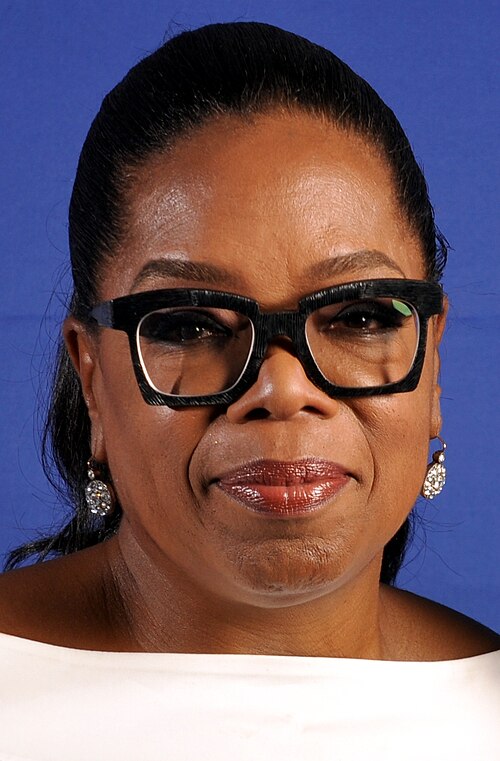
Oprah’s Acts of Kindness

Oprah Winfrey has a remarkable history of generosity, compassion, and thoughtful gestures, both large-scale and deeply personal. Here are a few standout acts of kindness that demonstrate her enduring impact:

In the wake of Hurricane Katrina, Oprah contributed $10 million through her Angel Network and partnered with Habitat for Humanity to rebuild homes for dozens of families in Houston. Her initiative helped rehome 250 families displaced by the disaster.


In response to the devastating wildfires in Maui, Oprah and Dwayne Johnson launched the People’s Fund of Maui, initially pledging $10 million. The fund ultimately raised nearly $60 million, providing $1,200 monthly payments to over 8,100 displaced adults—helping families with essential expenses like


In 2007, after discussions with Nelson Mandela, Oprah founded a boarding school for academically gifted girls from disadvantaged backgrounds in South Africa. She has invested over $200 million into the Academy and related educational initiatives.


Launched in 1998, Oprah’s Angel Network, a public charity, raised more than $80 million, building over 60 schools worldwide, offering scholarships to more than 30,000 students, supporting women’s shelters, youth centers, and more.


Oprah has invested heavily in education for young men at Morehouse College, including an additional $13 million in 2019 that brought the total support to $25 million.

This is a showcase site for Jeff Napier of US-Web-Design. Surprisingly low-cost solutions for all your website and marketing needs. More...

Additionally, she donated $1 million to Feeding America (formerly America’s Second Harvest) to bolster food aid efforts.


Oprah matched a $500,000 donation by George and Amal Clooney to support the student-led March for Our Lives, advocating for stricter gun control.


She pledged $1 million to N Street Village, a D.C. nonprofit that assists homeless and low-income women, calling attention to their pivotal work and affirming, “Every life matters.”


Oprah produced and hosted the groundbreaking documentary “Scared Silent” to bring national attention to child abuse. The documentary reached 45 million viewers and galvanized support for child protection legislation, leading to the passage of the National Child Protection Act, often referred to as “Oprah’s Bill.”


Inspired by her own bittersweet childhood Christmas, Oprah spearheaded “Christmas Kindness” in 2002, distributing 50,000 personalized gifts to children in South African orphanages and schools. She later described the effort as the most rewarding experience of her life.


One of Oprah’s favorite show guests, Tererai Trent, shared her dream of building a school in her native village in Zimbabwe. Oprah responded with a generous $1.5 million donation to turn that dream into reality. The school was completed in 2014.


See also: Oprah Winfrey, Fun Facts.

Posted on

Dua Lipa’s Acts of Kindness

Dua Lipa’s acts of kindness go beyond the spotlight, spanning strategic philanthropy, authentic advocacy, and deeply personal outreach. She consistently uses her influence to uplift others, whether by enabling access to education in Kosovo, encouraging mental health conversations, or connecting with individuals in prisons through storytelling.

Notable Acts of Kindness by Dua Lipa

Sunny Hill Foundation & Kosovo Cultural Support

Charity & Education in Kosovo (2018): Dua Lipa and her father co-founded the Sunny Hill Foundation (2016) to empower youth and develop the arts in Kosovo. Through the Sunny Hill Festival, a music event she organized, the foundation raised and distributed €100,000 to benefit cultural events and music schools in her homeland.

Subtle Philanthropy via Auction (2025): In a remarkable move, she auctioned off the very Porsche 911 GT3 RS that she helped design, called the “Dua Lipa Rennstalla GT3 RS” and donated the full proceeds (expected over €400,000) to her foundation, Sunny Hill. These funds aim to support artistic education initiatives and potentially fund a new cultural center in Pristina

Disaster Relief & Humanitarian Outreach

This is a showcase site for Jeff Napier of US-Web-Design. Surprisingly low-cost solutions for all your website and marketing needs. More...

Rebuilding Albania (2021): Following the 2019 earthquake, Dua Lipa’s foundation participated in the “Adopt a Kindergarten” initiative in Albania. By July 2021, they helped reconstruct a kindergarten in Tirana, empowering young children’s education. The project culminated in October 2021 with the opening of the “Sunny Hill Kindergarten.”

Advocacy for Youth, Mental Health & Homelessness

In November 2018, Dua participated in UNICEF’s “Go Blue” campaign for World Children’s Day and later performed in a benefit concert—Streets of London—to raise awareness and funds for homeless individuals.

She’s been vocal about the lack of mental health support in creative industries and supported fundraising efforts for organizations like The Black Dog and CALM

She joined the BBC Radio 1 Live Lounge Allstars supergroup to record a cover of “Times Like These,” with proceeds supporting Children in Need, Comic Relief, and the

Mental Health & LGBTQ+ Support

Dua Lipa was honored as Mental Health Champion of the Year by The Trevor Project, a leading LGBTQ+ suicide prevention organization, for her tireless advocacy and support for LGBTQ+ youth mental health. She also used her platform during the 2024 U.S. election to direct followers to crisis resources.

Engagement with Incarcerated Readers

In a deeply human gesture, Dua visited a women’s prison in the U.K. through the Booker Prize Foundation’s Books Unlocked program. There, she met inmates in a book club discussing Shuggie Bain, a novel she had also featured in her Service95 book club. One inmate poignantly remarked: “Had I maybe read books sooner in my life, maybe I wouldn’t be here.”

See also Dua Lipa Facts.

Posted on

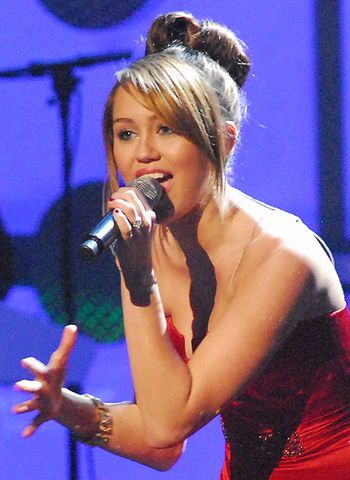
Miley Cyrus, Acts of Kindness

See Also:

10 Ways To be More Like Miley Cyrus

10 Famous Quotes by Miley Cyrus

10 Miley Cyrus Jokes

Miley Cyrus Revisiting the Wrecking Ball

Miley Cyrus, What AI Has to Say

Miley Cyrus Quiz

Miley Cyrus, Crazy Facts

Miley Cyrus’s philanthropic journey spans heartfelt personal gestures and large-scale foundation efforts—always aiming to uplift those most in need, be they homeless youth, marginalized communities, or communities devastated by disaster.

Notable Acts of Kindness by Miley Cyrus

1. Championing Homeless & LGBTQ Youth through Happy Hippie Foundation

Founded the Happy Hippie Foundation (2014): Miley launched this nonprofit on September 17, 2014 (public debut in May 2015), to support homeless youth—especially within the LGBTQ community—and other vulnerable groups.

This is a showcase site for Jeff Napier of US-Web-Design. Surprisingly low-cost solutions for all your website and marketing needs. More...

MTV VMAs Moment (2014): Instead of accepting her “Wrecking Ball” Video of the Year award herself, she had a homeless youth named Jesse accept it on behalf of the 1.6 million runaways and homeless youth in the U.S. This prompted over $200,000 in donations to My Friend’s Place within just 24 hours.

#InstaPride Campaign (2015): Collaborated with Instagram to feature portraits of transgender and gender-expansive individuals, photographed by Miley herself, to promote diversity and acceptance.

2. Disaster Relief & Crisis Response

Hurricane Harvey (2017): Miley—through Happy Hippie—donated $500,000 to Hurricane Harvey relief. She also encouraged her followers to give what they could and directed donations to organizations like the American Red Cross.

Woolsey Fire & Malibu Relief (2018): After losing her Malibu home in the Woolsey Fire, she and Liam Hemsworth supported the community by helping launch the Malibu Foundation. Happy Hippie contributed $500,000 to the initiative.

Supporting Dolly Parton’s My People Fund (2016): In response to devastating Tennessee wildfires, she backed her godmother Dolly Parton’s initiative via Happy Hippie to aid affected families.

3. Creative Fundraising & Advocacy

Art Auction for amfAR (2015): Miley created and sold her Caitlyn Jenner–inspired artwork at an amfAR gala. The pieces raised $69,000 for AIDS research and LGBT youth services.

Unusual Charity Gesture: To raise funds at an LGBT Center’s auction, she cheekily licked a piano, which then sold for $50,000.

4. Inclusivity & Education

Rainbowland Response (2023): When her song “Rainbowland” was removed from a school concert due to controversy, her foundation donated to Pride and Less Prejudice to supply LGBTQ-inclusive books to early-grade classrooms.

5. Support in Health Causes & Young Fans

Make-A-Wish & Hospital Visits: Through the Make-A-Wish Foundation, Miley fulfilled wishes for children with illnesses—like giving them guided L.A. tours or inviting them backstage for performances and duets.

See Other Articles About Miley Cyrus.

Posted on

Billie Eilish, Acts of Kindness

Billie Eilish continues to inspire not just through her music, but through meaningful actions that uplift communities, support sustainability, and champion dignity and compassion.

After filming the music video for the “Guess” remix with Charli XCX, Billie donated all the unworn bras and underwear from the shoot to “I Support the Girls,” a nonprofit that provides essential items to survivors of domestic violence and people experiencing homelessness. The donation, amounting to over 10,000 pieces, was intended to help recipients regain dignity and comfort through clothing.


On March 29, 2024 (anniversary of the initiative), Billie, alongside her mother Maggie Baird, helped deliver vegan meals to My Friend’s Place, a nonprofit aiding homeless youth. She was joined by fellow vegan activists Joaquin Phoenix and Rooney Mara. This marked a significant milestone for the Support + Feed initiative, which her mother founded during the COVID-19 pandemic to support both small plant-based businesses and communities facing food insecurity.


On Mother’s Day, Billie, her brother Finneas, and family members delivered vegan burritos and flowers to staff at Martin Luther King Jr. Community Hospital in South Los Angeles. This heartfelt gesture was organized through Support + Feed and was meant to thank frontline workers during the pandemic.
MLK Community Health Foundation


After devastating wildfires struck Southern California, Meghan Markle shared a video of Billie sending signed T-shirts and other merch to a 15-year-old girl whose home—and cherished Billie Eilish T-shirt—had been destroyed. It was a touching response that lifted the girl’s spirits during a traumatic time.


Billie has consistently used her platform for environmental and social good, particularly around plant-based activism and climate awareness:

This is a showcase site for Jeff Napier of US-Web-Design. Surprisingly low-cost solutions for all your website and marketing needs. More...

Eco-Friendly Concert Initiatives: On her Happier Than Ever tour, she partnered with nonprofits like REVERB to reduce waste and carbon emissions. The tour featured eco-villages, water refill stations, plant-based catering, compostable materials, and more—demonstrating that large-scale concerts can be sustainable.

Legislation Advocacy: Alongside her mom, she lobbied on Capitol Hill for the Healthy Future Students and Earth Act, a bill proposing grants for plant-based school meal programs. She remarked that serving healthy, climate-friendly meals is vital for both youth and the planet.

Earth Day Action: She temporarily shut down her online store on Earth Day and encouraged fans to donate to environmental nonprofits instead, including Support + Feed and GRID Alternatives.

Fur-Free Fashion: Billie famously insisted that designer Oscar de la Renta avoid using fur if she were to wear their gown to the 2021 Met Gala—and the brand agreed.

See Also: Other Articles About Billie Eilish.

Posted on

Michelle Obama

Michelle Obama, born Michelle LaVaughn Robinson on January 17, 1964, in Chicago, Illinois, is a lawyer, author, former First Lady of the United States, and a widely admired public figure known for her intelligence, charisma, and advocacy. While most recognize her as the wife of Barack Obama, the 44th President of the United States, Michelle has built a legacy that stands uniquely her own, one rooted in determination, service, and empowerment.

Early Life and Education

Michelle grew up in the South Side of Chicago in a working-class family. Her father, Fraser Robinson III, worked as a city water plant employee despite suffering from multiple sclerosis, and her mother, Marian Shields Robinson, was a homemaker who later worked as a secretary. Michelle has often spoken about the profound impact her parents had on her, especially their emphasis on education and character.

From a young age, Michelle was known for her academic prowess. She skipped the second grade and went on to attend Whitney M. Young Magnet High School, Chicago’s first magnet high school, where she commuted over an hour each way. She graduated as class salutatorian. Magnet high schools focus on specific areas of academia, such as performing arts, or engineering skills. In the case of Whitney W. Young, the focus is on college preparatory education.

Michelle then attended Princeton University, where she majored in sociology and minored in African-American studies. Her senior thesis, titled “Princeton-Educated Blacks and the Black Community”, examined the experiences of Black alumni. In a surprising twist for someone later thrust into global fame, she wrote candidly about feeling like an outsider at the predominantly white, elite university.

After Princeton, she earned her law degree from Harvard Law School, where she participated in demonstrations advocating for the hiring of more minority faculty. She later joined the prestigious Chicago law firm Sidley & Austin, where she met a young summer associate named Barack Obama.

Career and Public Service

Though Michelle began her career in corporate law, she soon realized her passion lay elsewhere. She transitioned into public service, working for Chicago’s city government, then as Executive Director for the Chicago chapter of Public Allies, a nonprofit encouraging young people to work in public service. Later, she worked at the University of Chicago and the University of Chicago Medical Center, where she created community outreach programs.

This is a showcase site for Jeff Napier of US-Web-Design. Surprisingly low-cost solutions for all your website and marketing needs. More...

Michelle Obama was not initially excited about her husband’s political ambitions. She famously made Barack write a detailed “pro/con” list before he ran for president. Still, she became one of his most persuasive and effective surrogates on the campaign trail.

First Lady of the United States

Michelle Obama became the first African-American First Lady when Barack Obama was elected president in 2008. Her tenure as First Lady from 2009 to 2017 was marked by a focus on several key initiatives:

Let’s Move!: A campaign to combat childhood obesity by promoting healthier eating and exercise.

Joining Forces: Supporting military service members, veterans, and their families.

Reach Higher: Encouraging young people, especially underrepresented groups, to pursue higher education.

Let Girls Learn: A global initiative promoting education for adolescent girls.

She was praised for her grace, accessibility, and down-to-earth manner. Her wardrobe choices were also widely followed, but she often used fashion to promote lesser-known American designers, particularly people of color.

Michelle Obama transformed the role of First Lady by leveraging her platform to become a cultural and political icon in her own right, without ever holding elected office.

Life After the White House

After leaving the White House in 2017, Michelle Obama continued to lead by example. Her 2018 memoir, Becoming, became an international bestseller and one of the best-selling books of all time. The book revealed intimate details about her upbringing, motherhood, and even her struggles with infertility and miscarriage, topics rarely discussed so candidly by public figures.

She launched the “Becoming” book tour with the scale and excitement of a rock concert, selling out arenas and captivating audiences with her message of perseverance and authenticity.

In 2020, she hosted “The Michelle Obama Podcast” and played a key role in launching When We All Vote, a non-partisan initiative to increase voter participation. She and Barack also founded Higher Ground Productions, a media company that produces content focused on uplifting and inclusive stories. Their first project, American Factory, won an Academy Award for Best Documentary Feature in 2020.

Personal Life

Michelle and Barack Obama were married in 1992 and have two daughters, Malia and Sasha. Despite her high-profile status, Michelle has been fiercely protective of her daughters’ privacy and well-being.

She’s known for her sense of humor and relatability. During her time in the White House, she danced on talk shows, hugged children at school visits, and planted vegetables in the White House Garden with kids. She was also unafraid to call out sexism, racism, and political hypocrisy, all while remaining deeply admired across political lines.

Surprising but True Facts

She hates politics. Despite her central role in two presidential campaigns and her political influence, Michelle has consistently said she has no desire to run for office, describing politics as “dirty” and “divisive.”

She’s a grammar nerd. Michelle has said that she is “obsessive” about correct grammar and spelling, and used to correct Barack’s speeches for punctuation.

She once got suspended in kindergarten. For… skipping class and going to the play area without permission!

She’s taller than Barack. In some heels, that is. Michelle is 5’11”, and Barack is 6’1”. It’s become a long-running joke between them.

She’s a fan of hip-hop and Beyoncé. Her workout playlist features tracks by Jay-Z, Lizzo, and Childish Gambino. She also danced on stage with Beyoncé during a “Let’s Move!” event.

Her first concert was The Jackson 5. Michelle was just a child when she saw the famous group perform at the Chicago Amphitheater.

She trained Barack to do chores. Early in their marriage, Michelle told Barack, “I am not raising a man,” and required him to do laundry and clean up after himself.

She struggles with imposter syndrome. Despite all her success, Michelle has spoken about feeling like she’s “not good enough” and still wrestles with doubt, something many people find surprising and relatable.

She’s a lefty. Like several other recent presidents, including her husband, Michelle writes with her left hand.

She officiated a wedding. In 2018, Michelle became a one-time wedding officiant for two close friends, surprising guests by walking in just before the ceremony.

Legacy

Michelle Obama’s story is one of authenticity and empowerment. Whether through her work on education, nutrition, or civic engagement, her impact transcends traditional roles. She has become a global symbol of strength, intelligence, and grace, an icon who makes bold honesty feel like an act of revolution.

Her ability to inspire through lived experience rather than lofty idealism makes her particularly powerful in today’s world. Whether mentoring girls, planting gardens, or speaking candidly about her struggles, Michelle Obama’s legacy is still unfolding, and continues to shape the cultural and moral consciousness of a generation.

See also Michelle Obama’s Acts of Kindness.

Posted on Leave a comment

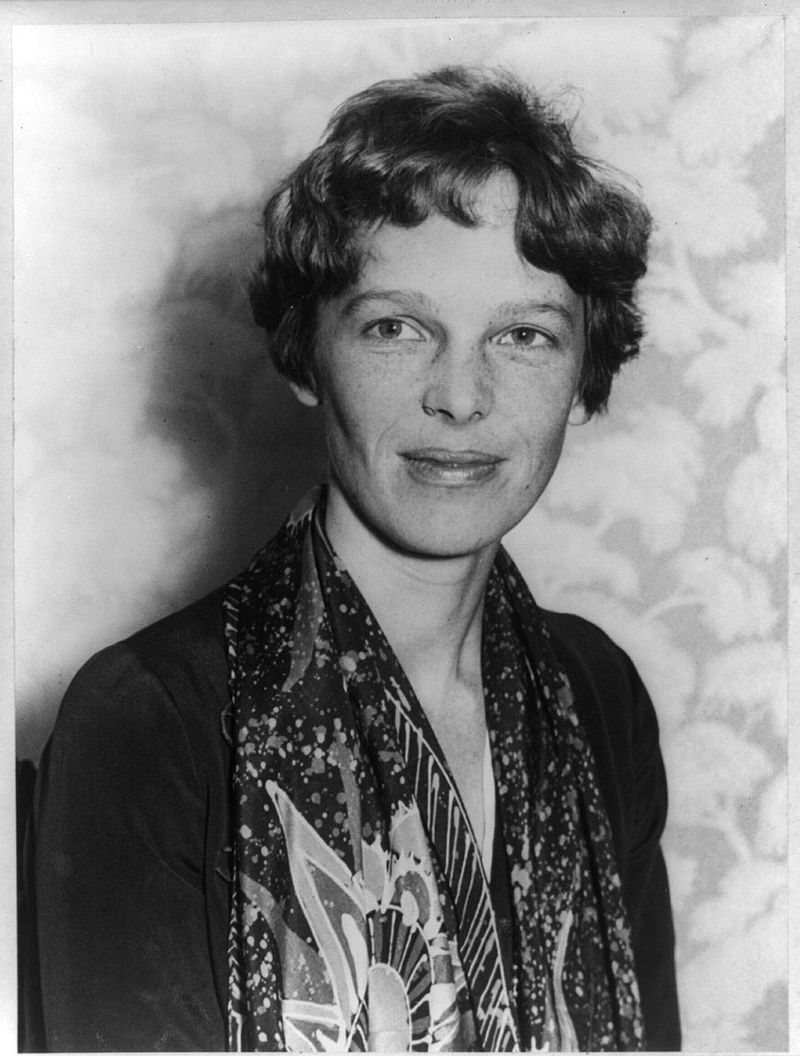
Amelia Earhart

Amelia Earhart: The Sky’s Limitless Spirit

Amelia Mary Earhart was not just an aviator; she was a symbol of courage, innovation, and determination in a time when women were largely confined to traditional roles. Born on July 24, 1897, in Atchison, Kansas, Earhart’s story is as thrilling as the skies she loved to navigate and filled with surprising turns, inspiring milestones, and one of the greatest unsolved mysteries in modern history.

Early Life: A Wild Heart Takes Flight

Amelia’s upbringing was unconventional for a girl in the early 1900s. Her father, Edwin Stanton Earhart, was a railroad lawyer who struggled with alcoholism and job instability, while her mother, Amy, came from a wealthy family and encouraged her daughters to be independent and adventurous. As children, Amelia and her younger sister, Muriel, wore bloomers instead of dresses, climbed trees, hunted rats with rifles, and refused to be boxed in by what society expected of girls.

Surprisingly, Amelia didn’t take her first flight until she was 23 years old, and at first, she wasn’t impressed. Her first airplane ride in 1920 with pilot Frank Hawks didn’t immediately thrill her. But something must have clicked, because within a week, she was determined to learn how to fly.

She worked a series of odd jobs to fund flying lessons: truck driver, stenographer, photographer, and even a file clerk. Her instructor, Neta Snook, was one of the few female pilots in the world, and Amelia was one of her most dedicated students. To pay for her own plane, a bright yellow Kinner Airster, Amelia cut her hair short and slept in hangars. She named the plane “The Canary.”

A Meteoric Rise

In 1928, Earhart gained national fame as the first woman to fly across the Atlantic, but not as a pilot. She was a passenger on a flight with pilots Wilmer Stultz and Louis Gordon. Her role was described as more of a “sack of potatoes,” as she later put it, since she didn’t actually fly the plane. Nonetheless, the feat brought her instant celebrity. The press dubbed her “Lady Lindy,” likening her to Charles Lindbergh, who had completed a solo transatlantic flight the year before.

Though she was uncomfortable with the attention, Amelia knew how to use it to advance her passion for aviation. She wrote a best-selling book, gave lectures, designed a fashion line (called “Amelia Earhart Fashions”) with aviation-themed designs, and used her fame to advocate for female pilots. She became one of the founding members—and the first president—of The Ninety-Nines, an organization for licensed women pilots that still exists today.

This is a showcase site for Jeff Napier of US-Web-Design. Surprisingly low-cost solutions for all your website and marketing needs. More...

Breaking Barriers

Amelia didn’t want to just be famous; she wanted to fly into history. In 1932, she became the first woman and only the second person after Lindbergh—to fly solo nonstop across the Atlantic Ocean. She took off from Newfoundland and landed in a cow pasture in Northern Ireland, carrying just a thermos of soup and a can of tomato juice. She had no parachute and only a small number of navigational tools.

The flight was harrowing: strong winds, mechanical issues, and ice on her wings almost brought her down. But she made it, and with that, her place in the pantheon of aviation pioneers was sealed. Congress awarded her the Distinguished Flying Cross, making her the first woman to receive the honor.

She continued to set records: first woman to fly solo across the U.S., first person to fly solo from Hawaii to California, and first to fly solo from Mexico City to Newark.

Fun fact: She also had a bit of a rebel streak when it came to tradition. When she married George Putnam, her publicist and a publishing magnate, in 1931, she called it a “partnership” and gave him a letter on their wedding day stating she wouldn’t hold him to any conventional ideas of marriage. “I shall not hold you to any medieval code of faithfulness to me,” she wrote. “Nor shall I consider myself bound to you similarly.” Despite this progressive approach, they remained together until her disappearance.

The Final Flight and a Vanishing Act

In 1937, Earhart set out to accomplish what no one had done before: a circumnavigation of the globe near the equator, the longest possible route. She chose as her navigator Fred Noonan, an experienced sailor and navigator. The journey was ambitious and dangerous. By June, they had completed 22,000 miles, with just 7,000 to go.

On July 2, 1937, they departed from Lae, New Guinea, en route to a tiny island in the Pacific called Howland Island. But they never made it. Despite radio contact and frantic efforts by the U.S. Coast Guard to guide them in, Amelia and Fred vanished over the Pacific Ocean. The most extensive search in U.S. history up to that point yielded nothing. The plane, the passengers – gone without a trace.

Her disappearance sparked theories ranging from the mundane to the fantastical. Some believed she crashed and sank; others thought she was captured by the Japanese, became a spy, or even lived under an alias. Bones possibly belonging to her were discovered on Nikumaroro Island, a remote Pacific atoll, in 1940, but the evidence remains inconclusive. Despite endless investigations, her fate is still one of the greatest mysteries in aviation history.

Surprising and Lesser-Known Facts

Amelia was an accomplished mechanic and often worked on her own planes, preferring to understand the technology rather than leave it to others.

She was friends with Eleanor Roosevelt, who once invited Amelia to the White House and expressed a desire to learn to fly herself. The two women even planned to take a flight together, though it never happened.

Earhart promoted science fiction: She was close friends with Hugo Gernsback, the “father of science fiction magazines,” and was fascinated by futuristic concepts and the role of women in them.

She kept a scrapbook of women’s achievements as a teenager, which she would later credit as a source of inspiration for her own path.

Her last transmission was, heartbreakingly, “We are running on line north and south.” It’s still one of the most chilling messages in the history of aviation.

Legacy

Amelia Earhart’s life and disappearance have become the stuff of legend, but her legacy goes far beyond the headlines. She redefined what it meant to be a woman in the early 20th century, proving that intelligence, grit, and passion could challenge even the firmest social boundaries.

Her name is now immortalized on airports, schools, ships, and even a moon crater. Statues and stamps have been created in her honor. And every year, new generations discover her story, not just for the thrill of the mystery, but for the enduring truth she embodied: that limits, like fears, are often just illusions.

As she once said, “The most effective way to do it, is to do it.” Amelia Earhart did just that – flying headfirst into history and the unknown.

Posted on Leave a comment

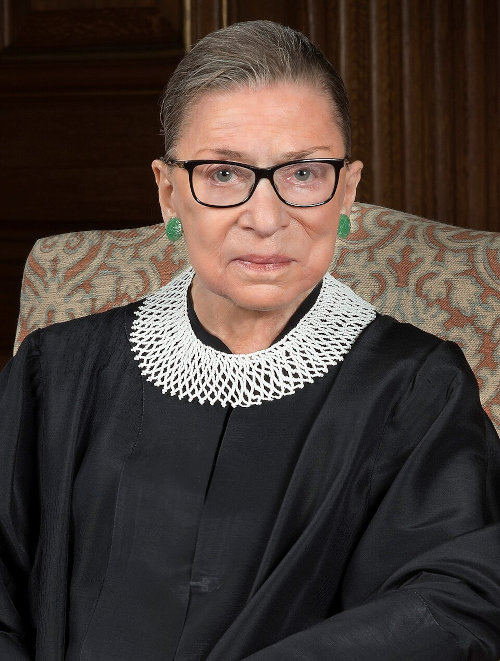
Ruth Bader Ginsburg

Ruth Bader Ginsburg, affectionately known as RBG, was a towering figure in American law and a cultural icon who changed the course of U.S. history, not through bombast, but through brilliance, grit, and an unyielding commitment to justice. Her life was marked by groundbreaking achievements, quiet but fierce advocacy for gender equality, and a resilience that bordered on the superhuman. Though small in stature at 5’1″ (155cm), her influence was immense.

Early Life and Education

Joan Ruth Bader was born on March 15, 1933, in Brooklyn, New York, to Nathan and Celia Bader. She was the second daughter of a working-class Jewish family. Her mother, Celia, had a deep love for education but was unable to attend college herself. She instilled that passion in Ruth, taking her to the library weekly and encouraging her to pursue her dreams, even when society had different expectations for women.

A tragedy struck young Ruth when her beloved mother died of cancer the day before Ruth’s high school graduation. Though grief-stricken, Ruth went on to attend Cornell University on a full scholarship, where she met Martin Ginsburg, a charming, humorous economics major. She graduated in 1954 as the highest-ranking female student in her class.

Marriage and Harvard Law

Ruth married Martin shortly after graduating and gave birth to their first child, Jane, while Martin was in the Army. After his service, both enrolled at Harvard Law School. Ruth was one of just nine women in a class of over 500. The women were even asked by the dean to justify why they were taking a man’s place.

But Ruth thrived. When Martin fell seriously ill with testicular cancer, she attended all his classes, typed his notes, cared for their daughter, and kept up with her own studies. After Martin recovered and got a job in New York, Ruth transferred to Columbia Law School and graduated in 1959 at the top of her class.

A Brilliant Legal Mind Ignored

Despite her stellar academic record, Ruth struggled to find a job. No one wanted to hire a woman lawyer—especially one who was also a mother. She eventually clerked for Judge Edmund Palmieri and then joined the faculty at Rutgers Law School, where she was paid less than her male colleagues. When she discovered this, she joined an equal-pay campaign with other women professors. That was just the beginning.

This is a showcase site for Jeff Napier of US-Web-Design. Surprisingly low-cost solutions for all your website and marketing needs. More...

Becoming a Gender Equality Warrior

In the 1970s, Ginsburg became the architect of the legal fight for women’s rights. She co-founded the Women’s Rights Project at the ACLU and methodically dismantled laws that treated women as inferior. Cleverly, she chose cases in which men were discriminated against, like a widower denied Social Security benefits because he was a man, forcing the male-dominated courts to understand the perils of gender bias.

Between 1973 and 1978, Ginsburg argued six landmark cases before the U.S. Supreme Court—and won five of them. Her legal strategy was incremental but brilliant, modeled after Thurgood Marshall’s civil rights tactics. She didn’t demand revolution; she built it piece by piece.

Fun Fact: RBG’s legal writing was so measured and precise that some clerks referred to her as the “Yoda of the legal world.” Her motto: “Be brief, be pointed.”

Appointment to the Bench

In 1980, President Jimmy Carter appointed Ginsburg to the U.S. Court of Appeals for the D.C. Circuit. Thirteen years later, President Bill Clinton nominated her to the Supreme Court. At her confirmation hearings, she wowed senators with her intellect, candor, and legal expertise. She was confirmed by a vote of 96-3 and became only the second woman (after Sandra Day O’Connor) to serve on the U.S. Supreme Court.

On the Supreme Court

On the Court, Ginsburg was known for her restrained and methodical approach. In majority opinions, she upheld civil rights and women’s rights with clarity and quiet power. As the Court became more conservative, she often found herself in the minority. That’s when her dissents began to shine.

Her dissent in Ledbetter v. Goodyear Tire & Rubber Co. (2007) argued against a majority decision that made it harder for women to sue for wage discrimination. That dissent was so compelling that Congress later passed the Lilly Ledbetter Fair Pay Act, the first bill signed into law by President Obama.

Fun Fact: Ginsburg's powerful dissents earned her a nickname from a New York University law student: “The Notorious R.B.G.” It was a humorous play on the name of rapper The Notorious B.I.G.—a fellow Brooklyn native. Ginsburg loved it and embraced the nickname.

Pop Culture Icon

In her later years, RBG became an unlikely pop culture sensation. She appeared in documentaries, was portrayed in films, had books written about her, and was even the subject of action figures, coloring books, and Halloween costumes. Young people admired her for her toughness, her intellect, and her fight for justice. She once said, “I’m 84 years old and everyone wants to take a picture with me.”

Fun Fact: RBG was a fitness enthusiast well into her 80s. She worked out twice a week with a personal trainer, doing planks, push-ups, and weightlifting. Her trainer even wrote a book called The RBG Workout.

Personal Life

Ruth and Martin Ginsburg had a famously devoted marriage. Marty, a successful tax attorney and gourmet cook, was her biggest fan. He often said, “My wife doesn’t give me any advice about cooking, and I don’t give her any advice about the law.” He proudly supported her career and urged President Clinton to nominate her to the Supreme Court. They were married for 56 years until Marty’s death in 2010.

Their son, James, is a music producer, and daughter Jane is a law professor at Columbia. Ruth often spoke about the importance of balance, humor, and support in her life and career.

Health Battles and Relentless Spirit

Ginsburg survived multiple bouts of cancer: colon cancer in 1999, pancreatic cancer in 2009, lung cancer in 2018, and liver cancer in 2020. She rarely missed a day on the bench and once participated in oral arguments just days after surgery.

Even while undergoing chemotherapy, she continued to write opinions, train with her fitness coach, and vow to serve “as long as I can do the job full steam.”

Death and Legacy

Ruth Bader Ginsburg died on September 18, 2020, at the age of 87, due to complications from pancreatic cancer. Her death, just weeks before the 2020 election, set off a political firestorm. But the nation mourned her as a hero.

She was the first woman and the first Jewish person to lie in state at the U.S. Capitol. Thousands of people—many in “Notorious R.B.G.” T-shirts—lined up to pay their respects.

Legacy

Ginsburg’s impact on American life is immeasurable. Her legal victories changed the rights of millions. Her dissents inspired a new generation of feminists and activists. Her example proved that one person, using intellect and principle, can profoundly change the world.

She once said, “Fight for the things that you care about, but do it in a way that will lead others to join you.” That philosophy was the heart of her life—and it’s why she remains an enduring symbol of justice, dignity, and determination.

Final Fun Fact: RBG was a fan of opera and even appeared on stage in a non-speaking role in The Daughter of the Regiment. She said if she hadn’t been a lawyer, she might have become an opera singer—though she admitted she had “a grade B voice.”

Posted on Leave a comment

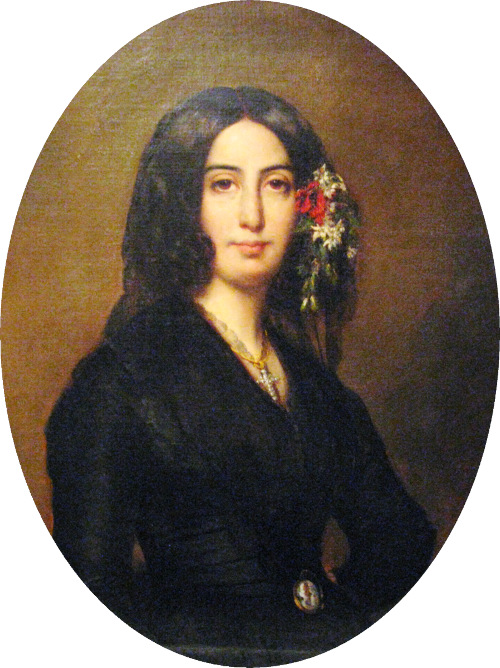
George Sand

George Sand: The Scandalous and Brilliant Pen of France

George Sand, born Amantine Lucile Aurore Dupin on July 1, 1804, in Paris, France, was one of the most prolific and controversial writers of the 19th century. Best known for her novels that championed social reform and women’s rights, she lived a life as unconventional as her ideas. A novelist, memoirist, essayist, playwright, and public intellectual, Sand was also a figure of intense fascination and gossip in her own lifetime.

She was not only famous for her literary talent, but also for wearing men’s clothes, smoking cigars in public, and engaging in high-profile love affairs including with composer Frédéric Chopin. With over 70 novels, 50 volumes of other works, and a deeply political voice, George Sand shattered every mold set for women of her era.

Early Life: Born to a Legacy of Contradiction

Sand was born into a family that reflected France’s complicated history. Her father, Maurice Dupin, was an officer in Napoleon’s army and a descendant of the Marshal of France, Maurice de Saxe, an illegitimate son of Augustus II the Strong, King of Poland. Her mother, Sophie-Victoire Delaborde, came from a working-class background. This union between aristocratic and common blood profoundly influenced Sand’s outlook on society.

When her father died in 1808, four-year-old Aurore was raised by her strict paternal grandmother in Nohant, a country estate in central France. There, she received an unusually broad education for a girl of her time, reading widely in literature, religion, and philosophy.

In 1822, at age 18, she married Baron Casimir Dudevant, with whom she had two children. The marriage quickly soured, leading Sand to leave her husband in 1831 and move to Paris to reinvent herself.

Reinventing Herself: George Sand Emerges

In 1832, in order to gain access to places women could not go, such as libraries and cafés, Sand began dressing in men’s clothing – a choice that shocked society. She also adopted the male pseudonym George Sand, believing that her works would be taken more seriously if thought to be written by a man.

This is a showcase site for Jeff Napier of US-Web-Design. Surprisingly low-cost solutions for all your website and marketing needs. More...

Her first major success came with “Indiana” (1832), a novel that criticized the legal and social constraints on women, especially in marriage. This was followed by a string of popular works, including Lélia (1833), Valentine (1832), and Consuelo (1842–43). Her writing combined romanticism with a keen social critique, advocating for freedom, justice, and female independence.

Oddly enough, she often claimed she had no real talent. In letters, she dismissed her work as “only stories.” Yet her writing had immense influence on contemporaries, including Flaubert, Hugo, Dumas, and even Karl Marx, who praised her moral courage.

Surprising and Odd True Facts About George Sand

She had a pet dog who dined at the table. Sand was notoriously eccentric with her pets. Her favorite dog, “Pistolet,” was reportedly fed at the dinner table and had his own plate and chair.

She engaged in ‘romantic socialism.’ Sand was politically radical, especially during the 1848 Revolution in France. She edited a socialist newspaper and advocated for land reform and workers’ rights. She even wrote pamphlets under yet another pseudonym: “Citizen Cazeaux.”

She built a hut for writing in the woods. At her estate in Nohant, she had a small, rustic hut where she’d escape to write in solitude. This “writing hut” still stands today.

She was once a cigar-smoking cross-dresser in the Vatican. During a trip to Rome, she famously entered the Vatican disguised as a man, smoking a cigar the entire time, scandalizing her companions.

She was fascinated by the occult. Sand maintained an interest in mysticism and the supernatural. She attended séances and even wrote fiction that dabbled in spiritualism.

She made her own ink. Sand often made her own writing ink using a secret recipe that included brandy and elderberries. She said it gave her writing a richer flow.

The Lovers: Chopin and Beyond

Perhaps the most famous episode in Sand’s personal life was her decade-long affair with Frédéric Chopin. They met in 1836 and began their relationship shortly afterward. At first, Chopin was appalled by her appearance and behavior. He once remarked, “Is she really a woman?” Yet they soon became inseparable.

Their romance included a famously miserable winter on the island of Majorca in 1838–39, where they stayed in a former monastery. Chopin was suffering from tuberculosis, and the cold, damp weather nearly killed him. Sand later fictionalized the trip in A Winter in Majorca.

Their relationship ended bitterly in 1847. Sand’s daughter Solange married a man Chopin disliked, and tensions between the composer and Sand escalated. After their breakup, Chopin declined rapidly and died two years later at the age of 39.

Sand also had relationships with other prominent men, including poet Alfred de Musset, with whom she had a fiery and stormy romance. De Musset was so tormented by their breakup that he later wrote a poem lamenting that he “loved her so much, it nearly killed him.”

Writing to the End

Sand never stopped writing. Her later works focused more on pastoral life and were infused with idealism. Her novel La Petite Fadette (1849) is a perfect example of this shift, highlighting rural values and gentle morality.

Her friendship with Gustave Flaubert, the author of Madame Bovary, is one of the literary world’s most heartwarming oddities. Though their styles and ideologies clashed. Flaubert was a perfectionist, Sand a fluid and fast writer. They maintained a long, affectionate correspondence. Flaubert called her “the great woman of my heart.”

In 1876, after a life lived to the fullest, George Sand died peacefully at her estate in Nohant. She was 71. Her last words were reportedly: “Leave the bedroom door open, please. I am going to love.”

Legacy: The Woman Who Dared Everything

George Sand remains a symbol of literary genius, fearless independence, and social rebellion. In an age where women were expected to remain quiet and obedient, she spoke loudly through her pen, her politics, and her personal choices.

She helped pave the way for modern feminism, influenced generations of writers, and proved that one could write prolifically without sacrificing quality or courage. Her novels are still studied, adapted, and read today.

In 2004, to commemorate her bicentennial, France issued a postage stamp in her honor. Statues and streets across the country now bear her name.

Still, many remember her best not for her politics or prose, but for her radical self-definition. As she once said:

“I am a woman, and I tell you that in spite of my sex, I have often been more masculine than the men I have known.”

And perhaps, in her fearless refusal to conform, she was not only ahead of her time, she helped define what time would become.

Posted on Leave a comment

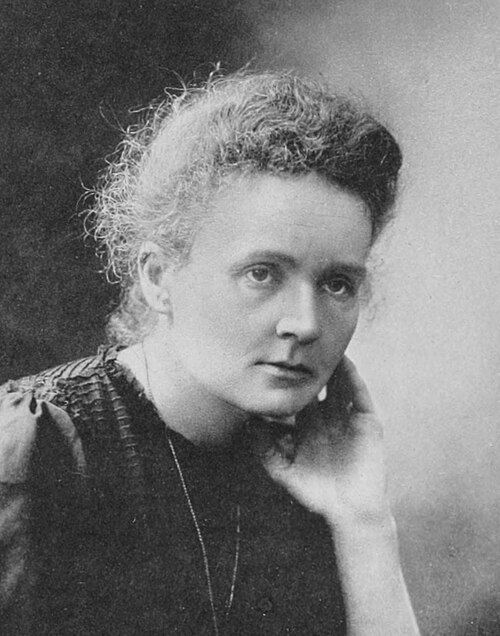
Marie Curie

Marie Curie: The Radiant Life of a Scientific Pioneer

Marie Curie was not just a scientist, she was a revolution in human form. Born Maria Salomea Skłodowska in Warsaw, Poland, on November 7, 1867, she would go on to become the first woman to win a Nobel Prize, the only person to win Nobel Prizes in two different scientific fields, and one of the most influential figures in science history. Her story is not only one of intellect and perseverance, but also of danger, love, tragedy, and even a touch of radioactive oddity.

A Brilliant Beginning in Partitioned Poland

Marie was the youngest of five children in a family of educators. Her father taught math and physics, and her mother was a headmistress, but life in Poland under Russian occupation was hard. After losing her mother to tuberculosis at age 10 and her sister to typhus, young Maria grew up in a world shaped by hardship and intellectual rebellion.

Women were not allowed to attend university in Russian-ruled Poland, so Maria became involved in the Flying University, an underground network of classes for women. She worked as a governess to support herself and save money for further education. During this time, she fell in love with a Polish mathematician, Kazimierz Żorawski, but his aristocratic parents forbade the match. Heartbroken but undeterred, she eventually made her way to Paris in 1891, where she adopted the French version of her name: Marie.

Paris, Physics, and Partnership

In Paris, Curie enrolled at the Sorbonne, where she lived on little more than tea and bread, often fainting from hunger but finishing at the top of her class in physics in 1893, and mathematics in 1894.

That same year, she met Pierre Curie, a fellow scientist who recognized her brilliance. The two married in 1895, bonding over science and shared idealism. Rather than a diamond ring, Pierre gave Marie a bicycle, which they used on their rustic honeymoon, an unusual but fitting symbol of their egalitarian and unconventional union.

The Discovery That Glowed

Marie began studying uranium, inspired by the recent discovery of X-rays and Henri Becquerel’s work on radioactive properties. She coined the term “radioactivity,” and, in her meticulous research, discovered two new radioactive elements: polonium (named after her beloved Poland) and radium (from the Latin radius, meaning “ray”).

This is a showcase site for Jeff Napier of US-Web-Design. Surprisingly low-cost solutions for all your website and marketing needs. More...

In a time when lab work was laborious and unglamorous, Marie and Pierre processed tons of pitchblende (a uranium-rich ore) by hand, boiling it down in an abandoned shed with no ventilation. The Curies often worked without gloves or protective gear, unknowingly exposing themselves to dangerous radiation.

Fun fact: Marie Curie’s notebooks are still radioactive—over a century later, they are kept in lead-lined boxes at the Bibliothèque nationale de France. Visitors must sign waivers and wear protective gear to consult them.

Fame, Tragedy, and Firsts

In 1903, Marie and Pierre Curie, along with Henri Becquerel, were awarded the Nobel Prize in Physics—making Marie the first woman to win a Nobel. At first, the Nobel committee intended to honor only Pierre and Becquerel, but Pierre insisted that Marie be credited as an equal contributor. Her scientific merit, not her gender, deserved the spotlight.

Tragedy struck in 1906 when Pierre was killed in a street accident, run over by a horse-drawn carriage. Marie was devastated but persevered. In an almost unheard-of move for a woman at the time, she was offered and accepted Pierre’s professorship at the Sorbonne, becoming the first female professor in the university’s history.

In 1911, she received her second Nobel Prize, this time in Chemistry, for her discovery and isolation of radium and polonium. This remains an unmatched achievement: no other person has won Nobel Prizes in two scientific disciplines.

Strange But True: The Radium Craze

Curie’s discoveries triggered a bizarre public fascination with radium. People believed it had mystical healing properties. It was added to cosmetics, toothpaste, water, and even radium-laced chocolate bars. There were “glow-in-the-dark” parties, and one company sold a product called Radithor, essentially radium in water, promoted as a cure-all.

One tragic result was the case of the “Radium Girls.” They were young women who painted watch dials with luminous radium paint and were encouraged to lick their brushes to keep the tips fine. Many died of radiation poisoning.

Ironically, while Marie Curie remained skeptical of commercialized radium, she carried test tubes of it in her pocket for experiments. Her clothes reportedly glowed faintly in the dark.

World War and Humanitarianism

During World War I, Curie saw a practical use for her discoveries. She developed mobile X-ray units called “Little Curies” and trained medical staff to operate them. These vehicles saved countless lives by helping battlefield doctors locate shrapnel and broken bones.

She even drove one of these X-ray cars herself to the front lines, without a driver’s license or formal medical training. That was a gutsy move for any woman, let alone a Nobel-winning physicist.

Later Life and Legacy

Curie spent her later years founding the Radium Institute (now Curie Institute) in Paris, a world-class center for medical research. Her health, however, deteriorated from long-term exposure to radiation. She died in 1934 at the age of 66, of aplastic anemia, a condition linked to radiation exposure. At the time, the dangers of radioactivity were still poorly understood.

Despite the risks, she never patented her discoveries, believing that science should benefit humanity. “Radium is not to enrich anyone. It is an element. It belongs to all people.”

In 1995, Marie and Pierre Curie’s remains were transferred to the Panthéon in Paris—France’s national mausoleum for heroes. Marie became the first woman to be entombed there based on her own merits.

Curie’s Legacy Burns Bright

Marie Curie’s legacy goes far beyond the laboratory. She broke gender barriers, challenged academic norms, and fundamentally changed our understanding of matter and energy. She inspired generations of scientists, especially women in STEM fields, by proving that brilliance knows no gender.

Odd But True Facts

She refused medals and awards in her later years, believing the work mattered more than the recognition.

She carried out much of her work in a wooden shed with a leaky roof and no insulation, describing the conditions as “a cross between a stable and a potato cellar.”

Albert Einstein once said of her, “Marie Curie is, of all celebrated beings, the only one whom fame has not corrupted.”

Posted on Leave a comment

Eleanor Roosevelt

Eleanor Roosevelt: First Lady of the World

Anna Eleanor Roosevelt was born on October 11, 1884, in New York City to a prominent and wealthy family. But behind the affluence lay early tragedy. Her mother, Anna Hall Roosevelt, considered Eleanor “ugly” and called her “Granny” due to her solemn demeanor and old-fashioned ways. By age 10, Eleanor had lost both parents, her mother to diphtheria and her father, Elliott Roosevelt (Teddy Roosevelt’s younger brother), to alcoholism and a failed suicide attempt.

Raised by a strict and pious grandmother, Eleanor’s childhood was marked by grief and insecurity. Yet she emerged from it with a resilience and moral clarity that would define her public life.

Becoming Eleanor

At age 15, Eleanor was sent to Allenswood Academy, a finishing school near London. It was here that she came under the influence of headmistress Marie Souvestre, a fiercely intellectual and progressive woman. Eleanor later credited Souvestre with awakening her mind and giving her the confidence to think independently. She would recall her Allenswood years as some of the happiest of her life.

Upon returning to New York, Eleanor began her debutante life reluctantly. In a society that expected little more than marriage and manners from young women, she was bored by the rituals and eager for a more meaningful existence.

In 1905, she married her distant cousin Franklin Delano Roosevelt, despite reservations about his overbearing mother, Sara Delano Roosevelt, who tried to dominate the couple’s life. Eleanor bore six children, five of whom survived to adulthood, though their family life was strained.

A Marriage Complicated

Eleanor and Franklin’s marriage was complicated, evolving from romantic partnership to political alliance. The greatest strain came in 1918, when Eleanor discovered love letters between Franklin and her social secretary, Lucy Mercer. Devastated, she offered Franklin a divorce, but he refused, pressured by his mother and his own political ambitions.

This is a showcase site for Jeff Napier of US-Web-Design. Surprisingly low-cost solutions for all your website and marketing needs. More...

Though they remained married, Eleanor forged an independent path from then on. She poured her energies into public service, political activism, and writing—and never looked back.

Strangely enough, after Franklin’s death in 1945, it was revealed that Lucy Mercer had been with him at the time of his passing – a final bitter twist in the complex web of their marriage.

Political Awakening and Activism

During World War I, Eleanor volunteered for the Red Cross and Navy relief efforts. By the 1920s, she was active in progressive causes, including settlement houses, women’s rights, and racial justice. She taught at the Todhunter School for Girls and began writing newspaper columns and essays on social issues.

She became a key figure in the Women’s Division of the New York Democratic Party, coached by political operatives like Molly Dewson and Louis Howe. These alliances, mostly with women, helped her hone her political skills while Franklin was recovering from polio.

One strange but true aspect of Eleanor’s activism is that she sometimes disguised herself to investigate social injustices. She once posed as a factory worker to inspect labor conditions and even snuck into a mine shaft dressed as a miner.

First Lady Redefined

When Franklin became president in 1933, Eleanor transformed the role of First Lady. Rather than limit herself to ceremonial functions, she held press conferences, but with a twist: she only allowed female reporters, forcing newspapers to hire women. She also wrote a daily newspaper column called “My Day” from 1935 to 1962, totaling over 8,000 entries, which is still a record for any first lady.

She traveled extensively during the Great Depression and World War II, visiting coal mines, slums, and military hospitals, reporting back directly to the president. Franklin often said she was his “eyes and ears,” particularly after polio limited his mobility.

Eleanor championed the rights of African Americans, women, and youth, often at great political cost. When the Daughters of the American Revolution refused to let Black opera singer Marian Anderson perform at Constitution Hall in 1939, Eleanor resigned from the organization in protest and helped arrange for Anderson to sing instead on the steps of the Lincoln Memorial before 75,000 people.

A Global Force for Human Rights

After Franklin’s death in 1945, Eleanor expected to retire. But President Harry Truman appointed her to the U.S. delegation to the United Nations, where she became chair of the U.N. Human Rights Commission.

In 1948, she played a pivotal role in drafting and passing the Universal Declaration of Human Rights, which she called “the international Magna Carta for all mankind.” Her dedication to social justice on the global stage earned her the nickname “First Lady of the World.”

Eleanor also helped to found the Freedom House, the National Youth Administration, and worked with the NAACP, League of Women Voters, and American Association for the United Nations.

Personal Relationships and Rumors

While Eleanor was reserved and formal in public, her private life was emotionally rich and sometimes controversial. Her intimate friendship with journalist Lorena Hickok, whom she affectionately called “Hick,” has drawn intense speculation. The thousands of letters between them contain deeply affectionate language, leading some historians to suggest a romantic relationship, though others argue the expressions were typical of the era’s intense female friendships.

A strange but true fact: Hickok lived in the White House for a time in a room adjoining Eleanor’s, which raised eyebrows even then.

Later Years and Legacy

Eleanor Roosevelt continued her activism until her death. She opposed McCarthyism, supported civil rights, and advised multiple presidents, including John F. Kennedy, who appointed her to chair the President’s Commission on the Status of Women in 1961.

She also kept writing, producing 27 books, hundreds of magazine articles, and tens of thousands of letters. She once said: “You must do the thing you think you cannot do.” It became her personal motto.

In a strange twist, despite her advocacy for health care reform, Eleanor died of complications from bone marrow tuberculosis in 1962 after ignoring early symptoms and delaying treatment. Her funeral was attended by presidents Truman, Eisenhower, and Kennedy—a rare gathering of three sitting and former presidents.

Strange But True Eleanor Facts

Eleanor once rode in an experimental airplane with Amelia Earhart, and they joked about flying off to Paris that night in their evening gowns.

She was the first First Lady to address a national political convention, in 1940.

She smuggled contraband radio parts to Jewish refugees in Europe before WWII, hiding them in her luggage.

Despite being from high society, she couldn’t drive, and Franklin jokingly said it was for the safety of the nation.

See related: Women Driving in Memphis

Eleanor received 38 honorary degrees, more than any woman of her time.

Conclusion

Eleanor Roosevelt reshaped the role of women in public life, pioneered human rights advocacy, and defied the constraints of her era. Through personal sorrow, political battles, and groundbreaking service, she proved that character, not comfort, defines a life. Her influence transcended the White House, leaving a legacy that continues to inspire freedom fighters, social reformers, and humanitarians around the world.

As she once said:
“Where, after all, do universal human rights begin? In small places, close to home…”

That’s exactly where Eleanor Roosevelt began, and where her work still resonates.

Posted on Leave a comment

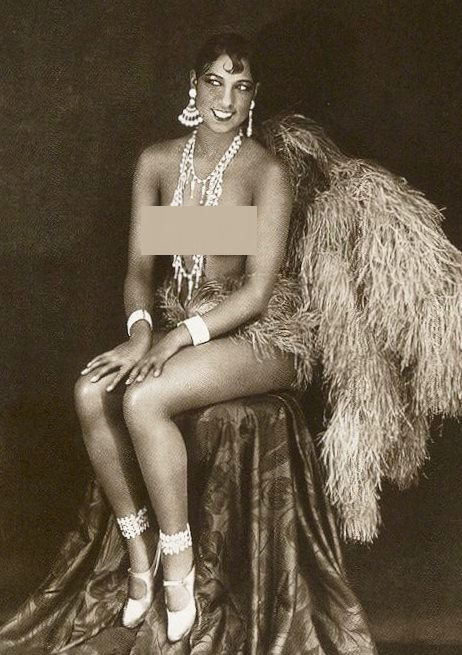
Josephine Baker

Additional Adult Topics

Josephine Baker was a sexy and highly sexual woman. She became the biggest African-American star in the world. Here is her strange mini-biography.

Josephine was born in 1906 on the wrong side of the tracks in Saint Louis, Missouri, USA. Her grandparents on her mother’s side had been slaves.
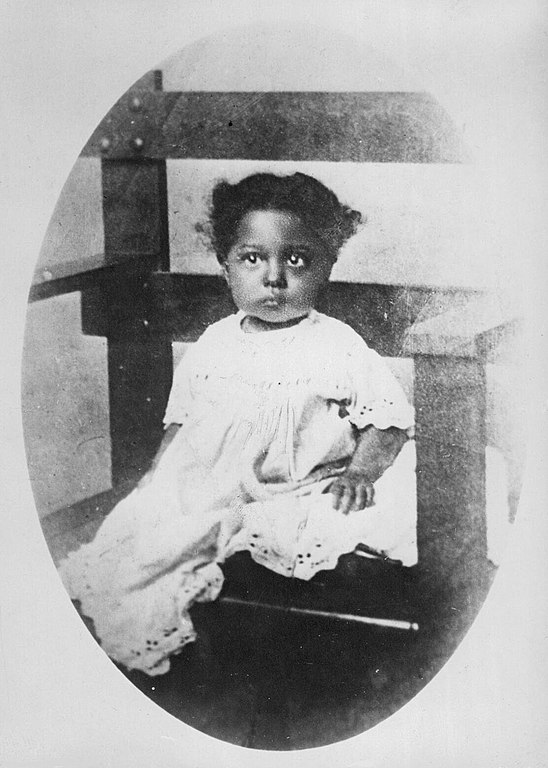
Josephine Baker as a baby

Her parents had a vaudeville background. Vaudeville was live variety entertainment presented in theaters. Acts ranged from singing and dancing to magic, juggling, trained animal acts, and comedy. Back in the day, vaudeville was an attractive pursuit that was profitable for some performers, but barely made ends meet for most.

Her deadbeat father was a drummer who left when Josephine was one year old. He may have been of Native American heritage. No one seems to know for sure. Her poor mother had to take in laundry to barely put food on the table.

To make matters worse, her mother found another man to marry. Another deadbeat. Oh, this one didn’t leave the family, but he didn’t work either. He spent his days sitting around reading the newspaper. The family was so poor that Josephine, her younger step-brother and two step-sisters, her mother and father all slept in the same bed.

This is a showcase site for Jeff Napier of US-Web-Design. Surprisingly low-cost solutions for all your website and marketing needs. More...

After a while, that was too much for her, so she took to sleeping on the floor, under a blanket made from newspapers.

When she was eight years old, to bring in more money her mother sent her off to work for a white family as a maid. Things got worse, not better. Josephine slept in that family’s basement with their dog.

One time, she put too much soap in the laundry. The white woman burned her hands. Evidently, it was just mild enough not to leave permanent scars.

Despite all that, Josephine managed to stay in school until age twelve.

Things weren’t yet bad as they could be. By the age of thirteen, she was living on the streets, scavenging for food and using cardboard boxes for shelter from the weather. Needing money, she took up unskilled street performing. She emulated popular dances of the era, Trucking, The Tack-Annie, The Itch, and Messing Around.

Finally, things started to improve. She met and married Willie Wells. She was thirteen years old at the time. He was fifteen. One can only imagine what kind of sex life they had. How much did they even know about sex at that age?

Josephine’s rough street performing improved and she started performing with the Jones Family street performers in front of Booker T Washington theater.

One day, the opening act in the theater, the Dixie Steppers, failed to show. You guessed it. The Jones family, along with Josephine were invited into the theater to perform on stage.

By this time, Josephine could dance, cross her eyes, and play trombone at the same time. She had comedy talent.

By the time she was 15 years old, she had divorced Willie, and married a guy named William Howard Baker at age 15. Just like her father, William turned out to be a lazy non-worker. Isn’t it amazing how often people will marry someone who has the same traits as one of their parents?

Right around this time, the manager of the Dixie Stepper took the Jones family and Josephine to New York. During this time, Josephine’s career evolved. She was truly a professional, although not by any means well-paid.

Still only fifteen years old, Josephine won a role in the 1921 all-Black production “Shuffle Along.” She played comedy clown at the end of a chorus line who couldn’t keep up, stumbling around out of time, and making a hilarious mess, but she ended the routine with skillful dancing.

She performed in New York City for four years as her skill continued to grow. Then, at age nineteen, she moved to Paris, France.
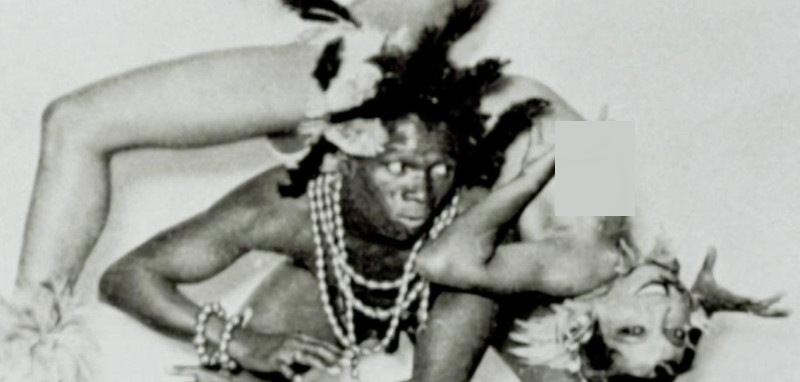

She became a nearly instant sensation. Billed as having come from an African tribe, she could dance like no other, taking what she had learned on the streets of Saint Luis including things like popping and locking, which she was doing decades ahead of time, to the stages of Paris.

Some have said that she’s the founder of much modern dance including hip-hop. Reviewers at the time called her style ‘uninhibited.’ Beyonce, among other modern celebrities have attributed some of their skills to Josephine’s influence.

It didn’t hurt that she was an exceptionally beautiful Black woman, a rarity in France. Furthermore, it didn’t hurt that she danced nearly naked, something that was somewhat common in Paris at the time. Did I say ‘nearly naked?’ She was absolutely topless other than some necklaces, and had invented a skirt made of sixteen rubber bananas that were hung from a belt and swayed back and forth in such a way that the audience could see everything. She was obviously not afraid to be seen in her entirety. According to some reports, she sometimes performed 100% naked.
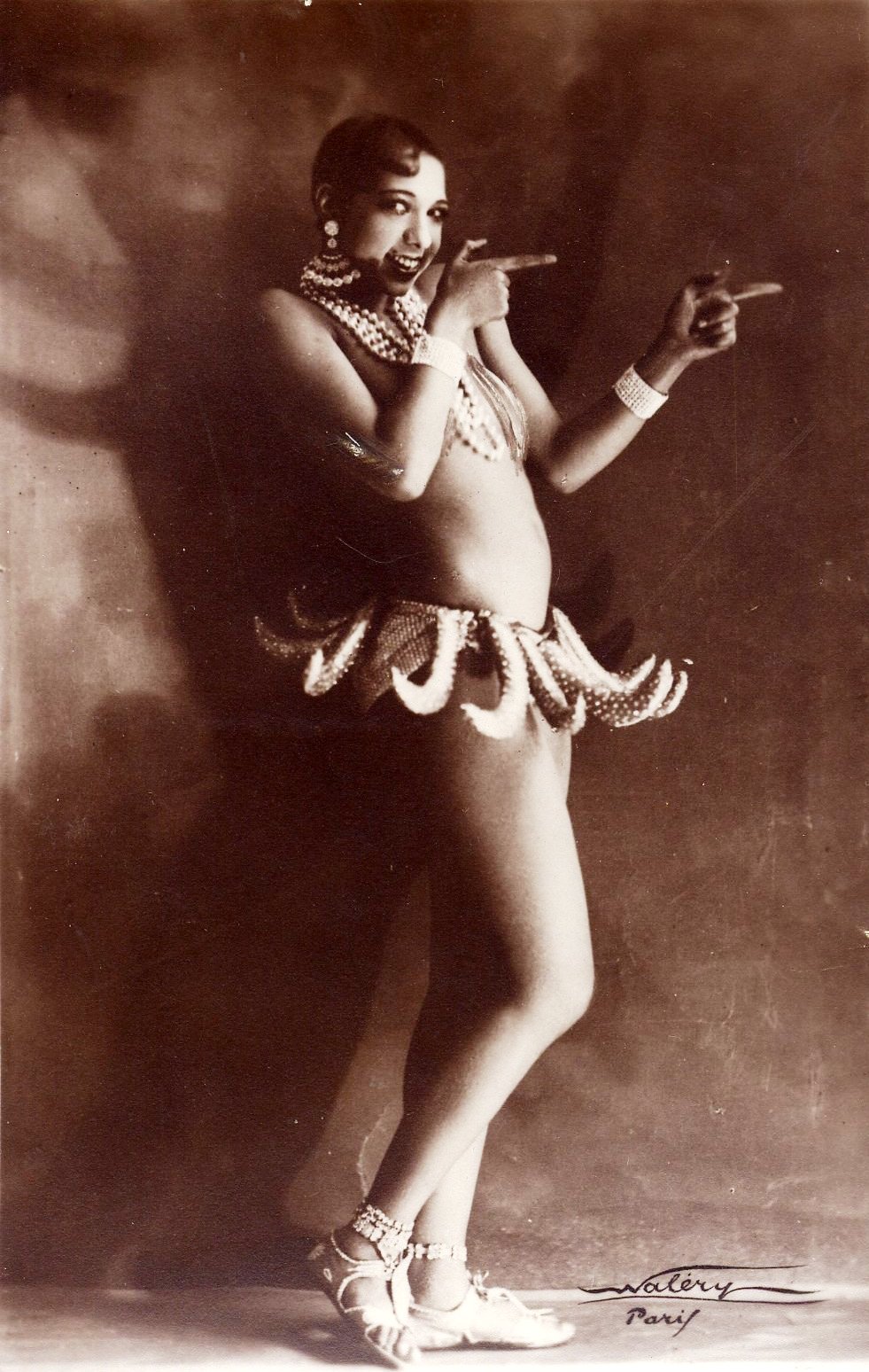
Josephine Baker in her banana skirt, also known as banana girdle

Two years later, Josephine Baker became the ‘Toast of Paris.’
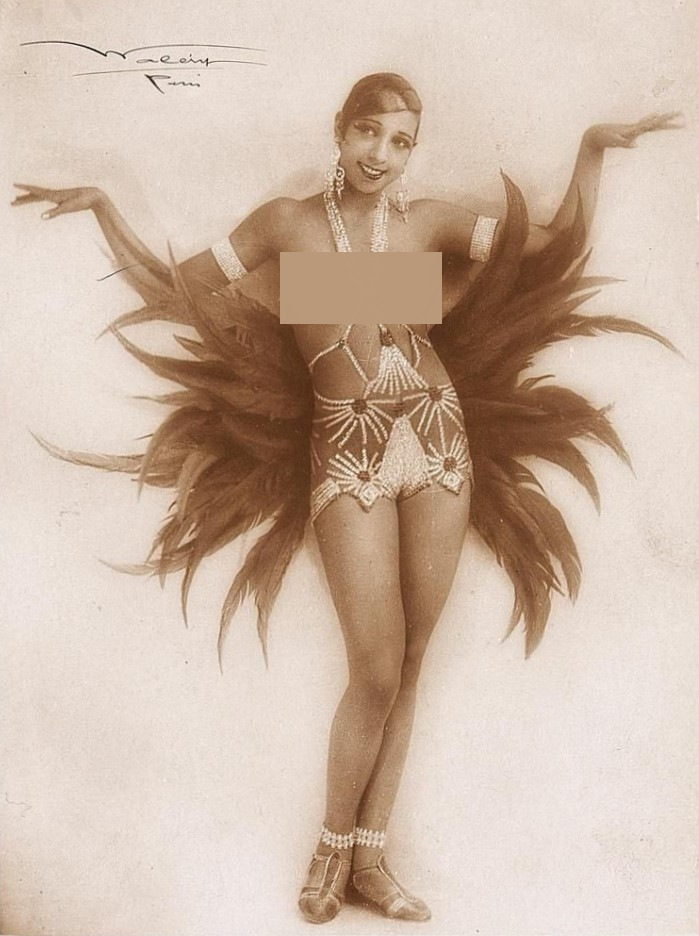
Josephine Baker, the Toast of Paris

Great opportunities came her way. She was the the first black star in a major motion picture, Siren of the Tropics, a silent film released in 1927. Later she starred in “Zuzu” in 1934, and “Princes TamTam” in 1935.

One of her trademarks was a spit curl, a little lock of hair that was pasted to her forehead, Betty Boop style. In fact Betty Boop, who came along in 1930, may have been inspired by Josephine Baker. Josephine started selling the paste she used for that spit curl, calling it BakerFix, and made a literal fortune with her acting plus that product.

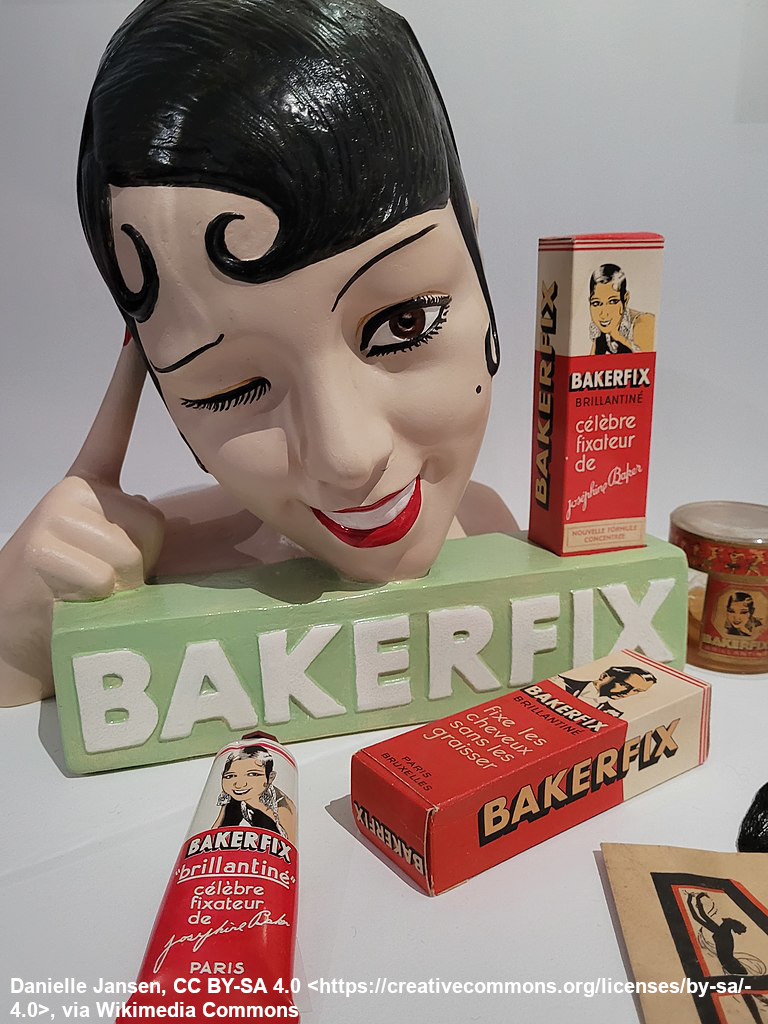

Another trademark, besides nudity in performing and the spit curl, was that she seldom if ever wore high heels, preferring flats. That was probably influenced by her dancing.

While many people have a housecat or a dog, Josephine fell in love with Chikita, a cheetah, giving her kitty a diamond collar that matched Josephine’s diamond bracelet. Josephine were sometimes spotted around Paris in her white convertible Rolls Royce, with Chikita by her side. She often performed with Chikita on stage. Sometimes the cat would wander down to the orchestra pit, scaring the musicians, which added to the show.

She fell in love with Giuseppe Pepito Abatino, a former stone mason from Sicily. Unlike her father and now estranged second husband, Pepito actually worked. He became her agent. She couldn’t marry him because she was still technically married to William.

Already on a spectacular projectory, with Pepito’s management, she became the most successful Black woman in Europe.

With all her success, she still missed America. She pestered Pepito to get her a booking on Broadway. He got her a starring role in the 1936 Zigfield Follies. However, this was America. She couldn’t drink from ‘white’ drinking fountains, couldn’t use ‘white’ bathrooms, or eat in ‘white’ restaurants. She had to use the service entrance of the very theater in which she was performing.

As you can imagine, she went back to France as soon as the Zigfield gig was done.

In time, she could have married Pepito, but he died of stomach cancer when she was 30 years old.

She counted among her friends Jean Cocteau, who is described in Wikipedia as “French poet, playwright, novelist, designer, filmmaker, visual artist and critic.”

Ernest Hemingway called her the ‘most sensational woman anyone ever saw.’

Picasso featured her in art.

So what about her sex life? When asked, she would say she believed sex was a good workout, it was fun.

She had many affairs with men, sometimes picking up random guys in nightclubs. Women too. She had an affair with Ada “Bricktop” Smith, who was the other famous Black woman in Paris at the time. Ada was a singer, dancer, and owned a nightclub in Paris.
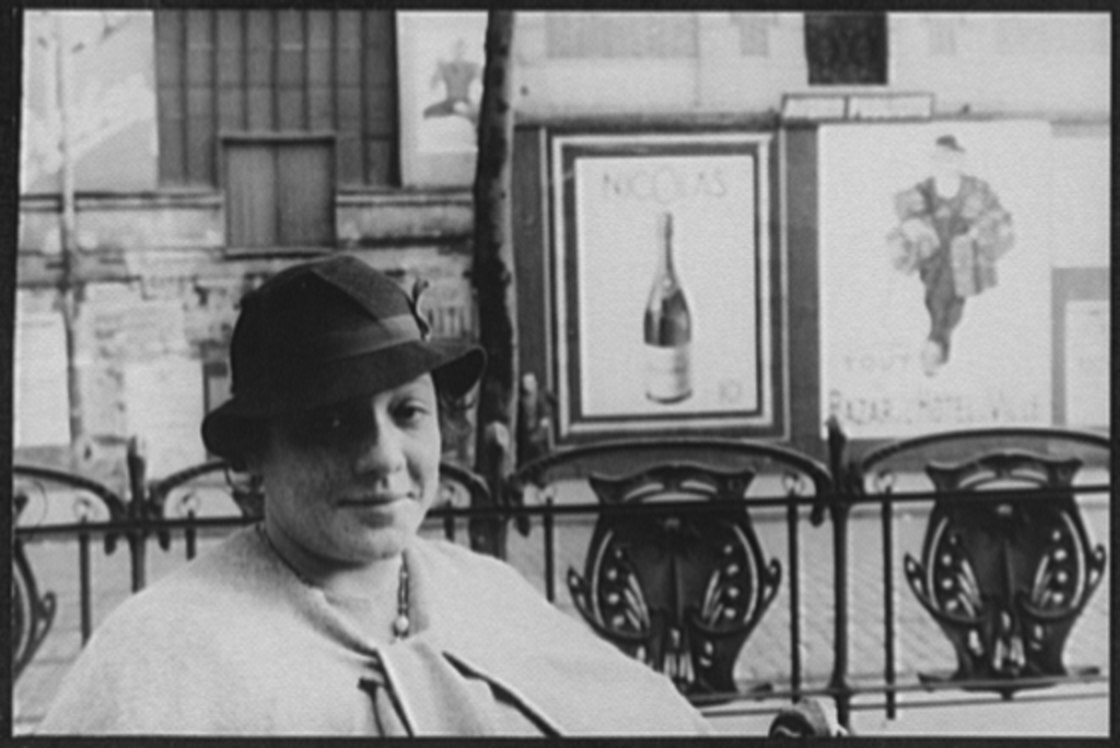
Josephine Baker's Friend, Ada Bricktop Smith
Ada “Bricktop” Smith

According to a Wikipedia article, Josephine also had affairs with French novelist Colette, and possibly Frida Kahlo.
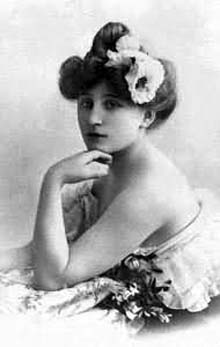

Colette
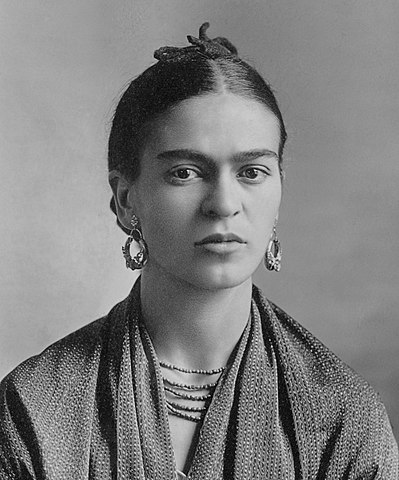
Frida Kahlo

Time went on. She continued in her success. In 1937 she married Jewish French industrialist, Jean Lion. For a year, they had a wonderful time, riding horseback, flying in private planes, going fox hunting, and wining and dining with the biggest of celebrities. She left Jean after fourteen months, at least in part because of her many affairs with both men and women.

Along came World War II. She hated the Nazis. They were like prejudiced white people in America, but they tormented Jews instead of Black people. Josephine also loved France so much, the country where she was invited to dine with white people for the first time in her life, the country where everyone adored her for who she was rather than shun her just for her skin color, that she signed up as a spy with the French Resistance.

She also performed for the troops. She never charged any money for these performances. At the same time, being the celebrity that she was, she could wine and dine with many influential people, including Nazi dignitaries. She was able to get next to them – in bed one would assume, listen to their secrets, and pass them on to the French military intelligence and eventually President Charles deGaul.

At one point, she was asked to set up an army entertainment camp in Morocco. She did entertain the troops, but it was really a cover for her continuing spying activity. While in Morocco, she nearly died from the last in a series of miscarriages, probably brought on by improper abortions. This one was so bad that she developed peritonitis and a blood infection. Her uterus was removed.

Even as she was still recovering from that, she continued not only her spy work, but also, along with a entourage, she entertained the troops, charging no money, and allowing no civilians in the audience.

When the German men spilled the beans, ‘mansplained’ as one biographer called it, she wrote notes that she folded into her panties. She had no problem passing through customs as she went from country to country. No one was going to strip search the famous Josephine Baker. Instead, customs officials asked for her autograph.

Another bold trick she used to smuggle information was to write in invisible ink on her sheet music. Of course she’d always be carrying sheet music in her business.

When she was forced to leave France, she took out as many Jewish refugees as she could fit in her Rolls Royce.

The war ended. Time went on. The little girl who grew up abused and in abject poverty remained one of the biggest and wealthiest stars in Europe.

In 1947 at the age of 41, Josephine married orchestra leader, Jo Bouillon. Jo Baker and Jo Bouillon.

By the age 45, she could sing in English, French, Italian, Portuguese, Yiddish.

May 20, 1951 was declared Josephine Baker day by the NAACP.

Even though she could perform at the world-renowned Stork Club, she evidently couldn’t sit in the audience. When the management tried to expel her, Grace Kelly, later to become Princess Grace of Monaco, held her arm and walked out with her, including Grace’s entire entourage. They became close friends.
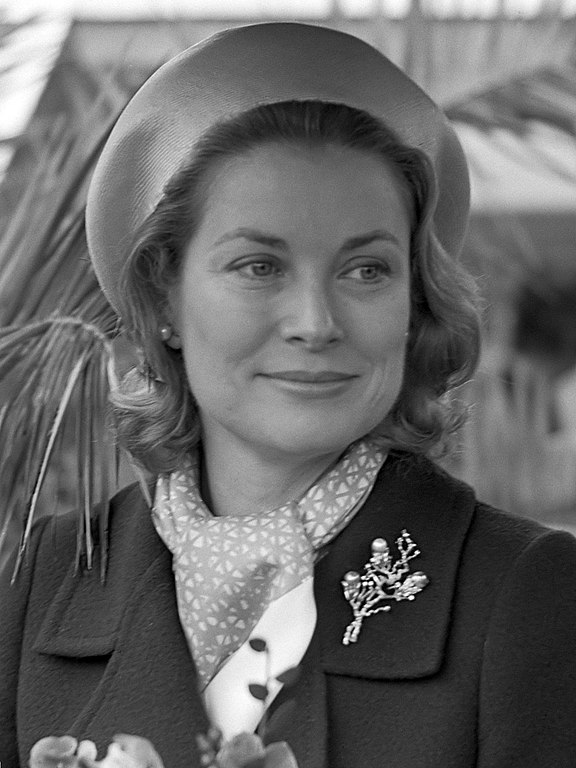
Also in 1951, while performing at the Stork Club, she complained about their policy of discouraging black audience members. Her friend Walter Winchell did not come to her defense, she she got mad at him. He retaliated by calling her a Communist in his newspaper column. That, among other complications, resulted in the government canceling her visa. Once again, she had to return to France.

She came back a few times to the United States, where she was also a celebrity, but not on the same scale as in France. In the US, she was still a ‘Negro’ and relegated to only designated restaurants, bathrooms and hotels. At one point, she was turned down by 36 hotels because she was black. People were still so fucked up about race in America that her magnificent performance in the follies earned her bad reviews.

Here’s a Time Magazine review:

“Josephine Baker is a Saint Louis washwoman’s daughter who stepped out of a negro burlesque show and into a life of adulation and luxury in Paris during the booming 1920s. In sex appeal to jaded Europeans of the jazz-loving type, a Negro wench always has a head start. The particular tawny tint of tall and stringy Josephine Baker’s bare skin stirred French pulses, but to Manhattan theater-goers last week, she was just a slightly buck-toothed young negro woman who’s figure might be matched in any nightclub show, who’s dancing and singing could be topped practically anywhere outside France.”

Shortly after the war, and possibly starting before, she began executing a brilliant idea, one many years ahead of its time. In 1936 she had purchased Château des Milandes, a chateau with a village that she hoped to turn into something like Dollywood, with peacocks, a J-shaped swimming pool, hotel, rides, and much more.
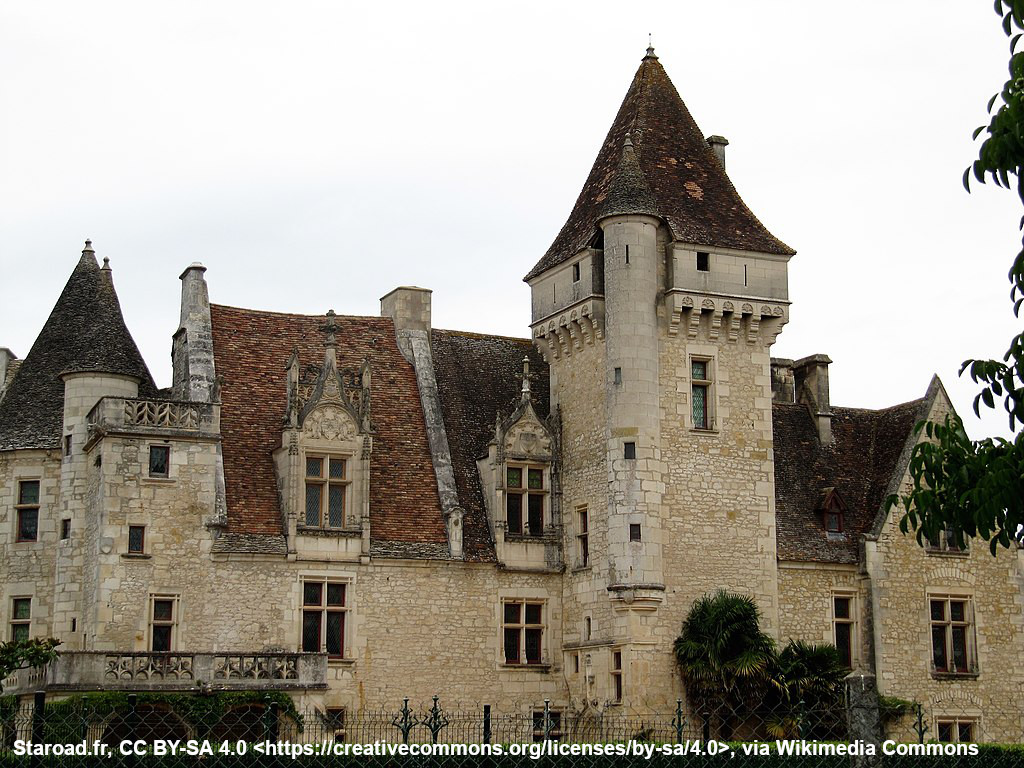
She also started adopting children, but not just any children. She wanted variety for a very special reason. She initially wanted a white child, a black child, a yellow child and a red child. She did manage to adopt White, Black and Asian children, but never managed to find a ‘red’ – American Indian child.

In total, she had twelve kids, ten boys and two girls, that she called her Rainbow Tribe. The kids she selected came from varied backgrounds, Catholic, Jewish and Muslim. She was intent on proving that people of different backgrounds can get along just fine. She said, “They will serve as an example of true democracy and be living proof that if people are left in peace, nature takes care of the rest.”

Most of her kids grew up to become successful, although one did commit suicide as an adult.

One of her children, Finnish-born Jarry, came out as gay at the age of 15. Uncharacteristically, Josephine, herself a practicing bisexual, threw him out, forcing him to live with his adoptive father, Jo Bouillion, by then in Argentina. This must have been due to what she figured would be negative publicity for her Rainbow Tribe. But still! Right?

How was Josephine as a person? People say she was sweet and kind, but also could act like a demanding brat, in the way that rapid wealth can spoil people.

When in America, she was a big civil rights advocate, being the only female speaker in the 1963 March on Washington.

When Dr. Martin Luther King was assassinated, his wife, Coretta Scott King, asked Josephine to lead the civil rights movement, but she turned it down out of consideration for the safety of her children.

The Château des Milandes experiment never quite worked out. If you’ve ever owned a village with a chateau, then you know they can absorb a lot of money. In fact, Château des Milandes ate up all of Josephine’s fortune. By 1968, she was flat broke, and was evicted from the villa. Leaving her home of 32 years was not easy for her. She had to be removed bodily.

Fortunately, her friend actress Grace Kelly, gave her an apartment in which she could stay and live in style for the rest of her life.
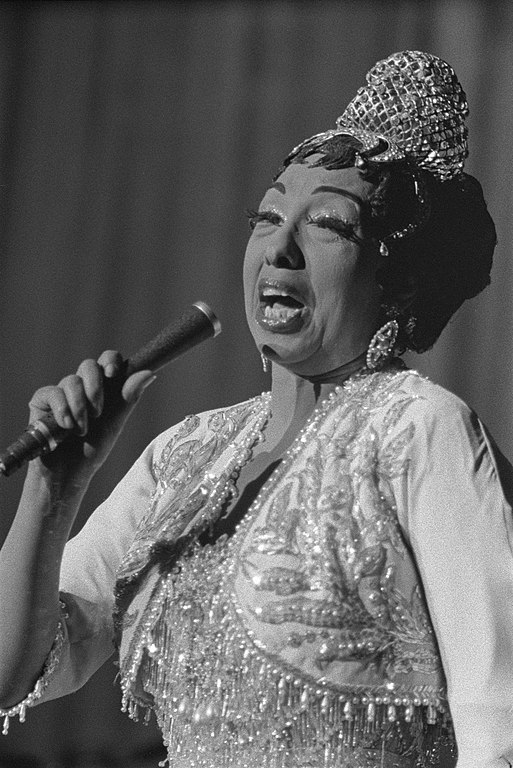
In 1975, at the age of 68, Josephine Baker was still a very well-regarded celebrity. A sold-out show celebrating Josephine’s fifty years in entertainment was arranged at Carnegie Hall. She performed brilliantly. The show was attended by Mick Jagger, Sophia Loren, Jackie Onasis, among others.

Four days later, she died peacefully in her bed, surrounded by newspapers all with glowing reviews of her performance.

20,000 people attended Josephine Baker’s funeral.
Posted on

Betty Dodson

Additional Adult Topics

Betty Dodson: Sex Educator, Pioneer, and Unapologetic Advocate for Pleasure

Betty Dodson was, in many ways, ahead of her time—a fierce and unapologetic champion for sexual liberation and women’s rights in the realm of pleasure. She was like the sex-positive, no-BS aunt who handed you the keys to the kingdom of self-love and then told you, “You’re welcome.” A modern-day sexual sage, Betty did more than just break taboos – she rewrote the book on what it means to be comfortable with your own body and to embrace the pursuit of pleasure, even in the face of cultural and societal judgment.

Born on August 24, 1929, in Wichita, Kansas, Betty’s journey into the world of sex education wasn’t exactly paved with roses. The world she grew up in was, to put it mildly, a bit tight-lipped about anything remotely related to sex. In fact, the entire concept of female sexual pleasure was tucked away like an embarrassing secret, something to be ignored or barely acknowledged. But Betty wasn’t having it. She had questions, big ones, and she wasn’t going to stop asking until she found the answers.

Dodson’s early life was shaped by a certain kind of curiosity about her own body, and that curiosity never went away. After earning a degree in fine arts, she ventured into the realm of teaching art and drawing, but the itch to discuss sex and its complexities never left her. In the 1960s, as America was in the midst of massive cultural upheaval (think: sexual revolution, civil rights movements, and Woodstock), Betty found herself increasingly drawn to the taboo topic of sexuality – specifically, women’s sexuality. She realized that, while the feminist movement was gaining momentum, women’s own sexual pleasure remained largely ignored.

In her early twenties, she worked as an advertising illustrator in Manhattan. She married an advertising directory, Federick Lief. They stayed married for only six years during which her sex life was fairly conventional. It was after their divore that Betty started expressing her true sexual self. For instance, she held a one-woman show of erotic art at the Wickersham Gallery in New York City.

Enter Betty’s first book, Sex for One: The Joy of Selfloving, published in 1974 was eventually translated into 25 languages. In a world where women were often still expected to suppress their desires, Betty boldly raised her hand and said, “Let’s talk about it.” In no uncertain terms, she made it clear that self-pleasure was not only normal, but also vital for a healthy, happy life. The book was revolutionary, not just because it spoke openly about masturbation (an act still surrounded by shame and silence at the time), but because it suggested that women should be in charge of their own sexual satisfaction. What a concept!

This is a showcase site for Jeff Napier of US-Web-Design. Surprisingly low-cost solutions for all your website and marketing needs. More...

But Betty’s real magic wasn’t just in what she wrote; it was in what she did. She didn’t just talk the talk, she walked the walk, and with her unique brand of no-nonsense, down-to-earth wisdom, she set out to help women everywhere feel comfortable with their bodies and their sexuality. One of her most famous methods was what she dubbed the “Body Mapping” technique – a self-exploration exercise designed to help individuals (especially women) map out their own bodies, focusing on discovering what felt good and where. Essentially, she gave women the permission to touch themselves without guilt or shame, something society had spent centuries trying to make them feel was wrong.

Betty held get-togethers in her own living room, and occasionally in larger public venues in which women, and sometimes men, would get naked together and explore masturbatory pleasure.

These get-togethers, which were first more like orgies, evolved. From Wikipedia:

“From the 1970s onwards, she organised Bodysex workshops. Bodysex is a practice developed by Betty Dodson to help women connect with their bodies and erogenous zones, heal shames, improve pleasure perception, and promote self-love. In the workshops, women were guided to explore their bodies and masturbate together to learn, with guidance, how to have an orgasm as a woman alone and with a sexual partner. Her two-hour sessions featured 15 naked women, each using a Hitachi Magic Wand to aid in masturbation. Dodson used the Magic Wand, a mains-powered [corded, plug into a wall outlet] vibrator, in demonstrations and instructional classes to instruct women regarding self-pleasure techniques. She provided a Magic Wand to each woman for these sessions. She recommended women put a small towel over their vulva in order to dull the sensation of the vibrator and prolong the pleasurable experience. The essence of her method was to provide vaginal and clitoral stimulation at the same time. Dodson taught thousands of women to achieve orgasm using this technique. Her technique became known as the Betty Dodson Method.”

Betty fully participated in these workshops well past her eightieth birthday.

But Betty didn’t just change things for women. Her work laid the groundwork for broader conversations about sexual pleasure in a world where discussions of sex often felt like something you had to sneak around to talk about. She broke down barriers in ways that many other sex educators could only dream of doing. Dodson wasn’t about shame or guilt; she was about pleasure and pride.

As the decades rolled on, Betty became known for her frankness and humor. She would talk openly about orgasms, masturbation, and the importance of being fully in tune with your sexual self, all while cracking jokes that made you feel like you were having a conversation with your best friend, not a distant, clinical figure. A lot of sex educators might come off as clinical or stiff, but not Betty. She was an art lover, an advocate, and most importantly, a person who got it. She was never shy to use humor to get her point across – whether it was making jokes about how “everybody’s got a clitoris” or admitting that sometimes, self-love is just about a little solo dance party in your bedroom.

Betty Dodson also became a pioneer in the fight for sexual freedom, particularly in helping people – especially women – embrace the idea that their bodies were their own. In a time when women were still fighting for control over their own reproductive rights and bodily autonomy, Betty was there, saying, “If you don’t own your body, who does?”

She became a fierce advocate for not just sexual pleasure but for sexual liberation in general. Her approach was straightforward: your body, your rules. If you want to learn how to give yourself an orgasm, she was there. If you needed advice on navigating relationships and intimacy, Betty was there. She didn’t just teach about the physical act of sex; she taught about body autonomy and mental freedom too.

Even in her later years, Betty continued to push the boundaries of what it meant to be a liberated sexual being. She became a public figure, speaking openly about her own experiences, including her own journey of discovering sexual fulfillment at an age when many people are worried about their retirement plans. She was in her 80s and still teaching, still advocating, still living unapologetically. You could almost hear the collective groan of societal norms quaking in fear as Betty continued to lay waste to outdated ideas.

What Betty Dodson left behind wasn’t just a library of books or a list of classes. She left behind a cultural shift, a generation (and more) of people who are now more comfortable with their bodies, more comfortable with their desires, and, most importantly, more comfortable with saying, “This is who I am, and I’m damn proud of it.” Through her work, she created an entirely new landscape of sex education – one that focuses on openness, honesty, humor, and self-respect.

By the time Betty Dodson passed away on November 25, 2020 at the age of 91, she had lived a life that was anything but conventional. She’d left behind a legacy of sexual empowerment, breaking down shame-filled walls brick by brick. Her work—and her wit—have inspired countless individuals to reclaim their own pleasure, free from guilt and societal expectations. In her own words, she put it best: “Pleasure is the ultimate act of resistance.” And Betty? She resisted. She resisted, and she taught the world how to do it joyfully.

The picture above is Betty when she was 81 years old. It seems sex is good for one’s health into old age!

Betty Dodson might be gone, but her influence lives on. For every woman (or man, or anyone in between) who feels liberated to express their sexual needs, desires, and identities, Betty’s legacy is still there, whispering, “You are your own authority on pleasure. Enjoy it.”

Betty’s work lives on under the management of her protogé Carlin Ross, through the website dodsonandross.com

See also Betty Dodson’s Kindness.

Posted on

Toni Morrison

Early Life and Education

Toni Morrison was not born “Toni.” Her birth name was Chloe Ardelia Wofford.

She chose “Toni” from her baptismal name, Anthony, which was easier for classmates to pronounce.

She was born in Lorain, Ohio, in 1931, a racially integrated working-class town, which influenced her writing.

She learned to read before kindergarten and was reading classic literature by the age of 5.

Her father distrusted white people so deeply that he wouldn’t let them in the house—even the landlord.

When the family was late paying the rent, the landlord burned their house down.

This is a showcase site for Jeff Napier of US-Web-Design. Surprisingly low-cost solutions for all your website and marketing needs. More...

She studied Latin in high school, which she later said gave her a deep appreciation for language structure.

Academic and Professional Career

She was the first Black woman to edit fiction at Random House, starting in the late 1960s.

She helped publish and elevate major Black voices, including Angela Davis, Muhammad Ali, and Toni Cade Bambara.

She didn’t publish her first novel, The Bluest Eye, until age 39, while raising two sons as a single mother.

She was a professor at multiple prestigious universities, including Princeton, where she taught for 17 years.

She never owned a computer, preferring to write in longhand with pencil and yellow pads.

She edited while cooking. She often kept drafts in the kitchen, editing between meals.

Literary Achievements

Beloved was inspired by a true story of an enslaved woman, Margaret Garner, who killed her own child to save her from slavery.

Beloved did not win the National Book Award, leading to an open letter protest signed by 48 Black writers.

She was the first African American woman to win the Nobel Prize in Literature, awarded in 1993.

She won the Pulitzer Prize for Beloved in 1988—after being famously snubbed for the National Book Award.

Her novels often include ghosts, folklore, and myth, blending realism with the supernatural.

She once wrote opera librettos, including Margaret Garner in 2005.

She published only 11 novels in her lifetime, yet reshaped the American literary canon.

Personal Life and Personality

She divorced at 39 and never remarried, saying she was too busy and too happy on her own.

She loved gardening and cooking, and said she could tell if a person could cook just by looking at them.

She was a night owl, writing early drafts in the pre-dawn hours before her children woke up.

She once worked as a theater usher, and was fired for talking too much during shows.

She rarely gave blurbs for other writers’ books, but once did so for The Underground Railroad by Colson Whitehead.

Influence and Legacy

Barack Obama awarded her the Presidential Medal of Freedom in 2012.

She taught Oprah Winfrey to think deeply about literature, influencing Oprah’s book club and her own acting in Beloved.

She rejected the label “African American writer” as limiting, insisting that her books were “about the human condition through the lens of African American experience.”

Her books are banned in many schools, often because of their themes of race, trauma, and sexuality.

She was a lifelong critic of American racism, describing it as a “distraction” meant to keep people from realizing their own potential.

Even in her final interviews, she was intellectually fierce and deeply funny, saying: “I’m already discredited. That’s why I’m so dangerous.”

See also Toni Morrison’s Kindness.

Posted on

Oprah

Early Life and Struggles

Her real name is Orpah. Named after a biblical figure, it was often mispronounced as “Oprah,” and the name stuck.

She was born in poverty in rural Mississippi in 1954, to a teenage single mother.

She wore potato sacks as dresses as a child because her family couldn’t afford proper clothing.

She learned to read at age 3 and was nicknamed “The Preacher” because of her dramatic readings in church.

She was sexually abused by multiple family members starting at age 9, a trauma she has publicly shared to inspire others.

She became pregnant at age 14, but the baby died shortly after birth.

This is a showcase site for Jeff Napier of US-Web-Design. Surprisingly low-cost solutions for all your website and marketing needs. More...

Education and Career Beginnings

She won a full scholarship to Tennessee State University, where she studied communications.

She became the youngest and first Black female news anchor at Nashville’s WLAC-TV at age 19.

She was demoted from news anchor because producers said she got “too emotionally involved” in her stories.

Breakthroughs and the Oprah Show

She turned a failing talk show into a sensation. Her show AM Chicago rocketed to #1 in a month after she took over.

She owned her own show. Unlike most TV hosts, she negotiated ownership of The Oprah Winfrey Show through her company, Harpo Productions.

Harpo is Oprah spelled backward.

She’s one of the first Black female billionaires and was the richest African-American of the 20th century.

Pop Culture and Influence

She was nominated for an Oscar for The Color Purple (1985), in her first acting role.

She has a Barbie doll made in her likeness.

Her endorsement of Barack Obama in 2008 is estimated to have given him over 1 million extra votes.

The Oprah Book Club turned unknown books into instant bestsellers. The Deep End of the Ocean sold over 1 million copies in days.

She once gave away 276 cars to her studio audience in one episode, “You get a car!” became iconic.

She was sued for defamation by Texas cattlemen in 1998 over her comments on beef safety. She won.

Philanthropy and Legacy

She opened a school for girls in South Africa in 2007, investing over $40 million of her own money.

She’s donated more than $400 million to educational causes, scholarships, and underserved communities.

She is the first Black woman to appear on the Forbes 400.

She helped bring Beloved to the big screen, a passion project based on Toni Morrison’s novel.

She has her own cable network, OWN (Oprah Winfrey Network), launched in 2011.

Surprising Personality and Quirks

She once spent $38,000 on a single bath tub, custom-designed to fit her body exactly.

She has a fear of chewing gum. A childhood trauma involving gum stuck to furniture led to a lifelong disgust.

She keeps journals and has written in them consistently since she was 15.

She doesn’t use her last name casually. Most people know her simply as “Oprah,” a global one-name brand.

She was almost cast as Mrs. Which in A Wrinkle in Time years earlier, but the movie was delayed until 2018—when she finally got the role.

See also: Oprah’s Acts of Kindness.

Posted on

10 Miley Cyrus Jokes

See Also:

10 Ways To be More Like Miley Cyrus

10 Famous Quotes by Miley Cyrus

Miley Cyrus, Acts of Kindness

Miley Cyrus Revisiting the Wrecking Ball

Miley Cyrus, What AI Has to Say

Miley Cyrus Quiz

Miley Cyrus, Crazy Facts

Enjoy these light-hearted, respectful jokes about Miley Cyrus.

Miley’s life is proof that teenage rebellion can eventually win you a Grammy.

She has the energy of someone who would elope with herself just to make a point.

She could sing the phone book and somehow make it sound like emotional closure and a barn fire.

This is a showcase site for Jeff Napier of US-Web-Design. Surprisingly low-cost solutions for all your website and marketing needs. More...

Miley doesn’t break rules. She invites them over, interviews them on live TV, and then sets them on fire.

She once twerked so hard Siri asked if she needed medical assistance.

She could show up in a potato sack and make it look like couture. She probably already has.

Miley doesn’t follow trends—she shows up, destroys them, and builds something weird and better.

If she ran for president, her campaign slogan would just be “Y’all Ain’t Ready.”

Miley Cyrus walked into a recording studio and said, “I’m ready to rock!” The sound engineer replied, “Great, just don’t break anything this time.”

You know you’ve had a long week when you feel like you’ve been on a “Wrecking Ball” all day.

What’s the difference between Miley Cyrus and a chameleon? One changes her image frequently, the other just changes color.

Why did the chicken cross the road? To get to the other side, where Miley Cyrus wasn’t performing.

I tried to sing like Miley Cyrus, but my dog just looked at me like I’d lost my mind.

What do you call Miley Cyrus’s autobiography? “From Montana to Mayhem.”

My cat started singing, and I swear it sounded like a tiny, furry Miley Cyrus.

What’s Miley Cyrus’s favorite bedtime story? “The Little Engine That Could… Twerk.”

I tried to explain Miley Cyrus’s career to my grandmother. She just nodded and said, “Bless her heart, she’s certainly unique.”

See Other Articles About Miley Cyrus.

Posted on

Billie Eilish Jokes

Here are some light-hearted, respectful jokes about Billie Eilish.

Billie Eilish looks like she knows exactly where your soul is stored and is judging its playlist.

If Billie Eilish ever smiled for too long, the sky might assume it’s allowed to be blue again.

Her songs sound like what it feels like when the Wi-Fi goes down during an existential crisis.

Billie Eilish makes music for people who want to win arguments without raising their voices.

Billie Eilish is so famous for being dark and mysterious, sunshine apologizes when it hits her face.

This is a showcase site for Jeff Napier of US-Web-Design. Surprisingly low-cost solutions for all your website and marketing needs. More...

Her idea of a fun Friday night probably involves staring at a lava lamp and silently judging capitalism.

Billie Eilish’s songs are so emotional, therapists probably play them in waiting rooms to get clients in the mood.

How does Billie stay calm during award shows? She just imagines everyone in oversized hoodies.

You know someone’s deep when their fashion sense screams “ghost of a misunderstood poet.”

Billie Eilish looks like she wakes up in the morning just to say, “Ugh, morning.”

Billie Eilish is so cool, air conditioning units study her technique.

I tried listening to Billie while doing chores, and my dishes got clinically depressed.

She looks like she keeps a diary that writes itself out of fear.

If Billie hosted a game show, every prize would be introspection and a black hoodie.

She could turn a birthday party into an avant-garde documentary about loneliness.

Billie sings like she’s revealing ancient truths through a fog machine.

She makes you feel things you didn’t know you repressed, like that time in 5th grade when someone took your pudding.

Billie is the only person who could turn whispering into a power move.

Her concerts feel like guided tours through your unresolved emotions.

Billie could narrate a horror film and you’d somehow root for the ghost.

I’m pretty sure her ideal vacation is just staring at the ocean while contemplating entropy.

Listening to Billie is like hugging your anxiety until it starts sobbing.

If aliens found only Billie’s discography, they’d assume humans survive purely on feelings and oversized pants.

Her hair changes colors so often, chameleons probably follow her on Instagram for inspiration.

Billie Eilish is so effortlessly mysterious, even her own shadow probably wonders what she’s thinking.

See Also: Other Articles About Billie Eilish.