The Greek word for brotherly love is Philadelphia.
Category: Travel and Geography
Place Names
Here are some places with unusual names:
Truth or Consequences, New Mexico
Experiment, Georgia
Don’t Handle the Bobcats Without Gloves, Texas
Mars, Pennsylvania
Embarrass, Wisconsin
Mexican Hat, Utah
Enigma, Georgia
Old Joe, Arkansas
Smackover, Arkansas
Kissimme, Florida
Social Circle, Georgia
Waterproof, Louisiana
Why, Arizona
Zigzag, Oregon
Talent, Oregon
Zyxyz, California
Hygiene, Colorado
Imalone, Wisconsin
Gnaw Bone, Indiana
Bunlevel, North Carolina
What Cheer, Iowa
Humptulips, Washington
Scalp Level, Pennsylvania
Cheesequake, New Jersey
Looneyville, West Virginia
Monkey’s Eyebrow, Kentucky
Unusual Housing
There is a house in Margate, New Jersey that is made in the shape of an elephant. A home in Norman, Oklahoma is shaped like a chicken.
There is a house in Massachusetts that is made entirely from newspapers. The floors, walls, even the furniture is made from newspaper.
Another house, this one in Canada, is made of 18,000 discarded glass bottles.
Pavement
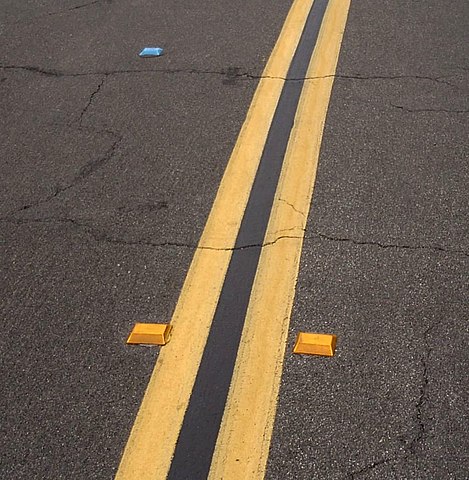
If you put all the pavement in America into one place, it would more that totally cover the state of Georgia.

Twenty-four percent of Los Angeles is paved for roads and parking.
The Interstate Highway System in the U.S. is the largest highway system in the world, totaling about 48,000 miles (77,000 kilo meters), enough to wrap around the world at the equator twice.
The World Record for the longest-lasting pavement goes to a concrete section of U.S. Route 66 in Oklahoma, which lasted over 80 years.
Recycling is a big part of modern paving; materials like rubber, glass, and even old asphalt are often buried in streets.
This is a showcase site for Jeff Napier of US-Web-Design. Surprisingly low-cost solutions for all your website and marketing needs. More...
Noise-reducing pavements are designed to help lessen the noise produced by tires on the road.
Permeable pavements allow water to pass through them, helping reduce runoff and preventing floods.
Glow-in-the-dark pavements are being developed to enhance safety and reduce energy consumption from streetlights.
Solar roadways are an innovative idea where pavements can generate electricity from solar panels embedded in them.
Reflective pavements help keep roads cooler by reflecting more sunlight.
Microbial asphalt uses bacteria to repair tiny cracks, extending the pavement’s lifespan.
The roughness of pavement is measured by the International Roughness Index (IRI).
The first asphalt road in America was laid in 1870 in Newark, New Jersey.
Porous asphalt is used to improve water drainage and reduce hydroplaning risks.
The oldest known paved road is in Egypt, dating back to 2600 BC.
Paved surfaces can contribute to urban heat islands, where cities become warmer than surrounding areas, raising the temperature in some areas by as much as 20 degrees Fahrenheit (11 Celsius).
Some pavements are designed to filter pollutants from stormwater, improving water quality.
Reno, Nevada and Los Angeles
Reno, Nevada is farther west than Los Angeles, California.

Smallest Church
The smallest church in the world is in Kentucky. There is room inside for three people
Largest Cathedral
The largest Gothic cathedral is not in Rome or Paris, but on Amsterdam Avenue in New York City.
Women and Liechtenstein
Worst Vote Ever
See also: Surprising Facts About Voting.
In 1968 Liechtenstein held a vote to determine whether women should be allowed to vote. Women were allowed to participate only in this vote, because until then women were not allowed to vote. The result of the vote was that women were not allowed to vote.
See the worst of everything: The Worst


