Category: Travel and Geography
Marin County Quiz
Ukraine, What AI Has to Say
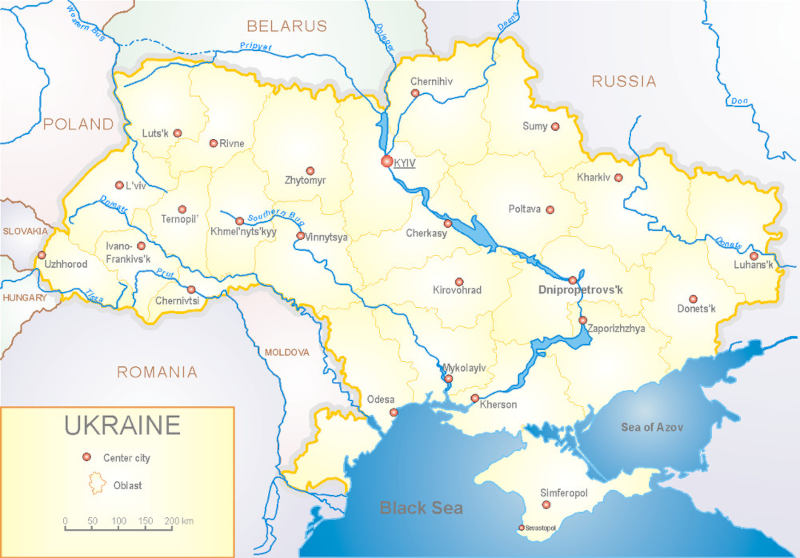
I asked AI, “Please tell me 30 unusual or unexpected facts about Ukraine.” Here is the response. You may wont to double-check facts. Some of this may not be true.
Sure thing! Here are 30 unusual and unexpected facts about Ukraine:
Ukraine is the largest country entirely within Europe, with a total area of 603,550 square kilometers
The capital city, Kyiv, is home to the world’s deepest metro station, Arsenalna, which is 346 feet underground
Ukrainians wear their wedding rings on the right hand, not the left
The national dish of Ukraine is borscht, a beet soup
This is a showcase site for Jeff Napier of US-Web-Design. Surprisingly low-cost solutions for all your website and marketing needs. More...
Ukraine is the world’s largest producer of sunflower seeds and sunflower oil
The Ukrainian flag’s colors, blue and yellow, represent clear skies and fertile fields, respectively
The Trembita, the world’s longest musical instrument, originates from Ukraine
Ukrainians celebrate Ivana Kupala Day, a traditional festival where couples jump over bonfires to test their love
The city of Lviv has over 2,500 architectural and historical monuments
Ukraine has seven UNESCO World Heritage Sites
The Antonov An-225 Mriya, the world’s largest airplane, was built in Kyiv during the Soviet era
Ukrainians have a tradition of making Pysanky, intricately decorated Easter eggs
The word “Ukraine” means “borderland” in old Slavic
Ukraine is known as the “breadbasket of Europe” due to its fertile land
The city of Odesa is famous for its funicular railway, which connects the port to the city’s upper part
Ukraine has a rich tradition of folk music and dance, with many regional variations.
The Asgarda are a group of Ukrainian women who train in martial arts in the Carpathian Mountains
Ukraine has a strong tradition of weaving and embroidery, with the Vyshyvanka being the national costume
The Yalta Conference, a significant World War II meeting between Churchill, Roosevelt, and Stalin, was held in Crimea, Ukraine
Ukraine has a rich literary tradition, with famous writers like Taras Shevchenko and Ivan Franko.
The city of Lviv is home to 1,500 cafes, the most per capita of any city in the world
Ukraine has a tradition of making salo, cured pig fat, which is often served with garlic and onions
The Ukrainian national drink is horilka, a strong alcoholic beverage often served with chili pepper
Ukraine has a strong tradition of Christmas caroling, with groups of singers known as Koliadnyky
The city of Kyiv boasts up to three official witch gathering places called Lysa Hora (Bold Mountain)
Ukraine has a rich tradition of puppetry, with the famous puppet theater in Kyiv
Ukraine has a strong tradition of martial arts, with many schools and training centers across the country.
The Ukrainian language uses the Cyrillic alphabet, which has 33 letters
Ukraine has a strong tradition of environmental activism, with many groups working to protect the country’s natural resources.
Ukraine has a rich tradition of folk art, with many artists creating beautiful works inspired by the country’s history and culture.
The Crazy Engineering of Venice
Venice behaves less like a normal city and more like a floating historical experiment that somehow kept working for 1,500 years. Beneath the postcard views are some wonderfully strange facts:
1. The city stands on millions of wooden piles
Venice is built on millions of tree trunks hammered deep into lagoon mud. These piles came from forests in what are now Slovenia, Croatia, and northern Italy.
Odd twist: underwater and sealed from oxygen, the wood hardened almost like stone.
2. The canals function as Venice’s streets
Instead of roads, the city has about 150 canals and more than 400 bridges. The main watery boulevard is the Grand Canal, which snakes through the city like a giant backwards “S”.
This is a showcase site for Jeff Napier of US-Web-Design. Surprisingly low-cost solutions for all your website and marketing needs. More...
3. The famous gondolas must all be black
Today every traditional Gondola is painted black. A law introduced centuries ago banned flashy decoration because wealthy Venetians were competing with increasingly extravagant boats.
4. The city was once a powerful global empire
The Republic of Venice ruled major trade routes across the Mediterranean for about 1,000 years. At its peak it controlled parts of modern Greece, Croatia, and the eastern Mediterranean.
5. Venice has no cars at all
Inside the historic center of Venice, there are no cars, buses, or bicycles. Everything travels by boat or by foot, including ambulances, garbage trucks, police, and even funeral services.
6. The city slowly sinks… but unevenly
Venice is sinking a few millimeters per year. Combined with rising seas, this causes periodic flooding called “acqua alta” (high water). Some parts flood far more often than others.
7. A massive flood barrier now protects it
To fight flooding, Italy built the MOSE Project. Huge gates rise from the seabed during high tides to temporarily seal the lagoon from the Adriatic Sea.
8. St. Mark’s Square used to be the city’s living room
St. Mark’s Square is the only place in Venice officially called a “piazza.” All other squares are called “campi” because they were originally grassy fields.
9. Venice invented quarantine
The word quarantine comes from the Venetian practice of isolating ships for 40 days (“quaranta giorni” in Italian) during plague outbreaks.
10. Venice hosts one of the world’s oldest film festivals
The Venice Film Festival began in 1932, making it the oldest international film festival on Earth.
Secret Beach House Inside Box Truck
This guy, Scott, built what many might consider the ultimate recreational vehicle (RV), all in an 18-foot box truck. His whole home is in just a bit less than 144 square feet. He estimates the cost, including buying his used Isusu truck, at $85,000. That’s high, but as you can see, he spared no expense.
By building his own motorhome, he avoided many of the problems associated with typical RVs.
Many motorhomes are problematic because the manufacturers attempt to keep costs down by building on truck or van chassis that aren’t really up to the job. Then, the household appliances, plumbing and electrical systems are not really equipped to be shaken all the time as the vehicle drives down the road. By the time they are 60,000 to 65,000 miles (100,000 km) old, they are so broken down they are not cost-effective to keep running.
For instance, running an automotive V8 engine full out while going up hills warps the exhaust manifolds, tends toward overheating, blows gaskets, and may even burn the valves.
The ordinary household plumbing fittings will vibrate apart, resulting in gallons of water being pumped out across the carpeting, warping the cabinetry near the floor, and setting off irreparable mold growth.
This is a showcase site for Jeff Napier of US-Web-Design. Surprisingly low-cost solutions for all your website and marketing needs. More...
Whereas manufactured homes (formerly called ‘mobile homes’) have to be made with proper and safe materials, it is legal to build motorhomes and trailers with just about any kind of cheap materials. There have been numerous reports of new RV owners having ongoing flu-like symptoms from out-gassing of formaldehyde from the paneling, cabinetry and upholstery. We don’t even want to consider the long-term effects.
Many RVs come with labels that say ‘not for full-time use.’
You might think you’re covered with a nice warranty when you buy a new RV. Unfortunately, you may discover that the dealer has had you sign paperwork stating that the dealer is not responsible for warranty work. That’s left to the manufacturer. But who is the manufacturer? If the refrigerator breaks, it’s the company that made it. If the paneling starts coming apart, it’s the coach builder. If the roof leaks, is that the coach builder or the chassis maker? You may find you have to drive a thousand miles to have the warranty work done by the manufacturer.
Worse, especially if you buy a half-million dollar diesel pusher (a large motorhome with a diesel engine in the rear), that repairs are not only expensive, but you may not easily find a shop willing to do the work. For instance, if the shifter quits working, it might be the push-button panel in the dashboard, but it might be the transmission, or it might be in the ten meters of wiring somewhere under the floor between the front and back. It is not uncommon for repairs, even on a new unit, to take literally months to have completed.
Maybe you should buy a used RV and using some of the money you saved to fix it up. That’s a good idea in general until you find out how much some of the repairs may cost. For instance, replacing a transmission in an RV can be twice as costly as in a car because it is so much more difficult to reach. Then, you might also discover that many RV parks will turn down anyone with a rig older than 15 years.
There have been numerous cases of motorhomes and trailers falling apart on the road, leaving the owner stranded without even a tow truck large enough to move it. Sometimes that straps that hold in tanks under the floor fail. In some cases, the paneling that makes up the sides of the vehicle has been known to work loose then blow off in the wind.
Among the most significant breakdowns from a practical point of view are slide out sections that won’t slide back in, or hydraulic levelers stuck in the down position. Your RV isn’t going anywhere when this happens.
Enough with the negativity already! On the plus side, you are living a lighter footprint on the earth if you’re a full-time RVer. Instead of commuting many miles to and from work, you can park your RV near to where you work. Instead of heating a 4,000 square-foot McMansion, you’re only heating a couple hundred square feet. So, even though the insulation is much thinner in an RV, you’re still leaving a smaller carbon footprint. If you’re not connected to city services, you have very little water, electricity and propane on board. You can learn to make these supplies last weeks, again reducing waste and pollution. Because you have limited storage, you’re less likely to buy and consume things.
Finally, there’s expense. If you’re in a financial bind, you might consider buying an older RV, knowing you’ll probably have to fix things from time to time, then find a good RV park or private property, where the rent is only a few hundred dollars per month.
Many of the RV parks need managers. The manager checks people in and out, offers a bit of security, and maintains the facilities such as mowing the lawn and helping people back in their trailers. This is in trade for free living.
North Dakota

North Dakota has an area of approximately 70,700 square miles (183,000 square kilometers).
The state’s nickname is the “Peace Garden State” because it is home to the International Peace Garden, located on the border between North Dakota and Manitoba, Canada.
North Dakota is the least-visited state in the country, making it a great destination for those seeking a quieter and more peaceful experience.
The western part of the state is known for its picturesque Badlands, featuring unique rock formations and stunning vistas.
The state’s economy is largely driven by agriculture, with wheat being the primary crop grown in the region.
North Dakota is one of the top producers of honey in the United States, thanks to its vast fields of wildflowers that attract bees.
This is a showcase site for Jeff Napier of US-Web-Design. Surprisingly low-cost solutions for all your website and marketing needs. More...
North Dakota is rich in fossil fuels, particularly coal and oil. It has significant oil reserves in the Bakken Formation, making it an important energy-producing state.
Rugby, North Dakota, is considered the geographic center of North America.
The state is home to several Native American tribes, including the Mandan, Hidatsa, Arikara, and Lakota Sioux.
North Dakota has a strong Norwegian influence, and the city of Minot hosts the Norsk Høstfest, the largest Scandinavian festival in North America.
North Dakota has a vibrant rodeo culture, with numerous rodeos held throughout the state during the summer months.
Laws Still on the Books in North Dakota
In Fargo, North Dakota, it is illegal to wear a hat while dancing.
Don’t keep an elk in a sandbox in your yard. That’s breaking the law.
You may not let your horse sleep in your house.
It is illegal to fall asleep with your shoes on.
It is illegal to shoot an Indian on horseback, provided you are in a covered wagon.
It is illegal to dance to the “Star-Spangled Banner.”
It is illegal to play hopscotch on a Sunday.
It is illegal to dance while wearing a hat in a courtroom.
North Carolina

North Carolina is known as the “Tar Heel State” and its residents are called “Tar Heels.”
The Wright brothers, Orville and Wilbur, conducted their first powered flight in Kitty Hawk, North Carolina, on December 17, 1903.
The Biltmore Estate in Asheville, North Carolina, is the largest privately owned house in the United States. It has 250 rooms and covers 178,926 square feet.
The state’s official beverage is milk.
Pepsi Cola was invented and first served in New Bern, North Carolina, in 1893.
The University of North Carolina at Chapel Hill is the oldest public university in the United States, chartered in 1789.
This is a showcase site for Jeff Napier of US-Web-Design. Surprisingly low-cost solutions for all your website and marketing needs. More...
The state’s Outer Banks are a chain of barrier islands that are constantly shifting due to ocean currents and winds.
The state is known for its beautiful lighthouses, including the Cape Hatteras Lighthouse, which is the tallest brick lighthouse in the United States.
North Carolina is one of the leading producers of sweet potatoes in the country.
The town of Wilmington, North Carolina, is a popular filming location for movies and TV shows, earning it the nickname “Hollywood East.”
The “Research Triangle” is a region in North Carolina that includes Raleigh, Durham, and Chapel Hill. It is home to several prestigious universities and research institutions.
Blackbeard, one of the most infamous pirates in history, had a hideout in Beaufort, North Carolina.
North Carolina is the largest producer of tobacco in the United States.
Cheerwine, a cherry-flavored soda, was created in Salisbury, North Carolina, in 1917 and remains popular in the state.
The city of Winston-Salem, North Carolina, was originally two separate towns, Winston and Salem, which merged in 1913.
North Carolina is home to the largest military installation in the world, Fort Bragg, which covers over 251 square miles.
Silly Laws Still on the Books in North Carolina
It is illegal to use elephants to plow fields unless they are accompanied by a state-licensed elephant driver.
Bingo games cannot last more than five hours.
Alligators may not be kept in bathtubs.
If a man and a woman who are not married enter a hotel room together, they may be arrested.
It is against the law to sing off-key.
Women must have their bodies covered by at least 16 yards of cloth at all times.
Fights between cats and dogs are prohibited.
It is illegal to sell more than two drinks to the same person at a time.
No one may sing “Happy Birthday” in a public restaurant.
It is illegal to go to bed without first having a full bath.
New York State

New York City was originally settled by the Dutch in 1624 and was known as New Amsterdam until it was captured by the English in 1664 and renamed New York.
In 1785, New York City became the first capital of the United States under the new Constitution before it was moved to Philadelphia and eventually to Washington, D.C.
The Seneca Falls Convention, held in 1848 in Seneca Falls, New York, marked the beginning of the women’s suffrage movement in the United States.
The New York Draft Riots, which took place in 1863 during the Civil War, were the largest civil insurrection in American history, sparked by opposition to conscription.
In 1911, the Triangle Shirtwaist Factory fire in New York City resulted in the deaths of 146 garment workers, leading to significant labor reforms and safety regulations.
The Empire State Building in New York City was the tallest building in the world until the completion of the North Tower of the World Trade Center in 1970.
This is a showcase site for Jeff Napier of US-Web-Design. Surprisingly low-cost solutions for all your website and marketing needs. More...
The Empire State Building, completed in 1931, was constructed in just over a year and became an iconic symbol of New York City and the United States. During WWII, a US bomber pilot lost his way in cloudy conditions, smashing into the 78th floor of the Empire State Building. Unlike the World Trade Center, the building did not collapse. The damage was totally repaired.
The abolitionist movement gained momentum in New York State in the 19th century, and it became a critical hub for the Underground Railroad, helping enslaved individuals escape to freedom.
The construction of the Statue of Liberty, a gift from France, was completed in France in 1884, and it was then disassembled and shipped to New York City where it was reassembled on Liberty Island.
The Great Blizzard of 1888 paralyzed New York City and the surrounding area with record-breaking snowfall and strong winds, resulting in significant loss of life and economic disruption.
The Catskill Mountains in upstate New York were a popular destination for vacationers, entertainers and artists in the 19th and 20th centuries, inspiring the Hudson River School of landscape painting.
The Finger Lakes region in upstate New York, with a population of around 4 million people, and known for its wine production, particularly Rieslings and other cool-climate varietals, is named after the long, narrow lakes that resemble fingers on a hand.
The Adirondack Park in northern New York is the largest publicly protected area in the contiguous United States.
The Woodstock Music Festival, one of the most iconic music events in history, took place in Bethel, New York, in 1969.
The first American pizzeria, Lombardi’s, opened in New York City in 1905 and is still operating today.
New York State has hosted the Olympic Games four times: twice in Lake Placid (1932 and 1980) and twice in New York City (1904 and 1932).
The world’s first commercial-scale electric power plant, the Pearl Street Station, began operation in New York City in 1882.
New York State is home to numerous prestigious universities, including Columbia University, Cornell University, and New York University.
New York State has more ski resorts than any other state in the United States, making it a popular destination for winter sports enthusiasts.
In 1859, Central Park in New York City had a “Vinegar Hill” – a small, isolated mound of rock that was made entirely of discarded vinegar barrels.
The town of Phelps, New York, holds an annual “Sauerkraut Weekend” festival to celebrate its history as a major sauerkraut producer.
In the town of Cairo, New York, there is a building known as the “World’s Smallest Church,” which can only accommodate a congregation of about 8 people.
The town of Medina, New York, is home to the “Floating Bridge,” which is a bridge built on a pontoon system, allowing it to rise and fall with changes in water levels.
The Corning Museum of Glass in Corning, New York, is home to the world’s largest collection of glass art, spanning over 3,500 years of history.
New York State has a town named “Sodom,” located in the Finger Lakes region. Its name has sparked various theories about its origin.
The village of Lake George, New York, hosts an annual “Winter Carnival” featuring events like an outhouse race, ice diving, and a chili cook-off.
The Strong National Museum of Play in Rochester, New York, houses the National Toy Hall of Fame, where iconic toys like Barbie and LEGO have been inducted.
In the town of Saratoga Springs, New York, you can find the “Spam Museum of Saratoga Springs,” dedicated to the canned meat product.
The world’s largest kaleidoscope can be found in Mount Tremper, New York. It is housed in a silo and offers a mesmerizing visual experience.
New York State has a town named “Chili,” which is often subject to jokes and puns related to the spicy food. The town name is pronounced like “Chy ly” but also “Che lee.”
TThe town of Geneseo, New York, holds an annual “Dog Parade” where participants dress up their dogs in creative costumes and march through the streets.
The town of Sackets Harbor, New York, hosts an annual “Civil War Weekend” featuring reenactments, historical tours, and cannon firings.
Silly Laws Still on the Books in New York State
It is illegal to take a lion to the movies.
You cannot allow a donkey to sleep in your bathtub.
It is illegal to jump off a building more than 50 feet tall.
It is illegal to greet someone by putting one’s thumb to the nose and wiggling the fingers.
It is illegal to keep a bear as a pet.
It is illegal to honk someone else’s car horn.
If you intend to dry your laundry on a clothesline, you must first obtain a permit.
It is illegal to frown at a police officer.
No more than three unrelated people can share an apartment.
Do not pee on pigeons unless you’re OK with breaking the law.
It is illegal to wear a bulletproof vest while committing a crime.
It is illegal to eat peanuts and walk backward on the sidewalks of Rochester, New York.
It is illegal to wear slippers in public restrooms.
It is illegal to ride an elevator with more than four people and a dog.
It is illegal to throw a ball at a person’s head for fun in a city park.
It is illegal to walk around on Sundays with an ice cream cone in your pocket on Sundays.
You cannot legally change the color of a rabbit’s fur.
It is illegal to perform a puppet show without a state license.
It is illegal to keep more than two dildos in a house.
It is illegal to dye a duckling blue and offer it for sale, unless more than six are for sale at once.
It is illegal to give a dog a lighted cigar.
Volcanoes

Volcanoes are vents or openings in the Earth’s crust that allow molten rock, gases, and ash to escape from beneath the surface. That and molten iron is the stuff this whole earth is made of, and it’s right under your feet, although very far down in most cases.
The word “volcano” is derived from Vulcan, the Roman god of fire.
There are approximately 1,500 active volcanoes worldwide.
The largest volcano on Earth is Mauna Loa in Hawaii, which is also the largest shield volcano. It rises about 13,678 feet (4,169 meters) above sea level and extends about 30,000 feet (9,144 meters) below sea level.
The tallest volcano in the solar system is Olympus Mons on Mars, reaching a height of about 69,841 feet (21,287 meters), almost three times the height of Mount Everest.
Volcanoes can form on land or underwater, with some of the most spectacular volcanic activity occurring beneath the ocean surface.
This is a showcase site for Jeff Napier of US-Web-Design. Surprisingly low-cost solutions for all your website and marketing needs. More...
The eruptions of volcanoes can vary widely, ranging from peaceful lava flows to explosive eruptions that can eject ash, gases, and pyroclastic materials into the atmosphere.
When the Krakatoa volcano erupted in 1883, the sound could be heard 3,000 miles (4,800 km) away.
Volcanic ash can travel long distances, carried by wind currents. The 2010 eruption of Eyjafjallajökull in Iceland disrupted air travel across Europe for several days due to the ash cloud it produced.
Volcanoes are responsible for creating new land, as the lava cools and solidifies over time.
Volcanic eruptions can produce pyroclastic flows, which are fast-moving currents of hot gas, ash, and volcanic materials that rush down the slopes of a volcano.
Your author and his wife had the privilege of walking on brand new real estate that hadn’t existed the day before on the Big Island of Hawaii. We were advised to bring face masks in case the wind direction shifted, wear winter-like clothing to shield us from the heat, and wear boots. Of course most of that clothing isn’t available on Hawaii, but we did dress in layers. As we walked across the dry lava, we could see cracks leading 2 inches (5 cm) down still glowing red.
We came to a river of lava, a pyroclastic flow, and were able to poke 6-foot (2-meter) ohia sticks (a straight hardwood) into the molten lava and pull some out on the instantly flaming sticks. It turned into smooth, hardened glass, with long streamers as drips froze in mid-fall. Our sneakers were smoking, and when we returned, we found that tho soles had slightly melted into new shapes.
The famous volcanic eruption of Mount Vesuvius in 79 AD buried the cities of Pompeii and Herculaneum, preserving them remarkably well.
Some volcanoes exhibit a lava lake, a pool of molten lava that can be observed within the volcano’s crater.
Volcanic lightning, known as “dirty thunderstorms,” can occur during volcanic eruptions due to the electrical charges generated by ash particles colliding in the plume.
The largest volcanic eruption in recorded history was the eruption of Mount Tambora in Indonesia in 1815. It caused the “Year Without a Summer” in 1816, resulting in widespread crop failures and unusually cold temperatures.
The volcanic activity on Io, one of Jupiter’s moons, is the most intense in the solar system. Its surface is covered with hundreds of active volcanoes.
Volcanic eruptions can create unique geological formations, such as volcanic cones, calderas, and lava tubes.
Some volcanoes have produced massive eruptions in the past, known as supervolcanic eruptions. The most recent one occurred about 74,000 years ago at Toba in Sumatra, Indonesia.
Underwater volcanoes, also known as seamounts, can form islands over time when they emerge from the ocean surface.
The deadliest volcanic eruption in history occurred in 1815 on Mount Tambora, killing an estimated 71,000 people.
Some volcanoes, known as “stratovolcanoes” or composite volcanoes, are made up of alternating layers of lava, ash, and rock.
The Hawaiian Islands were formed by a series of volcanic eruptions over millions of years, as the Pacific tectonic plate moved over a hot spot in the Earth’s mantle.
Earthquake

Earthquakes can occur on any continent, including Antarctica.
Earthquakes have been recorded in every state in the United States.
The largest recorded earthquake in history was the Great Chilean Earthquake of 1960, with a magnitude of 9.5.
Earthquakes can trigger other natural disasters, such as tsunamis, landslides, and volcanic eruptions.
The point within the Earth’s crust where an earthquake originates is called the hypocenter or focus.
The point on the Earth’s surface directly above the hypocenter is called the epicenter.
This is a showcase site for Jeff Napier of US-Web-Design. Surprisingly low-cost solutions for all your website and marketing needs. More...
Earthquakes can happen at any time, but they are more likely to occur in the early morning hours.
The instrument used to measure earthquakes is called a seismometer.
Earthquakes can be caused by tectonic plate movements, volcanic activity, or human activities like mining or reservoir-induced seismicity.
Many are saying the recent flooding in California and other places put more weight on the tectonic plates, and could hasten the next earthquakes.
The study of earthquakes is known as seismology.
The Earth experiences thousands of small earthquakes every day, but most of them go unnoticed by humans.
The Richter scale, developed in 1935, is used to measure the magnitude of earthquakes.
The largest earthquake ever recorded in the United States was the 1964 Alaska earthquake, with a magnitude of 9.2. The picture below was taken after the Alaska earthquake.

The Ring of Fire, a major area in the basin of the Pacific Ocean, is prone to frequent earthquakes and volcanic activity.
Earthquakes can cause changes in the Earth’s rotation, leading to slightly shorter or longer days.
The speed of seismic waves generated by an earthquake can range from a few hundred meters per second to several kilometers per second.
The San Andreas Fault in California is one of the most well-known and studied earthquake-prone areas in the world.
Earthquakes can occur underwater and are often responsible for creating new landforms, such as islands.
The deadliest earthquake in recorded history occurred in 1556 in Shaanxi, China, estimated to have claimed the lives of approximately 830,000 people.
The term “aftershock” refers to smaller earthquakes that occur after a major earthquake.
Earthquakes can cause liquefaction, where saturated soil temporarily loses its strength and behaves like a liquid.
Some animals have been observed displaying unusual behavior before an earthquake, possibly sensing the seismic activity.
Earthquakes can generate a variety of wave types, including primary (P-waves), secondary (S-waves), and surface waves.
Deep earthquakes, those occurring at depths of more than 300 kilometers (186 miles), are associated with subduction zones.
Earthquakes can be felt over long distances, and some large earthquakes have been reported to shake buildings thousands of kilometers away.
The largest recorded intraplate earthquake (occurring within a tectonic plate) was the 1811-1812 New Madrid earthquakes in the United States.
The term “seismic gap” refers to an area along a fault line that is locked and has not experienced a significant earthquake in a long time, potentially indicating increased seismic hazard.
The study of historical seismicity helps scientists understand patterns and recurrence intervals of earthquakes in different regions.
Earthquakes can be monitored and early warning systems can provide a few seconds to minutes of advance notice before the shaking reaches a particular location.
New Mexico
New Mexico is the only state with an official state question: “Red or green?” referring to the choice of chili sauce.
The state is known as the “Land of Enchantment” and has a rich Native American and Hispanic cultural heritage.
New Mexico has the highest percentage of Hispanic population among all the states in the U.S.
It is home to the oldest continuously inhabited community in the United States, Taos Pueblo, which has been inhabited for over 1,000 years.
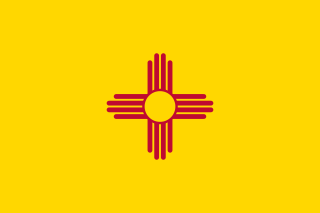
The state flag of New Mexico features the Zia symbol, a sacred symbol of the Zia Pueblo Native American tribe.
The city of Santa Fe, the state capital, is the highest capital city in the United States, sitting at an elevation of 7,199 feet (2,194 meters).
This is a showcase site for Jeff Napier of US-Web-Design. Surprisingly low-cost solutions for all your website and marketing needs. More...
Carlsbad Caverns National Park in New Mexico is home to one of the largest underground cave systems in the world, with more than 119 known caves.
The Trinity Site in New Mexico is where the world’s first atomic bomb was detonated on July 16, 1945.
Roswell, New Mexico gained international fame for the alleged crash of an unidentified flying object (UFO) in 1947.
The state is home to the world’s longest tramway, the Sandia Peak Tramway, which takes visitors from Albuquerque to the top of the Sandia Mountains.
Los Alamos, New Mexico has more PhDs per capita than any other city in the U.S.
The Very Large Array (VLA) is located in New Mexico, a radio astronomy observatory made up of 27 giant radio telescopes that work together to observe deep space.
The state hosts the Albuquerque International Balloon Fiesta, the largest hot air balloon festival in the world.
New Mexico is home to the oldest capital city in the United States, Santa Fe, which was founded in 1610.
The state has 19 Native American tribes, including the Navajo Nation, the largest Native American reservation in the United States.
New Mexico has more than 300 days of sunshine per year, making it one of the sunniest states in the U.S.
The world’s first commercial spaceport, Spaceport America, is located in New Mexico.
There is a town in New Mexico called “Truth or Consequences.”
The New Mexico State University in Las Cruces is home to the Chile Pepper Institute, dedicated to the research and preservation of chili peppers.
The Four Corners Monument marks the only spot in the United States where four states (New Mexico, Arizona, Utah, and Colorado) meet at a single point.
Some Crazy Laws in New Mexico
In New Mexico, it is illegal for idiots to vote in elections.
It is against the law for a woman to appear unshaven in public in Carrizozo, New Mexico.
In Raton, New Mexico, it is illegal for a woman to ride horseback down a public street while wearing a kimono.
It is illegal to hunt in Mountain View, New Mexico while in a moving vehicle, except for whales.
In Silver City, New Mexico, it is forbidden for couples to have sex in a parked vehicle during their lunch break from work.
It is illegal to let a llama roam around a public highway in New Mexico.
It is illegal to dance in a public school building in New Mexico.
In New Mexico, it is illegal for a woman to cut her own hair without her husband’s permission.
In Albuquerque, New Mexico, it is illegal for women to appear unshaven while wearing a bikini.
It is illegal to spit on a seagull in New Mexico.
In New Mexico, “idiots” are prohibited from operating tractors on highways.
It is against the law to walk backwards after sunset in New Mexico.
In Carlsbad, New Mexico, it is illegal to fish from the back of a camel or giraffe.
It is illegal to hunt in New Mexico with a catapult or a crossbow.
In New Mexico, it is illegal to hunt in a cemetery.
It is against the law to hunt a bear using a firearm with less than .25 caliber in New Mexico.
New Jersey
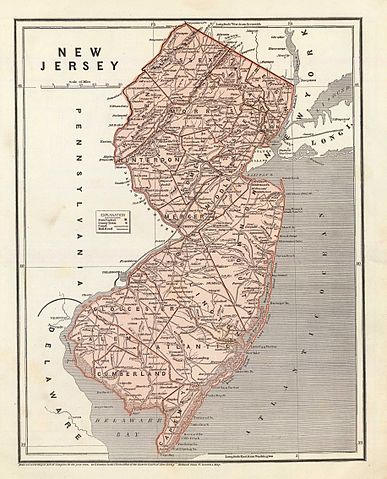
New Jersey is the fourth smallest state in the United States, but it is the most densely populated state.
It is illegal to pump your own gas in New Jersey (Self-service gas stations are banned statewide).
The iconic American board game Monopoly was based on the streets and properties of Atlantic City, New Jersey.
New Jersey is home to the first ever recorded baseball game, which took place in Hoboken in 1846.
The first drive-in movie theater in the world opened in Camden, New Jersey, in 1933.
The world’s first recorded motion picture was filmed in West Orange, New Jersey, by Thomas Edison in 1893.
This is a showcase site for Jeff Napier of US-Web-Design. Surprisingly low-cost solutions for all your website and marketing needs. More...
The Holland Tunnel, connecting New Jersey and New York City, was the first mechanically ventilated underwater tunnel in the world.
New Jersey has the most diners in the world and is often referred to as the “Diner Capital of the World.”
The longest boardwalk in the world can be found in Atlantic City, stretching over 5 miles (8 km). Built in 1870, it was initially 8 feet wide (243 cm). Now it is 60 feet (18 meters) wide.
Atlantic City in New Jersey was the first place in the United States outside of Nevada to legalize casino gambling.
New Jersey has more horses per square mile than any other state in the U.S.
The famous inventor and scientist Albert Einstein resided in Princeton, New Jersey, for more than 20 years.
The first ever professional basketball game was played in Trenton, New Jersey, in 1896.
The original Miss America beauty pageant took place in Atlantic City, New Jersey, in 1921.
New Jersey is home to the first Indian reservation in the United States, the Brotherton Reservation, established in 1758.
The first cultivated blueberries were developed in Whitesbog, New Jersey, in the early 20th century.
The Statue of Liberty, although located in New York Harbor, is situated closer to New Jersey than to New York.
New Jersey is home to the highest roller coaster in the world, the Kingda Ka at Six Flags Great Adventure in Jackson.
The first ever drive-in bank was opened in New Jersey in 1946.
New Jersey is famous for its tomatoes and is sometimes referred to as the “Tomato Capital of the World.”
The Revolutionary War Battle of Trenton, where George Washington famously crossed the Delaware River, took place in New Jersey.
New Jersey is home to many prominent universities, including Princeton University, Rutgers University, and Seton Hall University.
The first organized baseball game with a codified set of rules was played in Hoboken, New Jersey, in 1846.
New Jersey is known for its diverse music scene and has produced many famous musicians, including Bruce Springsteen, Frank Sinatra, and Whitney Houston.
It is illegal to frown at a police officer in New Jersey.
In New Jersey, it is illegal to wear a bulletproof vest while committing a crime.
It is illegal to delay or detain a homing pigeon.
It is illegal to slurp soup in public in Newark, New Jersey.
New Hampshire

New Hampshire has no sales tax or income tax, making it one of the few states in the U.S. with no broad-based tax on earned income.
New Hampshire is known as the “Granite State” because of its extensive granite formations and quarries.
The state motto of New Hampshire is “Live Free or Die.”
It was the first state to declare its independence from England in 1776.
The famous poet Robert Frost lived in New Hampshire for many years and wrote some of his most famous poems there.
The Mount Washington Observatory, located on the summit of Cannon Mounted, has recorded some of the most extreme weather conditions in the world, including the highest wind speed ever measured on land. The wind gusted to 199.3 miles per hour (320.7 kph), the highest speed the anemometer could record.
This is a showcase site for Jeff Napier of US-Web-Design. Surprisingly low-cost solutions for all your website and marketing needs. More...
The Old Man of the Mountain, a famous rock formation resembling a face, was a well-known symbol of New Hampshire until it collapsed in 2003.
New Hampshire is home to the oldest continuously operated general store in the United States, the Brick Store in Bath, which has been open since 1790.
The state is bordered by Maine, Vermont, Massachusetts, the Atlantic Ocean, and Canada’s Quebec province.
New Hampshire has a short coastline of about 18 miles (29 kilometers), making it the smallest coastline of any U.S. state.
The first free public library in the United States was founded in Peterborough, New Hampshire, in 1833.
The first women’s strike in the United States took place in Dover, New Hampshire, in 1828, led by the female textile workers known as the “Dover Girls.”
The famous motorcycle rally, Laconia Motorcycle Week, has been held annually in Laconia, New Hampshire, since 1923 and is one of the oldest motorcycle rallies in the country. The very first ride including over a hundred motorcyclists was held in 1916. It was originally called the “Gypsy Tour.” It is not uncommon for a few riders to die most years, with seven fatalities in 2008. New Hampshire does not require helmets for riding motorcycles, which according to helmet advocates may account for some of the deaths.
The inventor of Tupperware, Earl Tupper, was born in Berlin, New Hampshire.
New Hampshire is one of the few states in the U.S. that does not require adults to wear seat belts while driving.
The first American astronaut to travel in space, Alan Shepard, was born in Derry, New Hampshire.
The New Hampshire State House in Concord is the oldest state capitol building in which the legislature meets in its original chambers
The state boasts over 800 lakes and ponds.
New Hampshire is home to the world’s longest candy counter, located at Chutters Candy Store in Littleton.
The Cornish-Windsor Covered Bridge, spanning the Connecticut River between New Hampshire and Vermont, is the longest covered bridge in the United States.
New Hampshire has more than 70 state parks and recreation areas, offering a variety of outdoor activities such as hiking, camping, and fishing.
These laws are on the books in New Hampshire but seldom enforced:
If a person is caught raking the beaches, picking up litter, hauling away trash, building a bench for the park, or many other kind things without a permit, he/she may be fined $150 for ‘maintaining the national forest without a permit’.
New Hampshire law forbids you to tap your feet, nod your head, or in any way keep time to the music in a tavern, restaurant, or cafe.
You may not run machinery on Sundays.
Coincidences

Both Abraham Lincoln and John F. Kennedy were assassinated on a Friday while seated beside their wives. Both JFK and Abe Lincoln reported having dreams about being assassinated shortly before their deaths.
The Royal Synchronicity: Queen Elizabeth II was born on the same day that King George V, her grandfather, died.
The Unsinkable Woman: Violet Jessop, a stewardess, survived the sinking of the RMS Titanic in 1912, the sinking of the HMHS Britannic in 1916, and the collision of the RMS Olympic in 1911.
On December 5, 1664, a ship sank off the coast of Wales. The only survivor was a man named Hugh Williams. On December 5, 1785, another ship sank. One man survived, another Hugh Williams. On December 5, 1860, yet another ship went down with only one survivor – you guessed it – his name was Hugh Williams.
Mark Twain and Halley’s Comet: Mark Twain was born in 1835 when Halley’s Comet appeared, and he died in 1910 when the comet returned.
The Triple Lightning Strike: In 2006, Roy Sullivan, a park ranger, was struck by lightning for the seventh time, making him the person with the most recorded lightning strikes.
This is a showcase site for Jeff Napier of US-Web-Design. Surprisingly low-cost solutions for all your website and marketing needs. More...
Jonathan Swift wrote a classic book called Gulliver’s Travels that borders on science fiction. It was written before ‘science fiction’ was what you called such books. In this book he wrote about two moons circling Mars. His descriptions of their size and orbital distance weren’t perfect but surprisingly accurate. He did this one hundred years before they were described by astronomers.
The Reunited Brothers: Two brothers, separated at birth, named Jim Lewis and Jim Springer, coincidentally named their sons James Alan and James Allan.
The Train Crash Prediction: In 1895, author Morgan Robertson wrote a novel titled “Futility” about an unsinkable ship named the Titan that hit an iceberg and sank. Fourteen years later, the RMS Titanic suffered a similar fate.
In 1979, a man named Frane Selak survived a train crash, a plane crash, a bus crash, and a car crash, and then won the lottery.
The Converging Paths: In 1975, two women with the same name, both traveling from England to the Canary Islands, wearing identical clothing, and carrying similar bags, ended up sitting next to each other on the plane.
The Identical Twins: In 2002, two unrelated identical twin brothers, separated at birth, named Jim Springer and Jim Lewis, coincidentally reunited and discovered they shared the same first name, occupation, and hobbies.
The Bridge Collapse: In 1940, a worker named Harold C. W. Keevil fell off the unfinished Tacoma Narrows Bridge but survived. A year later, he was on the same bridge when it collapsed, but he survived again.
The Struck by Lightning Brothers: In 2018, two brothers, aged 5 and 7, were both struck by lightning on separate occasions within the span of a year.
The Separated Sisters: In 2007, two sisters named Samantha Futerman and Anaïs Bordier, who were adopted from South Korea, discovered they were identical twins after one saw the other in a YouTube video.
The Winning Lottery Numbers: In 2003, the winning numbers of the Virginia Lottery’s Pick 4 game were 6-6-6-6, causing a record number of winners and resulting in the lottery having to pay out millions of dollars.
The Mysterious Subway Meeting: In 2008, two strangers named Laura and Laura, who had the same birthday, height, hair color, and were both wearing a black coat and a red scarf, accidentally bumped into each other on the London Underground.
Geology
The Earth’s inner core, composed mostly of iron and nickel, is hotter than the surface of the Sun, reaching temperatures of up to 5,500 degrees Celsius (9,932 degrees Fahrenheit).
The Earth’s magnetic field has flipped numerous times throughout its history, with the north and south magnetic poles reversing positions.
The highest mountain on Earth, Mount Everest, continues to grow at a rate of about 4 millimeters per year due to the constant tectonic activity between the Indian and Eurasian plates.
The deepest part of the Earth’s ocean, the Mariana Trench in the western Pacific Ocean, reaches a depth of approximately 11,034 meters (36,201 feet or 7 miles), which is deeper than Mount Everest is tall.
Approximately 71% of the Earth’s surface is covered by water, with the remaining 29% consisting of landmasses.
The largest volcano on Earth, Mauna Loa in Hawaii, is also one of the most active. It rises about 9,144 meters (30,000 feet) from its base on the ocean floor, making it taller than Mount Everest when measured from its underwater base.
This is a showcase site for Jeff Napier of US-Web-Design. Surprisingly low-cost solutions for all your website and marketing needs. More...
The Earth’s crust is made up of several tectonic plates that are constantly moving. Over millions of years, these movements have caused the continents to shift and collide, forming mountain ranges and other geologic features.
The Earth’s magnetic field, which protects the planet from harmful solar radiation, is generated by the motion of molten iron in the outer core.
The Grand Canyon in the United States is not only a magnificent natural wonder but also a geologic timeline, with its layered rock formations representing millions of years of Earth’s history.
Diamonds, which are formed deep within the Earth’s mantle, can be brought to the surface through volcanic eruptions. They are essentially made of carbon atoms that have been subjected to immense pressure and heat.
The Earth’s lithosphere, which includes the crust and uppermost part of the mantle, is divided into several large and small tectonic plates. These plates move in relation to each other, causing earthquakes, volcanic activity, and the formation of mountain ranges.
The largest earthquake ever recorded on Earth was the Great Chilean Earthquake of 1960, with a magnitude of 9.5. It caused widespread destruction and triggered tsunamis that affected coastal regions across the Pacific Ocean.
The Earth’s outermost layer, the crust, is thinner beneath the oceans (about 5-10 kilometers or 3-6 miles) and thicker beneath the continents (about 30-50 kilometers or 18-31 miles).
The Earth’s oldest rocks, found in Western Greenland, are estimated to be about 3.8 billion years old, providing valuable insights into the early history of our planet.
The movement of tectonic plates can cause the formation of volcanoes along subduction zones, where one tectonic plate is forced beneath another. This process is responsible for the “Ring of Fire,” a major area in the basin of the Pacific Ocean known for its intense volcanic and seismic activity.
The Great Barrier Reef off the coast of Australia is the largest coral reef system in the world, stretching over 2,300 kilometers (1,429 miles). It is composed of billions of tiny organisms called coral polyps.
The Earth’s mantle, located between the crust and the outer core, is a solid but viscous layer composed mainly of silicate minerals. It is divided into the upper and lower mantle, with the boundary known as the Gutenberg Discontinuity.
The Dead Sea, located between Israel and Jordan, is the lowest point on land, sitting more than 430 meters (1,410 feet) below sea level.
The largest recorded volcanic eruption in modern history occurred in 1815 when Mount Tambora in Indonesia erupted. The event resulted in a global cooling effect, causing the “Year Without a Summer” in 1816.
The Earth’s continents were once joined together in one supercontinent called Pangaea, which began to break apart around 175 million years ago.
The driest place on Earth is the Atacama Desert in Chile, where some areas have not received rainfall for centuries.
The Earth’s largest canyon is not on the surface but lies beneath the Antarctic ice sheet. The Gamburtsev Mountains are buried beneath kilometers of ice and were only discovered through radar mapping.
The largest known crystal, discovered in the Naica Mine in Mexico, measures about 12 meters (39 feet) in length and weighs 55 tons. It is made of gypsum.
The Earth’s tides are primarily caused by the gravitational pull of the Moon, but the Sun also contributes to their magnitude.
The longest recorded earthquake lasted for approximately 10 minutes and occurred in Russia in 1952.
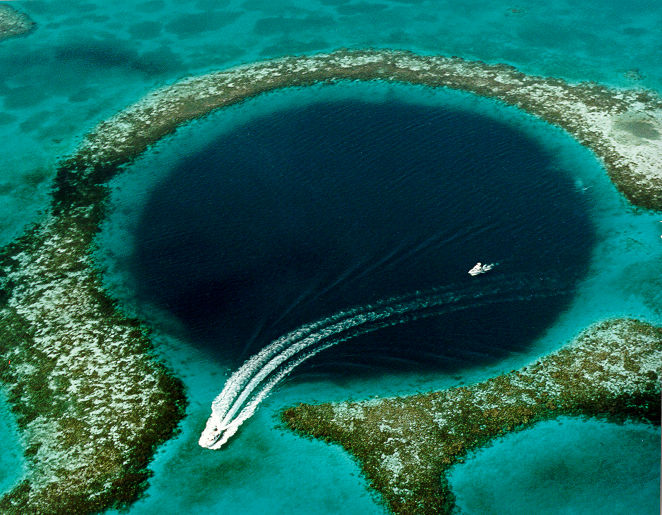
The Great Blue Hole in Belize is the world’s largest underwater sinkhole, measuring about 300 meters (984 feet) across and 124 meters (407 feet) deep.

The Great Blue Hole in Belize
The deepest underground mine in the world is the Mponeng Gold Mine in South Africa, reaching a depth of 4 kilometers (2.5 miles).
The Earth experiences approximately 50,000 earthquakes each year (246 per day), but the majority of them are too small to be felt by humans.
The longest recorded glacier is the Lambert Glacier in Antarctica, stretching for about 400 kilometers (250 miles).
The Great Salt Lake in Utah, USA, is saltier than the ocean and one of the saltiest bodies of water on Earth. Its salinity can reach up to 27%.
The largest underground cave chamber in the world is the Sarawak Chamber in Malaysia, which is approximately 700 meters (2,300 feet) long, 400 meters (1,300 feet) wide, and 70 meters (230 feet) high.
Nevada
The name “Nevada” is derived from the Spanish word for “snow-covered,” due to the snowy peaks of the Sierra Nevada mountain range.
Nevada is the driest state in the country, with an average annual rainfall of only about 7 inches (18cm).
Las Vegas, Nevada, is often referred to as the “Entertainment Capital of the World” and is famous for its casinos, hotels, and vibrant nightlife.
The Hoover Dam, located on the border of Nevada and Arizona, is one of the largest man-made structures in the world and a major tourist attraction.
Nevada is the only state in the U.S. where prostitution is legal in some counties (but not in the major cities like Las Vegas or Reno).
The extraterrestrial-themed highway, Nevada State Route 375, is popularly known as the “Extraterrestrial Highway” due to numerous UFO sightings reported in the area.
This is a showcase site for Jeff Napier of US-Web-Design. Surprisingly low-cost solutions for all your website and marketing needs. More...
Nevada is home to the largest gold-producing area in the United States, known as the Carlin Trend or Carlin Unconformity. It’s a place where giant tectonic plates collided 330 million years ago.
The Black Rock Desert in Nevada is the location of the annual Burning Man festival, a unique celebration of art, music, and community.
In Nevada, you can find the Valley of Fire State Park, known for its stunning red sandstone formations and petroglyphs.
Nevada is the largest producer of silver in the United States and the second-largest producer of gold.
The state has a relatively small population compared to its land area, with the majority of the population concentrated in the Las Vegas metropolitan area. More than two of every people in Nevada live in the Las Vegas metro area.
The University of Nevada, Las Vegas (UNLV), is known for its research and programs in hospitality, gaming, and entertainment.
Nevada has a unique legal gambling age of 21, while most states have a legal gambling age of 18 or 19.
The state’s official motto is “All for Our Country.”
Nevada is home to Area 51, a highly classified U.S. Air Force facility known for conspiracy theories and alleged UFO sightings.
Nevada has a vibrant cowboy culture and hosts numerous rodeo events throughout the year.
Nevada’s nickname is the “Silver State” due to its historical silver mining industry.
Silly laws Still on the Books in Nevada
It is illegal to place a bench or chair within 50 feet of a highway.
It is illegal to pawn your dentures in Nevada.
It is illegal to use an x-ray machine to determine a person’s shoe size.
It is illegal to use a lasso to catch a fish in Nevada.
It is illegal to wear a hat that obstructs someone’s view in a public theater.
It is illegal to kiss longer than three minutes in public.
It is illegal to sit on the sidewalk or lie down on a street in the city of Las Vegas.
It is illegal to catch a fish with your bare hands in Nevada.
There are a number of laws involving camels in Nevada, originating from a time when the US military experimented with a camel-mounted cavalry, figuring that camels have greater durability in dry conditions.
Nevada Laws Involving Camels
It is illegal to ride a camel on the highway in Nevada.
It is illegal to drive a camel on a city street without a bell attached to it.
It is illegal to bring a camel on a streetcar or a trolley in Nevada.
It is illegal to hunt camels on Sundays.
It is illegal to shoot camels from a moving vehicle.
It is illegal to drive a camel while under the influence of alcohol.
It is illegal to use a camel as a getaway vehicle during a crime.
It is illegal to throw a camel from a moving vehicle.
It is illegal to tie a camel to a parking meter or fire hydrant.
It is illegal to ride a camel while wearing a sombrero in public.
It is illegal to ride a camel without a valid camel license.
It is illegal to disturb a camel by honking your car horn unnecessarily.
Nebraska
Silly Laws in Nebraska
In Nebraska, it is illegal to go whale fishing. (Note: Nebraska is a landlocked state with no access to oceans.)
It is against the law for a bar owner to sell beer unless they are simultaneously brewing a kettle of soup.
It is illegal to fish with a firearm in Nebraska.
In Omaha, sneezing or burping during a church service is prohibited.
It is illegal for a mother to give her daughter a perm without a state license.
This is a showcase site for Jeff Napier of US-Web-Design. Surprisingly low-cost solutions for all your website and marketing needs. More...
It is illegal for a man with a mustache to kiss a woman in public.
In Waterloo, it is illegal for barbers to eat onions between 7 am and 7 pm.
It is illegal to go whaling in a car in Nebraska.
In Omaha, it is against the law for a child to wear a hat that is too large while dancing.
It is illegal to fly a kite higher than 10 feet off the ground in Nebraska.
Nebraska Facts
Nebraska’s silly state nickname, the “Cornhusker State,” comes from the nickname given to the University of Nebraska athletic teams.
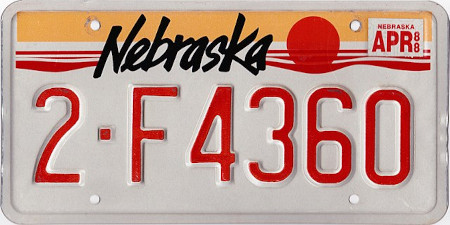
Nebraska’s motto on its state license plates is “The Good Life.”
Nebraska is the only state in the United States with a unicameral legislature, meaning it has only one chamber in its legislature. This came about over time because too many important bills were blocked when Democrats and Republicans could not agree.
Omaha, Nebraska’s largest city, is home to the headquarters of five Fortune 500 companies, including Berkshire Hathaway.
Nebraska has the largest indoor rainforest in the United States, located at the Henry Doorly Zoo in Omaha.
Kool-Aid was invented in Hastings, Nebraska, by Edwin Perkins in 1927.
The world’s largest publicly held company, Berkshire Hathaway, is based in Omaha, Nebraska, and is headed by billionaire investor Warren Buffett.
Nebraska is the birthplace of the actress and singer Hilary Swank, known for her roles in movies such as “Million Dollar Baby” and “Boys Don’t Cry.”
The town of Alliance, Nebraska, is home to Carhenge, a replica of Stonehenge made entirely from old cars.
The world’s largest train yard, Bailey Yard, is located in North Platte, Nebraska.
Nebraska is the birthplace of the actor Marlon Brando, known for his iconic performances in movies such as “The Godfather” and “On the Waterfront.”
Nebraska has the largest population of Czech-Americans per capita of any state in the United States.
Nebraska is home to the world’s largest indoor desert, located at the Desert Dome in the Henry Doorly Zoo.
The first-ever 911 emergency phone system was implemented in Lincoln, Nebraska in 1959.
The Great Platte River Road Archway Monument in Kearney, Nebraska, is a unique museum built over Interstate 80 that showcases the history of westward expansion.
Minnesota
Minnesota is known as the “Land of 10,000 Lakes,” but it actually has over 11,000 lakes.
Minnesota is home to the largest mall in the United States, the Mall of America, which has more than 500 stores.
Minnesota has the highest number of golfers per capita in the United States.
The state is the birthplace of the pop-up toaster, invented by Charles Strite in 1921.
It is the birthplace of iconic figures including Bob Dylan, Prince, and Judy Garland.
Minnesota has one of the longest-running science fiction conventions in the world, known as CONvergence.
This is a showcase site for Jeff Napier of US-Web-Design. Surprisingly low-cost solutions for all your website and marketing needs. More...
The world-famous Mayo Clinic is located in Rochester, Minnesota.
Minnesota has a strong Scandinavian heritage, with many residents having Swedish, Norwegian, or Finnish ancestry.
The state has the longest-running music radio show in the United States, “A Prairie Home Companion,” hosted by Garrison Keillor.
Minnesota is the birthplace of the stapler, invented by George McGill in the late 1800s.
Minnesota has the highest voter turnout in the United States, with consistently high participation in elections.
The Twin Cities, Minneapolis and St. Paul, are considered the birthplace of the indoor shopping mall concept.
It is home to the largest Somali population in the United States.
Minnesota has more miles of bike trails than any other state, making it a popular destination for cyclists.
It has one of the highest literacy rates in the country, with a strong emphasis on education.
The state has a rich Native American heritage, with eleven sovereign Native American tribes residing within its borders.
Minnesota is the headquarters for many Fortune 500 companies, including Target, 3M, and General Mills.

