Everyone knows that gasoline was rationed during World War II, but few know how severely. People were allowed three gallons per week. Tell me, even with a modern, fuel-efficient car, could you get by on that?
Category: Transportation
Early Telephony
In the first phone company, the four operators had to remember the names of about 200 customers. When John Smith Continue reading Early Telephony
Christopher Columbus
Christopher Columbus spent less money coming to the New World than it costs the average American to buy a new car today.
Historians think the ships that Christopher Columbus used were smaller than is generally depicted. They were probably between 60 to 80 feet long and 18 to 25 feet wide. Little is known about these three ships, because Columbus did not write about their physical details in his journals. He already knew what they looked like. He probably assumed everyone knew what such ships looked like.

Maybe his ships looked something like this
Have fun with the Christopher Columbus Quiz.
San Francisco’s First Streetcars
One of the first streetcars in San Francisco was made to look like a horse, so its high speed of eight miles per hour and noisy characteristics would not frighten horses pulling carriages and carts.
American Pilgrims
The Pilgrims would have sailed beyond Plymouth Rock, but their beer was all used up
Pavement
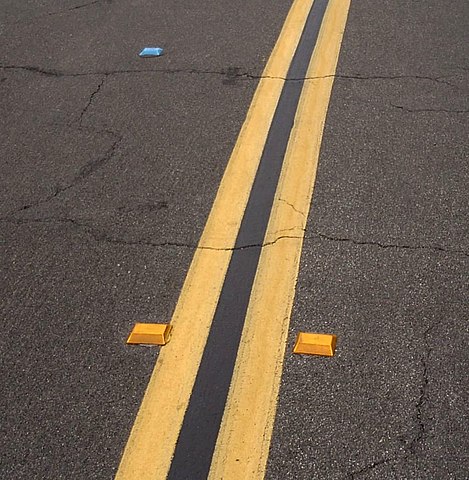
If you put all the pavement in America into one place, it would more that totally cover the state of Georgia.

Twenty-four percent of Los Angeles is paved for roads and parking.
The Interstate Highway System in the U.S. is the largest highway system in the world, totaling about 48,000 miles (77,000 kilo meters), enough to wrap around the world at the equator twice.
The World Record for the longest-lasting pavement goes to a concrete section of U.S. Route 66 in Oklahoma, which lasted over 80 years.
Recycling is a big part of modern paving; materials like rubber, glass, and even old asphalt are often buried in streets.
This is a showcase site for Jeff Napier of US-Web-Design. Surprisingly low-cost solutions for all your website and marketing needs. More...
Noise-reducing pavements are designed to help lessen the noise produced by tires on the road.
Permeable pavements allow water to pass through them, helping reduce runoff and preventing floods.
Glow-in-the-dark pavements are being developed to enhance safety and reduce energy consumption from streetlights.
Solar roadways are an innovative idea where pavements can generate electricity from solar panels embedded in them.
Reflective pavements help keep roads cooler by reflecting more sunlight.
Microbial asphalt uses bacteria to repair tiny cracks, extending the pavement’s lifespan.
The roughness of pavement is measured by the International Roughness Index (IRI).
The first asphalt road in America was laid in 1870 in Newark, New Jersey.
Porous asphalt is used to improve water drainage and reduce hydroplaning risks.
The oldest known paved road is in Egypt, dating back to 2600 BC.
Paved surfaces can contribute to urban heat islands, where cities become warmer than surrounding areas, raising the temperature in some areas by as much as 20 degrees Fahrenheit (11 Celsius).
Some pavements are designed to filter pollutants from stormwater, improving water quality.
Charles Lindbergh, Not First To Fly Over the Atlantic
Charles Lindbergh was not the first person to fly non-stop over the Atlantic Ocean. He was the sixty-seventh. He was, however, the first to do it solo.

Ferdinand Porsche
Education isn’t the only way to succeed.
Ferdinand Porsche, inventor of the Porsche cars, Volkswagens, and many German WWII machines, went to trade school to be trained as a factory foreman. He got the lowest grades in his class.
For more about Volkswagens see 10 Surprising Facts About Volkswagen.

Ferdinand and Volkswagens

See also: 10 Surprising Facts About Volkswagens.
As some of you may know, Ferdinand Porsche designed the Volkswagen Beetle, and he considered it his greatest achievement. He rated the VW higher than his winning race cars because this was a car every family could afford. It was a masterpiece of economical engineering for its time, as is evidenced by the fact that the basic design survived for so many years. Volkswagen still makes a version of it today, although it is quite different under the hood. In fact, the engine is no longer under the same hood. It used to be in the back of the car. Now it is in the front.
Ford and Volkswagen
See also: 10 Surprising Facts About Volkswagens.
After World War II, Henry Ford was offered the Volkswagen factory for free by the English government, then in charge of Germany’s industries. They were looking for someone who could operate the plant, thereby creating hundreds of jobs. Ernest Breech, Ford’s chairman of the board looked the plant over and said, “Mr. Ford, I don’t think what we are being offered here is worth a damn!”
He was right in a way. At that time Continue reading Ford and Volkswagen

