Category: Transportation
Elon Musk Quiz
See also: Elon Musk, 10 Surprising Facts.
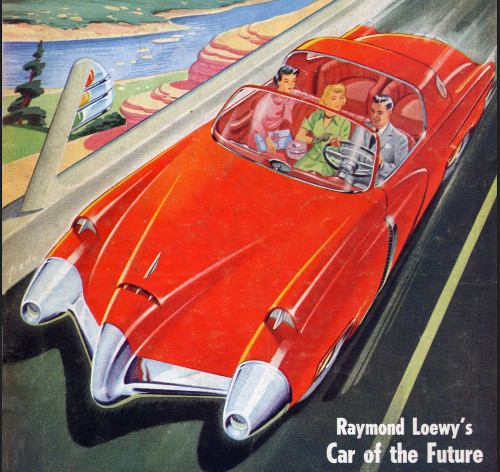
The Future of Automotive Transportation, What AI Has to Say
You might also enjoy:
Artificial Intelligence Quiz
10 Strange Facts About Cars
Tesla Electric Vehicles Quiz
I asked AI, “Please give me your thoughts on the future of automotive transportation.” This is the response:
The future of automotive transportation looks like it’s straight out of a sci-fi movie. With the rise of autonomous vehicles, electric cars, and advanced connectivity, we’re on the cusp of a revolution in how we move. Self-driving cars could transform commutes into opportunities for productivity or relaxation, and reduce accidents caused by human error. Electric vehicles are poised to reduce our reliance on fossil fuels and cut down on emissions, making transportation more sustainable.
Connected cars will talk to each other and to infrastructure, optimizing traffic flow and reducing congestion. The integration of AI will allow for smart route planning and predictive maintenance, making journeys smoother and more efficient.
But it’s not all smooth sailing. Issues like cybersecurity, data privacy, and the impact on jobs in driving-related industries will need addressing. Regulatory frameworks will have to evolve to keep up with these innovations.
In short, the road ahead is thrilling but paved with challenges. How do you see these changes impacting your life?
This is a showcase site for Jeff Napier of US-Web-Design. Surprisingly low-cost solutions for all your website and marketing needs. More...
Prevent trouble buying a used car. Get surprising details from the VIN.
Ukraine, What AI Has to Say
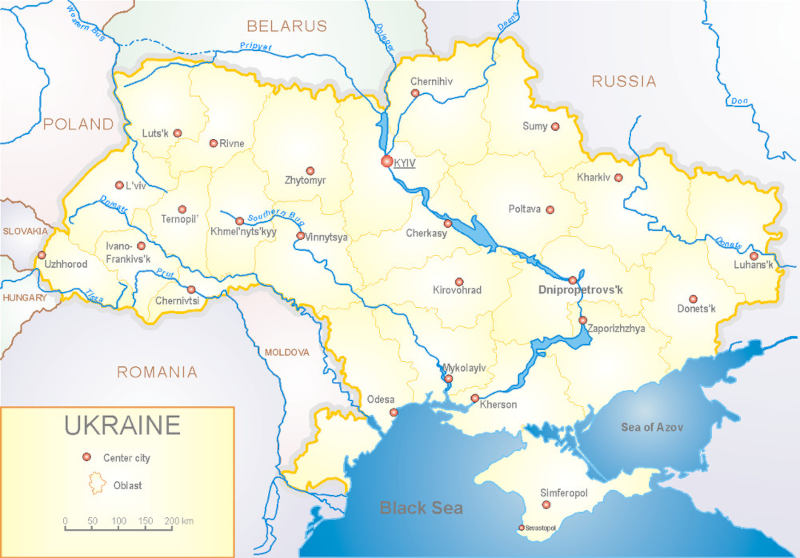
I asked AI, “Please tell me 30 unusual or unexpected facts about Ukraine.” Here is the response. You may wont to double-check facts. Some of this may not be true.
Sure thing! Here are 30 unusual and unexpected facts about Ukraine:
Ukraine is the largest country entirely within Europe, with a total area of 603,550 square kilometers
The capital city, Kyiv, is home to the world’s deepest metro station, Arsenalna, which is 346 feet underground
Ukrainians wear their wedding rings on the right hand, not the left
The national dish of Ukraine is borscht, a beet soup
This is a showcase site for Jeff Napier of US-Web-Design. Surprisingly low-cost solutions for all your website and marketing needs. More...
Ukraine is the world’s largest producer of sunflower seeds and sunflower oil
The Ukrainian flag’s colors, blue and yellow, represent clear skies and fertile fields, respectively
The Trembita, the world’s longest musical instrument, originates from Ukraine
Ukrainians celebrate Ivana Kupala Day, a traditional festival where couples jump over bonfires to test their love
The city of Lviv has over 2,500 architectural and historical monuments
Ukraine has seven UNESCO World Heritage Sites
The Antonov An-225 Mriya, the world’s largest airplane, was built in Kyiv during the Soviet era
Ukrainians have a tradition of making Pysanky, intricately decorated Easter eggs
The word “Ukraine” means “borderland” in old Slavic
Ukraine is known as the “breadbasket of Europe” due to its fertile land
The city of Odesa is famous for its funicular railway, which connects the port to the city’s upper part
Ukraine has a rich tradition of folk music and dance, with many regional variations.
The Asgarda are a group of Ukrainian women who train in martial arts in the Carpathian Mountains
Ukraine has a strong tradition of weaving and embroidery, with the Vyshyvanka being the national costume
The Yalta Conference, a significant World War II meeting between Churchill, Roosevelt, and Stalin, was held in Crimea, Ukraine
Ukraine has a rich literary tradition, with famous writers like Taras Shevchenko and Ivan Franko.
The city of Lviv is home to 1,500 cafes, the most per capita of any city in the world
Ukraine has a tradition of making salo, cured pig fat, which is often served with garlic and onions
The Ukrainian national drink is horilka, a strong alcoholic beverage often served with chili pepper
Ukraine has a strong tradition of Christmas caroling, with groups of singers known as Koliadnyky
The city of Kyiv boasts up to three official witch gathering places called Lysa Hora (Bold Mountain)
Ukraine has a rich tradition of puppetry, with the famous puppet theater in Kyiv
Ukraine has a strong tradition of martial arts, with many schools and training centers across the country.
The Ukrainian language uses the Cyrillic alphabet, which has 33 letters
Ukraine has a strong tradition of environmental activism, with many groups working to protect the country’s natural resources.
Ukraine has a rich tradition of folk art, with many artists creating beautiful works inspired by the country’s history and culture.
Raccoon Fixing Car
Most raccoons don’t have much knowledge of automotive technology, but this one seems to know exactly what he’s doing.
Raccoons are clever, adaptable little bandits with ringed tails and a reputation for opening anything that looks like it might contain snacks. Here are 30 fascinating facts about the animal known as the Raccoon.
🦝 Biology and Behavior
The scientific name of the raccoon is Procyon lotor, which roughly means “washer dog.” Early observers thought raccoons looked like they were washing their food.
That “washing” behavior isn’t really cleaning. Raccoons are actually increasing the sensitivity of their paws by wetting them.
This is a showcase site for Jeff Napier of US-Web-Design. Surprisingly low-cost solutions for all your website and marketing needs. More...
A raccoon’s front paws are extremely sensitive and contain thousands of nerve endings, almost like human fingertips.
They can identify objects by touch alone even without seeing them.
Raccoons are mostly nocturnal, meaning they are active mainly at night.
Their famous black facial mask helps reduce glare and improve night vision, similar to the eye-black used by athletes.
An adult raccoon typically weighs 10–20 pounds (5 – 9 kg), though some urban raccoons can grow much larger thanks to abundant food.
Raccoons have excellent climbing ability and can descend trees headfirst by rotating their hind feet.
They are very intelligent animals, ranking among the smartest mammals after primates and dolphins in some tests.
Raccoons have been shown to remember solutions to puzzles for up to three years.
🧠 Intelligence and Problem Solving
In experiments, raccoons have been able to pick locks, unlatch cages, and solve multi-step puzzles.
Some researchers say raccoon intelligence is comparable to monkeys in certain tasks.
They can open jars, doors, coolers, and trash can lids, which is why they are famous neighborhood “garbage burglars.”
Raccoons learn by trial and error and quickly adapt to new situations.
Mothers teach their young how to forage and solve problems.
🌎 Habitat and Range
Raccoons are native to North America, but humans have introduced them to parts of Europe and Japan.
They thrive in cities and suburbs, often living in attics, chimneys, sewers, and abandoned buildings.
Urban raccoons can have smaller territories because food is plentiful.
They are excellent swimmers and often hunt along rivers, lakes, and wetlands.
Raccoons can survive in climates ranging from Canada’s forests to tropical regions.
🍎 Diet
Raccoons are omnivores, meaning they eat both plants and animals.
Their diet can include fruit, nuts, insects, frogs, fish, eggs, corn, and garbage.
They especially love sweet corn and ripe fruit.
In cities they frequently raid trash cans, pet food bowls, and bird feeders.
👶 Life and Social Behavior
Baby raccoons are called kits or cubs.
A typical litter contains 2–5 babies.
The babies are born blind and helpless and stay with their mother for about a year.
Female raccoons are usually more social than males, sometimes sharing territory with relatives.
🦝 Fun and Unusual Facts
A raccoon’s ringed tail helps with balance when climbing and may also be used for communication.
Despite their mischievous reputation, raccoons play an important role in ecosystems by spreading seeds and controlling insects and small animals.
Take Me To The River – Haygoods
Enjoy this inspiring video by the Haygoods, an underrated musical family with their own theater in Branson, Missouri, United States.
The Haygoods are one of the most famous performing families in Branson, known for a high-energy stage show that blends music, dance, and elaborate special effects. Their story is a mixture of small-town grit, family harmony, and a lot of fiddles.
Here are some interesting facts about them:
1. It’s literally a family band
The group performing today consists of five brothers and one sister: Timothy, Patrick, Dominic, Michael, Matthew, and Catherine Haygood. They sing and play more than 20 different instruments during a typical show.
2. They grew up performing as kids
This is a showcase site for Jeff Napier of US-Web-Design. Surprisingly low-cost solutions for all your website and marketing needs. More...
The Haygood siblings began performing together in 1993 at Silver Dollar City when they were still children. At the theme park they sometimes performed six shows a day, six days a week, which became their training ground as entertainers.
3. Their childhood was very modest
The family grew up in the Ozarks in a single-wide mobile home, and their father worked as a carpenter to support eight children. Their mother found music teachers and mentors to train them on many instruments and performance skills.
4. A Sesame Street moment started it all
The oldest brother, Timothy, saw violin virtuoso Itzhak Perlman playing on Sesame Street when he was five years old. Inspired, he begged for violin lessons, which sparked the musical journey for the entire family.
5. They’ve sold millions of tickets
Over the decades, the Haygoods have sold more than 7 million tickets and performed thousands of concerts for audiences from all over the world.
6. They helped define the Branson family-show style
Their performances mix country, rock, pop, and classic hits with choreography, acapella harmonies, lasers, pyrotechnics, and comedy. They redesign the show nearly every year to keep it fresh.
7. Their show is famously high-tech
A typical Haygoods performance may include:
laser light shows
drones and holograms
instruments that light up
flying musicians and acrobatic stunts
It’s part concert, part Broadway-style spectacle.
8. They became Branson entrepreneurs
In the 2000s the family even owned and operated their own theater on the Branson Strip before later focusing primarily on performing.
9. They are one of Branson’s longest-running family shows
Their act has been performing in Branson for more than three decades, making it one of the longest-running first-generation shows in the city’s entertainment history.
10. Christmas shows are a huge tradition
Every winter they produce a major Christmas show, which has become a popular seasonal attraction for visitors to Branson.
See also: Country Boy.
Driverless Cars
Crazy Frog
Crazy Frog is one of the most popular videos ever on YouTube, with more than 4 billion views. Could it be that half the people on the planet have seen this video? Not yet. It turns out that many people watch it over and over. Still, I’ll bet more than seven in eight have not seen this. If you’re one who has seen it, you may enjoy watching it again.
You may be wondering what he’s doing with his hands. You’ll see he’s doing a twisting motion with his right hand, and a squeezing motion with his left. He’s operating a motorcycle. The right is turning the throttle, and the left is operating the clutch of a bike with a manual transmission. You may see him shift gears with a foot also.
What’s with the onomatopoeia at the beginning of the video? For that matter, what’s onomatopoeia? That’s the act of making sounds with ones mouth that imitate sounds made elsewhere such as by machines. It turns out our little froggie man is emulating the sounds of an old two-stroke motorcycle. Until the past 20 or 30 years, a good many of the world’s motorcycles had two-stroke engines that don’t burn gas as efficiently as modern four-strokes. When idling or decelerating unburned gas gathers in the mufflers of these bikes and catches fire or explodes from time to time, sounding much like Crazy Frog. Here’s an earlier video of him that focuses more on his motorcycling:
Secret Beach House Inside Box Truck
This guy, Scott, built what many might consider the ultimate recreational vehicle (RV), all in an 18-foot box truck. His whole home is in just a bit less than 144 square feet. He estimates the cost, including buying his used Isusu truck, at $85,000. That’s high, but as you can see, he spared no expense.
By building his own motorhome, he avoided many of the problems associated with typical RVs.
Many motorhomes are problematic because the manufacturers attempt to keep costs down by building on truck or van chassis that aren’t really up to the job. Then, the household appliances, plumbing and electrical systems are not really equipped to be shaken all the time as the vehicle drives down the road. By the time they are 60,000 to 65,000 miles (100,000 km) old, they are so broken down they are not cost-effective to keep running.
For instance, running an automotive V8 engine full out while going up hills warps the exhaust manifolds, tends toward overheating, blows gaskets, and may even burn the valves.
The ordinary household plumbing fittings will vibrate apart, resulting in gallons of water being pumped out across the carpeting, warping the cabinetry near the floor, and setting off irreparable mold growth.
This is a showcase site for Jeff Napier of US-Web-Design. Surprisingly low-cost solutions for all your website and marketing needs. More...
Whereas manufactured homes (formerly called ‘mobile homes’) have to be made with proper and safe materials, it is legal to build motorhomes and trailers with just about any kind of cheap materials. There have been numerous reports of new RV owners having ongoing flu-like symptoms from out-gassing of formaldehyde from the paneling, cabinetry and upholstery. We don’t even want to consider the long-term effects.
Many RVs come with labels that say ‘not for full-time use.’
You might think you’re covered with a nice warranty when you buy a new RV. Unfortunately, you may discover that the dealer has had you sign paperwork stating that the dealer is not responsible for warranty work. That’s left to the manufacturer. But who is the manufacturer? If the refrigerator breaks, it’s the company that made it. If the paneling starts coming apart, it’s the coach builder. If the roof leaks, is that the coach builder or the chassis maker? You may find you have to drive a thousand miles to have the warranty work done by the manufacturer.
Worse, especially if you buy a half-million dollar diesel pusher (a large motorhome with a diesel engine in the rear), that repairs are not only expensive, but you may not easily find a shop willing to do the work. For instance, if the shifter quits working, it might be the push-button panel in the dashboard, but it might be the transmission, or it might be in the ten meters of wiring somewhere under the floor between the front and back. It is not uncommon for repairs, even on a new unit, to take literally months to have completed.
Maybe you should buy a used RV and using some of the money you saved to fix it up. That’s a good idea in general until you find out how much some of the repairs may cost. For instance, replacing a transmission in an RV can be twice as costly as in a car because it is so much more difficult to reach. Then, you might also discover that many RV parks will turn down anyone with a rig older than 15 years.
There have been numerous cases of motorhomes and trailers falling apart on the road, leaving the owner stranded without even a tow truck large enough to move it. Sometimes that straps that hold in tanks under the floor fail. In some cases, the paneling that makes up the sides of the vehicle has been known to work loose then blow off in the wind.
Among the most significant breakdowns from a practical point of view are slide out sections that won’t slide back in, or hydraulic levelers stuck in the down position. Your RV isn’t going anywhere when this happens.
Enough with the negativity already! On the plus side, you are living a lighter footprint on the earth if you’re a full-time RVer. Instead of commuting many miles to and from work, you can park your RV near to where you work. Instead of heating a 4,000 square-foot McMansion, you’re only heating a couple hundred square feet. So, even though the insulation is much thinner in an RV, you’re still leaving a smaller carbon footprint. If you’re not connected to city services, you have very little water, electricity and propane on board. You can learn to make these supplies last weeks, again reducing waste and pollution. Because you have limited storage, you’re less likely to buy and consume things.
Finally, there’s expense. If you’re in a financial bind, you might consider buying an older RV, knowing you’ll probably have to fix things from time to time, then find a good RV park or private property, where the rent is only a few hundred dollars per month.
Many of the RV parks need managers. The manager checks people in and out, offers a bit of security, and maintains the facilities such as mowing the lawn and helping people back in their trailers. This is in trade for free living.
30 Things Only Baby Boomers Will Remember
When VCRs came out, they sold for $1,200. Eventually, you could rent videos for $4.95/day (US). At the end of the era, you could buy a VCR, complete with a remote for $59 and movies were often five videos for five days for five dollars.
Your author was fortunate to take typing lessons in public school during 5th grade, around age eleven. We all had to bring our own typewriters from home. Mine was about 30 pounds in came in a box like a hard suitcase. I was envious of the kids who had smaller typewriters. I was especially envious of the few who had electric typewriters. Imagine, with an electric typewriter, one didn’t have to make a point of pressing the A and the ; keys hard enough to match the impressions on the paper of the J and F keys.
When the phone rang, you answered it! There was no way of knowing who was calling, and they couldn’t leave messages until later, when answering machines became common. Most of the answering machines used cassette tapes. You had to rewind or fast-forward through the tape to hear your messages. Every now and then, something would go wrong and the tape would spill out of the cassette. When that happened you had to carefully suck it back in by turning one of the spools with a Bic pen stuck through it’s middle. Bic pens fit just right. Nothing else worked as well.
All serious amateur photographers had darkrooms. This was a room in the house where the photographer could lay out trays of chemicals, and a vertically-oriented projector that would shine light through negatives onto light-sensitive paper. The paper was then soaked in three trays of chemicals to develop the print. Drying these was always problematic. You couldn’t just leave a print laying around. It would curl up into a tight spiral. For black-and-white photos, which most were at the time, the darkroom had a dim red or orange light, called a safelight, that allowed a person to see, but would not harm the photos. For color photography, the safelight was a ridiculously dim olive green.
Student Pilot Solo with Broken Plane
At any given time there are 220,000 student pilots in the USA alone. Most don’t face the emergency this seventeen-year-old girl did on her solo flight. You can hear tremendous fright in her voice.
As soon as this young pilot takes off on her solo flight, a wheel falls off her airplane. How is she going to land?
Volkswagen

Volkswagen translates to “People’s Car” in German. During WWII, the German Equivalent of the Jeep, a two-wheel drive vehicle with the same air-cooled, 4-cylinder, horizontally-opposed rear engine as all the early beetles and vans was called the Kubelwagen meaning “bucket car.”
The original Volkswagen engines produced 22.5 horsepower. Now, the typical VW engine produces 174 horsepower.

Ferdinand Porsche, inventor of the Porsche cars and many German WWII machines, went to trade school to be trained as a factory foreman. He got the lowest grades in his class.

As some of you may know, Ferdinand Porsche designed the Volkswagen Beetle, and he considered it his greatest achievement. He rated the VW higher than his winning race cars because this was a car every family could afford. It was a masterpiece of economical engineering for its time, as is evidenced by the fact that the basic design survived for so many years. Volkswagen still makes a version of it today, although it is quite different under the hood. In fact, the engine is no longer under the same hood. It used to be in the back of the car. Now it is in the front.
This is a showcase site for Jeff Napier of US-Web-Design. Surprisingly low-cost solutions for all your website and marketing needs. More...
People often wonder how Adolf Hitler, with all his horrible ideas and rough manners could become so popular a leader. A great deal of Hitler’s appeal to the masses was that he decided to control the automobile industry. He promised them Volkswagens, cars that every family could afford at a time when there was only one car for every 211 people in Germany. (In America at that time, there was one car for every 5.7 people.)
After World War II, Henry Ford was offered the Volkswagen factory for free by the English government, then in charge of Germany’s industries. They were looking for someone who could operate the plant, thereby creating hundreds of jobs. Ernest Breech, Ford’s chairman of the board looked the plant over and said, “Mr. Ford, I don’t think what we are being offered here is worth a damn!”

He was right in a way. At that time the factory had not yet ever produced more than a few hand-crafted prototypes and the workers could only make cars when it wasn’t raining, because large areas of the roof were missing.
One of Henry Ford’s famous quotes came from this Volkswagen offer. When Ferdinand Porsche showed him the plans for Volkswagens, and Ford was asked about his concern of competition, he said, “If anyone can build a car better or cheaper than I can, that serves me right.”
Seventeen years later, Volkswagen was producing a car every eight seconds, and Ford could have owned the company.
Around a hundred years, Elon Musk said something similar about electric cars: “If somebody comes and makes a better electric car than Tesla, so much better than ours that we can’t sell our cars and we go bankrupt, I still think that’s a good thing for the world.”
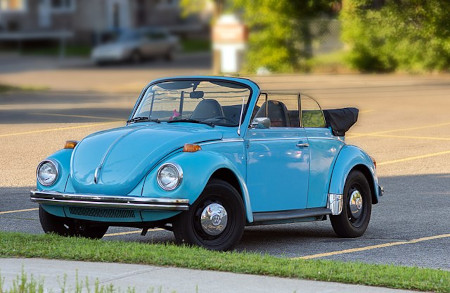
In 2014, Volkswagen sold more than 10 million vehicles, more than any other car company.
The Volkswagen company owns luxury carmaker brands including Audi, Bentley, Bugatti, Lamborghini, and Porsche.
Volkswagen has more than 100 factories scattered throughout the world.
The Apollo 15 lunar rover was built on a Volkswagen beetle chassis.
Volkswagen has been exploring the use of sustainable materials in their cars, including natural fibers and recycled materials, to reduce environmental impact.
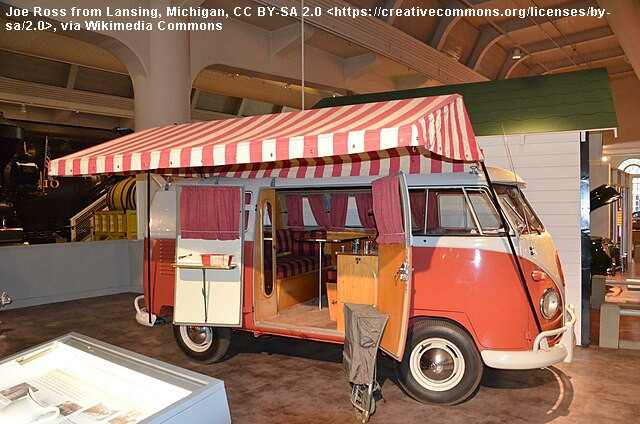
1959 VW Camper Van
10 Strange Facts About Cars
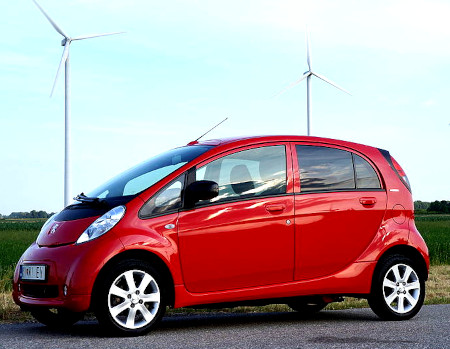
The world’s first recorded car accident occurred in 1891 in Ohio, United States, when a buggy collided with a bicycle.
The average car has around 30,000 parts.
The longest traffic jam in history occurred in China in 2010 and lasted for 12 days, stretching over 100 kilometers (62 miles).
The Bugatti Veyron, one of the world’s fastest cars, has 10 radiators to keep its engine cool.
The Porsche 911 has remained in continuous production since 1963.
A woman in England had to take her driver’s test 47 times before she finally passed. Quite possibly her examiner got taken for a ride.
This is a showcase site for Jeff Napier of US-Web-Design. Surprisingly low-cost solutions for all your website and marketing needs. More...
The world’s most expensive car sold at auction was a 1962 Ferrari 250 GTO, which fetched $48.4 million.
The Toyota Corolla is the best-selling car model of all time, with over 45 million units sold.
The Lamborghini company was founded as a result of a disagreement between Ferruccio Lamborghini and Enzo Ferrari.
The average car spends about 95% of its lifetime parked.
The first car to have an onboard navigation system was the 1990 Mazda Eunos Cosmo.
The Volkswagen Group owns 12 car brands, including Volkswagen, Audi, Porsche, Lamborghini, and Bugatti.
The airbags in cars were first introduced in the 1970s.
The first car to reach 100 mph (160 km/h) was a 1904 Belgian car called the “Mercedes-Simplex.”
The first car with a standardized left-hand driving position was introduced by Cadillac in 1916.
The fastest recorded speed by a street-legal production car is 304.77 mph (490.48 km/h) by the Bugatti Chiron Super Sport 300+.
The electric car controversy: If you have solar panels on your roof that charge your electric car, then you are most likely less impactful on the earth than anyone driving a gasoline, diesel or even a hybrid car. However, if your car’s electricity is coming from the grid, then the fossil fuel needed to generate and transport the electricity to your car is actually more than the equivalent use of fuel in a car.
The other consideration is what to do with the expired batteries. Our best technologists have not yet come up with a good way to recycle large quantities of lithium ion batteries as of 2023. Since these batteries are tremendously expensive to replace, the value of an electric car after perhaps ten years will be so low that the entire car may need to be junked.
Some engineers have experimented with using an electric car’s battery to power a house at night, and solar cells to power the house and recharge the car by day. This would reduce or eliminate the need for large household batteries.
The average person will spend around 4 years of their life driving a car.
The windshield wipers were invented by Mary Anderson in 1903.
The world’s first traffic light was installed in Cleveland, Ohio, in 1914.
The first car radio was invented in 1929 by Paul Galvin and was called the “Motorola.”
The world’s largest car manufacturer is currently Toyota.
The Rolls-Royce Phantom uses an estimated 450 pounds (204 kilograms) of soundproofing materials to create a quiet cabin.
The BMW logo represents a spinning aircraft propeller, as BMW originally manufactured airplane engines. BMW stands for Bayerische Motoren Werke, although in America it’s often called Bavaria Motor Works.
The McLaren F1, introduced in 1992, was the first production car to have a carbon-fiber monocoque chassis.
The first speeding ticket was issued in 1902 in New York City. The driver was caught going 12 mph (19 km/h) in an 8 mph (13 km/h) zone.
The average car has enough steel to build about 45 bicycles.
The Chevrolet Corvette was initially intended to be a limited production model, but its popularity led to continuous production since 1953.
The world’s first car with an entirely carbon fiber body was the 1981 DeLorean DMC-12.
The Ferrari company produces fewer than 10,000 cars per year to maintain exclusivity.
The first recorded car race took place in France in 1894, covering a distance of approximately 79 miles (127 km) from Paris to Rouen.
Having been produced for more than 30 years in nearly the same configuration, the Volkswagen Beetles and Volkswagen vans have bucked traditional automotive engineering, yet they were very successful. Unlike most cars the engines are mounted in the rear, behind the rear wheels. The engines have two cylinders one one side of the crankshaft, and two on the other. The engines are air-cooled. The engines do not have an oil filter beyond a simple screen in the bottom of the crankcase. Instead of ordinary springs for suspension, the wheels are sprung with steel bars that twist and untwist.
There were some problems with Volkswagens. The vans were prone to tipping over. The engines could overheat. And speaking of heat, since the engines were air-cooled, they couldn’t have a water-based heat exchanger. Instead they had sheet metal wrapped around the exhaust system in which air flowed to gather heat. This warm air was then piped into the passenger compartment. The end result was a heating system that wasn’t very warm in the winter. Furthermore, the sheet metal would rust out in a few years in many climates, resulting in no heating system at all. Finally, front-end collisions were often terrible in Beetles and vans.
Silly Laws Still On The Books Involving Automobiles
In Memphis, Tennessee, a woman cannot legally drive unless there is a man running on foot ahead of her car with a red flag to warn motorists that a woman is driving. Like many of these laws, this one is seldom enforced.
In Alabama, USA, it is illegal to drive blindfolded. (Seems obvious, but it’s an actual law!)
In Denmark, it is mandatory to check underneath your car for sleeping children before starting the engine.
In Thailand, it is illegal to drive without a shirt on.
In California, USA, it is illegal to jump out of a moving car.
In Cyprus, it is illegal to eat or drink while driving.
In Japan, it is illegal to splash pedestrians with water from puddles while driving.
In Nevada, USA, it is illegal to ride a camel on the highway.
In Saudi Arabia, only men are allowed to drive cars.
In Massachusetts, USA, it is illegal to operate a car with a gorilla in the backseat.
In Singapore, it is illegal to drive without a valid Electronic Road Pricing (ERP) device during certain hours.
In Australia, it is illegal to drive with a person or animal tied to the outside of your vehicle.
In Oklahoma, USA, it is illegal to read a comic book while driving.
In Minnesota, USA, it is illegal to cross state lines with a duck atop your head.
In Ohio, USA, it is illegal to drive a car without a steering wheel.
In Hawaii, USA, it is illegal to place coins in your ears while driving.
In Oregon, USA, it is illegal to go hunting from a moving vehicle unless the target is a whale.
Motorcycles
Motorcycles were initially seen as a mode of transportation primarily for women due to their perceived ease of use.
The first motorcycle was built in 1885 by Gottlieb Daimler and Wilhelm Maybach, known as the “Daimler Reitwagen.”
The fastest production motorcycles in the world, the Dodge Tomahawk, can reach speeds of up to 350 mph (560 km/h). Offered in 2003 they have 500-horsepower, 8.3-liter (506 cubic inch), 10-cylinder engines. Only ten of these machines were produced. They were not street-legal, produced strictly for speed.
The longest motorcycle jump record stands at 351 feet 3 inches (107 meters) and was achieved by Robbie Maddison.
The first mass-produced motorcycle was the Hildebrand & Wolfmüller, introduced in 1894, 16 years before the Ford Model T.
The Harley-Davidson company started in a shed in Milwaukee, Wisconsin, in 1903.
This is a showcase site for Jeff Napier of US-Web-Design. Surprisingly low-cost solutions for all your website and marketing needs. More...
The most expensive motorcycle ever sold at an auction was a 1951 Vincent Black Lightning, which fetched $929,000 in 2018.
The term “crotch rocket” is a slang term for a sportbike, known for its aggressive styling and high-performance capabilities.
The fastest electric motorcycle, the Lightning LS-218, can reach speeds of over 218 mph (350 km/h).
The longest journey ever completed on a motorcycle is 457,000 miles (735,000 km), achieved by Emilio Scotto from Argentina. He completed his 10-year ride in 2009 on a 1980 Honda Gold Wing.
The first motorcycle helmet was invented in 1914 by Dr. Eric Gardner.
The most commonly used motorcycle engine configuration is the V-twin, where two cylinders are arranged in a V shape.
The first motorcycle police patrol was established in Berkeley, California, in 1911.
Many motorcycles until about 30 years ago had 2-cycle engines. These engines had to burn a little oil mixed into their gasoline to keep the engines lubricated.
The large Harley Davidson engines are more than 25% bigger than Honda CR-V engines.
The world’s largest motorcycle rally is the Sturgis Motorcycle Rally, held annually in South Dakota, USA. Over 350,000 people attend.
In some countries, motorcycles are used as a cost-effective alternative to ambulances, especially in congested urban areas.
Motorcycles are much more fuel-efficient than cars, with some models achieving over 100 miles per gallon (42 km/L).
The Bonneville Salt Flats in Utah, USA, is a popular location for motorcycle speed record attempts due to its flat and smooth surface.
The most popular motorcycle brand in the world is Honda, followed by Yamaha and Harley-Davidson.
The longest continuous wheelie on a motorcycle is 205 miles (330 km) and was achieved by Yasuyuki Kudo.
The term “café racer” refers to a style of motorcycle that originated in the 1960s and is characterized by its stripped-down appearance and high-speed capabilities.
The fastest land speed record achieved by a motorcycle is 376.363 mph (605.697 km/h) by Rocky Robinson on the Ack Attack streamliner.
The first motorcycle jump over a car was performed by Evel Knievel in 1967.
The first motorcycle gang, known as the “Wino Willie’s”, was formed in California in the 1940s.
Motorcycles were originally called “motocycles” in the early days.
The term “chopper” originated from motorcycle enthusiasts who chopped off or customized parts of their motorcycles to make them lighter or more aesthetically appealing.
The motorcycle with the largest engine displacement in production is the Triumph Rocket 3, with a 2,500cc engine.
Motorcycle riders are less likely to be involved in fatal accidents compared to car drivers, but more likely to be seriously injured in an accident.
In New York, which is probably typical of most places, one out of every four car drivers gets in an accident every year. Most are little fender benders. The same kind of impact on a motorcycle could be much more serious. Fortunately, visibility and maneuverability on motorcycles is generally better, so some accidents can be avoided.
Motorcycles can stop in a very short distance compared to cars.
The Guinness World Record for the most people on a single motorcycle is 56, achieved by the Indian Army’s motorcycle display team.
The term “lane splitting” refers to the practice of riding a motorcycle between lanes of slow-moving or stopped traffic, which is legal in some countries and states.
Motorized unicycles and monocycles have been built by enterprising inventors from time to time. A unicycle consists of a small wheel with the rider on top. A monocycle is a large wheel with the rider inside. Monocycles usually have outrigger bars or wheels in front. Without the outriggers, a sudden application of the brakes would not stop the wheel. It would continue to spin with the rider spinning inside.
The first motorcycle road race took place in France in 1897 and covered a distance of 78 miles (125 km).
The Suzuki Hayabusa, introduced in 1999, held the title of the fastest production motorcycle for many years.
The smallest road-legal motorcycle is the Honda Motocompo, which can be folded into a compact size and fits into the trunk of a car. This was produced between 1981 and 1983 with a 49cc two-stroke engine and single speed transmission. The total weight was 93 lbs (42kg).
The longest motorcycle parade involved 4,405 participants and was achieved in the Philippines in 2013.
Motorcycles are often used in professional bicycle races as camera platforms, allowing photographers to capture dynamic shots of the race.
The record for the highest speed reached by a motorcycle while being ridden blindfolded is 265.33 mph (426.99 km/h) by Ben Bostrom.
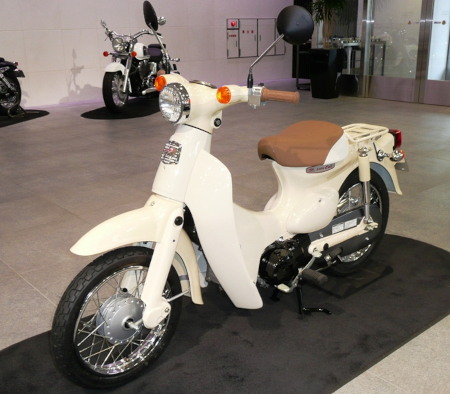
The Honda Super Cub (pictured above) is the best-selling motor vehicle of all time, with over 100 million units sold worldwide since its introduction in 1958.
In some countries, motorcycles are modified to serve as taxis, providing quick and affordable transportation in congested urban areas.
Coincidences

Both Abraham Lincoln and John F. Kennedy were assassinated on a Friday while seated beside their wives. Both JFK and Abe Lincoln reported having dreams about being assassinated shortly before their deaths.
The Royal Synchronicity: Queen Elizabeth II was born on the same day that King George V, her grandfather, died.
The Unsinkable Woman: Violet Jessop, a stewardess, survived the sinking of the RMS Titanic in 1912, the sinking of the HMHS Britannic in 1916, and the collision of the RMS Olympic in 1911.
On December 5, 1664, a ship sank off the coast of Wales. The only survivor was a man named Hugh Williams. On December 5, 1785, another ship sank. One man survived, another Hugh Williams. On December 5, 1860, yet another ship went down with only one survivor – you guessed it – his name was Hugh Williams.
Mark Twain and Halley’s Comet: Mark Twain was born in 1835 when Halley’s Comet appeared, and he died in 1910 when the comet returned.
The Triple Lightning Strike: In 2006, Roy Sullivan, a park ranger, was struck by lightning for the seventh time, making him the person with the most recorded lightning strikes.
This is a showcase site for Jeff Napier of US-Web-Design. Surprisingly low-cost solutions for all your website and marketing needs. More...
Jonathan Swift wrote a classic book called Gulliver’s Travels that borders on science fiction. It was written before ‘science fiction’ was what you called such books. In this book he wrote about two moons circling Mars. His descriptions of their size and orbital distance weren’t perfect but surprisingly accurate. He did this one hundred years before they were described by astronomers.
The Reunited Brothers: Two brothers, separated at birth, named Jim Lewis and Jim Springer, coincidentally named their sons James Alan and James Allan.
The Train Crash Prediction: In 1895, author Morgan Robertson wrote a novel titled “Futility” about an unsinkable ship named the Titan that hit an iceberg and sank. Fourteen years later, the RMS Titanic suffered a similar fate.
In 1979, a man named Frane Selak survived a train crash, a plane crash, a bus crash, and a car crash, and then won the lottery.
The Converging Paths: In 1975, two women with the same name, both traveling from England to the Canary Islands, wearing identical clothing, and carrying similar bags, ended up sitting next to each other on the plane.
The Identical Twins: In 2002, two unrelated identical twin brothers, separated at birth, named Jim Springer and Jim Lewis, coincidentally reunited and discovered they shared the same first name, occupation, and hobbies.
The Bridge Collapse: In 1940, a worker named Harold C. W. Keevil fell off the unfinished Tacoma Narrows Bridge but survived. A year later, he was on the same bridge when it collapsed, but he survived again.
The Struck by Lightning Brothers: In 2018, two brothers, aged 5 and 7, were both struck by lightning on separate occasions within the span of a year.
The Separated Sisters: In 2007, two sisters named Samantha Futerman and Anaïs Bordier, who were adopted from South Korea, discovered they were identical twins after one saw the other in a YouTube video.
The Winning Lottery Numbers: In 2003, the winning numbers of the Virginia Lottery’s Pick 4 game were 6-6-6-6, causing a record number of winners and resulting in the lottery having to pay out millions of dollars.
The Mysterious Subway Meeting: In 2008, two strangers named Laura and Laura, who had the same birthday, height, hair color, and were both wearing a black coat and a red scarf, accidentally bumped into each other on the London Underground.
10 Weird Facts About Bicycles

A bicycle is the most efficient machine in terms of energy expended for moving weight over distance.
A human on a bicycle is also the most efficient animal on earth in terms of energy spent for travel.
Bicycling is six times more efficient than walking.
Using a bicycle, it takes 35 calories to move an average-size person one mile (1.6 km). It takes 1,860 calories to move a person a mile in a car. So, taking a bike uses two percent as much energy as a car.
The average bicycle costs three percent as much as a typical car.
People who commute on bicycles have a 39% lower death rate than people who do not ride their bikes to work.
This is a showcase site for Jeff Napier of US-Web-Design. Surprisingly low-cost solutions for all your website and marketing needs. More...
According to at least one statistical study, the health benefits of cycling outweigh the risks by twenty to one.
The fastest speed ever recorded on a bicycle was achieved by Denise Mueller-Korenek in 2018, who reached a speed of 183.93 miles per hour (296.01 km/h) on a specially designed bicycle.
In the 1890s, bicycles were considered scandalous by some, because they allowed women to travel alone without chaperones.
The longest tandem bicycle in the world was over 67 feet (20 meters) long, and it was ridden by 20 people at the same time.
During World War II, the Japanese confiscated over 200,000 bicycles from occupied countries to use for their own military purposes.
The first bicycles had no pedals – riders had to push themselves along with their feet, like on a scooter.
In 1890, John Boyd Dunlop invented the pneumatic tire, which made cycling much more comfortable and efficient. John was a veterinarian who adapted his technique for making surgical gloves.
Bicycles played an important role in the women’s suffrage movement – suffragettes used bicycles to travel to rallies and spread their message.
BMX and mountain bikes did not exist until the 1970s.
During the Vietnam War, bicycles were used by soldiers as a way to transport equipment and supplies through the dense jungle terrain.
Bicycles are considered a form of art by some – there are many famous paintings and sculptures featuring bicycles, including “Bicyclette” by Pablo Picasso.
You’ll find much more information about bicycles and bicycling in the Bicycling section of 500Ways.
US Travel Quiz
Nautical Terminology Quiz

