Posted on Leave a comment

Julia Roberts

Her Smile Is Insured – Julia Roberts’ famous smile is reportedly insured for $30 million!

She Wasn’t the First Choice for Pretty Woman – The role of Vivian was initially offered to Molly Ringwald, who turned it down.

Julia’s middle name is Fiona.

As a child, Julia originally dreamed of becoming a veterinarian, but later discovered acting.

Julia is part of the 10% of the world’s population that is left-handed.

She’s Terrified of Water – Despite filming underwater scenes in Ben Is Back, she’s admitted to having a fear of being submerged.

This is a showcase site for Jeff Napier of US-Web-Design. Surprisingly low-cost solutions for all your website and marketing needs. More...

Julia converted to Hinduism after working on Eat Pray Love.

She often wears prescription glasses but prefers contact lenses in public appearances.

Julia Roberts loves knitting and even knits on movie sets to relax.

Before fame, she worked at Baskin-Robbins.

She’s the First Woman to Earn $20 Million for a Movie. She made history with her paycheck for Erin Brockovich.

Julia prefers a quiet life and owns a ranch in Taos, New Mexico.

Unlike many Hollywood stars, Julia doesn’t drink coffee due to allergies.

She Once Lived in a Haunted House – Julia and her family experienced eerie happenings in an old house they rented.

Martin Luther King Jr. and Coretta Scott King paid for Julia’s hospital birth expenses when her parents couldn’t afford them.

She Was Once Hollywood’s Highest-Paid Actress – In the early 2000s, she topped the list.

She’s Never Had Plastic Surgery – She embraces natural aging and has said she’d rather let her face show her life’s experiences.

Julia took clarinet lessons as a child.

She’s a Huge Beatles Fan – Julia has said The Beatles are her favorite band of all time.

She Met Her Husband on a Movie Set – She met Danny Moder, a cinematographer, while filming The Mexican.

For more than 20 years, Julia has been battling Thrombocytopenic Purpura, a rare blood disease that can result in bruises on one’s body. It can also cause anemia, fever, kidney problems, headaches, confusion and sometimes seizures. The prognosis is good as long as one is receiving treatments which can include removing one’s blood and replacing it with healthy donor transfusions.

She’s Afraid of Tarantulas – Julia has a deep fear of large spiders. On the other hand, Billie Eilish has a pet tarantula.

Her parents named her after Julia Lennon, John Lennon’s mother.

Instead of displaying her Oscar for Erin Brockovich in a flashy case, it stays on an ordinary bookshelf.

Posted on Leave a comment

Soft Drinks, 20 Surprising Facts

See also 7-Up.

History & Origins

Coca-Cola was originally green – Before the caramel color was added, Coca-Cola had a natural greenish hue.

Pepsi was once called “Brad’s Drink” – It was created by pharmacist Caleb Bradham in 1893 and renamed Pepsi-Cola in 1898.

Dr Pepper is the oldest major soft drink in America – It was created in 1885, a year before Coca-Cola.

Coca-Cola contained cocaine – In its early formulation, Coca-Cola contained coca leaf extract, which had small amounts of cocaine. It was removed in 1929.

This is a showcase site for Jeff Napier of US-Web-Design. Surprisingly low-cost solutions for all your website and marketing needs. More...

Fanta was invented in Nazi Germany – Due to trade embargoes during WWII, German Coca-Cola plants had to create a new beverage with available ingredients, leading to Fanta’s creation.

Strange Ingredients & Production

Mountain Dew was originally a whiskey mixer – It was created in the 1940s as a mixer for bourbon.

Some sodas use fish bladder in production – Isinglass, a substance from fish bladders, has been used in some sodas for clarification.

Coca-Cola’s secret formula is locked in a vault – The actual recipe is said to be known by only a few people and is kept in a vault in Atlanta, Georgia.

A single can of soda can contain up to 10 teaspoons of sugar – That’s more than the recommended daily sugar intake for an adult. The amount of sugar in the typical American’s diet has been linked to many diseases. Reducing sugar intake may add years to your life.

Some sodas contain wood rosin – Certain citrus-flavored sodas use ester gum (from wood rosin) to stabilize flavor oils.

Unusual Uses

Soda can clean rust – The phosphoric acid in soda can remove rust from metal surfaces.

It can be used as a toilet cleaner – The acidity in cola can break down stains in toilets.

It can tenderize meat – The acids in soda help break down proteins in meat, making it softer.

It can dissolve a tooth – If you leave a tooth in a cup of soda for several days, it can partially dissolve due to the acid.

It’s been used to clean blood stains – Some police officers have used soda to remove blood from roads after accidents.

Marketing & Popularity

Coca-Cola helped shape Santa Claus’s modern image – Their 1930s holiday ads popularized Santa’s red suit and jolly demeanor.

The “New Coke” failure became a marketing success – Coca-Cola’s reformulation in 1985 was unpopular, but its return as “Coca-Cola Classic” boosted sales.

Pepsi once owned a fleet of military ships – In a deal with the Soviet Union, Pepsi received submarines and warships in exchange for soda.

Sprite was created as a response to 7-UP – The Coca-Cola Company introduced Sprite in 1961 to compete with 7-UP.

The first diet soda was called “No-Cal” – It was introduced in 1952 by Hyman Kirsch, originally marketed to diabetics.

Health & Science

Diet sodas can trick your brain – Artificial sweeteners can make your body expect sugar, leading to increased hunger.

Drinking soda can weaken bones – The phosphoric acid in many sodas may contribute to lower bone density.

Caffeine-free Coke tastes different – Many people claim it tastes sweeter due to the lack of caffeine bitterness.

Some sodas glow under UV light – Tonic water contains quinine, which glows blue under ultraviolet light.

Soft drinks were once seen as medicine – Many early sodas, including Dr Pepper and 7-UP, were marketed as health tonics.

Strange Variants & Limited Editions

Japan has some of the weirdest soda flavors – Unique flavors include curry, eel, wasabi, and yogurt soda.

There’s a Pepsi White (yogurt-flavored) – It was a limited-edition drink in Japan.

Coca-Cola once made a coffee-soda hybrid – “Coca-Cola BlāK” was introduced in 2006 but was discontinued due to low sales.

There’s a clear version of Pepsi – Pepsi Crystal, launched in the early 1990s, was a transparent cola that didn’t last long.

You can buy “birthday cake” flavored soda – Some specialty brands have released soda flavors like birthday cake, buffalo wing, and ranch dressing.

Posted on Leave a comment

Polydactyl

See also: Catversity, the free online cat university and entertainment sub-site.

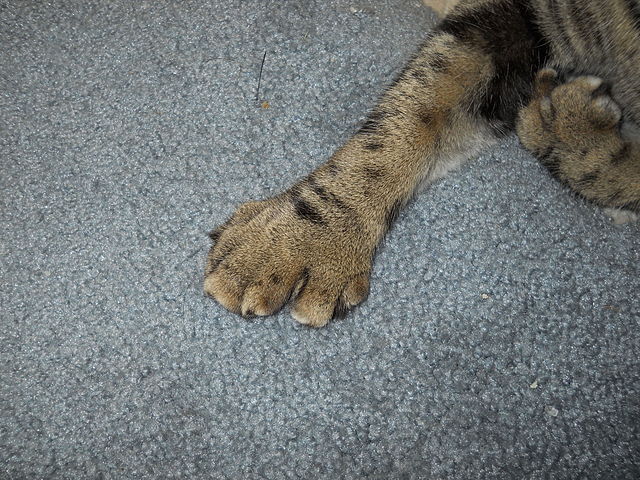
A polydactyl cat has two or four feet with more than 5 toes. This is a fairly common genetic condition that is completely harmless.


polydactyl cat

It can happen to human feet or hands also but is more rare than with cats.

This is a showcase site for Jeff Napier of US-Web-Design. Surprisingly low-cost solutions for all your website and marketing needs. More...

polydactyl human

Posted on Leave a comment

10 Strange Facts About Psychology

See Also: Ten Psychologist Jokes

The color red can increase a person’s appetite.

People who daydream more tend to have higher intelligence.

The average person has about 70,000 thoughts per day.

Music has been shown to reduce pain and anxiety, and improve mood.

People with higher levels of education are more likely to experience sleep paralysis.

The scent of lavender has been found to reduce stress and improve sleep quality.

This is a showcase site for Jeff Napier of US-Web-Design. Surprisingly low-cost solutions for all your website and marketing needs. More...

Multitasking can reduce productivity by up to 40%.

The “bystander effect” refers to the tendency for individuals to be less likely to help someone in need when other people are present.

People who swear more tend to be more honest.

The brain’s hippocampus, responsible for memory, is larger in London taxi drivers due to their extensive knowledge of the city’s streets.

Smiling, even if forced, can actually improve your mood.

People are more likely to remember negative memories over positive ones, due to the brain’s negativity bias.

In order to help us successfully navigate life, the negativity bias keeps us aware of things that we may need to change or avoid. Positive events are unimportant in survival.

The “placebo effect” refers to the phenomenon where a person experiences a perceived improvement in symptoms after receiving a treatment with no therapeutic value.

Playing video games can improve hand-eye coordination and problem-solving skills.

The fear of public speaking, known as glossophobia, affects about 75% of people.

Humans are hardwired to remember faces more easily than names.

People who sleep on their left side have more vivid dreams.

A study found that people are more likely to take risks in a casino if they have to walk past a person smoking, due to the association of smoking with risk-taking behavior.

The brain releases dopamine, the “feel-good” chemical, when we receive social media notifications.

The “butterfly effect” suggests that small, seemingly insignificant events can have far-reaching consequences.

Listening to sad music can actually improve your mood by allowing you to process and regulate emotions.

People tend to overestimate their abilities in unfamiliar areas, a phenomenon known as the Dunning-Kruger effect.

Nostalgia can counteract feelings of loneliness, boredom, and anxiety.

People are more likely to comply with a request if it is made in a quieter voice.

The smell of chocolate can increase theta brain waves, which are associated with relaxation.

People are more likely to remember information that is presented in a visually appealing format.

The “mere exposure effect” suggests that the more we are exposed to something, the more we tend to like it.

A study found that the anticipation of a vacation can bring more happiness than the vacation itself.

The brain can rewire itself through neuroplasticity, allowing for learning and adaptation throughout life.

Posted on Leave a comment

Psychologist Jokes

See Also: Ten Surprising Facts About Psychology

How many psychologists does it take to change a light bulb? Only one, but the light bulb has to want to change.

Why did the psychologist become a gardener? Because he wanted to help people “grow.”

Why did the psychologist become a chef? Because he wanted to “analyze” food for thought.

Why did the psychologist bring a spoon to work? To help his patients “dig deep” into their issues.

What do you call a group of psychologists? A “psycho-babble” of psychologists.

Why did the psychologist always carry a mirror? To help his patients “reflect” on themselves.

This is a showcase site for Jeff Napier of US-Web-Design. Surprisingly low-cost solutions for all your website and marketing needs. More...

How many psychologists does it take to screw in a light bulb? None, the light bulb will change when it’s ready.

Why did the psychologist become an artist? He wanted to paint people’s “emotional landscapes.”

What do you call a psychologist who also acts? A “psycho-dramatist.”

What do you call a psychologist who specializes in canine behavior? A “dogtor” of psychology.

Why did the psychologist bring a broom to work? To sweep away his patients’ “mental clutter.”

What’s a psychologist’s favorite dance move? The “Freudian slip.”

Why did the psychologist bring a telescope to work? To help his patients gain a “clearer” perspective.

Why did the psychologist become a magician? Because he loved making people’s issues “disappear.”

Why did the psychologist bring a stopwatch to work? To help his patients “track” their progress.

What’s a psychologist’s favorite dessert? “Sigmund Freud” cake — it’s layered with deep meaning.

Posted on Leave a comment

Candy

The world’s oldest known candy is a honey-based treat from over 2,000 years ago.

The word “candy” comes from the Arabic word “qandi,” which means “made of sugar.”

The first form of candy was created by ancient Egyptians over 4,000 years ago.

The first mass-produced candy in the United States was the candy corn, created in the 1880s.

The largest candy store in the world is Dylan’s Candy Bar in New York City, spanning over 15,000 square feet (1,393 square meters, or a third of an acre).


Dylan's Candy Bar, New York City, world's largest candy bar

This is a showcase site for Jeff Napier of US-Web-Design. Surprisingly low-cost solutions for all your website and marketing needs. More...

Dylan’s Candy Bar

The average American consumes about 22 pounds (10 kilograms) of candy each year.

The world’s largest chocolate bar weighed 12,770 pounds (5,792 kilograms) and was made in Armenia in 2010.

The first chocolate bar was invented in 1847 by Joseph Fry.

M&M’s were originally created for soldiers in World War II since they could carry them without the chocolate melting.

The world’s most expensive chocolate bar is the “Amedei Porcelana,” which can cost up to $90 per bar.

The largest lollipop ever made weighed over 7,000 pounds (3,175 kilograms).

The largest candy cane ever made was 51 feet (15.5 meters) tall.

The Snickers candy bar was named after the Mars family’s favorite horse.

Cotton candy was invented by a dentist named William Morrison.

The world’s longest gum wrapper chain measured over 62 miles (100 kilometers).

The Tootsie Roll was named after its creator’s daughter’s nickname, “Tootsie.”

The chocolate-covered insect industry exists, with companies producing candies like chocolate-covered ants and scorpions.

There are more than 400 different flavors of Kit Kat in Japan, including unique options like wasabi and green tea.

The first candy bar to be taken to space was a Milky Way bar in 1982.

Hershey’s Kisses got their name from the machine that produces them, which makes a “kissing” sound.

The world’s largest candy necklace was made in Canada and measured over 1,000 feet (304 meters) long.

The popular candy Pez was originally marketed as an alternative to smoking.

Candy canes were originally straight, and the curved shape is said to represent a shepherd’s crook.

Posted on Leave a comment

Human Babies

Babies have more bones than adults. They are born with about 300 bones, while adults have 206 due to the fusion of some bones as they grow.

A baby’s taste buds are more sensitive than those of adults. They can taste a wider range of flavors, which may explain why they can be picky eaters.

Newborn babies can recognize their mother’s voice from birth. They are also able to recognize familiar sounds they heard while in the womb.

Babies have a strong sense of smell. They can differentiate between their mother’s breast milk and that of another woman.

On average, a baby will triple its birth weight within the first year of life.

Newborn babies are nearsighted and can see objects clearly only at a close distance. They can see best at a distance of 8-12 inches, which is roughly the distance between their face and their mother’s while breastfeeding.

This is a showcase site for Jeff Napier of US-Web-Design. Surprisingly low-cost solutions for all your website and marketing needs. More...

Babies don’t have kneecaps at birth. Instead, they have soft cartilage that eventually hardens into kneecaps as they grow.

The brain of a baby doubles in size during the first year of life.

Babies have a natural instinct for swimming and can hold their breath automatically underwater until about six months old.

A newborn baby can cry as soon as they are born. This helps clear their lungs and open up their airways.

Babies have a strong grip reflex. They can hold onto an object placed in their hand and can even support their body weight for a short time.

Babies have a unique grasping reflex known as the “palmar reflex,” where they instinctively hold onto objects that touch their palms.

Babies have more taste buds on their tongues than adults. They have around 10,000 taste buds compared to adults’ 2,000-4,000.

A baby’s head is proportionally larger compared to the rest of their body compared to adults. This is because the brain develops rapidly during the early years.

Babies are born with the ability to mimic facial expressions. They often imitate the expressions they see their parents making.

A baby’s heart beats faster than an adult’s. The average heart rate for a newborn is around 120-160 beats per minute.

Babies have a higher body surface area-to-weight ratio than adults, which makes them more susceptible to changes in temperature.

Newborn babies have more bones in their skull than adults. This allows for flexibility during birth and helps the skull to mold and pass through the birth canal.

Babies have a stronger sense of hearing than adults. They can hear higher frequencies and are more sensitive to sounds in general.

Babies are born with a natural instinct to suck. This reflex helps them to feed and find comfort.

A baby’s first social smile typically appears between 6-8 weeks of age. This is when they start to recognize and respond to their caregivers.

Newborn babies have a heightened sense of touch. They can feel pain, temperature, and pressure more intensely than adults.

Babies have more rapid eye movement (REM) sleep than adults. This is thought to contribute to their brain development.

A newborn baby has no control over their saliva and may drool frequently.

Babies have a natural preference for human faces and will often gaze longer at faces compared to other objects.

A baby’s immune system is not fully developed at birth. They receive antibodies from their mother through breast milk, which helps protect them against infections.

Posted on Leave a comment

Water

Water can exist in the three common states of matter: solid (ice), liquid, and gas (steam).

Water is the only substance that can exist in all three states of matter within the range of temperatures found on Earth.

Water can also exist in a fourth state of matter called a “spin ice,” where the water molecules are arranged in a crystalline lattice.

Water is the most common substance on Earth, covering about 71% of the planet’s surface.

A single drop of water contains billions of water molecules.

Water has a high surface tension, which allows certain insects like water striders to walk on it.

This is a showcase site for Jeff Napier of US-Web-Design. Surprisingly low-cost solutions for all your website and marketing needs. More...

Pure water is colorless, odorless, and tasteless, however it is said that cats can taste pure water.

The maximum density of water occurs at 4°C, which means that ice floats on water.

Water is the only substance that expands when it freezes.

The human body is about 60% water. An average person contains ten gallons (38 liters) of water.

Water can absorb more heat than many other substances, which makes it a good coolant.

Water is used in many industrial processes, such as power generation, manufacturing, and agriculture.

To grow the wheat for a single loaf of bread requires two tons of water (1,496 gallons or 5,663 liters) are needed.

The blood of mammals has the same dilution of salt as ocean water.

A person can survive for about a month without food, but only about a week without water.

The world’s largest waterfall is Angel Falls in Venezuela, which drops water from a height of 979 meters (3,212 feet – more than 1/2-mile).

The average American uses about 80-100 gallons (302 to 378 liters) of water per day.

Water is a polar molecule, which means it has a positive end and a negative end. They say water molecules are shipped like Mickey Mouse, with a round head, the oxygen, and two ears, the hydrogen atoms at a 104.5-degree angle to each other.

Microwave ovens take advantage of the shape of water molecules. At a 2.4 gigahertz (2.4 billion times per second) they reverse an electrical field. The water molecules try to align one way, then the other. All this movement creates heat. Since plastic, porcelain and many other materials do not have polar molecules, they do not heat up in the presence of an alternating field.

Water can be split into its constituent elements, hydrogen and oxygen, through a process called electrolysis. Electrolysis is done with direct current electricity. If you put electrodes in water, bubbles of oxygen and hydrogen will form around those electrodes. Engines can be powered by recombining hydrogen with oxygen, but so far, the process of electrolysis uses more energy than can be retrieved.

Water is essential for photosynthesis, the process by which plants convert sunlight into energy.

Scientists specializing in exobiology generally assume that lifeforms will require water, so life will probably not be found on a dry planet.

Sea water contains approximately 34 parts per thousand of salt.

The water cycle is the continuous movement of water between the Earth’s surface and atmosphere.

Water can be used to extinguish fires because it can absorb heat quickly and effectively.

Water can have a memory, according to a controversial theory called “water memory” proposed by French scientist Jacques Benveniste.

You can be cold when wet because water transfers heat from your body to the air more quickly than dry skin.

Water can form up to 15 different phases, including a liquid crystal phase.

Water has been found to have a surprisingly high surface tension in microgravity environments, which can affect the behavior of fluids in space.

The human body can sense the difference between hot and cold water much more accurately than it can sense differences in temperature for other substances such as steel, plastic and wood.

Water can conduct electricity even in the absence of dissolved ions, due to a phenomenon called “protonic conduction.”

Water has been found to exhibit strange quantum properties, such as “quantum tunneling” and “quantum entanglement.”

Water can be supercooled to extremely low temperatures without freezing, and can even exist as a liquid at temperatures as low as -40°C. Something needs to trigger formation of crystals (ice). Without that, water cannot freeze.

Water can be used to create “snowcrete,” a building material made from a mixture of snow and concrete.

Water can form a “chain” of hydrogen bonds that can stretch across large distances, allowing it to transport energy and information.

Water can be used to create a type of glass called “water glass,” which is made by melting silica in a solution of sodium carbonate and water.

Water can act as a natural lens, bending and distorting light to create mirages and other optical illusions.

Water can form a “bridge” between two surfaces, allowing them to stick together without the need for glue or other adhesives. If you’ve ever put a cover slip on a microscope slide, you’ve witnessed the effect.

Posted on Leave a comment

Adolescents

The adolescent stage of human development generally refers to the period of life between childhood and adulthood, and is characterized by significant physical, emotional, and cognitive changes. Depending on which expert you ask, the age range can be from 10 years old to mid-twenties, but is generally age 12 to 15.

As a result of improvements in nutrition and healthcare, people reach puberty earlier and live longer than in past eras.

Girls generally go through a growth spurt sooner than boys. So a sister that has always been shorter than her older brother may be taller and stronger for a year or so, until he finally grows into his adult-size body.

Adolescents often experience “sleep drunkenness,” which is a state of grogginess and confusion that occurs when they are woken up abruptly.

Adolescents are more likely to engage in risky behaviors like drug use, drinking, and unprotected sex, as they test the limits of their newfound independence.

The adolescent brain goes through a pruning process where it eliminates unused neural connections.

This is a showcase site for Jeff Napier of US-Web-Design. Surprisingly low-cost solutions for all your website and marketing needs. More...

The teenage years are a time when individuals begin to develop a sense of humor and enjoy joking around with friends.

Adolescents are more likely to engage in “self-talk,” or talking to themselves, as a way to process their thoughts and emotions.

Adolescents often experience a heightened sense of self-consciousness and may feel like they are constantly being judged by others.

Adolescent boys are more likely to experience body dysmorphia and muscle dysmorphia due to societal pressure to be muscular and fit. For some boys, penis size becomes a concern.

The adolescent brain is more susceptible to addiction because of the underdeveloped prefrontal cortex.

Adolescents require more sleep than adults, but their natural sleep cycle causes them to stay up later and wake up later.

During puberty, the body undergoes rapid growth and hormonal changes, leading to increased hunger and appetite.

Adolescents have a greater tendency to conform to peer pressure and follow trends.

Adolescent girls are more likely to experience depression and anxiety than boys.

Adolescent girls are also more likely to experience body image issues and eating disorders.

Adolescents have a more heightened sense of social justice and fairness.

The adolescent brain is more sensitive to stress, which can have a long-term impact on mental health.

The adolescent brain is more responsive to rewards, which can lead to addictive behaviors.

Adolescents are more likely to experience mood swings and emotional turbulence.

Adolescents often experience conflicts with authority figures such as parents and teachers.

Adolescents are more likely to engage in binge drinking and drug use.

Adolescents often experience a sense of alienation and feel like they don’t fit in.

The teenage years are a time when individuals start to form close friendships and experience loyalty and betrayal.

Adolescents often experience a sense of nostalgia for their childhood, as they begin to realize that they are no longer children.

The adolescent brain is more susceptible to the effects of peer pressure due to increased activity in the amygdala, which processes social information.

The adolescent stage is also a time when individuals begin to explore their spirituality and religious beliefs.

The adolescent stage is a time when individuals begin to develop their own moral code and ethical beliefs.

Adolescents are more likely to experience “fear of missing out” (FOMO) and anxiety related to social media use.

The adolescent stage is often marked by an increased interest in social justice and political activism.

Posted on Leave a comment

Massage

The word “massage” comes from the Arabic word “masah” which means “to press.”

In ancient Rome, massage was used to treat gladiators before and after battles if they were still alive.

There are some male massage therapists in England who specialize in massage of the penis.

The longest recorded massage lasted for 80 hours and was performed by two therapists in Bangkok, Thailand.

In some cultures, such as in India, massage is considered a form of spiritual practice and is performed in temples.

In the United States during the 19th and early 20th centuries, some medical doctors attempted to cure ‘hysteria’ in female patients by massaging the clitoris.

This is a showcase site for Jeff Napier of US-Web-Design. Surprisingly low-cost solutions for all your website and marketing needs. More...

A study conducted in 2011 found that massage can reduce the symptoms of depression and anxiety.

In Thailand, massage is considered a form of medicine and is taught in medical schools.

In the United States and many developed countries, massage is most often performed on padded tables, but in most other countries, the client is treated on the floor.

A female massage practitioner is often called called a ‘masseuse’ and a male is a ‘masseur.’

In some cultures, such as in India, massage is considered taboo for men to receive from women who are not their spouses or relatives.

Some medical professionals claim that healthy as well as enlarged prostate glands can be treated successfully by massage through the anus.

The first massage chair was invented in 1948 by Japanese engineer Nobuo Fujimoto.

In China, massage has been used as a form of healing for over 3,000 years.

Gentle massage of the testicles is claimed to promote overall good health.

The first recorded mention of massage in Europe was in the 5th century BC by the Greek physician Hippocrates.

In Japan, massage is believed to improve blood circulation and relieve fatigue.

The first massage oil was made from olive oil in ancient Greece.

Swedish massage, also known as classic massage, is the most popular type of massage in the Western world.

Massage therapy can help lower blood pressure.

In some cultures, such as in Morocco, it is traditional for a mother to massage her newborn baby.

In some countries, such as South Korea, it is common for people to receive regular massages as part of their healthcare routine.

Some massage therapists specialize in working with animals, such as horses and dogs.

In ancient Egypt, massage was used as a form of pain relief during childbirth.

The first massage table was invented in 1878 by a Dutch physician named Johann Georg Mezger.

In some cultures, such as in Indonesia, massage is used to treat a variety of medical conditions, including asthma and diabetes.

In the 1970s and 1980s, massage beds were common in hotels. One could put coins in a slot, then the bed would shake for several minutes.

Massage can help improve flexibility and range of motion.

Some massage therapists incorporate energy healing techniques, such as Reiki, into their sessions.

In ancient China, massage was used to treat a variety of medical conditions, including paralysis and digestive issues.

Massage therapy can help alleviate symptoms of carpal tunnel syndrome.

In some cultures, such as in Egypt, it is believed that massage can help prevent baldness.

Some massage therapists specialize in working with cancer patients to help manage symptoms such as pain and fatigue.

Massage can help improve posture.

In most developed countries a licensed massage practitioner must go to school and have detailed knowledge of anatomy.

In the United States, massage practitioners must never touch genital areas for fear of losing their licenses.

Posted on Leave a comment

10 Weird Facts About Love

The feeling of falling in love releases the same chemicals in the brain as cocaine addiction.

In ancient Rome, people believed that the first kiss should always be initiated by the woman to avoid bad luck.

People who are in love have lower levels of the stress hormone cortisol.

The longest recorded marriage lasted for 91 years and 12 days.

Falling in love can cause physical symptoms, such as increased heart rate and sweating.

In Japan, there is a love hotel that is entirely staffed by robots.

This is a showcase site for Jeff Napier of US-Web-Design. Surprisingly low-cost solutions for all your website and marketing needs. More...

Scientists have found that people who are in love have more activity in the part of the brain associated with reward and pleasure.

In some African countries, it is customary for men to give their wives a love hut as a wedding gift.

Love at first sight is a real phenomenon, according to research that shows it takes only 4 minutes to decide whether you are attracted to someone.

In ancient Egypt, men used to wear perfume made from the sweat of their beloved.

People who are in love have higher levels of the neurotransmitter dopamine in their brains.

In the Middle Ages, people believed that if you sneezed three times in a row, it was a sign that you were in love.

A study found that when a person falls in love, their voice changes to become more similar to the person they are in love with.

In some cultures, it is customary for couples to exchange pieces of their own hair as a symbol of their love.

A group of flamingos is called a “flamboyance,” which is a fitting name for these birds who mate for life and perform elaborate courtship dances.

Studies show that people in happy relationships tend to live longer and have better overall health.

In medieval Europe, people believed that a woman could make a man fall in love with her by cooking his favorite meal and secretly adding her menstrual blood to the dish.

Couples who laugh together have stronger relationships, according to research.

In ancient China, women used to paint their teeth black to make themselves more attractive to men.

The song “Can’t Help Falling in Love” by Elvis Presley is based on a French song called “Plaisir d’amour” that was written in the 18th century.

Studies have shown that when two people are in love, their heartbeats can synchronize.

In ancient Greece, people believed that love was caused by arrows shot by Cupid, the god of desire.

A study found that holding hands with someone you love can help alleviate physical pain.

In some cultures, it is considered good luck for a bride to wear something old, something new, something borrowed, and something blue on her wedding day.

In the 19th century, the word “flirt” meant “to flick,” as in to make a sudden movement, and was used to describe a woman who was behaving coquettishly.

Scientists have found that people in love have lower levels of serotonin, a neurotransmitter associated with depression.

In ancient Persia, men would give their wives a love apple on their wedding night, which was a fruit with a sweet taste that was believed to enhance fertility.

Studies show that people who are in love have better memory recall than those who are not.

In some cultures, it is customary for the groom to carry the bride across the threshold of their new home to protect her from evil spirits.

A study found that people who are in love can experience withdrawal symptoms similar to those of drug addiction when they are separated from their partner.

Posted on Leave a comment

Scientists

Galileo Galilei was accused of heresy for promoting the heliocentric model of the solar system. The Catholic Church made him recant the truth, after which he spent the rest of his life under house arrest.

Sir Isaac Newton is said to have practiced alchemy and even tried to turn base metals into gold.

Marie Curie’s notebooks are still radioactive and can only be handled with protective gear.

Albert Einstein was offered the presidency of Israel but declined the offer.

Nikola Tesla was obsessed with the number 3 and often did things in sets of 3.

Charles Darwin ate every animal he discovered during his travels, including iguanas and giant tortoises.

This is a showcase site for Jeff Napier of US-Web-Design. Surprisingly low-cost solutions for all your website and marketing needs. More...

Thomas Edison was afraid of the dark and always slept with a light on. After a while, he switched from gas lights to electric lights since he made electric lighting available.

Leonardo da Vinci was ambidextrous and often wrote backwards. He was also known for demonstrating feats of strength.

Rosalind Franklin’s X-ray crystallography data was used by James Watson and Francis Crick to discover the structure of DNA, but she was not given credit until after her death.

Astronomer Carl Sagan wrote a novel, “Contact,” which was later turned into a movie starring Jodie Foster.

Neil deGrasse Tyson was once a competitive ballroom dancer.

Werner Heisenberg, the physicist behind the Heisenberg Uncertainty Principle, was also a talented pianist.

The father of microbiology, Antonie van Leeuwenhoek, was also a successful cloth merchant.

Margaret Mead, an anthropologist, once famously said, “Never doubt that a small group of thoughtful, committed citizens can change the world; indeed, it’s the only thing that ever has.”

Marie Tharp, a geologist, helped map the ocean floor, and her work revealed the Mid-Atlantic Ridge and helped prove the theory of plate tectonics.

Edwin Hubble, the astronomer who discovered the expanding universe, was also a skilled basketball player and played on the University of Chicago team.

Ada Lovelace, a mathematician who is considered the world’s first computer programmer, was also an accomplished musician and writer.


Richard Feynman, the Nobel Prize-winning physicist, was known for playing bongos and cracking safes as hobbies.

Max Planck, the physicist who originated quantum theory, was also an accomplished pianist.

Alfred Wegener, the scientist who proposed the theory of continental drift, was not widely accepted in his time but is now recognized as a pioneer in the field of geology.

Margaret Hamilton, a computer scientist, led the team that developed the software for NASA’s Apollo missions and coined the term “software engineering.”

Rosalyn Yalow, a physicist and medical researcher, was the first woman to win a Nobel Prize in Physiology or Medicine in 1977.

Alan Turing, the father of computer science and artificial intelligence, was also a skilled long-distance runner and cracked the Nazi’s Enigma code during World War II.

Katsuko Saruhashi, a geochemist, was the first woman to earn a doctorate in chemistry from the University of Tokyo and discovered the harmful effects of nuclear testing on the environment.

Paul Erdős, a mathematician, was known for his nomadic lifestyle and collaborative work with other mathematicians around the world.

Jocelyn Bell Burnell, an astrophysicist, discovered pulsars but was not awarded the Nobel Prize for her work, which went to her male supervisor instead.

Posted on Leave a comment

10 Weird Facts About the Human Body

The average person sheds about 600,000 particles of skin every hour.

The human brain is made up of around 75% water.

The surface area of the human lung is roughly the same size as a tennis court.

The smallest bone in the human body is the stapes bone in the ear, which is smaller than a grain of rice.

A human sneeze can travel up to 100 miles (160 kilometers) per hour.

The strongest muscle in the human body is the masseter muscle, which is used for chewing.

This is a showcase site for Jeff Napier of US-Web-Design. Surprisingly low-cost solutions for all your website and marketing needs. More...

Human hair can stretch up to 30% of its length when wet.

The human nose and ears continue to grow throughout a person’s entire life.

The human body has enough fat to make 7 bars of soap.

The human body contains enough iron to make a 3-inch (7.5 cm) nail.

The human heart creates enough pressure when it pumps blood to squirt blood up to 30 feet (9 meters) away.

The human body has enough salt to fill an average-sized salt shaker.

The human body can produce about a quart (1 liter) of saliva per day.

The liver is the only organ that can regenerate itself completely.

The human body produces about 25,000 quarts (25,000 liters) of blood in a lifetime.

The human body has enough carbon to make 900 pencils.

Human eyes are capable of distinguishing over 10 million different colors.

The average human farts around 14 times a day.

The human body has enough phosphorous to make 2,200 match heads.

The human brain uses around 20% of the body’s energy despite only making up 2% of the body’s weight.

The human body can survive without food for about a month, but only without water for about a week.

The human body can sweat up to 3 gallons (11.3 liters) per day in hot conditions.