Posted on Leave a comment

Amsterdam

Amsterdam is built on over 11 million wooden poles that support the buildings and infrastructure due to the city’s swampy ground.

Some old houses lean forward or sideways due to their wooden foundations shifting over time.

Many other houses lean forward intentionally. Leaning forward helped hoist furniture up through pulleys without hitting the walls.

Amsterdam has 165 canals, which is about the same as Venice, which has 170 canals.

There are over 880,000 bicycles in Amsterdam, almost as much as the city’s population of 933,000.

The narrowest house in Amsterdam is only 2.02 meters (6.6 feet) wide at Singel 7.

This is a showcase site for Jeff Napier of US-Web-Design. Surprisingly low-cost solutions for all your website and marketing needs. More...

Narrow house, and other surprising facts about Amsterdam
See it on Google Maps

To preserve its historical beauty, Amsterdam bans large billboards in many areas.

Around 15,000 bicycles are pulled from the canals each year.

Amsterdam has a massive underground bike garage near Central Station, with space for 7,000 bikes.

Amsterdam has the highest number of museums per square meter in the world including a museum of sexuality. See also: Strange Museums.
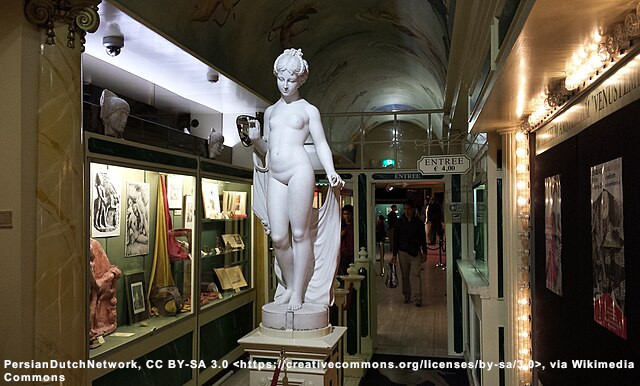
Sex museum, and other surprising facts about Amsterdam
Amsterdam Sex Museum

Amsterdam’s Red Light District has its own museum, which tells the history of the industry.


You might find this video interesting. It is a walking interview with a Red Light District sex worker including a visit to the Red Light District museum.

Marijuana and sex work are technically not legal, but they are tolerated under strict regulations.

Amsterdam’s coffee shops are famous for selling cannabis, not just coffee!

The world’s first official stock exchange was established in Amsterdam in 1602.

Amsterdam experienced the first-ever stock market crash in 1637 during the Tulip Mania. A slow build in speculative value of tulip bulbs, especially tulips of rare colorings continued until some bulbs were worth more than the price of a house. Values crashed in 1637 leaving some investors with tulip bulbs that were worth nearly nothing.

Some historical buildings have false facades to hide the modern renovations behind them.

Over 2,500 houseboats line Amsterdam’s canals, and some are even available as Airbnb rentals.

“De Poezenboot” is a cat shelter on a houseboat, home to rescued felines.
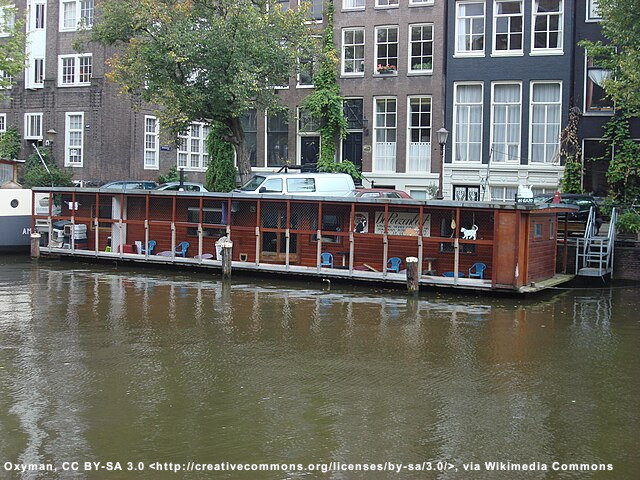
Poezenboot, floating cat sanctuary
Poezenboot, Cat Sanctuary

The Dutch are the tallest people on Earth, with men averaging 6 feet (182.9 cm).

The famous Anne Frank House was nearly demolished in the 1950s but was saved by a citizens’ movement.

Amsterdam sees more rainy days than London, but often in light drizzles.

People of more than 100 nationalities live in Amsterdam, making it one of the most diverse cities in the world.

During religious persecution, Catholics built hidden churches inside houses.

Amsterdam has its own artificial beach, Blijburg aan Zee, despite being inland.

The Netherlands was the first country to legalize gay marriage in 2001 and the first wedding was in Amsterdam.

Locals are known for being very direct in communication.

A massive network of water tunnels, pipes, and old sewage canals runs under the city, some dating back centuries.

Posted on Leave a comment

Aviation

Historical Aviation Facts

The first powered flight on December 17, 1903, lasted just 12 seconds and covered 120 feet (36 meters). The brothers flew three times that day. The third and longest flight lasted 15 seconds and covered 200 feet (61 meters). Their engine had no cooling system because it was not expected to run long enough to overheat.


Wright Brothers airplane first flight, aviation trivia

The First In-Flight Meal Was Served in 1919 – Passengers on a Handley-Page flight from London to Paris were given a cold lunch for 3 shillings.

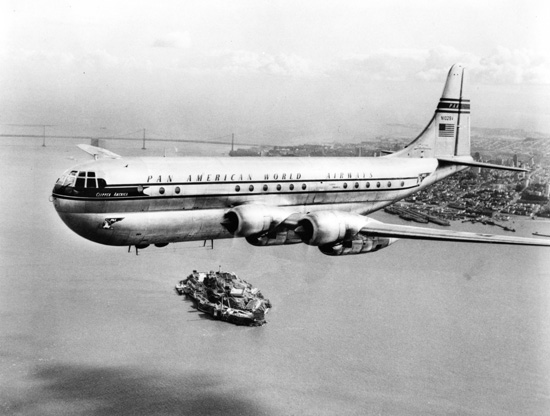
Commercial Airlines Once Had Sky Lounges – The Boeing 377 Stratocruiser in the 1950s had a downstairs lounge with a bar.

10 surprising facts about aviation, including Boing 377 stratocruiser
Boing 377 Stratocruiser

This is a showcase site for Jeff Napier of US-Web-Design. Surprisingly low-cost solutions for all your website and marketing needs. More...

The First Female Airline Pilot Flew in 1934 – Helen Richey became the first female commercial airline pilot, but gender biases limited her career.

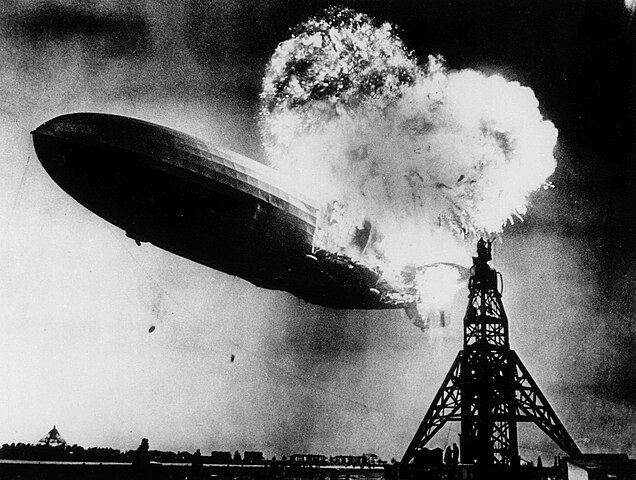
The Hindenburg Had a Smoking Lounge – Despite being filled with highly flammable hydrogen, the Hindenburg Zeppelin had a designated smoking area.

Hindenberg burning, and aviation trivia

This photo, taken during the initial explosion of the Hindenburg, shows the 804-foot (245-meter) German zeppelin just before subsequent explosions sent the ship crashing to the ground at Lakehurst Naval Air Station in Lakehurst, N.J., May 6, 1937. The roaring flames silhouette two men, at right atop the mooring mast, dangerously close to the blasts. The scene stimulated NBC radio broadcaster Herbert Morrison to give a memorable and highly emotion account of the disaster.

WWII Pilots Used to Pee into Tubes – Many aircraft in WWII had pee tubes for long flights since there were no restrooms. Certain anatomical restrictions having to do with the use of these tubes may be one reason that women were not often involved in long-range aviation in the early years.

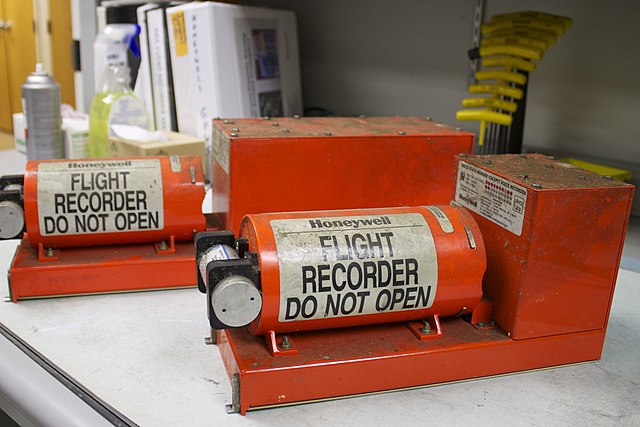
The “Black Box” Isn’t Black – Flight data recorders are actually bright orange to make them easier to find after crashes.

Flight Data Recorder

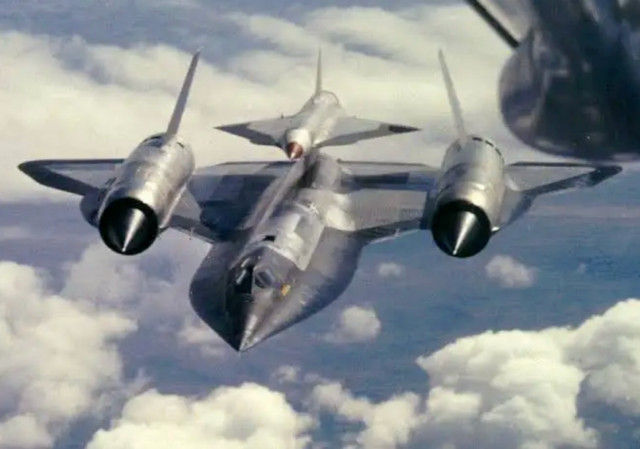
The Fastest Manned Aircraft Was the SR-71 Blackbird – It reached 2,193 mph (Mach 3.3), faster than a rifle bullet.

Surprising airplane facts, SR-71 Blackbird, fastest supersonic manned jet

A Pilot Once Ejected Without a Parachute and Survived – Alan Magee fell 22,000 feet from a WWII bomber and survived by crashing through a glass roof.

The Longest Flight Without Refueling Lasted 64 Days – In 1958, two pilots refueled mid-air and stayed in flight for 64 days, 22 hours.

Smoking was banned on U.S. domestic flights in 1990 but not international flights until 2000.

Modern Aviation Facts

In an all-economy configuration, the Airbus A380 has a max capacity of 868 people.

Some modern aircraft are testing a special surface that mimics sharkskin, reducing fuel consumption.

Most of a commercial flight is controlled by autopilot, with pilots handling only takeoff and landing. Planes are usually guided into a landing with electronics, and have a feature called autoland which takes much of the workload off pilots.

Airplane tires are built to withstand 500 psi (35 bar) and can touch down at 170 mph (270 kph) without bursting.

Some aircraft can glide for over 100 miles (160 kilometers) if their engines fail.

Flight Paths Are Not Straight – Due to winds, weather, and air traffic, commercial flights often follow a curved path.

The odds of dying in a plane crash are 1 in 11 million, compared to 1 in 5,000 in a car.

Long-haul planes have secret beds for pilots and flight attendants.

A commercial plane is hit by lightning on average at least once a year but is built to endure it safely.

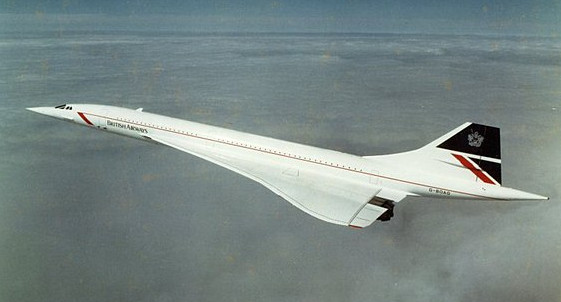
The Concorde flew at 60,000 feet (11 miles or 18 kilometers), almost twice the altitude of modern airliners.

Concorde, aviation surprising facts

Airplane Oxygen Masks Last Only About 12-15 Minutes – But that’s long enough for pilots to bring the plane to a breathable altitude around 10,000 feet (approximately 3 kilometers).

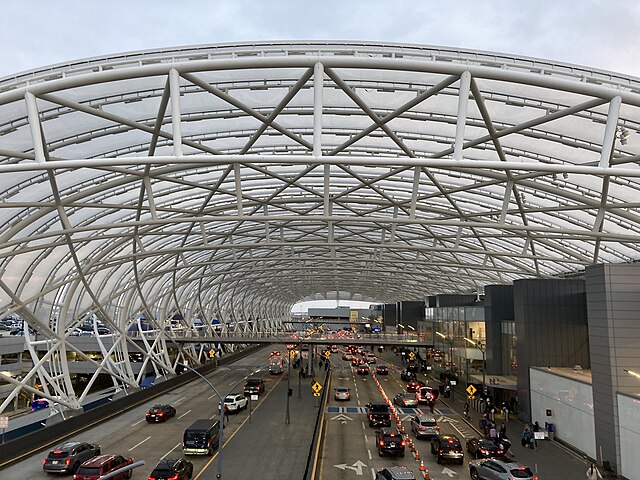
Hartsfield-Jackson Atlanta International Airport in Atlanta, Georgia, USA, handles over 100 million passengers a year.

Hartsfield-Jackson Atlanta Airport, aviation trivia

Modern Jets Are More Fuel-Efficient Than Cars – A Boeing 787 burns about 0.02 gallons per passenger per mile, making it more efficient than a car with one passenger which ranges from from about 0.058 per mile for a typical pickup truck down to 0.022 per mile for a hybrid car.

Airplane Water Tanks Are Not Clean – Studies have found that airplane water tanks can have bacteria, which is why coffee and tea might taste bad.

Aviation Contributes About 2-3% of Global CO2 Emissions – While significant, it’s much less than the transportation sector overall.

Electric and Hydrogen-Powered Aircraft Are in Development – Several companies are testing electric and hydrogen-powered aircraft to reduce emissions.

Posted on Leave a comment

Huge Army Tank

During World War II, Hitler commissioned Ferdinand Porsche, designer of the Volkswagen and many other cars, to design the biggest, heaviest tank possible. The thing was watertight so it could traverse water. It could cross a river, not by floating, but by crawling across the floor of the river. The problem with this tank is that it was so heavy it literally demolished the streets and foundations of nearby buildings as it passed, due to its weight and vibration.

Ferdinand Porsche, designer of huge German army tanks
Ferdinand Porsche,
public domain via Wikimedia Commons
Posted on Leave a comment

Volkswagen and Hitler

See also: 10 Surprising Facts About Volkswagens.

People often wonder how Hitler, with all his horrible ideas and rough manners could become so popular a leader. A great deal of Hitler’s appeal to the masses was that he decided to control the automobile industry. He promised them Volkswagens, cars that every family could afford at a time when there was only one car for every 211 people in Germany. (In America at that time, there was one car for every 5.7 people.)

Posted on Leave a comment

United States Secret Service Agency

History & Origins

The Secret Service was originally established in 1865, the same year that the slaves were freed, to suppress widespread counterfeiting after the Civil War — nearly one-third of U.S. currency was fake at the time.

President Abraham Lincoln signed the legislation to create the Secret Service just hours before his assassination.

The agency didn’t formally start protecting U.S. presidents until after President William McKinley was assassinated in 1901. In Buffalo, New York, he was shot twice in the abdomen. It didn’t kill him right away. He became sick from infection, languishing in a hospital for 8 days before his death. If only he had been shot 27 years later, penicillin might have saved him.

Presidential Protection

Theodore Roosevelt was the first full-time protectee of the Secret Service.

This is a showcase site for Jeff Napier of US-Web-Design. Surprisingly low-cost solutions for all your website and marketing needs. More...

Presidents, First Ladies, and other VIPs have code names assigned by the Secret Service. For example, Ronald Reagan was “Rawhide” and Barack Obama was “Renegade.”

Presidential candidates only receive Secret Service protection starting 120 days before the general election.

After the age of 16, children of sitting presidents no longer receive Secret Service protection.

Operations & Duties

The Secret Service has two major, different functions. It is responsible for both protection (presidents, dignitaries, etc.) and investigation (financial crimes, cyber threats, etc.).

The agency has agents stationed in over 20 countries.

The Secret Service investigates financial cybercrimes, like credit card fraud and identity theft.

The agency has canine units, employing highly trained dogs, particularly for explosives detection.

Training & Equipment

Agents undergo seven months of intensive training at the Secret Service training center in Maryland.

Just like CIA agents, Secret Service agents are trained in high-performance driving maneuvers to evade potential threats.

Agents often have emergency medical training to stabilize protectees in crisis situations.

Interesting Incidents

In 1902, just a year after the agency was created, agents stopped an assassination attempt against Theodore Roosevelt.

In 1981, Agent Timothy McCarthy took a bullet for President Reagan during an assassination attempt.

The Secret Service guards the nuclear football, the briefcase containing nuclear launch codes, at all times.

Technology & Gear

Some agents wear specially designed suits resistant to gunfire.

The presidential vehicle, often called “The Beast,” is heavily armored and equipped with oxygen supplies and blood bags matching the president’s blood type.

Agents use encrypted communication systems to stay connected during missions.

Cultural Impact

The Secret Service has been featured in films like In the Line of Fire, Olympus Has Fallen, and The Sentinel.

Besides plainclothes agents, there’s also a Uniformed Division for guarding major sites like the White House.

Unique Protocols

The agency often runs decoy convoys to confuse potential attackers.

Air Force One’s security is heavily coordinated by the Secret Service.

Agents may discourage presidents from excessive handshaking in crowded areas to minimize risks.

Uncommon Facts

Agents use code words like “Tripwire” (potential threat) and “Hammerdown” (mission success) as nicknames for threats.

They actively protect the U.S. financial infrastructure from counterfeit threats.

The Secret Service occasionally partners with the U.S. Marine Corps for rapid-response teams.

The agency frequently conducts covert surveillance missions.

Since 2013, all former U.S. presidents receive lifetime Secret Service protection.

Posted on Leave a comment

Surprising Facts About Voting

Historical Facts

In 1968 Liechtenstein held a vote to determine whether women should be allowed to vote. Women were allowed to participate only in this vote, because until then women were not allowed to vote. The result of the vote was that women were not allowed to vote.


Women and voting in Liechtenstein

In Switzerland, women weren’t allowed to vote until 1971. In the United States, it was 1920.

First U.S. Presidential Election: Only about 6% of the U.S. population was eligible to vote in the 1789 election. African-Americans, even though freed, were not allowed to vote in most states. White people had to be males over twenty-one years old, and not only that, they had to own real estate. It’s amazing that the United States wasn’t heavily skewed toward advantages for rich white men. Wait, maybe it was!

The U.S. voting age was lowered from 21 to 18 in 1971 with the 26th Amendment.

This is a showcase site for Jeff Napier of US-Web-Design. Surprisingly low-cost solutions for all your website and marketing needs. More...

Native Americans Couldn’t Vote Everywhere Until 1962: Although granted U.S. citizenship in 1924, some states still restricted their voting rights.

The Secret Ballot Wasn’t Always Used: Many early U.S. elections used voice voting or color-coded ballots.

The 15th Amendment Didn’t Guarantee Voting Rights: Despite granting African American men the right to vote in 1870 (five years after the Civil War), discriminatory practices like literacy tests still suppressed Black voters for decades.

Shirley Chisholm was the first Black woman elected to Congress in 1968.

The U.S. Almost Had a “None of the Above” Option: Some states have considered adding this choice to ballots.

Five U.S. presidents have won with the help of the Electoral College, without winning the popular vote.

Unusual Voting Laws and Practices

In Some States, You Can Register on Election Day: Several states allow same-day voter registration.

Felony Voting Rights Vary: Some states allow felons to vote while incarcerated, while others permanently bar them.

Unlike many other countries, Election Day in the United States is not a federal holiday.

In Australia, Voting Is Mandatory: Citizens must vote or face fines.

Since 2000, Oregon has conducted elections exclusively by mail-in ballots.

Absentee Voting Dates Back to the Civil War: Soldiers were allowed to vote remotely during the war.

NASA astronauts can cast ballots while orbiting Earth.

One State Uses RCV for Presidential Elections: Maine uses ranked-choice voting to determine its presidential election outcome.

RCV stands for Ranked-Choice Voting. It is an electoral system where voters rank candidates in order of preference rather than selecting just one. If a candidate wins more than 50% of the first-choice votes, they are elected. If no one gets a majority, the candidate with the fewest votes is eliminated, and their votes are redistributed to the next choice on those ballots. This process repeats until a candidate reaches a majority.

Key Benefits of RCV:

Reduces “spoiler effect” (where similar candidates split votes, leading to an unintended winner).

Encourages more positive campaigning (since candidates want to be voters’ second or third choices).

Ensures majority support rather than just a simple plurality.

RCV is used in Maine for federal elections, some city elections in places like New York City and San Francisco, and even in some political party primaries.

Strom Thurmond won a U.S. Senate seat in 1954 as a write-in candidate. Mr. Thurmond is also the record-holder for the longest filibuster: 24 hours and 18 minutes. He did this in 1957 in an attempt to block the Civil Rights act which provided expanded protection for African-American voting rights.

A filibuster is an attempt to block a vote in the US Senate. If a speaker can continue long enough, the hope is the Senators will lose interest and move on to other business rather than passing a bill.

Some Countries Have “None of the Above” as a Choice: India, Greece, and Russia offer voters the option to reject all candidates.

Modern Trends and Surprising Stats

The U.S. has lower turnout than many developed countries, averaging around 55-60% in presidential elections.

Historically, the 18-24 age group has the lowest voter turnout.

In most elections, women tend to vote more than men.

Ballot Design Can Change Outcomes: Poor ballot design, like the infamous “butterfly ballot” in Florida in 2000, can lead to confusion and miscounts.

The “butterfly ballot” was a controversial ballot design used in Palm Beach County, Florida, during the 2000 U.S. presidential election. This design placed candidate names on two facing pages, with punch holes aligned in the center, resembling butterfly wings. Voters were required to punch holes next to their chosen candidate’s name, but misalignment led to confusion. Many voters intending to select Democratic candidate Al Gore mistakenly voted for Reform Party candidate Pat Buchanan or invalidated their ballots by selecting multiple candidates.

The design’s complexity resulted in an unusually high number of votes for Buchanan in a predominantly Democratic county, as well as numerous spoiled ballots. Analyses suggest that these errors potentially influenced the election’s outcome, given the slim margin of victory in Florida.

Studies show that states with mail-in voting have higher voter participation.

Your Vote Matters More in Local Elections. Local races, such as city councils and school boards, often have very low turnout, meaning each vote has a bigger impact.

Posted on Leave a comment

Soft Drinks, 20 Surprising Facts

See also 7-Up.

History & Origins

Coca-Cola was originally green – Before the caramel color was added, Coca-Cola had a natural greenish hue.

Pepsi was once called “Brad’s Drink” – It was created by pharmacist Caleb Bradham in 1893 and renamed Pepsi-Cola in 1898.

Dr Pepper is the oldest major soft drink in America – It was created in 1885, a year before Coca-Cola.

Coca-Cola contained cocaine – In its early formulation, Coca-Cola contained coca leaf extract, which had small amounts of cocaine. It was removed in 1929.

This is a showcase site for Jeff Napier of US-Web-Design. Surprisingly low-cost solutions for all your website and marketing needs. More...

Fanta was invented in Nazi Germany – Due to trade embargoes during WWII, German Coca-Cola plants had to create a new beverage with available ingredients, leading to Fanta’s creation.

Strange Ingredients & Production

Mountain Dew was originally a whiskey mixer – It was created in the 1940s as a mixer for bourbon.

Some sodas use fish bladder in production – Isinglass, a substance from fish bladders, has been used in some sodas for clarification.

Coca-Cola’s secret formula is locked in a vault – The actual recipe is said to be known by only a few people and is kept in a vault in Atlanta, Georgia.

A single can of soda can contain up to 10 teaspoons of sugar – That’s more than the recommended daily sugar intake for an adult. The amount of sugar in the typical American’s diet has been linked to many diseases. Reducing sugar intake may add years to your life.

Some sodas contain wood rosin – Certain citrus-flavored sodas use ester gum (from wood rosin) to stabilize flavor oils.

Unusual Uses

Soda can clean rust – The phosphoric acid in soda can remove rust from metal surfaces.

It can be used as a toilet cleaner – The acidity in cola can break down stains in toilets.

It can tenderize meat – The acids in soda help break down proteins in meat, making it softer.

It can dissolve a tooth – If you leave a tooth in a cup of soda for several days, it can partially dissolve due to the acid.

It’s been used to clean blood stains – Some police officers have used soda to remove blood from roads after accidents.

Marketing & Popularity

Coca-Cola helped shape Santa Claus’s modern image – Their 1930s holiday ads popularized Santa’s red suit and jolly demeanor.

The “New Coke” failure became a marketing success – Coca-Cola’s reformulation in 1985 was unpopular, but its return as “Coca-Cola Classic” boosted sales.

Pepsi once owned a fleet of military ships – In a deal with the Soviet Union, Pepsi received submarines and warships in exchange for soda.

Sprite was created as a response to 7-UP – The Coca-Cola Company introduced Sprite in 1961 to compete with 7-UP.

The first diet soda was called “No-Cal” – It was introduced in 1952 by Hyman Kirsch, originally marketed to diabetics.

Health & Science

Diet sodas can trick your brain – Artificial sweeteners can make your body expect sugar, leading to increased hunger.

Drinking soda can weaken bones – The phosphoric acid in many sodas may contribute to lower bone density.

Caffeine-free Coke tastes different – Many people claim it tastes sweeter due to the lack of caffeine bitterness.

Some sodas glow under UV light – Tonic water contains quinine, which glows blue under ultraviolet light.

Soft drinks were once seen as medicine – Many early sodas, including Dr Pepper and 7-UP, were marketed as health tonics.

Strange Variants & Limited Editions

Japan has some of the weirdest soda flavors – Unique flavors include curry, eel, wasabi, and yogurt soda.

There’s a Pepsi White (yogurt-flavored) – It was a limited-edition drink in Japan.

Coca-Cola once made a coffee-soda hybrid – “Coca-Cola BlāK” was introduced in 2006 but was discontinued due to low sales.

There’s a clear version of Pepsi – Pepsi Crystal, launched in the early 1990s, was a transparent cola that didn’t last long.

You can buy “birthday cake” flavored soda – Some specialty brands have released soda flavors like birthday cake, buffalo wing, and ranch dressing.