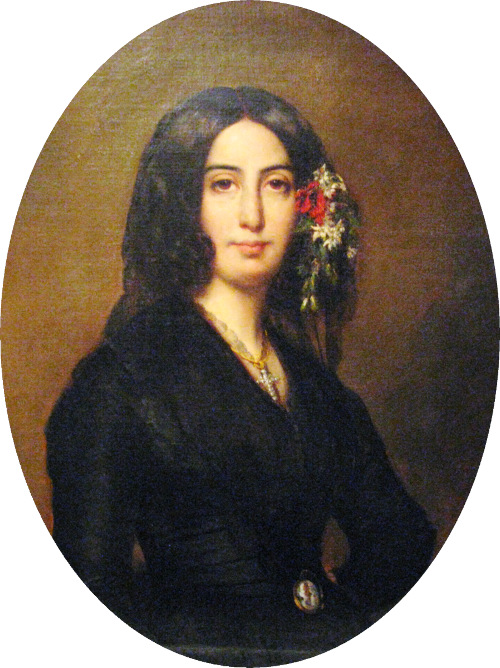
George Sand: The Scandalous and Brilliant Pen of France
George Sand, born Amantine Lucile Aurore Dupin on July 1, 1804, in Paris, France, was one of the most prolific and controversial writers of the 19th century. Best known for her novels that championed social reform and women’s rights, she lived a life as unconventional as her ideas. A novelist, memoirist, essayist, playwright, and public intellectual, Sand was also a figure of intense fascination and gossip in her own lifetime.
She was not only famous for her literary talent, but also for wearing men’s clothes, smoking cigars in public, and engaging in high-profile love affairs including with composer Frédéric Chopin. With over 70 novels, 50 volumes of other works, and a deeply political voice, George Sand shattered every mold set for women of her era.
Early Life: Born to a Legacy of Contradiction
Sand was born into a family that reflected France’s complicated history. Her father, Maurice Dupin, was an officer in Napoleon’s army and a descendant of the Marshal of France, Maurice de Saxe, an illegitimate son of Augustus II the Strong, King of Poland. Her mother, Sophie-Victoire Delaborde, came from a working-class background. This union between aristocratic and common blood profoundly influenced Sand’s outlook on society.
When her father died in 1808, four-year-old Aurore was raised by her strict paternal grandmother in Nohant, a country estate in central France. There, she received an unusually broad education for a girl of her time, reading widely in literature, religion, and philosophy.
In 1822, at age 18, she married Baron Casimir Dudevant, with whom she had two children. The marriage quickly soured, leading Sand to leave her husband in 1831 and move to Paris to reinvent herself.
Reinventing Herself: George Sand Emerges
In 1832, in order to gain access to places women could not go, such as libraries and cafés, Sand began dressing in men’s clothing – a choice that shocked society. She also adopted the male pseudonym George Sand, believing that her works would be taken more seriously if thought to be written by a man.
Her first major success came with “Indiana” (1832), a novel that criticized the legal and social constraints on women, especially in marriage. This was followed by a string of popular works, including Lélia (1833), Valentine (1832), and Consuelo (1842–43). Her writing combined romanticism with a keen social critique, advocating for freedom, justice, and female independence.
Oddly enough, she often claimed she had no real talent. In letters, she dismissed her work as “only stories.” Yet her writing had immense influence on contemporaries, including Flaubert, Hugo, Dumas, and even Karl Marx, who praised her moral courage.
Surprising and Odd True Facts About George Sand
She had a pet dog who dined at the table. Sand was notoriously eccentric with her pets. Her favorite dog, “Pistolet,” was reportedly fed at the dinner table and had his own plate and chair.
She engaged in ‘romantic socialism.’ Sand was politically radical, especially during the 1848 Revolution in France. She edited a socialist newspaper and advocated for land reform and workers’ rights. She even wrote pamphlets under yet another pseudonym: “Citizen Cazeaux.”
She built a hut for writing in the woods. At her estate in Nohant, she had a small, rustic hut where she’d escape to write in solitude. This “writing hut” still stands today.
She was once a cigar-smoking cross-dresser in the Vatican. During a trip to Rome, she famously entered the Vatican disguised as a man, smoking a cigar the entire time, scandalizing her companions.
She was fascinated by the occult. Sand maintained an interest in mysticism and the supernatural. She attended séances and even wrote fiction that dabbled in spiritualism.
She made her own ink. Sand often made her own writing ink using a secret recipe that included brandy and elderberries. She said it gave her writing a richer flow.
The Lovers: Chopin and Beyond
Perhaps the most famous episode in Sand’s personal life was her decade-long affair with Frédéric Chopin. They met in 1836 and began their relationship shortly afterward. At first, Chopin was appalled by her appearance and behavior. He once remarked, “Is she really a woman?” Yet they soon became inseparable.
Their romance included a famously miserable winter on the island of Majorca in 1838–39, where they stayed in a former monastery. Chopin was suffering from tuberculosis, and the cold, damp weather nearly killed him. Sand later fictionalized the trip in A Winter in Majorca.
Their relationship ended bitterly in 1847. Sand’s daughter Solange married a man Chopin disliked, and tensions between the composer and Sand escalated. After their breakup, Chopin declined rapidly and died two years later at the age of 39.
Sand also had relationships with other prominent men, including poet Alfred de Musset, with whom she had a fiery and stormy romance. De Musset was so tormented by their breakup that he later wrote a poem lamenting that he “loved her so much, it nearly killed him.”
Writing to the End
Sand never stopped writing. Her later works focused more on pastoral life and were infused with idealism. Her novel La Petite Fadette (1849) is a perfect example of this shift, highlighting rural values and gentle morality.
Her friendship with Gustave Flaubert, the author of Madame Bovary, is one of the literary world’s most heartwarming oddities. Though their styles and ideologies clashed. Flaubert was a perfectionist, Sand a fluid and fast writer. They maintained a long, affectionate correspondence. Flaubert called her “the great woman of my heart.”
In 1876, after a life lived to the fullest, George Sand died peacefully at her estate in Nohant. She was 71. Her last words were reportedly: “Leave the bedroom door open, please. I am going to love.”
Legacy: The Woman Who Dared Everything
George Sand remains a symbol of literary genius, fearless independence, and social rebellion. In an age where women were expected to remain quiet and obedient, she spoke loudly through her pen, her politics, and her personal choices.
She helped pave the way for modern feminism, influenced generations of writers, and proved that one could write prolifically without sacrificing quality or courage. Her novels are still studied, adapted, and read today.
In 2004, to commemorate her bicentennial, France issued a postage stamp in her honor. Statues and streets across the country now bear her name.
Still, many remember her best not for her politics or prose, but for her radical self-definition. As she once said:
“I am a woman, and I tell you that in spite of my sex, I have often been more masculine than the men I have known.”
And perhaps, in her fearless refusal to conform, she was not only ahead of her time, she helped define what time would become.

