Many technologies that seemed just around the corner in the 1950s through 2000s turned out to be far more difficult than expected. Here are ten famous examples:
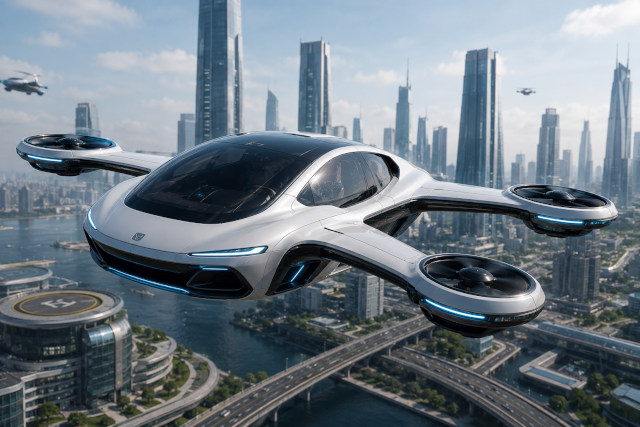
1. Flying Cars for Everyday Commuting
People imagined that by now we’d all be lifting off from our driveways and soaring over traffic. While experimental vehicles exist, they remain expensive, noisy, heavily regulated, and difficult to operate safely.
2. Household Robot Servants
Science fiction promised robotic butlers capable of cooking, cleaning, folding laundry, and caring for children. We have robot vacuums and increasingly capable AI, but no affordable all-purpose home robot yet.
3. Permanent Moon Bases
After the Apollo 11 Moon Landing, many expected permanent lunar colonies by the early 2000s. Instead, humans have not returned to the Moon since 1972, though new missions are underway.
4. Jetpacks for Personal Transportation
Jetpacks became a symbol of “the future.” Functional versions exist, but they are expensive, noisy, fuel-hungry, and generally unsuitable for everyday travel.
5. Fully Autonomous Cars Everywhere
Predictions from the 2010s suggested self-driving cars would be commonplace by now. Significant progress has occurred, but truly universal autonomous driving remains a difficult technical and regulatory challenge.
6. Universal Real-Time Translation
Many imagined a device that could instantly and perfectly translate any language. Modern AI translation is remarkably good, yet it still struggles with nuance, culture, humor, dialects, and specialized contexts.
7. Underwater Cities
Mid-20th-century futurists expected large populations to live beneath the oceans. Building and maintaining underwater habitats has proven far more costly and difficult than anticipated.
8. Cures for Most Forms of Cancer
Many people expected cancer to be largely defeated by now. Tremendous advances have been made, and survival rates have improved substantially, but cancer is not one disease. It is hundreds of different diseases, making universal cures elusive.
9. Weather Control
Scientists and futurists once envisioned the ability to steer hurricanes, end droughts, or schedule rain. While cloud seeding exists, reliable large-scale weather control remains beyond current capabilities.
10. Videophones Replacing Most Travel
This prediction was actually half right. We do have video calls everywhere, but they did not eliminate business trips, conferences, vacations, or face-to-face meetings as many expected. Human beings remain stubbornly attached to being in the same room together.
Honorable Mentions
- Commercial fusion power.
- Space hotels.
- Artificial organs that fully replace most biological ones.
- Cities under giant climate-controlled domes.
- Routine vacations to orbit.
- Lifespans of 150+ years.
- A completely paperless society.
A curious pattern appears in these predictions: engineers often underestimate how hard the final 10% is. Building a prototype is one challenge; making it safe, affordable, reliable, legal, and available to billions of people is an entirely different mountain to climb.

