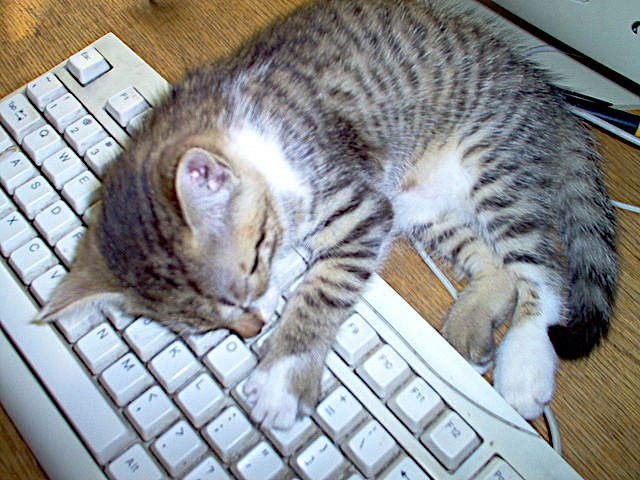
Housecats are one of those creatures that seem fully “figured out”… until you zoom in and realize you’ve only been looking at the cover of a very strange book. Here are some lesser-explored corners of the feline universe, where things get quietly fascinating:
🧠 1. Cats as “micro-ecologists” of your home
People talk about cats as hunters, but not as environment managers. Your cat is constantly monitoring tiny ecosystems you barely notice: insects, dust motes, faint sounds in walls, even air currents.
A cat staring at “nothing” might actually be tracking:
- Ultrasonic movements of pests
- Flickers of light you can’t perceive
- Subtle airflow changes
In a sense, your home has a silent, whiskered park ranger.
🧬 2. Personality drift over time
We often label cats as “shy” or “friendly” and stop there. But cats can undergo personality drift more dramatically than we acknowledge.
A bold kitten might become a contemplative observer. A skittish cat may grow into a deeply affectionate companion. Unlike dogs, cats often rewrite themselves slowly, almost like they’re editing their own character arc.
🕰️ 3. Their sense of time is eerily precise
People joke about cats knowing feeding time, but the mechanism is rarely discussed.
Cats likely combine:
- Light cycles
- Household rhythms
- Internal metabolic clocks
They don’t “tell time” like we do, but they predict recurring reality. To them, your routine is a loop they’ve memorized with unnerving accuracy.
🎭 4. Cats perform “social minimalism”
Dogs broadcast emotion like fireworks. Cats? More like haiku.
Their communication is:
- Low-energy
- Subtle
- Highly intentional
A slow blink, a tail flick, a slight lean—these are compressed emotional signals. You’re getting meaning in a minimalist format, which is easy to miss if you expect loud displays.
🧠 5. They may map your house in 3D “memory layers”
Cats don’t just know where things are. They seem to understand:
- Heights
- Jump trajectories
- Escape routes
Your living room isn’t a floor plan to them. It’s a multi-level strategy map, almost like a mental video game with vertical pathways.
🌙 6. Night behavior isn’t just instinct—it’s strategy
We say cats are “nocturnal,” but that’s not quite right. They’re crepuscular—most active at dawn and dusk.
What’s less discussed is why that matters indoors:
- They may still be aligning with ancient prey cycles
- Night activity could be a form of “simulation hunting”
- Zoomies might be a neurological reset rather than random chaos
Your hallway becomes their savanna at 3 a.m.
🧩 7. Cats as “consent-based companions”
A rarely explored philosophical angle: cats model consent in relationships.
They:
- Approach when they choose
- Leave when they’ve had enough
- Reward respect with trust
Living with a cat subtly trains humans to read boundaries better. It’s less ownership, more negotiation between species.
🧪 8. Their purring may have biological side effects
Purring is often labeled “contentment,” but it’s more complex.
Research suggests purring frequencies may:
- Promote tissue healing
- Reduce stress (for both cat and human)
- Serve as self-soothing during pain
It’s possible your cat is running a tiny built-in “wellness engine.”
🧭 9. They might track you as part of their territory
We think cats live in our homes. From their perspective, you move through their territory.
They often:
- Monitor your location
- Check in visually
- Follow at a distance
You’re not just the owner. You’re a mobile landmark with food privileges.
🧠 10. Cats may experience a form of “quiet curiosity” rather than play
Not all feline engagement is playful. Sometimes it’s more like investigation without urgency.
Cats often:
- Study objects without interacting much
- Return to the same thing repeatedly
- Pause mid-action as if “thinking”
It’s less “fun” and more… field research.
🐾 Final thought
Housecats are like small, polite aliens who signed a cohabitation agreement with humanity thousands of years ago. We’ve studied their fur patterns and feeding habits endlessly, but their inner lives still flicker just out of reach, like something glimpsed at the edge of a hallway.

