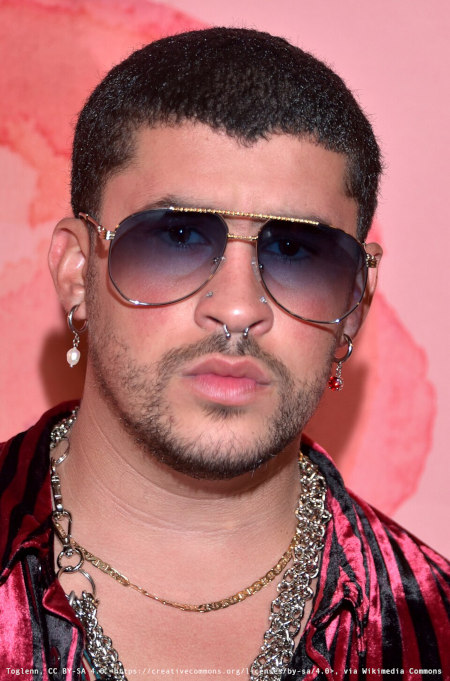
See also 10 Acts of Kindness by Bad Bunny
His real name is Benito Antonio Martínez Ocasio.
“Bad Bunny” came from a childhood photo where he looked deeply unimpressed in a bunny costume.
Before fame, he worked as a bagger at a supermarket while uploading songs to SoundCloud.
His rise to fame started when he was 19 years old.
Bad Bunny was born in Puerto Rico, a Spanish-speaking US territorial island in the Caribbean sea.
He was discovered after a track went viral and caught the attention of producer DJ Luian.
His breakout feature on “Soy Peor” turned him into a voice of emotional vulnerability in Latin trap.
He refuses to sing in English despite global fame, making Spanish-language music dominate worldwide charts.
His album YHLQMDLG became one of the most-streamed albums ever on Spotify.
He made history as the first all-Spanish-language act to headline Coachella.
He’s a huge wrestling fan and actually performed in WWE matches, including at WrestleMania.
His wrestling appearances weren’t gimmicks—he trained seriously and impressed seasoned pros.
He once arrived at an awards show in a skirt and painted nails, challenging gender norms in Latin music.
He frequently uses his platform to speak out on Puerto Rican politics and social issues.
After Hurricane Maria, he became outspoken about government response and aid.
He paused his music career briefly to protest in the streets alongside citizens demanding political change in Puerto Rico.
His album El Último Tour del Mundo became the first Spanish-language album to hit #1 on the Billboard 200.
He often refuses traditional interviews, preferring mystery over media saturation.
His fashion sense swings wildly between avant-garde runway and “just woke up like this” chaos.
He appeared in the TV show Narcos: Mexico as a character named Arturo “Kitty” Páez.
He’s collaborated with artists across genres, including Drake and Rosalía.
Despite fame, he often returns to Puerto Rico and stays deeply connected to his roots.
He once released a song criticizing machismo culture, flipping expectations in a genre often associated with it.
His voice style includes a signature slightly offbeat, conversational flow that breaks traditional reggaeton structure.
He dropped a surprise album (Las Que No Iban a Salir) made of previously unreleased tracks during the pandemic.
He’s been one of the most-streamed artists in the world multiple years in a row.
He often hides his eyes behind tiny sunglasses, like a mysterious reggaeton (a form of dance music of Puerto Rican origin.) oracle.
He once dressed as a drag version of himself in a music video to make a statement about identity.
He incorporates indie rock, punk, and electronic elements into reggaeton, stretching the genre’s DNA.
His fans are known for embracing his emotional honesty, especially around heartbreak and loneliness.
He has openly supported LGBTQ+ rights, unusual in the traditionally conservative reggaeton scene.
He once threw his phone away mid-performance after a fan shoved theirs in his face – instant legend, instant debate.
He titled one of his tours “The Last Tour of the World” – then kept going.

