🦵 Anatomy & Function
The knee is the largest joint in the human body, acting like a hinge and a pivot at the same time.
The patella (kneecap) is a sesamoid bone—a bone embedded within a tendon, which is quite rare.
Your knee joint contains synovial fluid, which has a similar viscosity to egg whites and reduces friction between the bones.
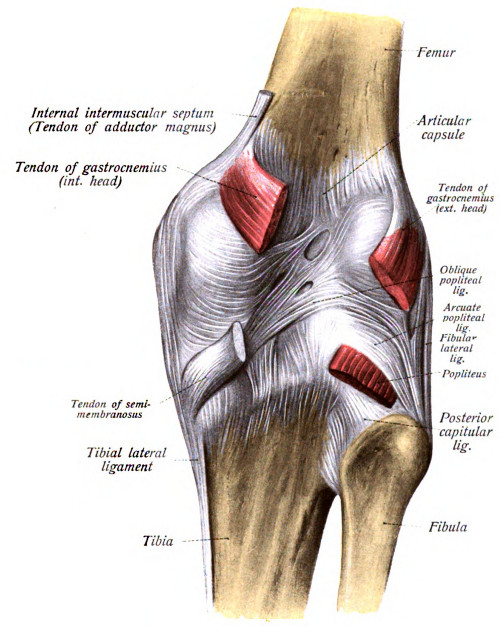
Three bones meet at the knee: the femur (thigh), tibia (shin), and patella (kneecap)—but they don’t all touch each other directly.
The menisci (two C-shaped cartilage pads) act like shock absorbers, helping your knee withstand about 3-6 times your body weight during activities like climbing stairs.
🦴 Biomechanics
Knees are not symmetrical—the alignment and shape vary from left to right and person to person.
While they mostly act as hinges, knees actually have a slight rotational capability, especially when flexed.
During walking, each knee bends and straightens about 1,500 times per mile.
Knees absorb more stress than your hips when you run, especially downhill.
The posterior cruciate ligament (PCL) is so strong it’s often injured only in car crashes or serious falls.
🧬 Evolutionary/Ethnographic Facts
Human knees evolved from the knees of four-legged animals, which is why they’re structurally complex and sometimes prone to failure.
In some populations (like the Bajau people, who free-dive), knee joint flexibility is enhanced from constant squatting and treading water.
Babies are born with no hard kneecaps—just cartilage that ossifies (turns to bone) over the first few years.
Some ancient humans, such as Neanderthals, had knees that bent slightly differently, possibly to support heavier bodies.
Knees are part of what makes human bipedalism efficient—chimpanzees have straighter hips and bent knees, making their walking awkward and energy-inefficient.
🏥 Injuries & Disorders
The ACL (anterior cruciate ligament) is one of the most commonly torn ligaments in sports.
Women are 2 to 8 times more likely to tear an ACL than men—due to biomechanics and hormonal differences.
“Runner’s knee” is a vague but common term—often used to describe pain from patellofemoral syndrome.
Some people are born with double-jointed knees, making them hyperextend in strange directions.
Osgood-Schlatter disease, a common adolescent condition, causes swelling just below the kneecap from overuse during growth spurts.
😲 Weird & Curious
Knee popping or cracking sounds (called “crepitus”) are usually harmless, though they can sound intense.
The term “knee-jerk reaction” comes from a real neurological test—when a doctor taps your patellar tendon, your leg reflexively kicks.
In medieval duels, knights often aimed below the belt to strike weak points like the knee.
Some Buddhist monks stand or kneel for hours daily, and have developed thickened knee skin and joint adaptations.
There’s a rare condition called patella alta, where the kneecap rides unusually high on the femur.
🧠 Cultural, Linguistic & Symbolic
Kneeling is a universal symbol of submission or respect—from marriage proposals to religious rituals.
The knee was once considered erotic—Victorian women covered theirs at all times, even when bathing.
The phrase “on bended knee” first appeared in 15th-century English literature, long before Boyz II Men sang about it.
Some martial arts train fighters to deliver devastating knee strikes, which can produce more force than punches.
In yoga and meditation traditions, knee pain is common in seated poses, but ancient texts rarely mention it—possibly due to lifestyle differences and more flexible knees back then.

