See also: Catversity, the free online cat university and entertainment sub-site.
Here are some fascinating facts about Scottish Fold cats:
Unique Ears: Their distinctive folded ears are caused by a genetic mutation affecting cartilage, giving them their signature look.
Origin: The breed originated in Scotland in 1961, when a shepherd named William Ross discovered a cat named Susie with folded ears.
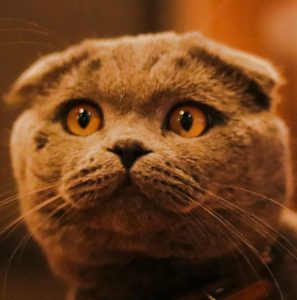
Double or Triple Folds: Some Scottish Folds have ears with a single fold, while others have double or triple folds, making their ears lie flatter against the head.
Round Appearance: They have a rounded head, round eyes, and a compact body, contributing to their adorable “owl-like” appearance.
Variety of Colors: Scottish Folds come in a wide range of colors and patterns, including solid, tabby, and bicolor.
Straight-Eared Folds: Not all kittens from this breed develop folded ears. Some have straight ears and are often referred to as “Scottish Straights.”
Gentle Temperament: They are known for being calm, affectionate, and good-natured, making them great companions.
Voice: Scottish Folds have a soft and sweet voice and are not overly vocal.
Bonding: They form strong bonds with their families and enjoy being around people.
Not Lap Cats: Despite their affectionate nature, they may not always enjoy sitting on laps but prefer being close to their humans.
Playful: They are playful and curious, often enjoying interactive toys and games.
“Buddha Pose”: Scottish Folds are known for sitting on their hind legs with their front paws on their belly, resembling a seated Buddha.
Health Concerns: The gene responsible for folded ears can also lead to cartilage and bone issues, such as osteochondrodysplasia.
Short and Long Hair: They come in two coat types: short-haired and long-haired, the latter often referred to as Highland Folds.
Social Cats: They usually get along well with children, other cats, and even dogs.
Intelligent: Scottish Folds are smart and can learn tricks, such as fetching or opening doors.
Low Maintenance: Short-haired Folds require minimal grooming, but long-haired ones need regular brushing.
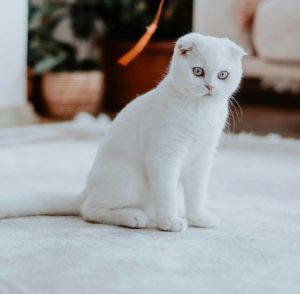
Eye Color: Their eye color often complements their coat, with shades ranging from copper to blue or green.
Moderate Energy: They have moderate energy levels, balancing playful spurts with lounging time.
Popular Breed: Scottish Folds are a favorite among cat lovers and celebrities, including Taylor Swift, who owns two.
Adaptable: They adapt well to various living situations, from apartments to larger homes.
Not Hypoallergenic: Like most cats, they produce allergens and are not suitable for allergy sufferers.
Selective Breeding: To prevent genetic issues, they are often bred with straight-eared cats.
Expressive Eyes: Their large, round eyes give them a perpetually curious and endearing expression.
Tolerant of Change: They are generally tolerant of new environments and changes in routine.
Love of Food: Scottish Folds enjoy food and may need portion control to prevent overeating.
Short Lifespan: They typically live 12-15 years with proper care, though health issues can impact their lifespan.
Cold Tolerance: Their plush coats provide some resistance to cold weather, though they still prefer cozy environments.
Rare Genetics: The fold gene is autosomal dominant, making Scottish Folds relatively rare and sought after.
Companionable Nature: Their mellow and affectionate nature makes them ideal for families and individuals alike.
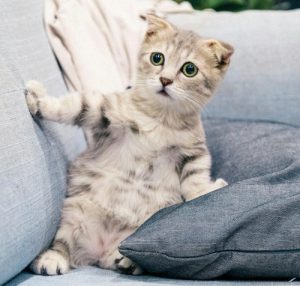
Scottish folds tend to stand or recline upright which is not common with most other cats.

