An elephant can eat a quarter-ton (500 lbs, 226 kilos) of grass in one day.
Category: Science
Elephants in Thailand

Life of a domestic elephant in Thailand: School begins at age three. The elephant is introduced to two boys who will learn with it. The boys are called mahouts. For the next six years they learn all about working with each other to get wood out of the jungle. For the next fifty years, the elephant and the mahouts are employed by the timber industry. The reason there are two men for one elephant, is that should something happen to one of the men, the other will be able to continue working with the elephant. Then, at age 59, the elephant is retired, and gets to graze freely in the forest for the next forty years or so. The mahouts, if still alive, continue to visit the elephant in the forest every few days.
Rabbits and Sleep
Rabbits sleep 16 times per day.
What Sharks Will Not Eat
Sharks will eat anything. The only exception, is that they will not eat anything in the vicinity of where they give birth. This is the way nature protects them from accidentally eating their own babies.

Sharks and Cancer
Sharks almost never get cancer. Scientists are studying them to find out why, and whether their protection is adaptable to humans.
Shark Competition
One species of shark is so competitive that the babies fight each other within their mother, until only one is left to be born.
Fishing Lantern
While fishing at a pond in New York State, a man lost the glass part of his lantern. Five years later, once again fishing in the same spot, he caught a fish that was wearing that same glass lantern chimney, stuck around its body.
Three Fish at Once
A fisherman in England hooked three pike at once. While pulling in the first, it was eaten by a second who was eaten by the third.

Pacific Salmon
When Pacific salmon get to a certain age, their pituitary glands suddenly secrete poison to kill them.

Catfish Tastebuds
Some catfish have taste buds over their entire bodies. Wouldn’t that be fun at a potluck?
Hagfish
The hagfish has terrible table manners. It starts its meal by biting into the gill of another fish. Then it eats its way into the fish’s throat. Finally, it crawls totally inside the victim and kills and eats the fish from the inside out. These hagfish have four hearts and they all beat with independent rhythms.
See the worst of everything: The Worst

Flounder
The flounder, a weird, flat fish, has both eyes on one side of its body.

public domain via Wikimedia Commons
Living Fossils
Everyone knows that there are places underground that have fossils 70 million years old. What most people don’t realize is that these things didn’t all die. Scientists bored a hole 850 feet down into the era of dinosaurs and found 3,500 living, undiscovered species of fungi, protozoa and bacteria. The scientists do not know whether these are the same as those who lived in prehistory or whether they have mutated.
Dinosaurs
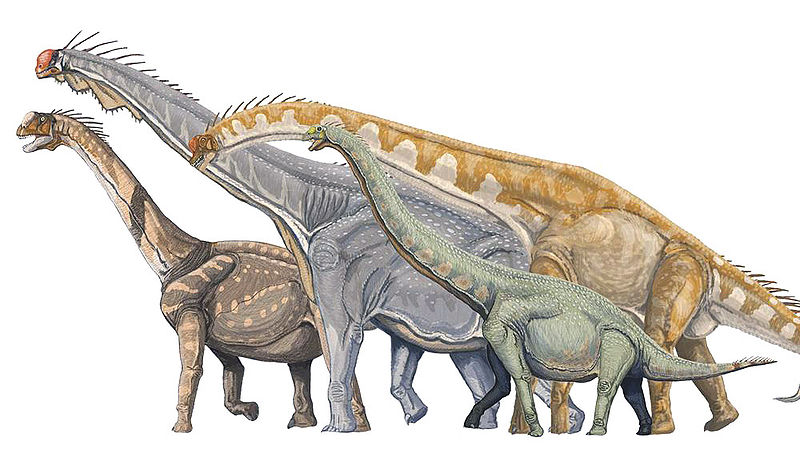
Some dinosaurs had two brains. Since nerve signals move from one part of the body to another relatively slowly – it takes 1/50 of second to notice a pain in your foot – and since these beasts were so large, they had a second brain at the base of the tail to maintain control of the creature’s back legs and tail. Interestingly, the rear brain was bigger than the front brain.
The Largest dinosaur, Brachiosaurus, weighed as much as 800 people, was taller than a four-story hotel, and was as long as two of the longest school buses.
Who says all dinosaurs have died? There is a species of lizard called Komodo Monitor, also known as Komodo Dragon, that can grow to over ten feet long and weigh 365 pounds. Komodo Monitors can eat a pig whole.
Most scientists are now saying that dinosaurs were very unlike lizards. Their legs were usually directly under their bodies, not sticking out from their sides as they are in lizards. Their bone structure was more like that of warm-blooded mammals. Tracks have been found made by of groups of dinosaurs moving together in herds with a spacing and depth of impression indicating sustained high speed, again more a mammalian trait than reptilian. One theory regarding the extinction of dinosaurs which is gaining some acceptance is that because they were warm-blooded creatures with a high metabolism, they were more susceptible to viruses or bacterial infections than their cold-blooded predecessors. According to one scientist, they might have all died of diarrhea.
Animal Lifespans
See also: Catversity, the free online cat university and entertainment sub-site.
Average Lifespans of Animals
Lion = 40 years
Pig = 25 years
Tortoise = 350 years
Clam = 150 years
Whale = 100 years
Eagle = 100 years
Pigeon = 20 years
Cow = 25 years
Crocodile = 300 years
Elephant = 100 years
Mouse (domestic) = 2 years
Mouse (wild) = Less than 1 year
Rat = 2 years
Cat (outdoor) = 2 years
Cat (kept indoors) = 17 years
Dog = 11 years
Rabbit = 5 years
Horse = 30 years
What Do Animals Think or Feel?
How do we know what animals think or feel? I say be kind to animals just in case it matters to them. The poet William Blake said, “How do you know but that every bird that cleaves the aerial way is not an immense world of delight closed to your senses five?”
Anglerfish
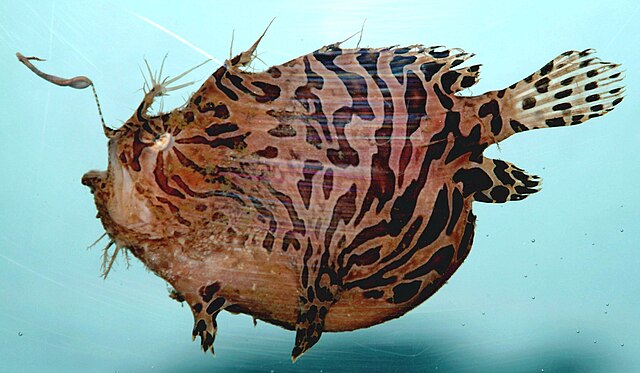
Some anglerfish, who live in the ocean at depths of over one mile (1.6km), have unusual lives. To see where they are going in that depth, or perhaps to attract food, the females have a chemically operated lamp that hangs on a stalk in front of their mouths. The male doesn’t need to see because early in his life, he bites into the belly of the female and stays there forever. After a while the female grows skin over the connection. The male degenerates, losing his teeth, his fins, and any manner of life beyond being a small appendage hanging off the female.
Alligators
If alligator eggs are kept above 86 degrees Fahrenheit, all the babies will be males. If incubated at below 86 degrees, all females will result. One theory about the extinction of dinosaurs is that with a global change in temperature, only one sex would have been born. Of course we now know that dinosaurs were mostly unlike alligators. Alligators have their legs to their sides, so they rest on their bellies. Most dinosaurs had legs under their bellies. Dinosaurs may also have been warm-blooded.

Public domain via Wikimedia Commons

