Casimir Polemus of France survived three shipwrecks. In each case, he was the only survivor.
See the worst of everything: The Worst

Casimir Polemus of France survived three shipwrecks. In each case, he was the only survivor.
See the worst of everything: The Worst
On December 5, 1664, a ship sank off the coast of Wales. The only survivor was a man named Hugh Williams. On December 5, 1785, another ship sank. One man survived, another Hugh Williams. On December 5, 1860, yet another ship went down with only one survivor – you guessed it – his name was Hugh Williams.
I’ll bet most of you reading this don’t know what the word ichthyology means. Neither did I. Highlight the yellow section below to find out.
Ichthyology is the study of fish.
Let’s say you are snorkeling off the coast of Florida. Along comes a 12-foot long slimy thing weighing about as much as an SUV, with a quizzical expression in it’s wide set eyes. What would you do? The proper answer is to pet it. Manatees, oceanic mammals, are so huge that they have no natural enemies, and so they aren’t going to be afraid of you. They just come up to figure you out and see if you would like to pet them. Three-quarters of all manatees have scars on their backs from boat propellers.
Experimentation has shown that dolphins’ sonar is so well developed that they can discern a one-inch difference between two objects placed 10 feet away.
When a dolphin gives birth, a midwife dolphin attends. Often the midwife helps push the baby to the surface for its first breath.
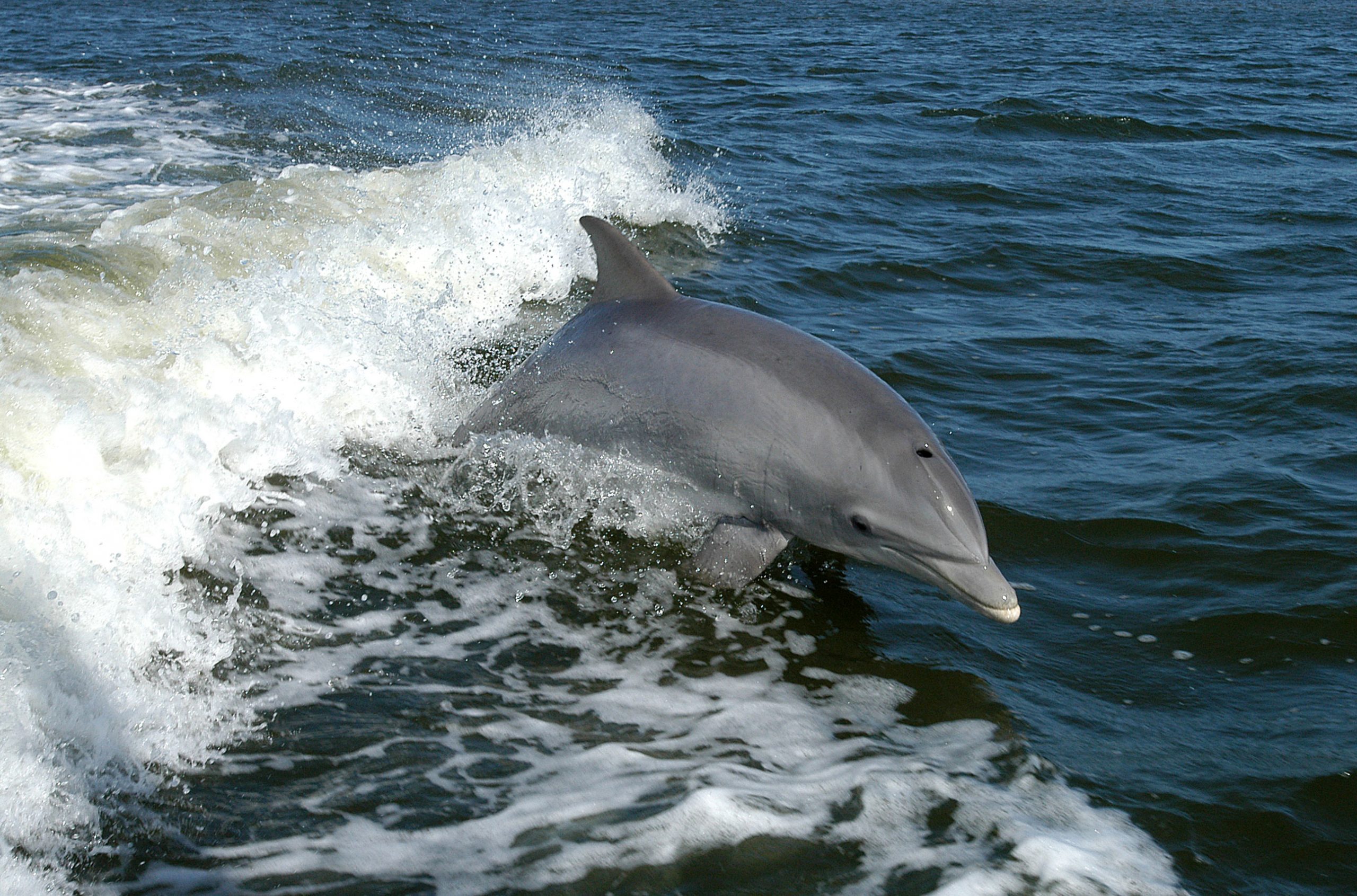
Many dolphins and some whales have an easy time of catching their fish dinners. Evidently, they stun the small fish with ultrasonic sound waves before snapping them up.
A baby blue whale gains 200 pounds (90 kg) per day while drinking 50 gallons (189 liters) of milk. Her mom eats 4 tons (3,628 kg) of plankton out of the water every day.
So far, the biggest whale ever weighed (by calculations) was 170 US tons (154 metric tons), equal to more than four fully-loaded tractor-trailers.
Whales have the worst bad breath imaginable. According to Herman Melville, who researched whales thoroughly for his novel, Moby Dick, “The breath of the whale is frequently attended with such an insupportable smell as to bring on a disorder of the brain.”
Sometimes people get athlete’s foot. It seems rather trivial compared to what can happen to whales. Whales have been known to carry around up to one thousand pounds (453 kg) of barnacles!

We all know that whales are big, but few of us realize just how big. The biggest species is the Blue Whale. This animal is bigger than any dinosaur that ever lived. The biggest dino (brachiosaurus) was only 50 tons and 80 feet long. One blue whale is as big as 25 of the largest elephants. (150 tons, 100 feet long) Think of 75 minivans. They are that big! And they grow fast. Youngsters gain weight at the rate of ten pounds per hour. A blue whale’s tongue is about the same weight as two full-size pickup trucks. Their heart is about the same size as a Toyota Prius. This monster organ beats about nine times per minute. At the other end of the spectrum is the hummingbird with up to 1200 beats per minute, or 133 beats for every time the whale’s heart beats.
The blood of mammals has the same dilution of salt as ocean water.

Sharks will eat anything. The only exception, is that they will not eat anything in the vicinity of where they give birth. This is the way nature protects them from accidentally eating their own babies.

Sharks almost never get cancer. Scientists are studying them to find out why, and whether their protection is adaptable to humans.
One species of shark is so competitive that the babies fight each other within their mother, until only one is left to be born.

