Posted on Leave a comment

30 Tips for Selling

Sell curiosity before selling product. People buy after they feel understood.

Listen like you are being graded on silence.

Mirror values, not personalities. Authenticity beats imitation every time.

Assume the prospect is smart and busy. Respect earns attention.

Ask questions that make them pause, not just nod.

Conversation Craft

Talk in outcomes, not features. Nobody buys a drill, they buy holes.

This is a showcase site for Jeff Napier of US-Web-Design. Surprisingly low-cost solutions for all your website and marketing needs. More...

Use stories as Trojan horses for facts.

Name the problem better than the customer can. Trust appears instantly.

Slow down right before the price. Calm suggests confidence.

Avoid jargon unless the customer uses it first.

Momentum and Process

Follow up like a professional, not a mosquito.

Take notes as if Future You is forgetful. Future You is.

Shorten the time between steps. Deals decay in dead air.

Always agree on next actions. Hope is not a strategy.

Protect your pipeline from fantasy deals.

Psychology and Mindset

Detach your ego from the outcome. Desperation has a smell.

Rejection is data, not a verdict.

Confidence comes from preparation, not volume.

Treat objections as requests for clarity.

Remember that “not now” is not “never”.

Long-Game Advantages

Underpromise slightly, overdeliver consistently.

Become a resource even when you are not selling.

Keep learning your customer’s world. Industries evolve, scripts expire.

Ask for referrals when value is fresh.

Build trust like compound interest.

Practical Edge

Know your numbers cold. Guessing kills leverage.

Practice your opening line out loud. Your brain lies about readiness.

Have one killer case study memorized.

Protect your energy. Burnout makes people sloppy.

Leave every interaction better than you found it.

Posted on Leave a comment

30 Unusual Business Aphorisms

See Also: 30 Business Maxims (Chart)

Here are 30 interesting or unusual general business aphorisms, a box of strange but useful tools you did not know you owned.

Sell the result, then the mechanism. People buy outcomes and justify them with features later.

Charge for clarity, not just labor. People pay more for decisions they do not have to agonize over.

The fastest way to look professional is to reply faster than expected. Speed signals competence before quality ever gets evaluated.

If a customer asks for a discount, ask for a concession. Price is a lever, not a surrender flag.

Make one thing slightly annoying to copy. Friction is an underrated moat.

This is a showcase site for Jeff Napier of US-Web-Design. Surprisingly low-cost solutions for all your website and marketing needs. More...

Your worst customer is often your most educational one. They are an unpaid consultant with terrible bedside manners.

If your value proposition needs a paragraph, it needs surgery. Good offers or elevator speeches fit on a napkin.

Meetings expand to consume the courage of the room. Shorter meetings create braver decisions.

The person who controls the calendar quietly controls the business. Time is governance disguised as logistics.

Raise prices before you feel ready. Readiness is usually just fear wearing a sensible hat.

If you are “too busy,” you are probably underpricing or overcustomizing. Chaos loves bespoke work.

Document processes while you are annoyed by them. Irritation is a powerful instructional designer.

Most “strategy problems” are actually energy problems. Fix sleep, food, and focus before the spreadsheet.

Your first hire should buy you time, not make you money. Leverage beats revenue in the early chapters.

If something feels political inside your company, it is under-defined. Vagueness breeds power games.

Referrals increase when you ask when not if. Assumptive phrasing unlocks generosity.

A boring business with clear demand beats a clever one with applause. Applause does not pay invoices.

Your best marketing often looks like teaching. Authority sneaks in wearing a cardigan.

Write customer emails as if they might be forwarded. Because they will be.

The cost of saying yes is invisible until you try to say no later. Practice refusal while it is still cheap.

If everyone agrees too quickly, someone is not thinking. Silence is not consensus.

Constraints are design partners, not enemies. Limits force decisions instead of fantasies.

Track the questions customers ask before buying. Those questions are your sales copy in disguise.

You do not need more ideas. You need fewer options. Progress hates buffets.

Most businesses fail from mild neglect, not dramatic mistakes. Starvation is quieter than explosion.

If a competitor copies you, you just validated your direction for free. Say thank you privately.

Your inbox is a to-do list written by other people. Choose which authors you publish.

Policies are promises you make to your worst day. Write them when things are calm.

The longer something has worked, the more dangerous it is to assume it always will. Success fossilizes quickly.

Build a business you would still tolerate on a bad Tuesday. Great visions collapse under mundane misery.

Posted on Leave a comment

Pickleball: You Don’t Have To Be A Great Player To Become A Coach

I discovered a system that is without a doubt the fastest way for people to improve their games. I call it “Socratic Pickleball,” or “Socratic Analytical Pickleball.”

For Socratic coaching, you don’t have to be a great player. All you need is be good enough to spot some of the things people aren’t doing properly. You can greatly increase that ability by watching some YouTube videos. Focus on instructional videos as well as high-level competitions.

Socratic works like this: Four players of approximately equal skill level, or three players and you as the coach, play games that are ordinary doubles pickleball. However, you stop between many of the rallies to discuss strategies.

I believe this would work well for two singles players, or a singles player and a coach as well, but so far I have only worked with doubles pickleball.

The players are encouraged to interact. It doesn’t always have to be advice handed down from on high from the coach. As rallies are discussed, many interesting notions come up, many of which are presented in ways that are more memorable than just watching videos, or having the coach say ‘do this,’ or ‘do that.’ So, you can be more of a facilitator than instructor.

The player who is reluctant to come to the kitchen quickly learns to do so. The player who has never tried a long shot with forehand topspin learns how it’s done. The player who has gone into a serving slump (‘the yips’) learns ways to quickly overcome the problem. The experienced player who is trying to answer many deep shots with backspin learns why that may not be a good idea, players learn the difference between a defensive lob and an offensive lob, and much more!

This is a showcase site for Jeff Napier of US-Web-Design. Surprisingly low-cost solutions for all your website and marketing needs. More...

In fact, this can be done without a coach. (Of course that’s not what this post is about. This is about making money as a pickleball coach.) Any four players can get together and critique at the end of rallies. Even without the coach, a lot of improvement will come to these players.

Did I say critique? It is important not to load up anyone with too much advice, especially negative advice. It is a rare human who could handle someone telling them “For the thousandth time, I’m telling you you’ve got to come to the kitchen!” without feeling resentful. In ideal Socratic pickleball, it is better to say something like, “Your backcourt play is so good, maybe you should see what you can do when you come more quickly to the kitchen,” or “I find I can cut off more angles at the kitchen.”

The Socratic method is attributed to the philosopher Socrates, who it is said would often ask questions, then allow his students to debate the relevant issues.

The version I was initially teaching was four weeks of one-hour sessions. Each player paid $285, so I was making $285 per hour. Now, I do live in Marin County, California where money flows more freely, but I think in most communities a price close to that is possible.

More recently, I’ve been coaching for free and just asking my participants to support their local food banks.

Did I mention you don’t have to be a highly skilled player? I have done some Socratic coaching and at my height, I was rated at only 4.5, and that’s when ratings were more liberal than they are today.

There are other professional coaching variations you might also consider. Some things that come to mind are:

1. Group sessions. You can teach the very basics of pickleball to beginners. If you have the skill, you can hold workshops on speed at the kitchen, topspins and backspins, or third-shot drops.

2. You can organize pickleball festivals for which you could charge admission. This would take some organizing. You could have a day of festivities that include demonstrations by invited guests, fun and games that involve pickleball skills, food vendors, a raffle, and maybe even an evening dance.

3. I believe there are millions of pickleball players who would like to focus on drilling. Your job would be mostly to spend a half-hour or an hour with your students working on one skill at a time, such as diagonal dinking, passing shots, defensive lobs, split stepping, and so on.

4. For around $1,000 you can buy a ball machine. The most popular one is called Lobster. Add in $200 worth of balls, and you can provide great skill-building fun for your students.

You don’t have to do this alone! Call or text me at (805) 843-5353. I can be your business coach to start or expand your pickleball coaching business!

Here’s what a few people have said:

Thanks Jeff. I loved joining the group! Thank you for sharing your time and amazing pickle skills with all of us. I have learned a lot from you. – C.M.

Thank you for another wonderful lesson, Maestro! – K.E.

This has all been really fun and helpful. – Jeff

Thank you SOOOO much for your wisdom, cheer, and teaching skill. – K.E.

The Socratic pickleball sessions were extremely helpful! I not only learned but got to practice some new techniques. Jeff made it fun as well as informative. I am hoping to be able to do more Socratic sessions! – Nancy Boughey

Had a great time at Socratic Pickleball! Was so helpful to stop mid-game and think about what just happened. Jeff, our Socrates, was always encouraging us to push our skills to try new approaches, all while having a fun time. And you’ll love “The Yawn” 🥱.

– Ray Michaelsen

Thank you so much, Jeff. You’re a great teacher and getting corrections while the game is in play has been invaluable.

– Lou Gurman

Thank you for all that you have taught me. Very grateful. – Laura

Jeff’s generous Socratic pickleball coaching was a bright spot in a dark season. In just four weeks, I’ve improved more than with any teacher so far, and it was always a delight to hear his wry and gentle wisdom. Now if I could only remember to bend my knees…
Katherine Ellison

Jeff’s enthusiasm for pickleball is infectious! He always has a smile on his face and a positive outlook on how to improve your game. He was extremely helpful with instruction and tips on how to play with all types of players… great experience.
DS

Jeff’s Socratic clinics are helpful, effective, and fun! He covers all aspects of play, from simple physical technique to strategy and also emphasizing the importance of a positive mental outlook. Stopping play to analyze shot sequences really helps to understand how points are won and lost. His approach is a good blend of taking the game seriously without being too serious about it!
Thank you so much Jeff!
Jeff Bayles

Jeff made the concepts so approachable, now I know I can improve everyday, and most of all have fun. It’s the little tweaks that make the difference over time and Jeff has a special way of sharing that. I hear his voice, “where’s your partner?”, “are your knees bent?’!! Thanks, Jeff!!!

You might enjoy another of my websites: OddPickleball.com.

Posted on Leave a comment

Most Important People in AI

I prompted some AI Chatbots to tell me about the most important people in AI along with some personality trivia. Here’s what I got, slightly edited for readability and explanation.

From Google Gemini

Geoffrey Hinton: Known as the “Godfather of Deep Learning.” He recently left Google to speak freely about the dangers of the technology he helped create.

Trivia: He hasn’t sat down since 2005 due to a back condition; he uses a standing desk or lies on his side.

The modern AI landscape is heavily shaped by Sam Altman, the CEO of OpenAI, who steered the organization from a small research lab to a global powerhouse with the release of ChatGPT.

Despite his high-tech career, Altman is a known “prepper” who keeps a survival kit stocked with gold and antibiotics.

Working closely with OpenAI is Satya Nadella, the CEO of Microsoft, who pivoted the tech giant toward an “AI-first” strategy through a multi-billion dollar partnership.

This is a showcase site for Jeff Napier of US-Web-Design. Surprisingly low-cost solutions for all your website and marketing needs. More...

Nadella is a passionate cricket fan and often applies the strategic lessons of the sport to his leadership style.

Powering the hardware behind these software breakthroughs is Jensen Huang, the CEO of NVIDIA, whose GPUs are the indispensable backbone of the AI era. GPU stands for Graphics Processing Unit, which turns out to be surprisingly well-suited for neural networking, the major background function of AI.

Huang is famous for his signature look, almost always appearing in a black leather jacket.

Meanwhile, Sundar Pichai oversees the integration of the Gemini models into Google’s massive ecosystem; as a child in India, he was known for a photographic memory that allowed him to recall every telephone number he ever dialed.

Other major players include Elon Musk, who founded xAI to create “Grok” as a competitor to existing models, though he originally co-founded OpenAI to prevent Google from dominating the field.

Within the realm of AI safety, siblings Dario and Daniela Amodei founded Anthropic after leaving OpenAI, focusing on “constitutional AI” with their Claude models. They are widely recognized for their cautious, safety-first approach to development.

In the world of deep research and consumer tech, Demis Hassabis, a former child chess prodigy and game developer, leads Google DeepMind. He was a lead programmer for the classic game Theme Park at just 17 years old.

Demis is joined at Microsoft by Mustafa Suleyman, a DeepMind co-founder who now leads Microsoft’s consumer AI efforts and who once dropped out of Oxford to start a non-profit counseling service.

Finally, Mark Zuckerberg has become a champion of open-source AI at Meta through the “Llama” models, a notable shift from his early days when he famously challenged himself to only eat meat from animals he had personally killed.

Supporting the entire industry’s need for data is Alexandr Wang, the CEO of Scale AI. Wang became the world’s youngest self-made billionaire at age 25 by providing the human-labeled data necessary to train these complex systems.

The Pioneers: Researchers and “Godfathers”

These are the scientists who invented the math and architectures behind modern AI.

Yann LeCun: Chief AI Scientist at Meta and inventor of Convolutional Neural Networks (CNNs).

Trivia: He is an amateur jazz musician and sometimes builds his own electronic wind instruments.

Yoshua Bengio: The third “Godfather.” He is one of the most cited computer scientists in history.

Trivia: He has turned down numerous lucrative offers from tech giants to remain in academia in Montreal.

Fei-Fei Li: The creator of ImageNet, the dataset that sparked the current deep learning boom.

Trivia: Her family moved from China to the US with only $20; she worked in a dry cleaners while studying at Princeton.

Andrew Ng: Co-founder of Google Brain and Coursera. He has likely taught more people AI than anyone else on Earth.

Trivia: He believes that “AI is the new electricity,” a phrase that has become a mantra in the industry.

Andrej Karpathy: A founding member of OpenAI and former head of AI at Tesla. He is the “teacher-in-chief” for LLM developers.

Trivia: He once spent a month manually labeling 50,000 images to see how hard the task was for a computer.

Ilya Sutskever: Former Chief Scientist at OpenAI; he is credited with many of the core breakthroughs in GPT models. A GPT model (Generative Pre-trained Transformer) is an advanced AI system, built on a neural network architecture called the Transformer, designed to understand and generate human-like text and other content.

Trivia: He was a student of Geoffrey Hinton and is known for his almost “monk-like” focus on AGI. AGI is Artificial General Intelligence. Unlike chatbots which is focused on human-like conversational responses,

AGI will combine AI with ‘agentics’ and perhaps robotics and have wider capabilities than humans. An agent in the case of agentics, is an implementation of AI that can accomplish tasks beyond conversation, such as paying bills, ordering supplies, arranging travel plans or even running a business.

Jeff Dean: The legendary engineer behind Google’s infrastructure (MapReduce, TensorFlow).

Trivia: There is a “Chuck Norris” style meme culture at Google dedicated to his coding prowess (e.g., “The speed of light in a vacuum used to be slower until Jeff Dean optimized it”).

Ian Goodfellow: Inventor of GANs (Generative Adversarial Networks), which allow AI to “create” realistic images.

Trivia: He came up with the idea for GANs during a late-night argument with friends at a bar.

Daphne Koller: A pioneer in machine learning and biology. She co-founded Coursera and now runs Insitro.

Trivia: She was the first person to receive the $150,000 IJCAI Computers and Thought Award.

The Architects and Ethicists

These figures shape how AI is built, used, and regulated.

Mira Murati: Former CTO of OpenAI; she led the teams that launched DALL-E and ChatGPT.

Trivia: She is a mechanical engineer by training and previously worked on the Tesla Model X.

Clément Delangue: CEO of Hugging Face, the “GitHub of AI” where researchers share models.

Trivia: He is a vocal advocate for open-source AI and often uses a “hugging face” emoji in professional emails.

Timnit Gebru: A leader in AI ethics who co-authored the famous “Stochastic Parrots” paper. A “stochastic parrot” is a metaphor for Large Language Models (LLMs) like ChatGPT, describing them as systems that statistically mimic human language by stitching together word sequences from vast training data, without genuine understanding, meaning, or intent, essentially “parroting” patterns they’ve observed.

Trivia: She co-founded “Black in AI,” a non-profit aimed at increasing diversity in the field.

Aravind Srinivas: CEO of Perplexity AI, which is attempting to reinvent the search engine using LLMs.

Trivia: He was a research intern at both OpenAI and DeepMind before starting his own company.

Gary Marcus: A cognitive scientist and the leading “skeptic” of current AI methods, advocating for more logic-based approaches.

Trivia: He sold his first AI company, Geometric Intelligence, to Uber.

Kate Crawford: A scholar who wrote Atlas of AI, focusing on the environmental and labor costs of the industry.

Trivia: She is also a composer and has released several electronic music albums.

Reid Hoffman: Co-founder of LinkedIn and a prolific AI investor (Inflection AI, OpenAI).

Trivia: He is a massive fan of board games and once compared the strategy of Silicon Valley to the game Settlers of Catan.

Arthur Mensch: CEO of Mistral AI, Europe’s leading challenger to OpenAI.

Trivia: He was a researcher at DeepMind before leaving to start Mistral in Paris.

Joy Buolamwini: Founder of the Algorithmic Justice League; her research exposed racial bias in facial recognition.

Trivia: She is a “poet of code” and uses spoken word poetry to explain technical concepts.

Ray Kurzweil: A futurist at Google who predicted the “Singularity” (the moment AI surpasses human intelligence).

Trivia: He takes over 100 pills/supplements a day in an attempt to “live long enough to live forever.”

From ChatGPT

Here’s a curated list of 30 of the most important people in modern AI, spanning research, industry, and policy. “Important” here means they either shaped foundational ideas, built systems used by millions, or steered how AI collides with society. I’ve mixed in why they matter and a nugget of human trivia, because even world-changing algorithms are written by people who forget passwords and drink too much coffee ☕🤖

The Architects and Researchers
1. Geoffrey Hinton

Why important: Often called the godfather of deep learning. His work on neural networks made modern AI possible.
Trivia: Left Google in 2023 so he could warn the world about AI risks without corporate filters.

2. Yann LeCun

Why important: Invented convolutional neural networks, the backbone of computer vision.
Trivia: Chief AI scientist at Meta and a vocal skeptic of near-term AI doom narratives.

3. Yoshua Bengio

Why important: Pioneered deep learning theory and representation learning.
Trivia: Now focuses heavily on AI safety and alignment after helping unleash the tech.

4. Andrew Ng

Why important: Made AI education mainstream through Coursera and Google Brain.
Trivia: Famous for saying AI is the new electricity, a phrase that refuses to die.

5. Demis Hassabis

Why important: CEO of DeepMind, creator of AlphaGo and AlphaFold.
Trivia: Former child chess prodigy and video game designer.

6. Ilya Sutskever

Why important: Co-founder and former chief scientist of OpenAI, key architect behind GPT models.
Trivia: Known for extremely intense research retreats with minimal sleep and maximal whiteboards.

7. Fei-Fei Li

Why important: Created ImageNet, which jumpstarted the deep learning revolution.
Trivia: Strong advocate for human-centered AI and ethical design.

8. Stuart Russell

Why important: Author of Artificial Intelligence: A Modern Approach, the AI textbook.
Trivia: One of the earliest mainstream voices warning about misaligned superintelligence.

The Builders and CEOs

9. Sam Altman

Why important: CEO of OpenAI, instrumental in bringing generative AI to the public.
Trivia: Once ran a startup that scanned people’s eyeballs for crypto identity.

10. Elon Musk

Why important: Co-founded OpenAI and now runs xAI. Massive influence on AI discourse.
Trivia: Warns about AI apocalypse while funding companies to build it faster.

11. Sundar Pichai

Why important: CEO of Google, oversees some of the world’s largest AI infrastructure.
Trivia: Grew up without consistent internet access, now runs the internet’s brain.

12. Satya Nadella

Why important: Turned Microsoft into an AI-first company through its OpenAI partnership.
Trivia: Known for shifting Microsoft culture from “know-it-all” to “learn-it-all.”

13. Jensen Huang

Why important: CEO of NVIDIA, whose GPUs are the beating heart of modern AI.
Trivia: Signs graphics cards with a Sharpie like a rock star signing guitars.

14. Mark Zuckerberg

Why important: Open-sourced major AI models and infrastructure via Meta.
Trivia: Insists open models will outpace closed ones long-term.

15. Dario Amodei

Why important: CEO of Anthropic, focused on safer large language models.
Trivia: Former OpenAI researcher who left over safety concerns.

The Philosophers and Critics
16. Nick Bostrom

Why important: His book Superintelligence shaped global AI risk conversations.
Trivia: Once wrote a paper arguing humans might live in a simulation.

17. Gary Marcus

Why important: Persistent critic of deep learning’s limitations.
Trivia: Known for publicly debating nearly everyone on Twitter.

18. Timnit Gebru

Why important: Leader in AI ethics, bias, and accountability.
Trivia: Co-founded the Distributed AI Research Institute after leaving Google.

19. Kate Crawford

Why important: Explores AI’s environmental, social, and labor costs.
Trivia: Trained as both a scholar and an artist.

20. Joy Buolamwini

Why important: Exposed racial bias in facial recognition systems.
Trivia: Her work forced major companies to change or withdraw products.

The Innovators and Visionaries
21. Sebastian Thrun

Why important: Led Google’s self-driving car project and founded Udacity.
Trivia: His early self-driving demos shocked Silicon Valley.

22. Lex Fridman

Why important: Popularized long-form AI conversations through his podcast.
Trivia: Wears a black suit almost exclusively, like an AI noir detective.

23. Mustafa Suleyman

Why important: Co-founder of DeepMind and current CEO of Microsoft AI.
Trivia: Grew up in public housing and is outspoken about AI governance.

24. Andre Karpathy

Why important: Former Tesla AI director and OpenAI researcher, brilliant explainer of AI.
Trivia: Writes beloved “AI from scratch” tutorials that feel like campfire stories.

25. Ian Goodfellow

Why important: Invented GANs, enabling deepfakes and generative imagery.
Trivia: Conceived GANs during a bar conversation.

The Strategists and Policymakers
26. Eric Schmidt

Why important: Former Google CEO, now deeply involved in AI policy.
Trivia: Advises governments on AI as if it were nuclear technology.

27. Henry Kissinger

Why important: Co-authored books on AI and geopolitics late in life.
Trivia: Entered the AI debate in his 90s.

28. Emad Mostaque

Why important: Founder of Stability AI, pushing open generative models.
Trivia: Famously stepped away from leadership to decentralize control.

29. Jeff Dean

Why important: Senior Google researcher behind TensorFlow and massive-scale AI systems.
Trivia: Known for legendary productivity and near-mythical coding speed.

30. Paul Christiano

Why important: Pioneer of AI alignment techniques like reinforcement learning from human feedback.
Trivia: His ideas quietly shape how AI learns what humans want.

Closing Thought 🌌

If AI were a city, these people would be its architects, engineers, critics, mayors, and poets. Some are building skyscrapers at full speed. Others are checking the foundations for cracks. The tension between those roles is exactly what makes this moment in history feel electric.

Grok

Here is a curated list of 30 of the most important people in AI as of early 2026, based on their influence in research breakthroughs, company leadership, hardware enablement, policy, and ethical advancements. This draws from major recognitions like TIME’s 2025 TIME100 AI list, industry impact, and ongoing contributions.

The selection prioritizes those repeatedly highlighted across sources for driving AI progress.

Sam Altman — CEO of OpenAI. He leads the company behind ChatGPT and GPT models, navigating massive funding, political relationships, and efforts to scale advanced AI while restructuring for growth.
Trivia: Dropped out of Stanford; overcame internal board drama in 2023 to solidify his position.

Elon Musk — Founder of xAI, co-founder of OpenAI (former). He pushes AI through xAI’s Grok models and advocates for AI safety while criticizing competitors.
Trivia: Co-founded OpenAI but left over disagreements; often memes about AI on X.

Jensen Huang — CEO of NVIDIA. His company’s GPUs power nearly all major AI training; NVIDIA became the world’s most valuable company briefly due to AI demand.

Trivia: Known for wearing leather jackets; immigrated from Taiwan as a child.

Demis Hassabis — CEO of Google DeepMind. Pioneer in AI for science (AlphaFold solved protein folding); knighted for AI contributions.

Trivia: Chess prodigy as a child; co-founded DeepMind, acquired by Google.

Fei-Fei Li — “Godmother of AI”; created ImageNet dataset that sparked the deep learning revolution. Co-directs Stanford HAI, focuses on human-centered AI.

Trivia: Immigrated from China; advocates for diversity in AI.

Mark Zuckerberg — CEO of Meta. Invested billions in open-source AI (Llama models) and aggressively poached talent to compete in foundation models.

Trivia: Known for massive AI hiring sprees, including billion-dollar packages.

Satya Nadella — CEO of Microsoft. Transformed Microsoft into an AI powerhouse via OpenAI partnership and Azure AI infrastructure.

Trivia: Integrated AI deeply into products like Copilot.

Sundar Pichai — CEO of Google/Alphabet. Oversees Gemini models and integrates AI across Search, Cloud, and DeepMind.

Trivia: Leads one of the largest AI research efforts globally.

Dario Amodei — CEO of Anthropic. Former OpenAI researcher; founded Anthropic focusing on safe, constitutional AI (Claude models).

Trivia: Emphasizes alignment and safety research.

Yann LeCun — Chief AI Scientist at Meta. Turing Award winner; pioneer of convolutional neural networks (key to computer vision).

Trivia: Vocal critic of AI doomerism; French origins.

Geoffrey Hinton — “Godfather of Deep Learning”. Pioneered backpropagation; left Google to speak freely on AI risks.

Trivia: Won Turing Award; warns about existential risks.

Andrew Ng — Founder of Landing AI, Coursera co-founder. Made AI education accessible; early Google Brain leader.

Trivia: His online courses have millions of enrollees.

Mustafa Suleyman — CEO of Microsoft AI. Co-founder of DeepMind and Inflection AI; leads consumer AI push.

Trivia: Authored “The Coming Wave” on AI’s societal impact.

Ilya Sutskever — Co-founder of Safe Superintelligence (SSI). Former OpenAI chief scientist; key behind GPT breakthroughs.

Trivia: Involved in 2023 OpenAI board events.

Mira Murati — Former CTO of OpenAI; now leading new ventures. Instrumental in GPT-4 and multimodal advances.

Trivia: Albanian origins; focused on collaborative AI.

Andy Jassy — CEO of Amazon. Drives AWS AI services (Bedrock, Nova models) and warehouse robotics.
Trivia: Pushed Amazon’s massive AI investments.

Lisa Su — CEO of AMD. Challenges NVIDIA in AI chips; grew AMD dramatically.

Trivia: Turned around AMD from near-collapse.

Timnit Gebru — AI ethics leader; founded DAIR institute. Critiqued biases in AI; former Google researcher.

Trivia: Vocal on diversity and ethical issues.

Yejin Choi — Professor and researcher in NLP/common-sense reasoning. MacArthur Fellow.

Trivia: Focuses on making AI understand nuance.

Alexandr Wang — Founder of Scale AI. Provides data labeling for training; poached by Meta in big deal.

Trivia: Youngest self-made billionaire.

Daniel Gross — AI investor and executive. Involved in talent wars and startups.

Trivia: Early Apple AI work.

Nat Friedman — Investor and former GitHub CEO. Key in open-source AI ecosystems.

Trivia: Poached in Meta’s talent grabs.

Masayoshi Son — CEO of SoftBank. Massive AI investments (e.g., Stargate project).

Trivia: Visionary backer of tech giants.

Robin Li — CEO of Baidu. Leads China’s AI efforts with Ernie models.

Trivia: Key in Asian AI competition.

Stuart Russell — AI safety pioneer; author of leading AI textbook. Advocates for provably safe AI.

Trivia: Long-time voice on risks.

Kate Crawford — Researcher on AI’s societal impacts; co-founder AI Now Institute.

Trivia: Authored “Atlas of AI”.

Refik Anadol — AI artist; created TIME100 AI cover with AI-generated art.

Trivia: Blends AI with creative fields.

Liang Wenfeng — Founder of DeepSeek. Disrupted with efficient open models from China.

Trivia: Challenged U.S. dominance cost-effectively.

Matthew Prince — CEO of Cloudflare. Influences AI infrastructure and web impacts.

Trivia: Critic of AI scraping practices.

Navrina Singh — Founder of Credo AI. Leads in AI governance and responsible tools.

Trivia: Focuses on trusted AI deployment.

Posted on Leave a comment

Atlas Shrugged Jokes

Ayn Rand wrote Atlas Shrugged to inspire us, but all I got was 1,000 pages of people talking about themselves.

In Atlas Shrugged, people are either geniuses or villains.
I’m still trying to figure out which category my grocery cashier falls into.

Some people read Atlas Shrugged for philosophy.
I read it to practice my “pretending to understand complex sentences” skills.

Atlas Shrugged proves one thing: even fictional trains can be more reliable than my Wi-Fi.

Dagny Taggert’s dating profile says: “Looking for someone who won’t derail my plans.”

I tried quoting Atlas Shrugged at a party.
Everyone nodded politely, then slowly backed away.

This is a showcase site for Jeff Napier of US-Web-Design. Surprisingly low-cost solutions for all your website and marketing needs. More...

John Galt doesn’t do small talk. He does 60-page monologues.

If Atlas Shrugged taught me anything, it’s that punctuation is optional when you’re a genius.

In Atlas Shrugged, everyone is exceptional.
Meanwhile, I once spilled coffee on my laptop and the world kept spinning.

People asked, “Who is John Galt?”
I ask, “Who has the time to finish this book?”

John Galt doesn’t shrug—he gives TED Talks that last a week.

After reading Atlas Shrugged, I now know: the world will collapse without the talented.
But apparently, also without commas.

By the time you finish Atlas Shrugged, you either understand philosophy… or you understand why people read Wikipedia summaries.

If you think modern emails are long-winded, try 1,200 pages of industrial monologues.

Dagny Taggart walks into a bar. The bartender says, “We don’t serve railroad executives.” Dagny replies, “That’s fine, I’ll build my own bar.”

Hank Rearden tried yoga. The instructor said, “Relax.” Hank replied, “Relaxation is for looters.”

Reading Atlas Shrugged is like running a marathon: you finish, but you’re not sure why.

Francisco dAnconia’s pickup line: “Baby, I’ll collapse the economy just for you.”

James Taggart tried to play Monopoly. He demanded government subsidies for Boardwalk.

Posted on

Kamala Harris Jokes

When Kamala enters a room, Siri automatically stands up.

She once gave a speech so confident that the podium started clapping.

Kamala doesn’t argue — she “clarifies energetically.”

When Kamala says, “Let’s get started,” three committees spontaneously form.

Kamala’s favorite exercise is “holding people accountable.”

Kamala’s laugh has been officially declared a renewable energy source.

This is a showcase site for Jeff Napier of US-Web-Design. Surprisingly low-cost solutions for all your website and marketing needs. More...

Her favorite party game? “Cross-Examine the Host.”

Kamala once debated her GPS about the fastest route — and won.

When Kamala starts a sentence with “Here’s the thing,” you know the thing is about to happen.

Kamala Harris has had so many titles now – Vice President, Senator, District Attorney – her business cards must be the size of a CVS receipt.

From California AG to VP – she traded prosecuting criminals for sitting next to them during State of the Union addresses.

She’s mastered the political skill of saying “the Vice President agrees” while her facial expression says something entirely different.

Why did Kamala Harris bring a pencil to the Senate? Because she’s always ready to draw bipartisan support.

Kamala doesn’t need a cape. Her pantsuit already has superpowers.

Kamala Harris once gave a speech so powerful, the teleprompter asked for a raise.

Kamala Harris once filibustered a traffic jam.

Kamala Harris doesn’t just break glass ceilings. She recycles them into podiums.

Kamala’s speeches are so sharp, they come with a warning label: “May cause inspiration.”

Kamala’s favorite board game? Checks and balances.

Kamala Harris doesn’t just read the Constitution. She edits it for clarity.

Kamala Harris once gave a pep talk to a vending machine. It started dispensing hope.

Kamala’s favorite workout? Running for office.

Why did Kamala Harris excel at hide-and-seek? She’s a pro at finding the joy in every situation.

How did Kamala Harris fix her broken watch? She took it to the debate and argued it back to life!

How does Kamala Harris play Monopoly? She buys Park Place and turns it into a community joy center.

Posted on

Military vs Kindness

In 2024, global military spending reached a record $2.7 trillion.

At the same time, it is estimated that world hunger could be eliminated for $325 billion. That’s approximately twelve percent of the amount spent on the business of suffering and death.

Ending world hunger would only be $108 billion, roughly 4% of military spending.

By simply advocating for peace, you could be instrumental in replacing bombs with food and comfort, with plenty left over for high-quality free health care for everyone on earth.

Then, if you still believe we need weaponry, there’s more than a trillion dollars left over for that.

The choice is yours. Do we really need to rattle our weapons at each other at all costs?

This is a showcase site for Jeff Napier of US-Web-Design. Surprisingly low-cost solutions for all your website and marketing needs. More...
Posted on

Acts of Kindness in Business

In the wild world of business, the main rule is pretty simple: you gotta make money to stick around. For instance, you want a haircut. They provide the scissors and the skills, and you hand over some cash. You both walk away winners, you with a fresh trim and them with the means to, well, not starve. It’s a beautiful, if unglamorous, dance of supply and demand. In this normal, run-of-the-mill business world, there’s really nothing to complain about. It’s just two people getting what they want.

Advertising, however, can be annoying. It pops up everywhere, honking for attention, even when you didn’t ask for it. You’re watching an emotional movie scene where the dog finally comes home, and suddenly, BAM! A guy in khakis is shouting about car insurance. Still, it’s not all bad. In exchange for sitting through 30 seconds of someone yelling “SALE! SALE! SALE!,” you get entire blockbuster movies for free. Honestly, not a terrible trade.

But then there’s a special kind of advertising that’s not just tolerable, it’s actually kind of lovely. That’s when businesses brag about doing something good. They might say, “We donate 10% of our profits to charity,” or “Our CEO personally wrestled a bear to save an orphanage,” or “Our product is so eco-friendly, squirrels use it as furniture.” When businesses flex their goodness like this, it’s worth cheering for them – and worth buying from them too. Because in that scenario, everybody wins: the business, the customers, the community, and even the squirrels.

A form of advertising that’s under-utilized is novelty advertising. The common form is when a business has a large quantity of something fun or useful imprinted with their info. For instance, your author owned a bicycle shop in the 1970s. He got this crazy notion to have little tape measure / keyrings made up that contained the shop’s contact info. They cost almost a buck each, which was real money back then. Still, your author gave them out like water to pretty much everyone. Sure enough, people used those tape measures, told their friends, and bicycle sales grew tremendously.

Bottom line: If a business spends energy or money in doing something beneficial, their profit will increase.

Posted on

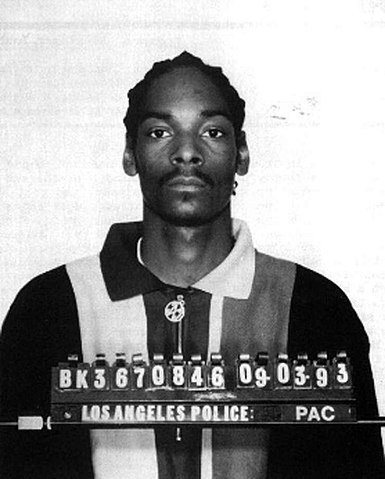
Snoop Dogg’s Acts of Kindness

Here are some thoughtful and impactful acts of kindness and philanthropy Snoop Dogg has been involved in:

In July 2023, Snoop Dogg donated $10,000 to help Josephine Wright, a 93-year-old woman in Hilton Head Island, S.C., preserve her ancestral land amid a contentious legal battle with developers. He shared, “I did it from the heart. She reminds me of my mother and grandmother.”

Founded in 2005, SYFL (Snoop Youth Football League) offers inner-city children opportunities in football and cheer, emphasizing teamwork, discipline, and academics. In mid-2024, Raising Cane’s donated $100,000 to the league, with Snoop publicly expressing his gratitude.

His efforts also earned him the “Social Leadership” Award at City of Hope’s Songs of Hope fundraiser, recognizing the league’s positive impact on communities.

Amid devastating wildfires in early 2025, Snoop Dogg transformed his Inglewood clothing store into a hub for collecting donations – food, clothing, and essentials – for evacuees. He personally helped distribute items and even gave out free clothes to those impacted.

In the mid-2010s, Snoop repeatedly hosted Thanksgiving giveaways in Inglewood, handing out between 1,000 and 3,000 turkeys to families in need. He partnered with the mayor and local officials, aiming to ensure everyone could enjoy a holiday meal and engaging warmly with the community.

This is a showcase site for Jeff Napier of US-Web-Design. Surprisingly low-cost solutions for all your website and marketing needs. More...

During a Hilarity for Charity event—Seth Rogen’s non-profit to raise Alzheimer’s awareness, Snoop auctioned off a blunt on stage, which fetched $10,000 for the cause.

In 2019, Snoop teamed up with Cash App for a Giving Tuesday campaign. Donations to his foundation, “Snoop’s Special Stars,” which organizes a football league where “EveryBODY plays,” were matched up to $200,000.

Posted on

Richard Branson’s Acts of Kindness

Here are some notable acts of kindness and generosity by Sir Richard Branson that vividly illustrate his compassionate side—ranging from personal gestures to large-scale humanitarian efforts:

A few years ago, Richard Branson found himself stranded after his car broke down on a major motorway. A logistics driver named Steve Chandler kindly gave him a lift to an important business meeting—but when Branson expressed gratitude years later, Chandler’s friends thought the story was too good to be true.

Chandler tweeted at Branson jokingly, seeking confirmation of the tale. Branson replied with warmth, and more:

“Yes it was me. Appreciate the lift! … want a lift with @VirginAtlantic to Miami, then a cruise with @VirginVoyages to say thank you?”

This unexpected reward transformed a small act of kindness into a spectacular gesture of gratitude.

During the COVID-19 pandemic, Virgin Atlantic faced severe operational disruptions and criticism for asking staff to take unpaid leave. In response, Branson pledged $250 million from his own resources to support workers and preserve their jobs.

This is a showcase site for Jeff Napier of US-Web-Design. Surprisingly low-cost solutions for all your website and marketing needs. More...

As one commenter aptly noted:

“He paid them back all the cuts which was owed to them.”

It was a move that combined empathy with leadership, ensuring his team felt valued when they needed it most.

How many people do you know that will pay a quarter-billion dollars out of their own pockets to help people?

Virgin Unite, founded by Branson in 2004, has spearheaded multiple humanitarian and environmental initiatives:

The Elders, co-founded with Nelson Mandela and others, aims to resolve global conflicts with moral authority and independent leadership.

In the crisis following Saddam Hussein’s invasion of Kuwait, Branson organized transport of 40,000 blankets to refugees in Jordan—navigating bureaucratic hurdles to ensure help reached those in need.

Initiatives like the Carbon War Room (for climate action), the Branson School of Entrepreneurship (empowering youth in Africa and Jamaica), and projects addressing healthcare and disease prevention through mobile tech, show his wide-ranging commitment.

Richard Branson has pledged to donate half of his net worth to entrepreneurial, environmental, and social causes, aligning with the ideals of the Giving Pledge.

See also 10 Surprising Facts About Richard Branson.

Posted on

Steven Bartlett’s Acts of Kindness

Steven Bartlett is becoming very well known as a British-born self-made entrepreneur through his television appearances on “Dragon’s Den,” a TV series in which potential entrepreneurs seek funding. He is also a huge YouTube influencer through his channel Diary of a CEO. If he did nothing other than boosting public awareness of good patterns, ideas and behaviors through that channel, that would be excellent. But that’s not all he does.

Steven Bartlett’s philanthropic actions tend to focus on empowering others, whether through mentorship, providing resources, or championing causes that help communities heal and grow. If you’d like to dive deeper into any one of these stories—or explore how to get involved—just let me know!

In an episode of Dragons’ Den, Bartlett was moved by the story of Millie Flemington Claire, who suffers from cystinosis and had started a company called Human Beauty. Though he opted not to invest financially, he offered to bring her into his London office to personally teach her social media and marketing skills—an act of kindness focused on investing his time and expertise rather than capital.

Steven chose to donate all profits from The Diary of a CEO LIVE tour (spanning cities like Manchester, London, Newcastle, Dublin, and Birmingham) to charities and causes that typically lack visibility and funding. He stated the tour is something he does “for the love of it” and felt it would be more meaningful if its proceeds were directed toward impactful causes.

As an advocate for the Prince of Wales’s initiative Homewards, Bartlett accompanied Prince William on visits aimed at supporting youth homelessness prevention programs. Notably, in March 2025, they visited Aberdeen together to meet with young people and businesses involved in efforts to address homelessness.

Bartlett has also been linked with charitable causes including UNICEF, Tusk, and Soccer Aid, lending his influence and support to broader philanthropic efforts.

This is a showcase site for Jeff Napier of US-Web-Design. Surprisingly low-cost solutions for all your website and marketing needs. More...
Posted on Leave a comment

Mobile Bike Repair Business

If you know a lot about fixing bicycles, a great opportunity awaits.

If you know only how to fix flat tires and handle small repairs, you still have an opportunity. For any thing beyond your capabilities, you can offer to transport stranded riders and their bikes to their homes or to a better-equipped bike shop.

Starting a mobile bike repair business is easier than starting a full retail bike shop. On the other hand, a mobile bike repair business can be a profitable stepping stone to an eventual bike shop.

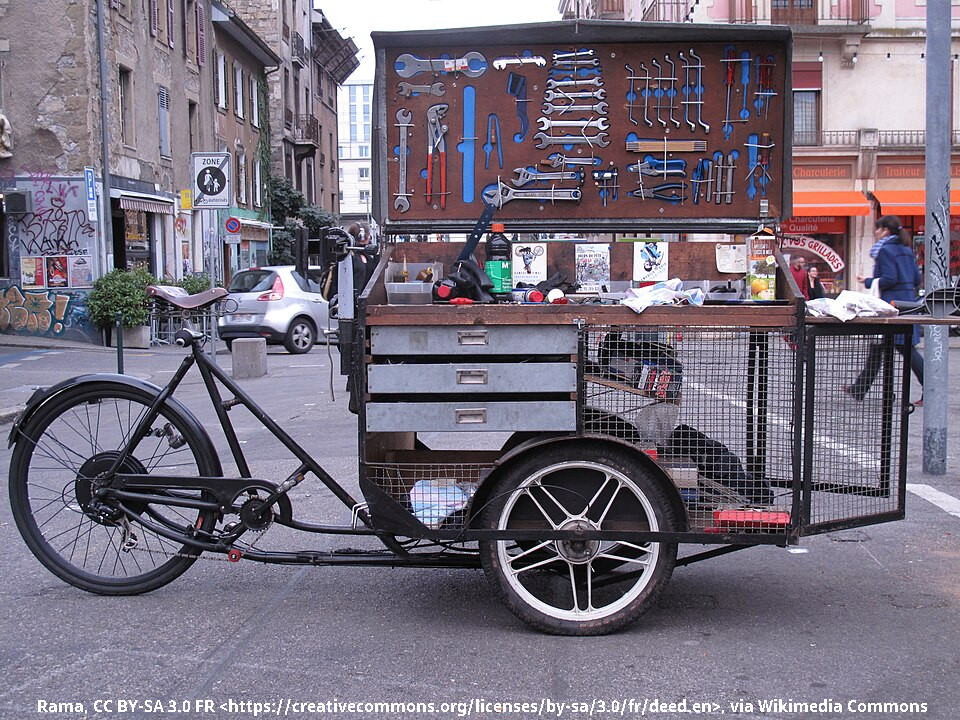
You could start as simply as loading some tools, a few spare parts and a good tire pump onto your bike shop, and meet stranded bicyclists on the road.


mobile bike repair trike

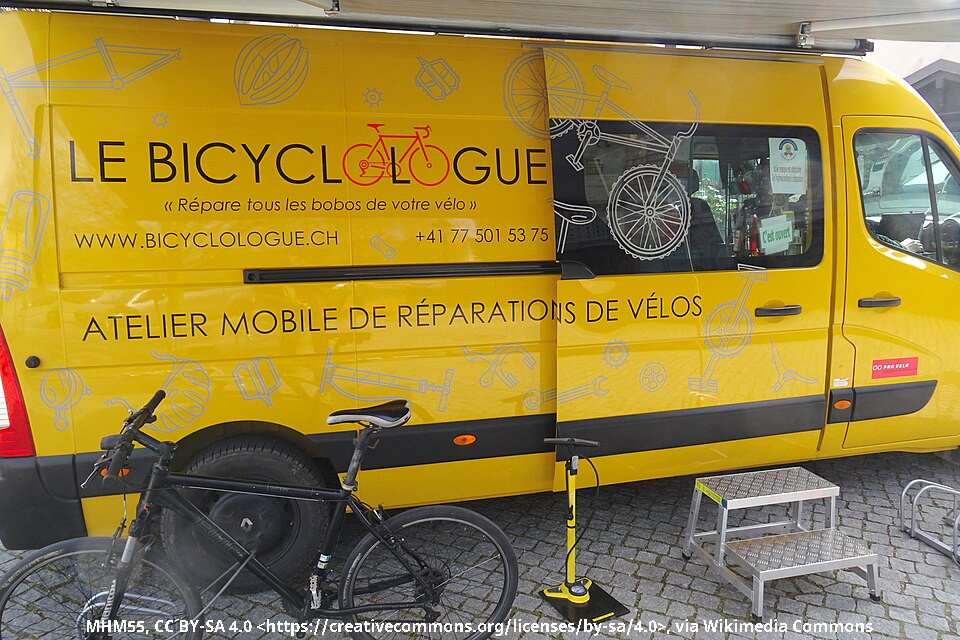
On the other end of the spectrum, you could equip a tall van with everything from a workstand to a vise, power source, and welding equipment. You can also carry 90% of the parts bicyclists need, and even a few accessories.

This is a showcase site for Jeff Napier of US-Web-Design. Surprisingly low-cost solutions for all your website and marketing needs. More...

Mobile bike repair can be done in one or all of three general ways:

1. You help stranded bicyclists. They call, you roll. It’s your choice whether you’d want to keep office hours, or be on-call 24 hours a day. Keep in mind that most recreational bicycle riding is done during the daytime, but on weekends.

2. People make an appointment for you to go to their homes to fix up the families’ bicycles. This often includes full tune-ups, and could potentially include major overhauls and repairs. This can be especially lucrative because you may have four or more repairs at a single location. You might even encourage them to make a ‘neighborhood bicycle repair fair,’ inviting all their friends and neighbors.

3. You travel to a public location such as a flea market, doing repair work for people who stumble upon you, or those who know you’re going to be there. Unless you do something to publicize your presence for the first time at a place such as a flea market, your first week is likely to be really slow. However, once people catch on to you being there week after week, you can expect a lot of business.

Initially, you can lay in a stock of common replacement parts by simply buying them at a local bike shop. If you tell them your plans, they may give you a small discount, typically 10%, hoping you’ll become a steady, high-volume customer.

You may find better deals on the most common parts such as inner tubes and saddles at discount stores.

In time, you can become established with bicycle wholesalers, giving you a better markup on parts. If your only income was from repair labor, that could be good enough, but augmenting it with parts sales is icing on the cake.

Then, if you want your cake and eat it too, you can lay in a stock of attractive accessories. You might realize quite a profit by selling jerseys, locks, helmets, and maybe even carry a complete bike or two in your van.

For more about the bicycle business in general, see How To Start A Bike Shop.

For more general business information to help you start this business, see General Business Action Pack.

Posted on Leave a comment

Used Bicycle Opportunity

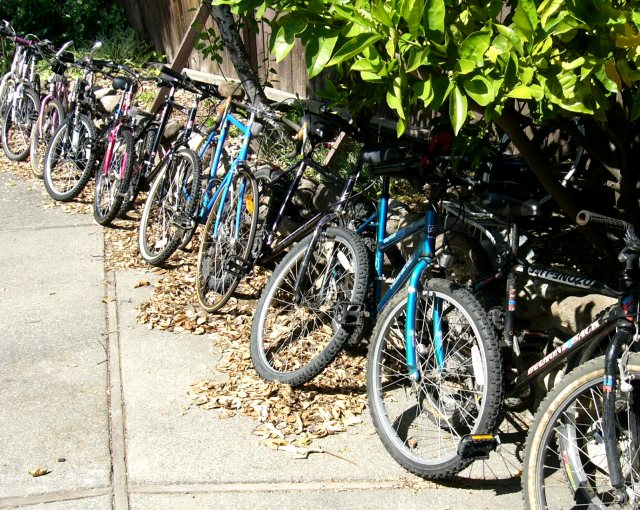
Secondhand bicycles offer a unique buying and selling opportunity because they are plentiful, easy to sell, and the perceived values can vary considerably. Computers become out-of-date too quickly. Clothing generally has less value, requires sizing, and much of it is stained or torn. Furniture can be bulky. But with bicycles there’s money to be had!

Bikes at garage sales can be incredibly inexpensive. The people may be moving next week, and haven’t been able to sell their bikes for a reasonable price. The owner of the bike may be at college and the parents want to sell it to help pay for textbooks. A bike may be broken and quite undervalued by the owner. It is very common to pay $25 for a typical mountain bike, one that sold for $300 when it was new. You can put $20 worth of parts in it, perhaps $50 for labor if you don’t do it yourself, and then sell it for $150. For a few months, in a somewhat offbeat scheme to support some relatives, I did this with twenty bikes per week out of my one-car garage. I just went to as many garage sales as I could hit on Friday, Saturday and Sunday, rounding up the bikes with my pickup truck. If I didn’t have a pickup truck, I could have rented a U-Haul for $40 or so on Sunday evening, and gather up all the bikes I had purchased over the weekend.

It is great if you can display your bikes locked up outdoors, with prominent price signs where many people drive by, but most people don’t have a place to do this. You might consider a consignment arrangement with someone who does. You can place classified ads in the newspaper, and although expensive, this generally works well. In most communities, the best bet is Craigslist. You can place ads for as many bikes as you want, along with pictures, and it is all free. Here’s more about Craigslist.

When I was doing this out of a home, I mostly dealt in medium-quality mountain bikes, a few road bikes, and one or two children’s bikes. In general, children’s and low-end adult bikes don’t sell for a sufficient profit to be worth your while. A twenty-year-old mountain bike that you price at $150 or $200 is the easiest thing to sell. I also had some relatively high-end bikes when I could find good enough deals. Typically, I’d pay $100 or $150 for a high-end bike at a garage sale, and sell it for $600.

As you develop your selling business, you’ll discover that you no longer need to get all your bikes at garage sales. People will start calling to find out whether you’ll buy their old bikes. You can enhance that by telling everyone you see that you’re always willing to buy broken or inexpensive adult bikes. (Remember, there just isn’t much money in low-end and children’s bikes.)

You’ll want to be careful about stolen bicycles. They don’t generally show up at garage sales because thieves don’t operate that way. They wouldn’t want the exposure. Still, you’ll want to be careful about anything in too good a condition at too good a price being sold by people between 12 and 25 years old unless their families are at the sale with them.

This is a showcase site for Jeff Napier of US-Web-Design. Surprisingly low-cost solutions for all your website and marketing needs. More...

If you have doubts about the history of a bike, you can ask the seller for a receipt. Often they’ll have legitimate excuses – such as they didn’t save the receipt. But if they can produce a receipt, you’ll know for sure that the bike has not been stolen. Sometimes, you can ask whether anyone has taken a picture that includes the bike. If they show you an old picture on their smartphone, it’s a pretty good bet that the bike has a good history.

In many communities, the police have worked out some sort of system to register used bikes. If you start dealing with used bikes regularly, they’ll want you to let them know about bikes you purchase. This probably isn’t as important as when you get an actual store, but you’ll want to participate if you can to protect the community at large from bike theft. The police won’t charge you any money, but they’ll want you to provide the serial number, description and source of every bike you handle. They usually ask you to hold every bike for 72 hours so they can have a chance to follow up if something turns out to be stolen. The downside is that if a bike is stolen, you’ll have to give it up, and won’t be reimbursed for what you paid. The upside is that the owner from which it was stolen gets it back.

Imagine a twelve-year-old boy who saved all summer to buy his BMX bike, has it for two weeks, leaves it unlocked in a friend’s yard, as twelve-year-olds will do, and discovers it has been stolen. The poor thing will cry his eyes out. If you can help prevent that sort of scenario, you can be proud to do so. Wouldn’t it be a great gesture to clean and tune a bike that’s going to be reunited with it’s owner? I never got the chance. I registered hundreds of bikes with my local authorities, and no bike was ever reported as stolen. Part of the reason is that the majority of bikes I purchased were broken, not shiny, valuable bikes. I think another reason is that most homeowners fail to record the serial numbers of their bikes, laptop computers, cameras and such gear.

If the police recover bikes that have been stolen, but don’t have a serial number or some way to positively identify the bike and reunite it with its owner. they hold it a while, then sell it at a ‘police auction.’ You can sometimes buy some remarkably good bikes for very little money at these auctions. You’re bidding against the general public, most of whom are looking for bikes for themselves, and know very little about how valuable certain models are. Others will see a bent wheel, or a missing cable, and just assume the bike is beyond their ability to repair for a reasonable cost.

That’s not always the case. Sometimes, the police auctions are way too popular, and you’d be wasting your time to try to buy bikes there. For instance, at some auctions, you need to pay as soon as you win each bike, so you miss the opportunity to bid on the next several bikes that go across the block while you’re waiting in line at the cashier. Of course, in that case, bringing a friend to help is a good idea. Some of the best auctions happen in inclement weather. In late fall, the police will have their last auction of the year. These will be many good bikes that accumulated during the end of the summer. There’s less interest as soon as the weather cools, and if it rains, or snows, there won’t be many bidders. You win. Mostly. But there is an unexpected catch.

When you buy a bike at a police auction, guess what? It may still be a stolen bike! Normally, this means nothing, and having gone through the process, and paid money, it is morally and nominally yours. But if the original owner discovers you have his bike, you are obligated to give it back.

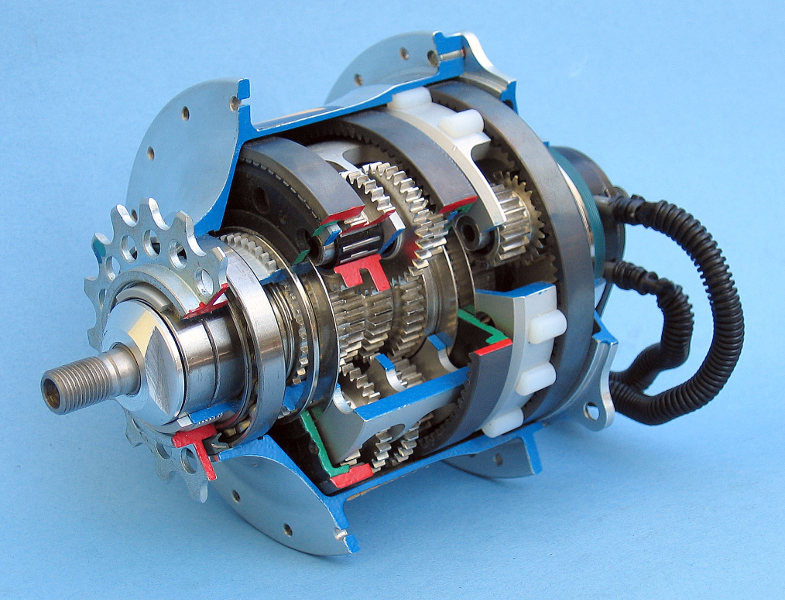
Buying and selling can also be about parts and accessories. I believe a person could watch eBay like a hawk, and pick up things like Campagnolo components, and bullet headlights from bikes from the 1950s. You could turn right around and sell them for more on eBay. There is 14-speed internally geared hub made by a company called Rholoff that sells for $1000.


The Rholoff Speedhub – 14 Speeds

via: http://commons.wikimedia.org/wiki/User:Marcela

If you could pick a used one up on eBay for $300, you could sell it for $600 – $700 easily. Interestingly, even a common three-speed hub sells regularly on eBay for $40. You might also mix and match with your local market, using Craigslist and garage sales. I think another good eBay business could be had by buying the lowest of the low bikes locally – you know, the department store $100 mountain bikes, disassembling them, and selling the pieces on eBay. Better yet, if you can score the older bikes, maybe something like a Peugeot PX-10 from 1970, you can disassemble them, and sell the parts for a rather remarkable sum.

Low-end larger bike parts such as frames, forks and complete wheels are hard to sell profitably due to the shipping cost. Hubs, shifters, derailleurs, handlebar stems and saddles sell surprisingly well.

For more about the general business of buying and selling bicycles, check out General Business Action Pack.

Posted on Leave a comment

Beyond Uber

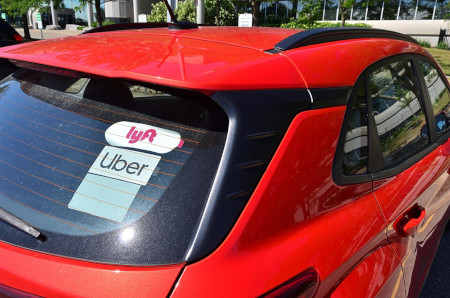
Driving for Lyft, DoorDash or Uber is a great way to make a little bit of money. Getting started is fairly easy. The problem is your income will be limited because the companies take most of the money, leaving you something close to minimum wage. It may be even less than minimum wage.

Here’s how to defeat that: Give every passenger a business card, and let them know that you offer elite car service. They can call you for their regular business, such as weekly medical or business appointments, airport runs and so on. There are at least five reasons they may want to contact you directly rather than just using their Uber app:

1. You can be there right on time. For instance, if they need a ride at 10:15am, they don’t have to log into Uber and hope someone will come along in a reasonable amount of time.

2. You might offer to charge a little less, but you’ll still make more than if you took the ride as a company driver.

3. You can give higher-quality service, for instance offering a coffee and snacks to your passengers.

4. If you have a winning personality, which often means just asking questions that your passengers will be delighted to answer, then of course they’d want to ride with you.

This is a showcase site for Jeff Napier of US-Web-Design. Surprisingly low-cost solutions for all your website and marketing needs. More...

5. If you feel like a safe driver, they will trust you more than whatever random driver the company provides.

You can look at the General Business Action Pack to discover other ways to promote your independent driving business.

Posted on Leave a comment

Bicycle Messenger

If you live in an urban community, or even a small town, to become a bicycle messenger is as easy as falling off a log. All you need is a bike and a cell phone. You can make up some business cards and flyers. Your first task as a messenger is to deliver the flyers to bulletin boards all over town, and to deliver the cards into the hands of as many people as you can. Don’t forget about Craigslist – a great cost-free way to advertise a service in most towns. If you live in a large city, there may already be messenger services. But there’s always room for more. Especially if you do something unique. For instance, you might deliver meals between 9pm and midnight. Or you might specialize in transporting medical records – whatever you find a need for in your city. If you’re in a small town, even as small as 5,000 residents, you can set up a general messenger service and prosper nicely.

Although messengers who use cars can deliver more quickly and can carry larger packages, many people just love the idea of the small ecological footprint of utilizing bicycles to deliver their messages, lunches and small packages.

Meanwhile, you get exercise while at work, and are likely to live a longer, happier, healthier life than one who spends their time at a desk.

Do be careful about breathing air pollution and stay aware of traffic. Statistically, you’re better off health-wise riding your bike than sitting around doing nothing. This is not a job for someone who doesn’t get enough sleep, is unaware, drinks too much, or takes unnecessary risks.

If an organized bicycle messenger service exists in your area, you might start by working for them, so you can learn intricacies of the business. Later, when you set out as an independent, you’ll make money on your own.

For general information about how to start and promote a bicycle messenger service, you might find this page helpful: General Business Action Pack.

This is a showcase site for Jeff Napier of US-Web-Design. Surprisingly low-cost solutions for all your website and marketing needs. More...
Posted on Leave a comment

Mobile Welding

If you want to work as a welder in a shipyard, on a construction site, or in high tech, you’ll need to be certified. However, there’s a wide field for non-certified welders.

One variation is mobile welding. You can set up a truck with an electric and gas welding system, hand and power tools, and do housecalls for all sorts of welding jobs, from fence and gate repair and construction, to minor automotive fabrication as well as commercial applications.

You’ll find that since so few people are equipped or trained in welding, and even fewer who want to be mobile, there’s a large, hungry clientele.

Your author set up a small welding truck with a Hobart electric stick welder and oxy-acetylene set. My little Toyota truck carried a ladder, and a couple hundred pounds of tools such as an angle grinder, a large assortment of Vice-grip clamps, squares and measuring devices, drills and so on.

My specialties developed by themselves. My very first project was to build some engine mounts for a custom promotional vehicle, the Smile Shuttle as shown in the article.

An early project was to repair a stainless steel sink in a restaurant that had developed a leaky seam. I found that welding thin-gauge stainless steel is not easy, it’s something that can be learned. That wasn’t the hard part. I either hand to drag my 50-foot welding cables into the restaurant, generally through a kitchen window, or disconnect the sink, drag it into the parking lot, weld it, then drag it back and and hook it up.

This is a showcase site for Jeff Napier of US-Web-Design. Surprisingly low-cost solutions for all your website and marketing needs. More...

Another of my early jobs was to construct a custom ladder rack for a pickup truck.

Within a year, I had as many custom truck racks and restaurant sinks as I could handle. The construction workers and restaurateurs all contacted each other when they needed my services.

I really liked the custom racks, because each tradesman had specific requirements, such as hooks for cables or hoses, holders for special equipment and so.


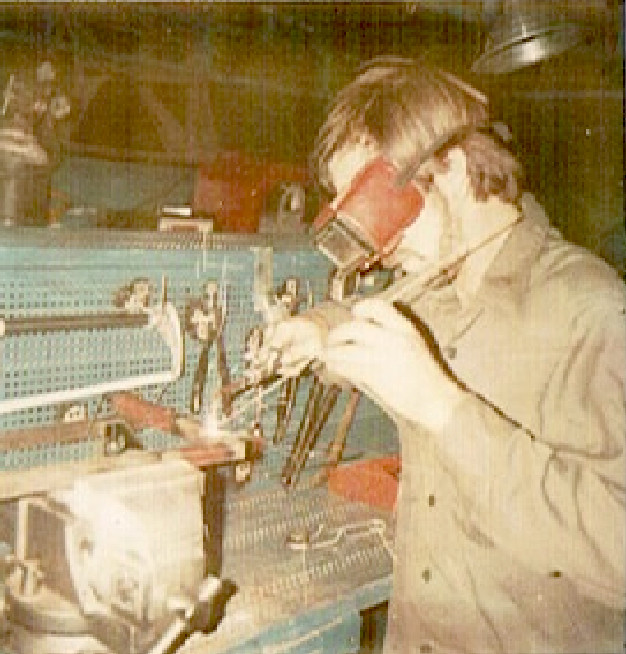
Jeff Napier, welding
Yup, that’s me, many years ago!

Of course, you can set up a similar business. Something I didn’t do, but you should, is really work to protect your health. Do not breathe dangerous or heavy metal fumes! I was pretty good about it, and my health is still fine, since I went on to another business after a couple of years, but you really should wear a high quality breathing mask and carry a strong fan or work in ventilated areas.

One thing I did do was to really focus on fire safety. It would be way to easy to do a little job in which a spark from your work starts a grass fire, sawdust fire, sets rags on fire and so on. The fire may be small and unnoticeable for a while, until it isn’t!

So, I always carried literally a few various fire extinguishers. I always checked my environment before I started working. I asked for volunteers to watch the area for smoke or fire, and whenever I felt it was necessary, I either stayed around for a half-hour or more when a job was finished, or made sure someone else kept an eye on things.

Even still, I set my pants on fire one time. Literally! I was fixing some broken cross-members in a ramp truck, one that hauls cars up a ramp with a winch to carry them. There was a lot of grease on the structure under the ramp. Basically, I had no business welding in that rig in the first place. After an hour, having brushed up against the various framework, my pants became coated in grease. At one point, I felt a sort of sweaty warmness along my left thigh. I lifted up my hood to discover flames coming off my pants that I quickly padded out with my gloved left hand. I wasn’t hurt in the slightest, but things could have been worse!

On another occasion, I had hired a helper, something I had done many times. This helper was new, so one of the things I showed him is how welders get into the habit of never just picking something up. I always quickly touch a thing to make sure it is not hot, then I pick it up.

Not 15 minutes later, right in front of the kid, I absent-mindedly picked up a one-by-one inch bit of square tubing I had just welded, leaving some impressive blisters on the palm of my hand.

I also avoided any projects that would cause any worry. I would not repair a broken car frame member. I would not work on safety-critical components. I would not work on structures that carried a lot of weight. I would not work in flammable environments.

General welding is a lot of fun because every job is different.

Another version that costs somewhat more to set up is in-shop welding. You can start your own welding and fabrication shop. You can also start as a mobile welder, then as your income grows, transition into having your own shop.

Personally, I loved the art of gas welding, and did as much of that as I could. Some of the jobs were really fun. For instance, I was once asked to replace the broken off fin at the bottom of an outboard boat motor. The two-inch aluminum fin was entirely missing. Using hollow-core aluminum gas welding rod, I rebuilt the fin, bead by bead, ground it into shape and smooth with a 4-inch angle grinder, charged the guy a couple hundred dollars, and was on the road to the next job.

If you’d like to set up as a mobile welder, make sure you have a lot of practice and are very safety-conscious.

Then you may find this info helpful: General Business Action Pack.

You’ll probably want a website to promote your business and then maybe some digital marketing. If you don’t want to build your own website or do your own marketing, make sure to find someone who has a good reputation. Unfortunately, many in the website business are less than ideal. You may find this article useful in finding a true professional: People Being Cheated in Website Development, SEO and Promotion.

In addition to the usual ways to build business, you may find that you work from time to time along side carpenters, plumbers and others who need welding services. For instance, a plumber who installed rooftop solar water heating systems called me one day to fabricate mounts for his solar panels. The next thing I knew, I was getting calls all the time to do the same thing for him, and also his buddies in similar businesses. Let them know you’re available, and you may quickly get as much work as you can handle.

Posted on Leave a comment

Quiet Lawn Care

Is it just me, or does the noise from lawn care equipment seem really bothersome to you also? Many people are bothered by loud lawnmowers, leaf blowers, mulchers and other equipment. Yet they feel the noise is inevitable. It is not!

The latest battery-powered electric lawnmowers can be much quieter. I’m sure one who looks around or is willing to do some of their own mechanical work can come up with much quieter lawn care equipment. Then it is a simple matter to advertise that you’re doing quiet lawn care. You should have a full clientele in no time!

Perhaps your quiet lawn business can grow to the point where you have 800 employees throughout the country or maybe even throughout the world.

You might enjoy this bit of background information: One of my first businesses was quiet lawn care. When I was fourteen years old, my neighbor across the street had a go-kart. I, being a typical kid of the era was green with envy. I wanted some sort of engine-powered ride also. But even then, I though of the go-kart as silly entertainment. I wanted a machine that could do something. So, I asked my father to lend me the money for a riding mower.

He bought me a Toro 500 lawn tractor. I immediately went around the neighborhood and set up weekly lawn care jobs. I was able to pay my dad back half-way through the first summer.

Now, my neighbor’s go-kart was much faster than my Toro, which went 5.4 miles per hour (8.6 kph) in high gear and that bothered me. Plus, it took ages to drive to lawns a few blocks away. I learned that I could replace the pulleys between the engine and the transmission, and managed to make that Toro go 25 mph (40 kph) in high gear, while low gear was still slow enough to properly mow lawns. It was a terribly dangerous thing to do, but I survived.

This is a showcase site for Jeff Napier of US-Web-Design. Surprisingly low-cost solutions for all your website and marketing needs. More...

I found that in my community, whereas no 14-year-old boy could legally drive o go-kart, there was a brilliant legal exception: Farm equipment was legal on the streets without any sort of license or age restriction. So, my little Toro mower was technically a farm tractor as far as I was concerned. I don’t know whether a policeman would have bought that argument, but I was never stopped.

If you’re astute, you’ve already picked up on the part of this story that doesn’t yet fit. You see, my Toro was terribly loud, like all lawn care equipment of the era.

One day, while mowing a lawn, a neighbor beckoned me over. I rode my mower over to her, and shut off the engine so I could hear what she was saying. She complained that my little tractor was way too loud. I had to agree. It was so loud it was even bothering me. Leaving her in high gear with the engine near idle speed to be as quiet as I could, I went home and stuffed the muffler with coarse steel wool. Suddenly the little tractor made 1/10 the amount of noise. I was so pleased!

One problem remained: Every now and then, the steel wool would catch fire, blowing a remarkable shower of sparks out the exhaust pipe. I learned to carry spare steel wool and re-stuff the muffler from time to time.

After two summers, winter came, and I bought a snow plow attachment for the little tractor. I figured I could continue to make money by clearing driveways. However, the tractor was too light-duty to do the job. That’s when I gave up lawn care and moved into another business, photography, which I have described elsewhere.

So, that’s my story, and I’m sticking with it.

For the general business information about how to start and build a quiet lawn-care business, see General Business Action Pack.

People being cheated in website development, SEO and promotion

To promote your business, you’ll probably want a website and some reasonably priced marketing. You’ll have to be careful because there are a lot of bad players in the business: People Being Cheated in Website Development, SEO and Promotion.

See also, Green Lawn Service.

Posted on Leave a comment

Green Lawn Service

This title is kind of fun. Of course lawns are green. There are a million people already in the lawn care business, so why is this article here on the website?

I’m using the term ‘green’ in a different sense. I’m not talking about the color. This use of green means ‘organic’ or ‘earth-friendly.’

It turns out that a lot of people care about green services these days. So your new business is super-simple.

Promote yourself as a lawn-care specialist who uses only green, safe, organic products. If you don’t have a good idea already, you can learn on YouTube and elsewhere how to substitute chemical fertilizers, pesticides, dyes and other chemicals for all-natural products.

People will care. They are more likely to hire you rather than any regular lawn-care professional and may pay more as well. You see, they worry about their kids playing on chemical-coated lawns. They worry not only about what their dogs and cats might track in, but also what can happen to their pets with chemical exposure.

So, by doing this business, everyone, even the dogs and cats, win.

This is a showcase site for Jeff Napier of US-Web-Design. Surprisingly low-cost solutions for all your website and marketing needs. More...

It’s not unfathomable to think that whereas you start out as a single person, in time your green lawn business can grow to the point where you have 800 employees throughout the country or maybe even throughout the world.

For the general business information about how to start and build a green lawn-care business, see General Business Action Pack.

People being cheated in website development, SEO and promotion

To promote your business, you’ll probably want a website and some reasonably priced marketing. You’ll want to be careful because there are a lot of bad players in the business: People Being Cheated in Website Development, SEO and Promotion.

See also, Quiet Lawn Care.