The world’s first recorded car accident occurred in 1891 in Ohio, United States, when a buggy collided with a bicycle.
The average car has around 30,000 parts.
The longest traffic jam in history occurred in China in 2010 and lasted for 12 days, stretching over 100 kilometers (62 miles).
The Bugatti Veyron, one of the world’s fastest cars, has 10 radiators to keep its engine cool.
The Porsche 911 has remained in continuous production since 1963.
A woman in England had to take her driver’s test 47 times before she finally passed. Quite possibly her examiner got taken for a ride.
The world’s most expensive car sold at auction was a 1962 Ferrari 250 GTO, which fetched $48.4 million.
The Toyota Corolla is the best-selling car model of all time, with over 45 million units sold.
The Lamborghini company was founded as a result of a disagreement between Ferruccio Lamborghini and Enzo Ferrari.
The average car spends about 95% of its lifetime parked.
The first car to have an onboard navigation system was the 1990 Mazda Eunos Cosmo.
The Volkswagen Group owns 12 car brands, including Volkswagen, Audi, Porsche, Lamborghini, and Bugatti.
The airbags in cars were first introduced in the 1970s.
The first car to reach 100 mph (160 km/h) was a 1904 Belgian car called the “Mercedes-Simplex.”
The first car with a standardized left-hand driving position was introduced by Cadillac in 1916.
The fastest recorded speed by a street-legal production car is 304.77 mph (490.48 km/h) by the Bugatti Chiron Super Sport 300+.
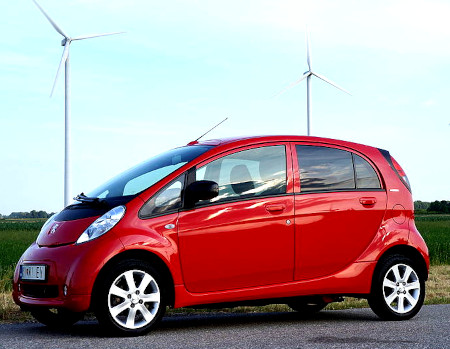
The electric car controversy: If you have solar panels on your roof that charge your electric car, then you are most likely less impactful on the earth than anyone driving a gasoline, diesel or even a hybrid car. However, if your car’s electricity is coming from the grid, then the fossil fuel needed to generate and transport the electricity to your car is actually more than the equivalent use of fuel in a car.
The other consideration is what to do with the expired batteries. Our best technologists have not yet come up with a good way to recycle large quantities of lithium ion batteries as of 2023. Since these batteries are tremendously expensive to replace, the value of an electric car after perhaps ten years will be so low that the entire car may need to be junked.
Some engineers have experimented with using an electric car’s battery to power a house at night, and solar cells to power the house and recharge the car by day. This would reduce or eliminate the need for large household batteries.
The average person will spend around 4 years of their life driving a car.
The windshield wipers were invented by Mary Anderson in 1903.
The world’s first traffic light was installed in Cleveland, Ohio, in 1914.
The first car radio was invented in 1929 by Paul Galvin and was called the “Motorola.”
The world’s largest car manufacturer is currently Toyota.
The Rolls-Royce Phantom uses an estimated 450 pounds (204 kilograms) of soundproofing materials to create a quiet cabin.
The BMW logo represents a spinning aircraft propeller, as BMW originally manufactured airplane engines. BMW stands for Bayerische Motoren Werke, although in America it’s often called Bavaria Motor Works.
The McLaren F1, introduced in 1992, was the first production car to have a carbon-fiber monocoque chassis.
The first speeding ticket was issued in 1902 in New York City. The driver was caught going 12 mph (19 km/h) in an 8 mph (13 km/h) zone.
The average car has enough steel to build about 45 bicycles.
The Chevrolet Corvette was initially intended to be a limited production model, but its popularity led to continuous production since 1953.
The world’s first car with an entirely carbon fiber body was the 1981 DeLorean DMC-12.
The Ferrari company produces fewer than 10,000 cars per year to maintain exclusivity.
The first recorded car race took place in France in 1894, covering a distance of approximately 79 miles (127 km) from Paris to Rouen.
Having been produced for more than 30 years in nearly the same configuration, the Volkswagen Beetles and Volkswagen vans have bucked traditional automotive engineering, yet they were very successful. Unlike most cars the engines are mounted in the rear, behind the rear wheels. The engines have two cylinders one one side of the crankshaft, and two on the other. The engines are air-cooled. The engines do not have an oil filter beyond a simple screen in the bottom of the crankcase. Instead of ordinary springs for suspension, the wheels are sprung with steel bars that twist and untwist.
There were some problems with Volkswagens. The vans were prone to tipping over. The engines could overheat. And speaking of heat, since the engines were air-cooled, they couldn’t have a water-based heat exchanger. Instead they had sheet metal wrapped around the exhaust system in which air flowed to gather heat. This warm air was then piped into the passenger compartment. The end result was a heating system that wasn’t very warm in the winter. Furthermore, the sheet metal would rust out in a few years in many climates, resulting in no heating system at all. Finally, front-end collisions were often terrible in Beetles and vans.
Silly Laws Still On The Books Involving Automobiles
In Memphis, Tennessee, a woman cannot legally drive unless there is a man running on foot ahead of her car with a red flag to warn motorists that a woman is driving. Like many of these laws, this one is seldom enforced.
In Alabama, USA, it is illegal to drive blindfolded. (Seems obvious, but it’s an actual law!)
In Denmark, it is mandatory to check underneath your car for sleeping children before starting the engine.
In Thailand, it is illegal to drive without a shirt on.
In California, USA, it is illegal to jump out of a moving car.
In Cyprus, it is illegal to eat or drink while driving.
In Japan, it is illegal to splash pedestrians with water from puddles while driving.
In Nevada, USA, it is illegal to ride a camel on the highway.
In Saudi Arabia, only men are allowed to drive cars.
In Massachusetts, USA, it is illegal to operate a car with a gorilla in the backseat.
In Singapore, it is illegal to drive without a valid Electronic Road Pricing (ERP) device during certain hours.
In Australia, it is illegal to drive with a person or animal tied to the outside of your vehicle.
In Oklahoma, USA, it is illegal to read a comic book while driving.
In Minnesota, USA, it is illegal to cross state lines with a duck atop your head.
In Ohio, USA, it is illegal to drive a car without a steering wheel.
In Hawaii, USA, it is illegal to place coins in your ears while driving.
In Oregon, USA, it is illegal to go hunting from a moving vehicle unless the target is a whale.

